Financial repression playbook

One down, one to go. With the FOMC resulting in a dovish cut, we now await the BOJ meeting next week. So, how are things shaping up for the end of the year and 2026?

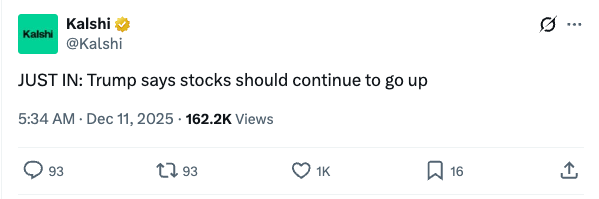
The Fed delivered the expected 0.25% rate cut. It was accompanied by cautious commentary on next year, without really turning hawkish. Pretty much a goldilocks result for markets. Stocks rallied into the close, while Bitcoin pumped to $94k before quickly retracing. The Fed’s dot plot and 2026 outlook seem wildly irrelevant given where things are going after Powell’s term ends.

Does anybody need that stated more clearly? The next Fed chair will be appointed by Trump and will do his bidding. Their primary function will be to cut interest rates. End of story.

Leaping into the future, it will be fascinating to see if a post-Trump Democrat administration will work to reinstate the Fed’s “independence”. I bet you they won’t…

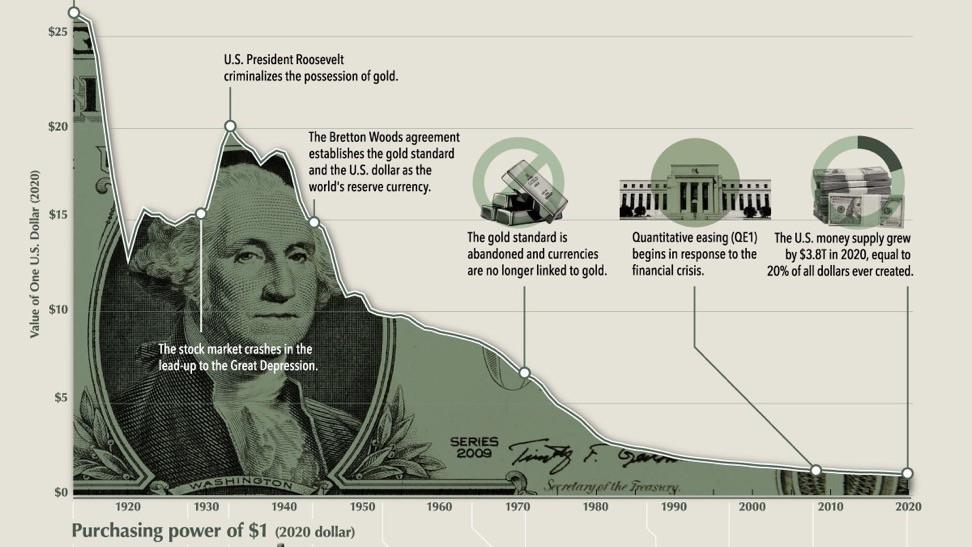
Anyway, I digress. The US is moving toward financial repression in 2026. Inflation allowed to run hot, and interest rates forced lower = Negative real rates. Negative real rates are a stealth tax on savers. It’s how the government reduces the debt burden.

It’s not good. But it’s what is going to happen.

Americans who own assets will be fine. Those who don’t will struggle.

Lots of liquidity, equities up, hard assets up, and a weaker dollar.

So, Bitcoin to the moon, right?

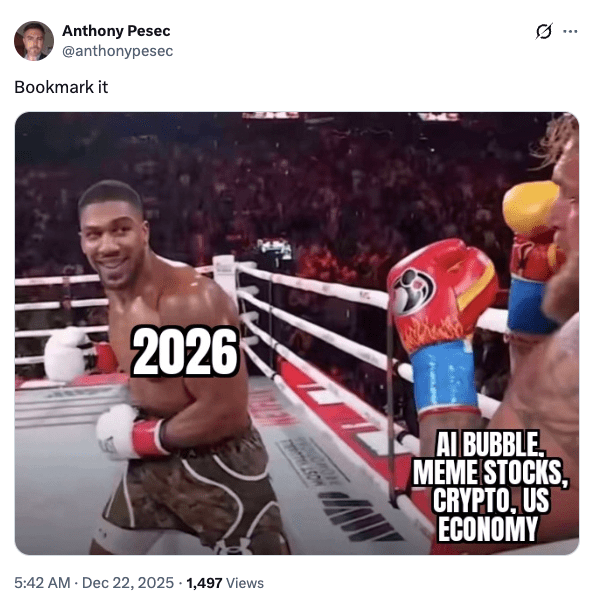
Hmmm, given what I wrote above, we are looking at the perfect environment for Bitcoin. The macro gurus, who are relatively new to Bitcoin, are declaring the 4-year cycle dead and preparing for new all-time highs in 2026. Except that’s not what usually happens. October marked a picture-perfect 4-year cycle top. It doesn’t get any clearer. The bottom should be around Oct/Nov next year.

I’m long BTC and happy to be proven wrong, but I think there is pain to come. I think we will see $40-50k, and buying Bitcoin when stocks are pumping will seem like the dumbest thing a person could ever do with their money. Sentiment needs to be broken before we run again.

And yes, I will buy at those levels. Until then, there isn’t much point in thinking too hard about it.

As for stocks…

The midterm general election is in November. Sometimes the most obvious outcome is the correct one.

Is the BOJ going to spoil the party?

The BOJ is signalling a hike. It’s been reported in the Nikkei. It’s pretty much baked in and would be more of a surprise if it didn’t happen. I don’t think it’s going to shock markets. It might strengthen the yen a little, but it probably won’t be earth-shattering. See my post on the Yen Carry Trade from last week.

Japan, of course, is already at negative real rates. That should support the Japan equity bull market. It only sucks if you don’t own stocks…

I have the flu. That’s as much brain power as I have this morning. Time for a lie down.

Disclaimer: This should go without saying, but the information contained in this blog is not investment advice, or an incentive to invest, and should not be considered as such. This is for information only.
The yen carry trade explained

It looks like the Bank of Japan (BOJ) is finally ready to raise rates again this month. So, right on cue, out come the doomers to ring the alarm on how the unwinding of the yen carry trade is going to blow up global financial markets.

Should we be worried? How could a potential unwind of this trade affect investors in Japan?

What is the yen carry trade?

The core idea behind this trade is to borrow money in a low-interest currency (JPY) and invest it in higher-yielding assets elsewhere.

For example, a fund could borrow yen at less than 1% interest, invest in US Treasuries earning 3.5%, and pocket the difference. This works perfectly until exchange rates make a big move. Then things can get interesting.

A conservative estimate puts the size of the carry trade at around $1 trillion, based on Japanese banks’ foreign lending. Some estimates use the notional value of FX swaps and forwards using the yen to reach a figure closer to $14 trillion.

Of course, hedge funds are not necessarily just buying conservative US government bonds on this trade. A mountain of cheap yen is converted to dollars and other currencies and flows into all kinds of assets. A deep dive would likely reveal that a large portion of this trade has gone right into the red-hot Magnificent 7 stocks.

Why Japan?

The carry trade can take place using any currency with a low interest rate. Japan has been the primary go-to market due to its unique characteristics:

  • The lost decades following the bursting of the bubble in the early 90s
  • Deflation and slow growth
  • The BOJ’s long-term low/negative interest rate policy
  • Hence, the yen became the world’s cheapest funding currency

How the carry trade makes (and loses) money

This trade works based on the interest rate differential – the carry. With a stable or weakening yen, it will remain profitable. In this type of environment, it’s hard to miss.

Problems occur if the yen strengthens. If an institution borrowed yen at ¥150 to the dollar but later the yen strengthens to ¥130, it suddenly requires more dollars to repay the same yen loan.

The unwind then happens as follows:

  • Sell the dollar asset (treasuries/stocks, etc.)
  • Convert to yen
  • Repay the yen loan

This unwind puts downward pressure on the asset being sold, which could be US treasuries or global stocks. And the flood of capital back into JPY accelerates the yen’s strengthening. A relatively small move in exchange rates can snowball into something much larger.

Famous unwind events include the 1998 Asian financial crisis and the 2008 global financial crisis. In 2024, we saw a mini unwind as the BOJ shifted policy.

Why does it matter to everyday investors, especially in Japan?

With the US central bank cutting rates and the BOJ looking to raise rates, there is a real possibility that the yen will strengthen in the short term. Most Japan residents will be relieved as foreign goods and overseas trips will become more affordable.

However, the unwind can suck out global liquidity and do some real short-term damage to our investments. Not many risk assets fare well in this kind of event, so be prepared for international stocks, Japanese stocks, high-yield bonds and crypto to take a beating. Japanese exporters, such as Toyota, are particularly sensitive as a stronger yen erodes their overseas profits.

So, are the doomers right this time?

Beware of people claiming that the yen will suddenly surge and stocks will crash overnight. The reality is:

  • Yen carry trade unwinds tend to happen in bursts, and not always in a straight line
  • Central banks will often intervene, verbally or via policy tools.
  • Markets tend to pre-position before the worst moves happen

You can already see this pre-positioning happening. The yen has strengthened over the last few days after the BOJ hinted at action at its next meeting. Note how BOJ governor Ueda is trying to communicate his thoughts in advance and avoid a “shock rate hike” a la August 2024.

People writing epic threads on X tend to overstate the timeline risks. Sharp moves can indeed happen. However, it doesn’t necessarily guarantee an imminent crash.

Should we be worried?

Concern about the carry trade unwind is most rational if you have:

  • Investments heavily exposed to foreign currencies
  • A portfolio dominated by global stocks
  • Income linked to export-driven Japanese companies

There is less to worry about if you have:

  • Mostly yen-denominated assets
  • A long time horizon
  • No plans to move money internationally soon

Concerns about a carry trade unwind are certainly not irrational. However, the real risk lies less in timing the event and more in understanding how currency moves can affect your portfolio and positioning accordingly.

So it really comes down to portfolio structure. Trying to predict macro events is insanely hard…

Ok, then how do I hedge against this?

Of course, some assets will benefit from a carry trade unwind:

  • The yen, of course, is the obvious winner – that trip abroad could get a lot cheaper next year!
  • Gold is historically a beneficiary of unwinds as investors deleverage and seek out safe havens. If the yen is rising, the dollar is usually falling, which is generally good for gold.
  • Long-duration government bonds generally do well as the world goes risk-off and money flows into the safest assets. Bond prices go up as yields go down.

In conclusion, don’t let the doomers scare you out of long-term investments, but be prepared for some volatility. Keep an eye on central bank rate decisions, the corresponding US-Japan interest rate gap, USD/JPY exchange rate and global risk sentiment.

Personally, I am long-term bearish on the yen, but in the short term, anything can happen.

It’s always good to keep some dry powder to pick up risk assets while investors run scared.

And make sure your passport is still valid for that overseas trip you’ve been planning!

Top image from Freepik

Disclaimer: This should go without saying, but the information contained in this blog is not investment advice, or an incentive to invest, and should not be considered as such. This is for information only.