I haven’t had much to say on markets for a while. We clearly entered the dumbest timeline, and no amount of TACO is likely to pull us back out of it.
Speaking of tacos, and to keep this post light, my friend recently introduced me to Taco Fanatico. We went to the Shibuya branch – there’s another in Naka-Meguro and even one in Nagoya. Cold beer and tacos definitely beat trying to trade this market…
If I’m not mistaken, said market is almost entirely driven by Trump’s social media posts rather than actual events. And, once more, I could be wrong, but the great dealmaker appears to be negotiating with himself. The Iranians have probably read the Chris Voss book. Trump doesn’t strike me as much of a reader…
You have probably had enough armchair geopolitics, so I won’t add to the discourse. Here’s BlackRock Chairman Larry Fink with two extreme scenarios:
“GLOBAL RECESSION”
The man who manages $11 trillion just warned the world what’s going to happen if Trump doesn’t make a DEAL, now.
A total wipeout.
Larry Fink, CEO of BlackRock, the largest asset manager in human history explains to the BBC how that occurs 👇🏼 pic.twitter.com/HqYrOhwj8x
In short, either the war ends, and things go “back to normal”, and markets revert to being insane in a good way. Or we get $150 oil for an extended period and a global recession.
Hope for the best and plan for the worst. Short-term investors would want to be defensively positioned. Long-term investors can, and probably will have to, endure some pain. A globally diversified portfolio, perhaps with satellite holdings in hard assets, is not going to be a cake walk, but you don’t have to look at it every day.
I think I summed up my views on how to plan effectively in noisy markets in my Back to basics post.
Asian economies in particular are in a precarious position. Japan is better prepared than some other countries, although the prospect of higher inflation, low growth and a floundering yen is not exactly mouthwatering.
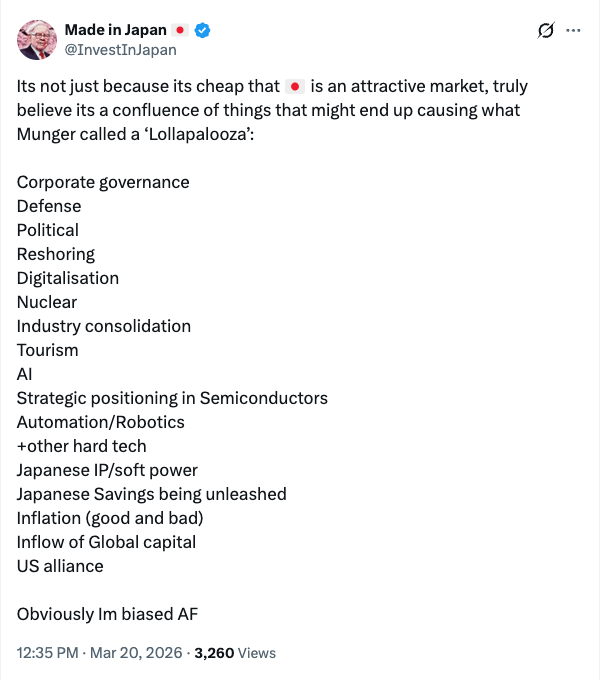
That said, the Japanese stock market still has a lot going for it, and the opportunity is nicely summed up here:
I may also be biased, but with many people trapped in yen, the investment options are not too shabby.
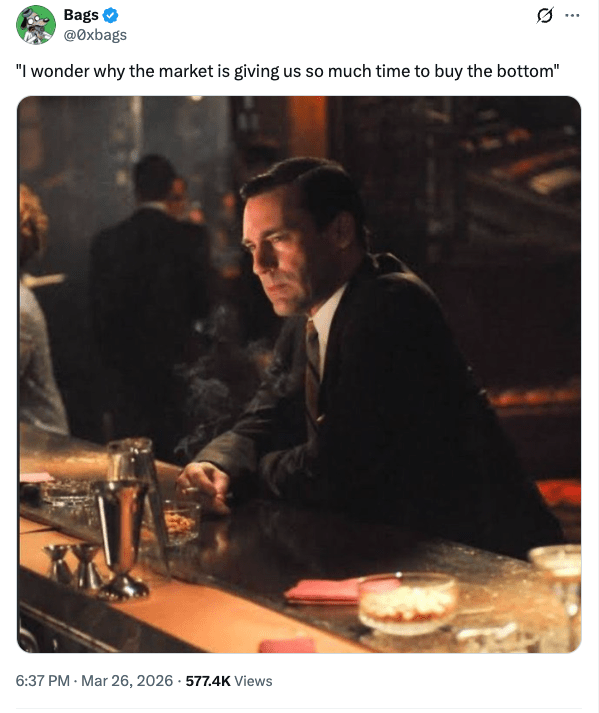
I’ve been buying some stocks on the heavy red days, but am exercising caution. I even bought a little Bitcoin, despite the nagging feeling that lower prices await.
Be careful out there. It’s a great time to touch grass, admire the sakura and eat tacos.
Disclaimer: This should go without saying, but the information contained in this blog is not investment advice, or an incentive to invest, and should not be considered as such. This is for information only.
I don’t cover property so much on this site, so today I’m happy to introduce a guest post from Jin’s Homes, a boutique real estate firm focused on the execution of short-term rental investments in Tokyo. The firm is led by Yoshihiro Jinzaki (“Jin”, Founder & CEO). Born and raised in Japan in an international environment, Jin is a native English speaker with a global mindset and a practical understanding of Japanese social norms, local expectations, and regulatory realities.
I met Jin at an event recently and had a really good chat with him. He’s friendly, engaging and is the perfect guide to Tokyo’s short-term rental market. I hope you enjoy this post:
Most professionals and investors in Japan consider property investment at some point – and then hesitate.
Financing conditions for investment properties are typically stricter than for primary residences. Compared to using a residential mortgage, investment loans often require higher equity and carry less favorable terms. At the same time, yields in Tokyo appear relatively low.
As a result, investors frequently look toward suburban areas in search of higher ROI.
But suburban investments come with their own concerns:
Will occupancy remain stable?
Will the asset hold its value long term?
Will resale liquidity be strong enough?
Faced with this trade-off, many potential investors ultimately decide not to invest at all.
A Different Approach: Short-Term Rental
One strategy that has gained increasing attention is licensed short-term rental (commonly known as minpaku).
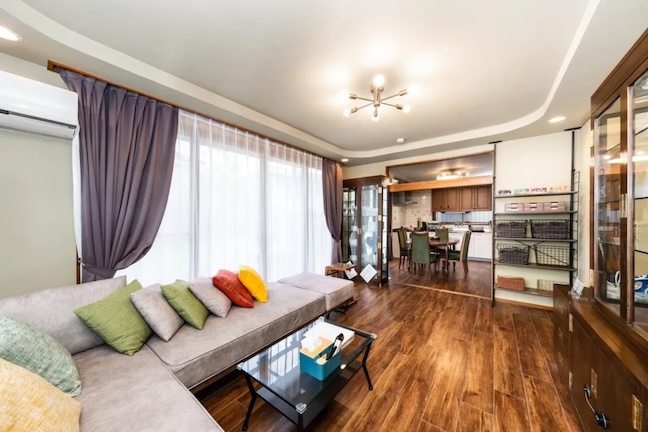
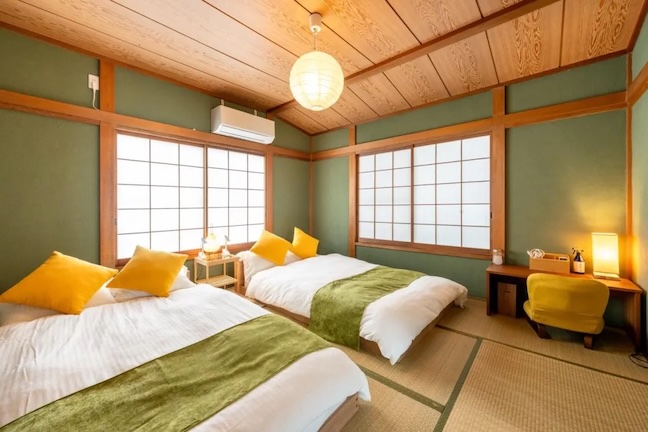
A short-term rental operated by Jin’s Homes
In Tokyo’s main residential and commuter areas – including both central wards and well-connected cities within the Greater Tokyo area – properly structured short-term rental properties can meaningfully outperform traditional long-term leases in net income terms – often in the range of 1.5–2x when structured correctly.
Because of this income profile, short-term rental has attracted attention not only from domestic investors but also overseas non-residents whose only option is to purchase in cash.
The appeal is straightforward: enhanced income potential within areas that still maintain strong asset stability.
A Tailwind: Tourism as a National Priority
Tourism is one of Japan’s strategic growth industries. The government continues to actively promote inbound travel, and international visitor numbers have reached record highs.
At the same time, developing large-scale hotels in major cities is capital-intensive and increasingly difficult due to land constraints and rising construction costs.
In that context, small-scale licensed accommodations – when compliant and professionally managed – play a complementary role in meeting demand.
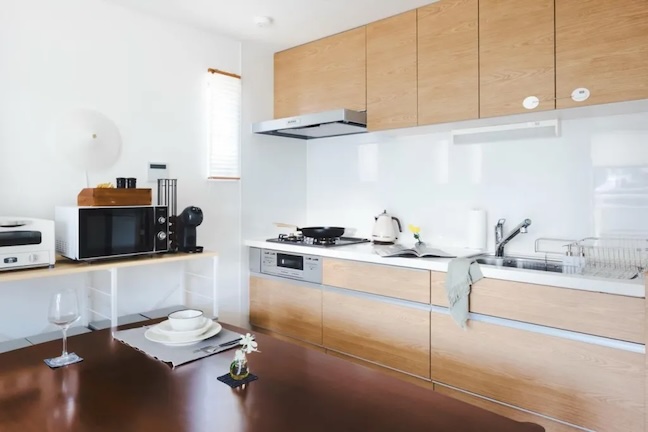
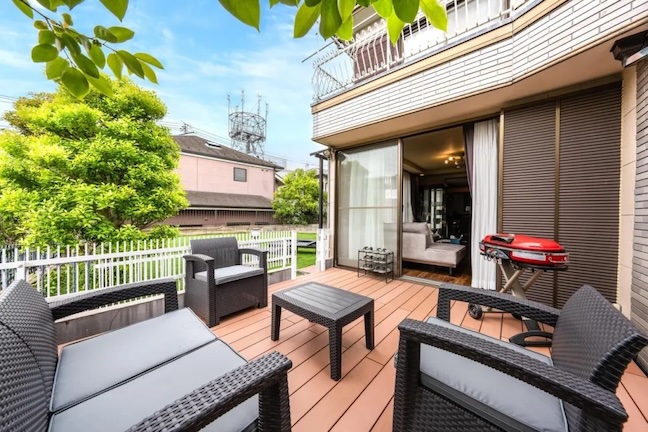
A short-term rental operated by Jin’s Homes
This does not mean every property is suitable.
But it does suggest that well-positioned short-term rental assets are operating within a structurally supported market.
The Real Concerns
Of course, short-term rental is not without challenges.
Investors typically worry about three things:
Can the property obtain the necessary licenses?
Will the projected returns actually materialize – and allow the capital invested to be recovered as expected?
Can the operation maintain good relationships with neighbors and remain stable long term?
In Japan, licensing requires coordination between multiple authorities – including the public health center, fire department, and building department. Each has its own standards, and approval must be obtained from all.
For those whose first language is not Japanese, navigating this process can be particularly complex.
Even after licensing, sustainable income depends heavily on professional setup, compliance discipline, and operational management. Poorly managed properties can damage both returns and community relationships.
Short-term rental is not simply about listing a property online.
It requires clear planning before purchase and disciplined management after launch.
A Turnkey Approach for Foreign Investors
For investors who prefer not to navigate the system alone, Jin’s Homes offers an integrated approach tailored to international clients.
Jin’s Homes works specifically with international investors, handling:
• Narrowing down viable property options based on licensing feasibility and projected profitability
• Pre-purchase regulatory consultation to reconfirm approval potential
• Bilingual brokerage and transaction support
• End-to-end project management covering permit acquisition, design, and launch
• Direct operational management and proactive neighborhood relationship building
We operate under a structured management framework designed to cover the full lifecycle of a short-term rental investment – from compliance to daily operations – allowing investors to remain focused on strategy rather than execution.
Since launch, every guest stay has been rated five stars – a measurable indicator of operational consistency.
Why Structure Matters
The difference between an average short-term rental and a strong, sustainable one often comes down to:
Selecting the right property from the beginning
Verifying licensing feasibility before purchase
Designing for the target guest demographic
Maintaining proactive communication with neighbors
Managing operations with professional standards
When these elements align, the income profile of Tokyo real estate can shift meaningfully – while still preserving the underlying stability of the asset.
If you are exploring whether this approach could fit into your broader property strategy, an initial feasibility discussion may help clarify what is realistically achievable before capital is committed.
Disclaimer: This should go without saying, but the information contained in this blog is not investment advice, or an incentive to invest, and should not be considered as such. This is for information only.




 Smart Money Asia