Investment trade-offs

yin-and-yang-145874_640

There is no such thing as the perfect investment. They all come with advantages and disadvantages, or trade-offs.

One of the simplest explanations of these trade-offs I have heard goes as follows:

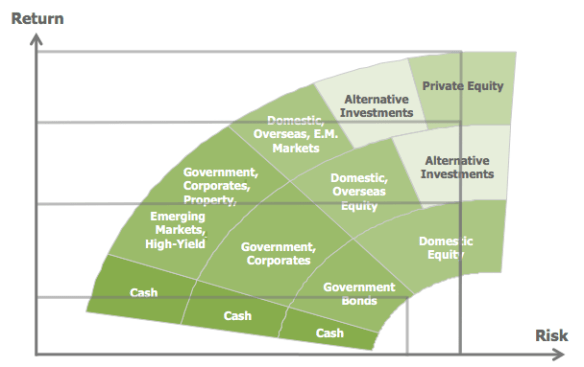
Any investment you make needs to balance three factors: low risk, high returns, and liquidity. You can have any two of these but not all three.

If you want high liquidity (easy access to the money) and low risk you are going to have to sacrifice high returns. Your money is going to be in something like a savings account.

If you want high liquidity and high returns you are going to have to take a lot of risk. This could mean an investment in stocks that could go down significantly in the short term.

If you want low risk and high returns, no-one is going to give you that unless they are able to keep your money for a long time. The best performing hedge funds and capital guaranteed products often have lock-ins, preventing investors from withdrawing their money for a fixed period.

Another trade off to consider is capital versus income. Some investments provide capital growth, but little or no income. Income generating investments may have lower prospects for capital growth. Before investing it’s important to understand which is best for you at your current stage in life.

One more trade-off to consider is absolute versus relative return. Absolute return is what an investment returned over a particular period. If a mutual fund returned 10% over the last 12 months is that a good return? Well, it depends on what the rest of the market returned. If the market returned 18%, then 10% is not particularly good. In fact in relative terms it’s a minus 8% return. Active fund managers are benchmarked in this way in order to gauge their performance. We will talk more about benchmarks starting tomorrow.


The Six Asset Classes

athletic-field-1867053_640

Depending on who you ask, you will find that there are varying opinions on the different types of assets out there that you can invest in. In my opinion there are six basic asset classes, plus an extra category we may call “alternatives”.

The main point here is to avoid confusion with investment products. There are thousands of products available, all packaged up with pretty brochures and power point presentations, but the majority of these products are simply investing in one or more of the six basic asset classes.

Let’s start with some simple definitions:

  1. Cash – a means of exchange and a store of value.
  2. Bonds – government or corporate debt.
  3. Equities – stocks and shares representing an ownership interest in a company.
  4. Property – a building or buildings and the land belonging to it or them.
  5. Commodities – raw materials or primary agricultural products that can be bought and sold.
  6. Collectables – items valued and sought after by collectors.

Cash is sometimes confused with currency, but they are not the same thing. If I have ¥10,000 and I step outside my house in Japan and wander into town, I can exchange this for goods and services readily. If I get on an plane and fly to the UK, can I do the same at my destination? The answer, of course, is no. I first need to exchange my Japanese Yen for British Pounds, and this is done at a market determined rate that can fluctuate from minute to minute. The JPY I hold has become a commodity that can be bought and sold.

Bonds are complex instruments, but they have some basic characteristics we can recognise: they have a creditor, who is the bond holder, and a debtor, who is the bond issuer. Bonds have a face value, which represents the amount of principal the bond holder will receive at maturity, and is the amount the issuer pays interest on. They also have a market value, which is what people are willing to pay for them today. They have a maturity date, when that nominal face value amount is typically repaid. They also have a coupon, which is the interest rate the issuer pays to bond holders.

Most people are familiar with the idea of equities or stocks in publicly traded companies. However, it is also possible to own stock in private companies, known as private equity. Private equity is not a separate asset class, however it is less liquid and carries different kinds of risks to investing in listed companies.

For some people property is the simplest asset to understand because it is tangible – you can see it and touch it. Property comes in many different forms: land, buildings, houses, apartments and even collective investments. It’s possible to buy a property fund or Real Estate Investment Trust (REIT) that gives you exposure to the asset class, but with a lower investment amount and potentially higher liquidity. The ability to borrow money to invest in physical property makes it a potentially powerful asset class.

Commodities are exciting due to the high level of price fluctuation, or volatility. This means there are many opportunities to buy low and sell high and make money. It’s also very easy to get it wrong and lose money. Commodities used to be for expert traders only, but these days, with the advent of Exchange Traded Funds (ETFs), it’s simple for anyone to invest in gold, oil or even coffee.

Collectables are about more than just a hobby. An educated investor can make incredible returns  buying and selling artwork, stamps or antiques. However it takes a significant level of knowledge and expertise to make money in collectables and it’s easy for amateurs to get duped. You may want to hang onto that heirloom your grandparents handed down to you though!

As I said, the majority of investment products can be fit neatly into one or a combination of these six categories. However there are “other” investments that may not fit in perfectly. Hedge Funds have long been touted as an asset class all of their own, although I would argue that most hedge funds simply invest in a combination of the above asset classes, albeit it an innovative or original way.

For the average individual investor, concerned with saving and investing for their future, a solid understanding of the six basic asset classes, and the risks and trade-offs associated with them is more than enough to get them started on the path to building wealth.


The Power of Compounding

golf-1938932_640

I’m a keen golfer. How about we bet on a game of golf? Say 10 cents a hole? How about we double that every hole? It wouldn’t be for big money right?

Let’s take a look hole by hole:

  1. $0.10
  2. $0.20
  3. $0.40
  4. $0.80
  5. $1.60
  6. $3.20
  7. $6.40
  8. $12.80
  9. $25.60
  10. $51.20
  11. $102.40
  12. $204.80
  13. $409.60
  14. $819.20
  15. $1,638.40
  16. $3,276.80
  17. $6,553.60
  18. $13,107.20!

Well, as they say…that escalated quickly!


(Credit to Tony Robbins Wealth Mastery for this one)

Retirement Planning – Where to start?

write-593333_640

People save money for many different reasons, but perhaps the most common reason is for retirement. The goal here is to replace income from work with income from investments. It can seem like a daunting task to plan for such a large need, particularly when people these days are far more mobile and may not necessarily know where they will spend their later years.

Here are some simple questions you can start to consider now. Don’t worry if you can’t answer them all yet. Some of them may even have more that one answer:

  • At what age do you anticipate retirement?
  • What country do you plan to make as your base in retirement?
  • Do you want to maintain a similar standard of living in retirement to the one you have now? – simply put do you think you will need the same income, less income, or about the same income as you have now?
  • What value of property would you want in today’s terms?
  • Which assets have you “ear-marked” for retirement planning?
  • Do you think these assets will be adequate?

People tend to underestimate the amount of money they are likely to need to retire securely. Some advisers will say you need a pot of ten times what you earn currently. However, if you are working on current interest rates that is not going to last very long. If you currently earn $100,000 per year, then that’s a million dollar pension pot. Going on historic averages, let’s assume you can earn 5% per year on your capital. That gives you an income of $50,000 per year, or half of what you are earning now. However, the current US base rate is only 1%! A million dollars is only going to earn you $10,000 per year in this environment. The current UK base rate is only 0.25%…

Of course we don’t know where interest rates will be in 20, 30 or 40 years time, but surely it is better to plan conservatively? The number you should really be aiming for is more like 20 times your current income. So a person currently earning $100,000 per year needs $2,000,000. Now two million dollars is a lot of money, but don’t be disheartened. If you start saving and investing early you have the power of compound interest on your side.

If you want to get into more detail on calculating retirement needs, there are a lot of resources available online. Here’s a really simple and easy to use calculator from Vanguard for a start. It’s a US based calculator so it may not be best for everybody. I just like the way you can use the sliders to adjust the variables and see how it affects the end result. If you don’t like it then just google financial calculator and find one that works for you.

Protection Review


umbrella-1031328_640

We mentioned earlier the three basics of financial planning: emergency cash reserve, basic protection, and some kind of pension. Below is a list of items to consider when reviewing if you have adequate protection in place:

  • Do you have an emergency cash reserve to cover at least 3-6 months expenses?
  • Do you have adequate health insurance?
  • Do you have any income protection insurance, in case you are sick or injured for the long term?
  • Do you have any critical illness insurance, in case you are diagnosed with a serious illness? (heart disease, stroke, cancer etc.)
  • Do you have any loans / liabilities that are not insured?
  • Do you have children? If so, have you considered life insurance?
  • Do you have a current will? Does it include all of your worldwide assets?
  • Have you reviewed your estate planning needs?

Obviously getting all of this done in one go is going to be tricky, so I would suggest making sure you have at least the first three in place before you consider making investments. The rest you can work on as you go.

Inspiration and information

silhouette-1632912_640

If you are serious about attaining financial freedom and peace of mind, I encourage you to read and study as much as possible. Below are some recommendations; some classic, some ultra-modern, to help you get started. Feel free to share any good books you have read on the subject:

Think and Grow Rich: The Original, an Official Publication of The Napoleon Hill Foundation

– A classic on personal development and personal improvement. I would encourage just about everyone to read this book.

Rich Dad Poor Dad: What The Rich Teach Their Kids About Money That the Poor and Middle Class Do Not!

– Another long seller. Learn the difference between working for money and having your money work for you.

Rich Dad's Cashflow Quadrant: Rich Dad's Guide to Financial Freedom

– Not as well known as Rich Dad Poor Dad, however I think it’s a better book. It certainly changed my outlook on working for income vs owning and investing in businesses.

Unshakeable: Your Financial Freedom Playbook

– Brand new and right up to date. Tony Robbins teaches how to invest safely in this modern, unpredictable era. With insights from some of the world’s top investors and business minds. At 256 pages, this is pretty much bite-size by Tony Robbins standards.

MONEY Master the Game: 7 Simple Steps to Financial Freedom

– And here’s the long version. At 688 pages there isn’t much that has been left out of this one…


My Financial Profile – Asset Weighting


stones-2082937_640

Welcome back! So far you have completed your Income and Expenditure and Balance Sheet. Now it’s time for the last part, Asset Weighting.

Take a look at the last tab of My Financial Profile. It’s not as confusing as it may look. The percentages in the left-hand column are simply a guide. This is what I would recommend as a good balance between fixed, medium term and current assets.

You will see that the recommendation is for 10-20% in net fixed assets. For most people, this is held in their own home, and it’s not possible to sell half a house if you suddenly need some liquidity. If you have expertise in property and want to hold more than 20% in net fixed assets, particularly if it’s generating you a nice income, that’s perfectly fine. The 10-20% is just a guide.

I have also indicated 10-20% as the recommended weighting to current assets. What we are really talking about here is your Emergency Cash Reserve. (see here if you need a reminder what this is) We are currently in a low-interest rate environment, and I don’t see great benefit in holding lots of cash, particularly if you live in Japan, where interest on bank deposits is near zero. One reason you may hold a larger weighting of cash is if you are saving for a deposit on a home. This money is really just waiting to be moved to the net fixed assets part of your balance sheet.

This leaves 60-80% in medium term assets, which is anything you are saving and investing for your future. It’s quite rare that I meet people who already have this weighting in medium term assets. If you are just getting started then it may in fact be very low. Even people on high incomes are often highly concentrated in cash and their own home.

So now it’s time to input the numbers from your balance sheet. Under Asset Weighting, Amount, in the third column, enter the totals from your balance sheet for Net Fixed, Medium-term and current assets. Circle whether you already have your Emergency Cash Reserve covered. (Y/N)

Now you can total your Net Worth. Hopefully you like the number you see here, but remember it’s a work in progress.

Now it’s simple to work out your current weightings as a percentage in column four. If you have $200,000 in fixed assets and your total net worth is $1,000,000, then your fixed asset weighting is 20%. (200,000 ÷ 1,000,000 x 100)

So how does your asset weighting look? Is it close to the guide in the left hand column? Are you heavily overweight in a particular area? If so, then the Target Weighting in column five is your action plan. Here you can input the way you want it to look.

For example if your current weighting looks like this:

  • Fixed assets – 10%
  • Medium-term – 10%
  • Current – 80%

Then perhaps you need to adjust your target weighting to:

  • Fixed assets – 10%
  • Medium-term – 70%
  • Current – 20%

This means you need to invest some money! There are two ways to do this: obviously you can take money from your current assets and invest it to balance things out. You can also take money from your monthly surplus over expenditure and invest that every month.

The lower box will help you to determine where your current disposable cash flow goes each month. In the left-hand box, insert your monthly / annual net disposable income. This is the last number on the income and expenditure page. Now you can examine where this money actually goes every month. Is part of it making extra payments on your mortgage? In that case it’s going into net fixed assets. Does it just go into your bank account and sit there? That would explain how you got to be overweight in cash!

It’s surprising how many people I meet where their disposable income flows 100% into current assets. I would encourage these people to consider investing on a monthly basis – the column for Future Amount is where they can decide how much to contribute each month.

As a general guide, the maximum amount I think you should contribute to medium term assets from your monthly surplus is 50%. Simply put, if you are saving $2,000 a month, and it’s all going into cash, then you can consider investing up to $1,000 per month into medium term assets. Any more than that and you may run into trouble if suddenly hit with an unexpected expense, or drop in disposable income.

Hopefully this is all clear and you have completed your asset weighting and understood what changes you need to make. Please let me know if you get stuck!


My Financial Profile – Balance Sheet

office-620822_640

The next step in building your financial profile is to complete your personal balance sheet. This consists of a combination of fixed assets, medium term assets, and current assets. You can find it on My Financial Profile.

Let’s start with the first tab for fixed assets. What we mean here is usually property, although anything that is illiquid (difficult to sell in a hurry) is classed as a fixed asset. This could include investments in unlisted companies, otherwise known as private equity.

If you own your own home and live in it, then record the details under principal residence. If you aren’t able to fill in every box that’s ok, but you really need to come up with a current value. If you haven’t had your home valued recently then this may not be so easy. You may find you need to estimate based on what similar homes in your area have sold for. If you have bought your own place recently, or simply cannot come up with an estimated value, then use the purchase price as today’s value.

If you are lucky enough to own a property / properties that you rent out, then record these under investment properties. Remember that the rental income you receive should also be recorded on your income and expenditure sheet.

You will note that the form asks for a value in base currency. Please refer to the post here to find out what your base currency should be.

Ok let’s move on to medium term assets. These are generally investments for your future and may differ in holding time. The first part is for retirement schemes. If you are paying into the Japan national pension, it may not be so easy to get a current balance, but it is possible. Your company HR department can likely assist, or you can go to your local pension office and request one. You probably actually get a statement by post from time to time, but you may not pay attention to it. If you are really stuck then estimate based on what you contribute each month and how long you have been paying in.

There’s some useful information on the Japan National Pension System here.

If you have a company retirement scheme, or a personal one, make sure you record those here too. If you have worked in other countries, it’s possible you have pension assets in those countries. Make sure you are not forgetting anything. Request a statement and get a balance.

The next part is for non-pension regular investment. Do you pay into a monthly savings / investment plan where you are building up savings for the future? If so include them here. (if you are just saving in the bank, that goes under current assets)

The other assets box is just that – if it’s not cash, property, or a regular contribution scheme, it goes under other assets. This could include stocks, stock options, bonds, lump sum investments into mutual funds etc. If you’re not sure where to put something, put it here and remember to get a balance.

Lastly we have current assets. This is basically cash in the bank, or at home. If you have multiple accounts then this is a good time to figure out how much is in each of them and consolidate it into a final balance. I would include term deposits with the bank here too. Some people put anything with more than a one year maturity in medium term assets, which is fine, but cash deposits are generally easily broken if you need to access the money, so I put them in current assets.

Hopefully your balance sheet is taking shape and you have a total for fixed, medium term and current assets. You will need this when we do your asset weighting. Before that though, just go back through each section of the balance sheet and ask yourself if there’s anything else you have forgotten to include on here. Is there an old post office account that you opened years ago lurking somewhere?

Once you’ve done a final check, that concludes your balance sheet!

My Financial Profile – Income and Expenditure

accountant-1238598_640

If you meet with a financial adviser, the first thing they will do is take you through a fact-finding process to understand your current financial position. This financial profile then forms the basis for advice.

Today you can begin work on your own financial profile, starting with income and expenditure. It’s up to you how you record this. You can simply write it on a piece of paper, make your own spreadsheet, or use the handy Financial Profile I have created here: My Financial Profile

Some of you may already know exactly what your monthly income and outgoings are. Maybe you are recording them already, in which case, well done! Some people may have a general idea but have never actually looked at the numbers in detail. And then there are the “I don’t know where it all goes” people – this is for you guys especially!

Start by opening the first tab of the Financial Profile – Income and Expenditure. If it’s your first time doing this you may prefer to record the figures on a monthly rather than an annual basis. The top part is for income.  If you have a regular job and tax / insurance / pension contributions are deducted at source, you may find it easier to simply record your net earned income – the amount that actually gets paid into your account every month. If you are self employed and/or have income from multiple sources you may find it easier to record your gross income. If your income fluctuates you may want to look back over the last three years and work out an average number.

If you have income from sources other than work, such as rental or investment income, then record those too and total it all up. If you have a partner who also has income, record that too.

Now for the fun part! Figuring out all the things you spend money on every month. Some organised people might be keeping receipts and records already. If you belong in the “I don’t know where it all goes” group, you may actually need to spend a couple of months gathering receipts and keeping track of your spending. A friend of mine recommended the Spending Tracker App. However you do it, try to record everything you spend over the course of an average month. If you have to estimate some items, that’s fine.

What we are really looking for is a number in the box at the bottom, indicating your monthly surplus over expenditure, or disposable income. Simply put, it’s the money that’s left over at the end of the month. Knowing this number helps us understand later how much of our savings we should be allocating to longer term investments each month. Total income minus total expenditure gives you your disposable income.

If you find that you have more month left over at the end of the money, then the first thing you need to do is look for things that you can cut from your expenditure list. Remember the goal here is to spend less than you earn so you have money left over to save for the future.

So hopefully you have been able to work out your monthly surplus over expenditure. Let me know if you have any trouble with this.

What is your base currency?

currencies-64275_640

Soon we will get started with your financial profile, where you will be recording your income and expenditure and building your own personal balance sheet. In order to boil this down to the most important numbers you will need to decide which currency to calculate in.

For expats this can be a tricky business. You may live and work in Japan for example, and earn money in JPY. However you may have assets, or even income, in your home country or elsewhere in other currencies. How do you decide which is your base currency?

For completing your balance sheet and adding up your total assets we could argue that it doesn’t really matter. Just pick the currency you use the most and convert all values to that. However from a financial planning perspective there is a clear rule: Your base currency is the currency you are going to spend the money in. If you are just going to live in Japan for a few years and then move back to your home country permanently, then the fact that you earn in yen is largely irrelevant. You will need to plan in the currency of your home country as that’s where you will spend the money. This is important to help manage currency risk. It would be a shame to build up a tidy sum in assets in JPY, only to find when you move back home and need to start using the money, that the yen has crashed and you are getting a really bad deal on the exchange rate.

If you are going to stay in Japan forever and retire here it’s pretty simple. Your base currency is JPY. However, what if you plan to send your child to university in the UK and need to save for that? Yes, it’s actually possible to have multiple base currencies. In this case you would save for retirement in JPY and save to pay for your child’s education fees in GBP.

So before you start your financial profile, it’s important to work out your base currency. When you fill out your balance sheet use the currency that you are likely to spend most of the money in. Feel free to contact me if you are unsure.