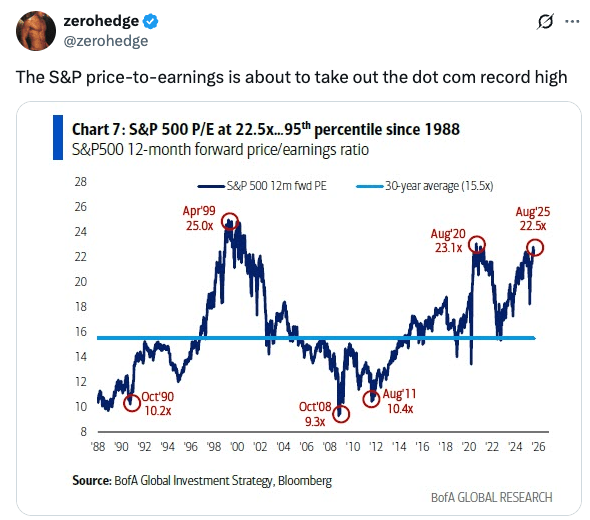
Are we due a market correction?

Chaos by Christmas? I do like a bit of alliteration, but this doesn’t sound good.

That nifty little turn of phrase came in a message from a friend. He’s been concerned about the way things look for a while, even as markets melted up following the Liberation Day debacle. The chaos message was timely, as I was already working on this post.

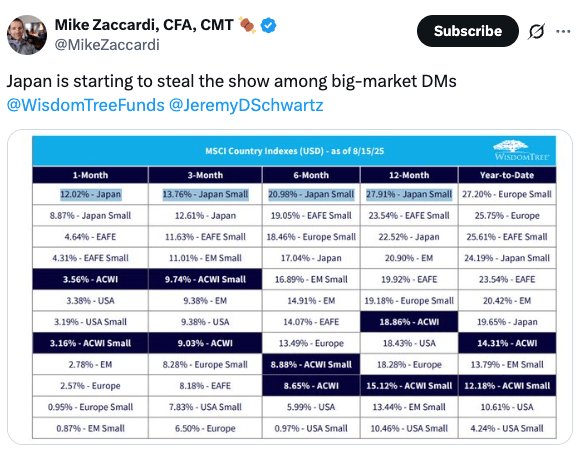
Exhibit A: Wall Street’s New Obsession? Japan’s Market Just Went Vertical – a short article about foreign investors returning to Japan in size. The Nikkei 225 is at real deal all-time highs. You see the latest price on the news each night. Is there perhaps a little euphoria creeping in?

Expectations are high. The Fed is supposedly going to ease in September. The BOJ seems to be due to hike. But will they? Federal Reserve Chair Jerome Powell is set to speak at Jackson Hole this week, but I doubt he will give much away. He has been under considerable pressure from the Trump administration to cut rates and has held firm so far. There are signs of cracks in the job market, but does JPow really have enough data to justify a cut? We’ll see, but I’m sceptical.

The same goes for the BOJ. Pressure is also coming on Governor Ueda from the US administration. Does the central bank feel certain enough about the inflation outlook and tariff outcome to take the plunge? One thing is certain: if the BOJ is going to hike, it will be leaked ahead of time. No one wants a surprise like this time last year. If you don’t hear anything in the days before, expect no action.

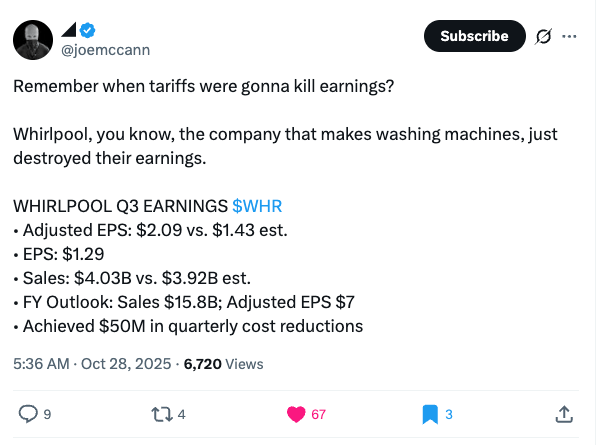
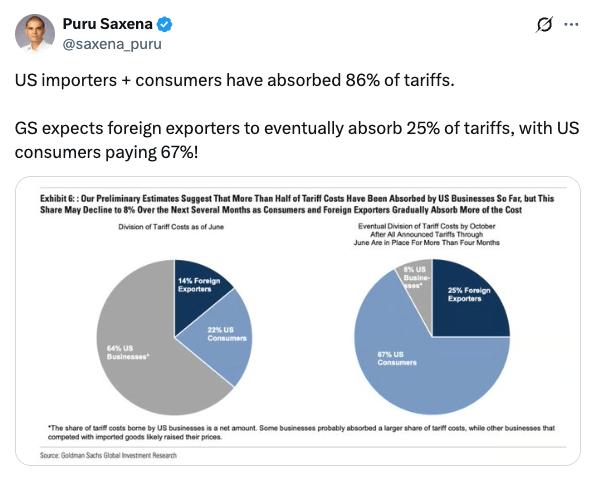
In the US, the S&P 500 is also pushing all-time highs, driven as ever by the Magnificent 7 tech stocks, which are driven in turn by the AI boom. Despite the furore over job numbers, the consumer seems to be doing ok on the face of things. However, the tariffs are yet to show up meaningfully in the data. Expect that to change soon.

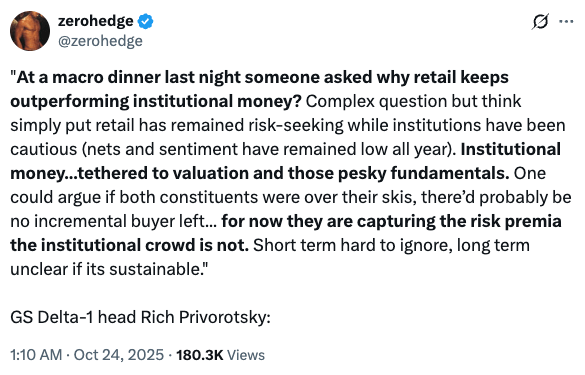
Where are the Robin Hood gamblers going to get their funds from when their cost of living keeps rising? Cash handouts from Trump? You can’t write anything off these days…

It’s not just eggs that have gotten expensive:

The final innings for crypto?

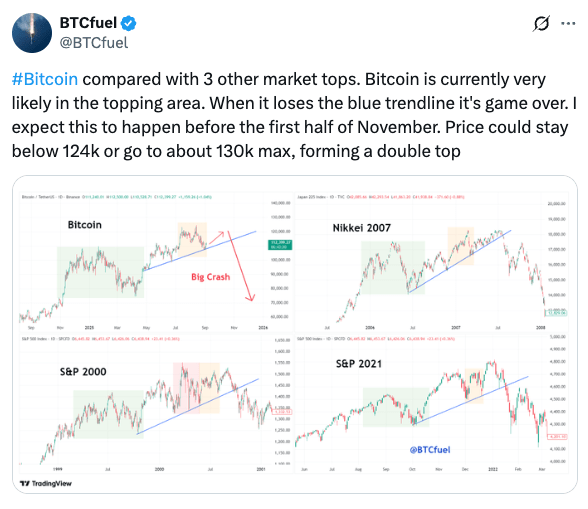
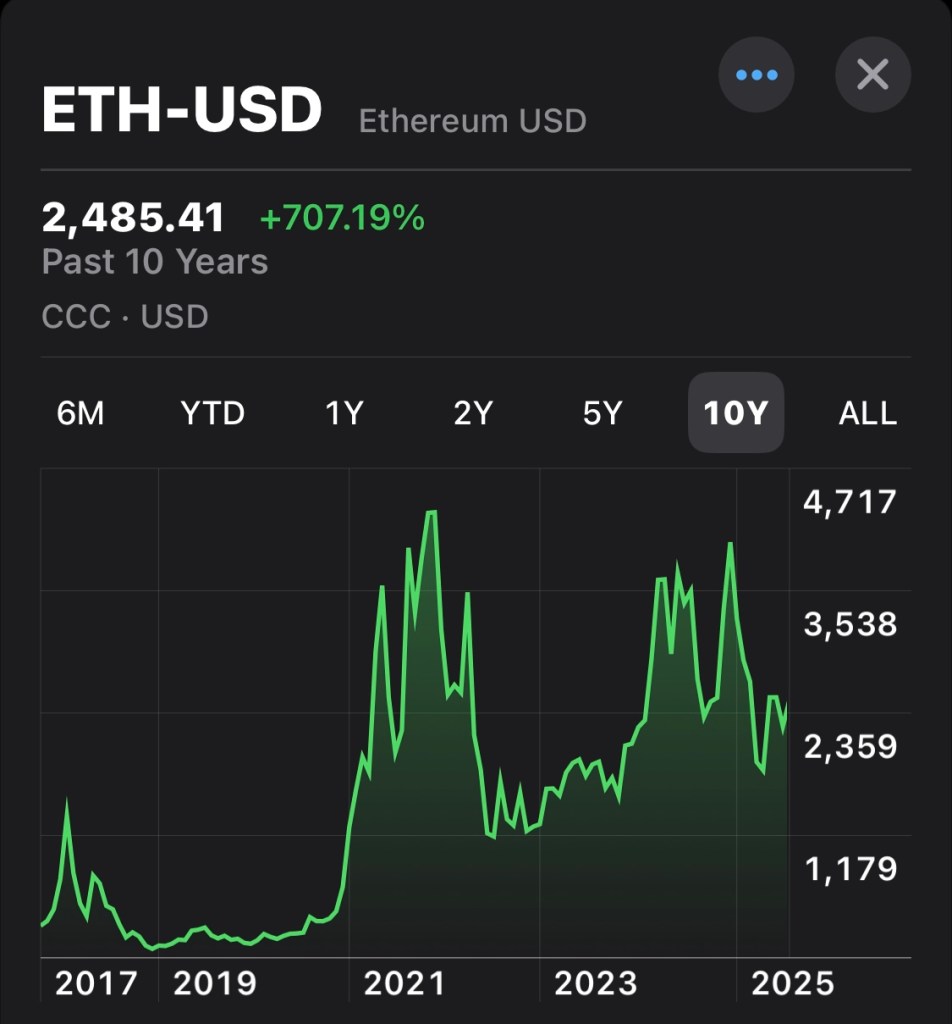
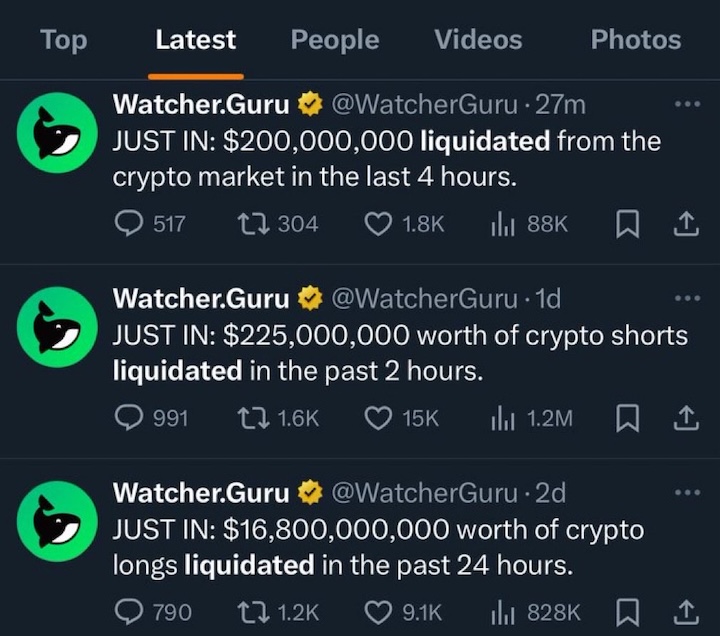
Bitcoin topped $124k last week and has now ‘crashed’ to $113k. Ethereum went on quite a run and got the crypto bros fired up about the alt season they’ve been waiting for. If history is anything to go by, then the next couple of months should mark the top of this cycle. I have no idea where it goes in that short time, but you should probably block out the people calling for $200k by the end of the year. $120k was my best guess, and we have done that. Maybe there’s a little more left in the tank, but who knows? When it feels euphoric, that’s the signal. The fear and greed index shows fear, so I’m not feeling it yet…

What to do?

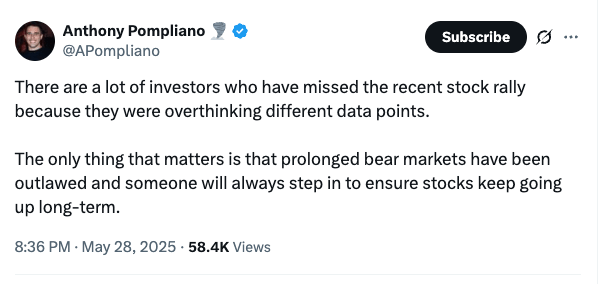
Expecting a bit of chaos and doing something about it are two different things. And maybe there is no need to do anything other than just mentally brace for a correction. After all, prolonged bear markets are illegal these days. (I jest, kind of. See: It’s going up forever, Laura)

Let’s do Japan first:

I have thoroughly enjoyed the interaction on X between investors in Japanese stocks over the last few years. What a glorious time to be invested in this market! Japan has clearly turned a corner, both in terms of putting the bubble-era all-time high behind us and making strides in corporate governance. But at ¥43,000 in August, things feel a little hot. I don’t think there’s reason to panic and dump your J-stonks, but with almost everything going up, it’s perhaps time to take a look at holdings that you might have got a little lucky with.

For me, that means going through my list and asking myself some basic questions: Why do I own this? Am I happy to hold it through a storm? My Japan account holdings now span two pages. I think I may have a few too many stocks. For some of them, I don’t really remember why I bought them in the first place. Would I buy them again now?

The majority of my holdings were bought for the dividends. That’s my way of keeping up with inflation and currency debasement in yen. I actually didn’t expect them to go up this much. I’m pretty comfortable keeping them and collecting my dividends through whatever may be on the horizon. NISA I won’t touch at all – that was all bought for a long-term hold.

I would like to get my holdings back to one page and a bit more dry powder in the cash account.

How about other markets?

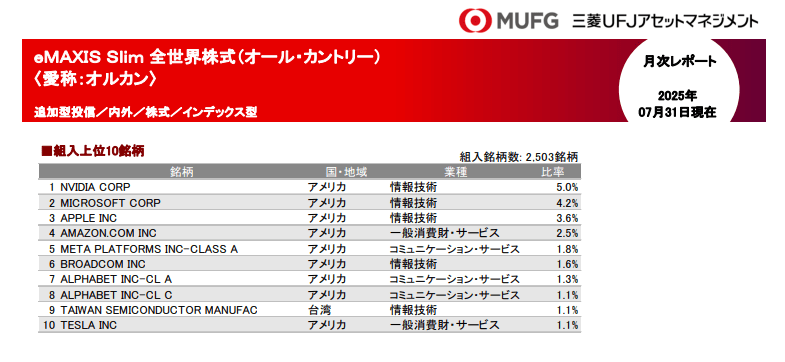
You may own a bit of everything in your All Country fund, but performance has really been driven by tech stocks. Here are your top 10 holdings:

Is tech dominance going to ease? Bank of America thinks so. You may know from my previous posts that I believe that tech stocks and Bitcoin are the two assets that will reliably outperform currency debasement. Are they due for a correction? Maybe. Is the AI bubble going to burst? Probably, but what do we mean by ‘burst’? The AI genie is out of the bottle. It’s not going away. The world will continue to hunger for more computing power. I don’t feel like selling any of this stuff, but I would like to have some dry powder to buy more when there’s a panic.

Got it, but we sell all the crypto, right?

I have said before, you need to have a plan for crypto and execute as best as you can. It gets harder the higher the level of euphoria.

My two cents: I’m not sold on the idea of dumping actual Bitcoin in order to buy it back cheaper. It comes with its own risks: the treasury companies and BlackRock suitcoiners want as much as they can lay their hands on. I don’t want to sell to them and then struggle to get it back later. Plus, the tax reporting is a pain!

ETFs are not Bitcoin; they are Bitcoin exposure. They can go. The treasury companies are probably going to be the FTX/Luna of this cycle – beware. Alts are struggling to attract enough attention and money in the middle of a bull market – you don’t want them hanging around your neck next year when everyone is depressed. (see my February post, Exit liquidity)

Chaos by Christmas? Maybe.

I would love a bit more euphoria first, though…

Top image from Pixabay

Disclaimer: This should go without saying, but the information contained in this blog is not investment advice, or an incentive to invest, and should not be considered as such. This is for information only.

Dumb money

I am reading “When Genius Failed: The Rise and Fall of Long-Term Capital Management”. It’s the remarkable story of a ’90s hedge fund comprising a group of big-brained academics, including Nobel Prize winners, who were so convinced that their models were infallible that they built a gigantic book of highly leveraged derivative trades. Even if you’re not familiar with the story, you can imagine how that ended.

The smart money doesn’t always win.

One of my favourite books is Jon Krakauer’s “Into Thin Air”. LTCM is like the hedge fund version of that cautionary tale. Hubris and leverage are a dangerous combination. The academics somehow convinced themselves that they had modelled out every outcome, and even if things went bad, there would always be enough liquidity to get out of their positions. Of course, ‘one in a million’ events happen more frequently than we expect, and when they do, nobody is around to buy what you desparately need to sell.

At least we learn our lessons, right? Well, LTCM blew up in 1998, and it was only 10 years later that Bear Stearns, which was closely linked to the fund, faced its own meltdown.

There’s a lot to be said for keeping things simple. Viva le dumb money!

Wait, isn’t this site supposed to be SMART Money Asia?

This is easily the greatest meme ever created. It applies to so many areas of life, and none more than investing. The LTCM guys were just too far out on the right of the curve that they no longer lived in reality.

Generally, the smart money and the dumb money follow the same strategy. They buy risk assets and sit on them. In my previous post, Liquid Refreshment, I covered how tech stocks and Bitcoin are the two things that outperform currency debasement. And what do the Robinhood degenerate gamblers do? They buy Mag 7 and IBIT and print money. When these assets dip, they buy more! What are the older, wiser retirement accounts buying? NASDAQ and IBIT, by the looks of it!

Wait, is the diversified portfolio guy telling us to just buy tech stocks and Bitcoin?

I have always said, if it’s a meaningful amount of money, you should have a core diversified portfolio weighted toward your base currency for about 80% of your wealth. You can allocate 20% or so to satellite holdings to take advantage of opportunities for higher returns. This is where you can go hard on tech stocks, gold, commodities and Bitcoin/crypto as you wish.

Overthinking and mid-curving are the killers. See my post, It’s going up forever, Laura, on why dumb money wins in the end.

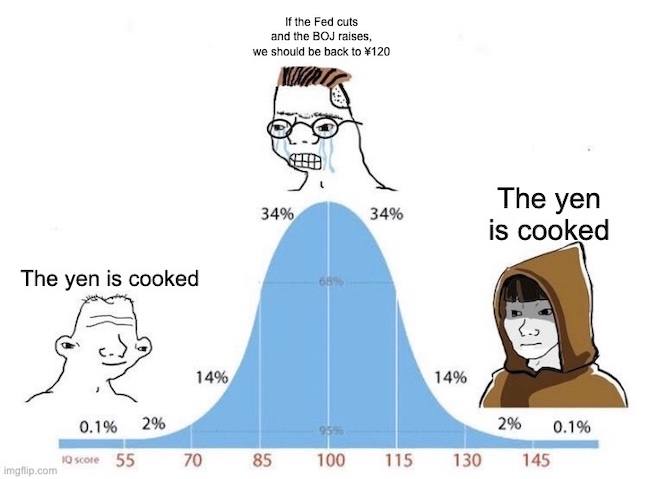
I see that USD/JPY is back at ¥150. Let’s do the meme:

Simple!

Of course, mid-curve guy is right. Short-term, barring any crazy events (which happen a lot!), the yen should strengthen against the dollar. However, if you are doing long-term planning and trying to figure out how currency could affect you, it’s pretty clear that the country with the worst debt/demographics profile is going to lose against the country with the global reserve currency.

Plan accordingly.

Trump wants rates lower, and Powell won’t play ball. So, Trump and Bessent will find ways to work around Powell and add liquidity regardless. This is bullish for stocks. If there is some kind of panic and a dip in stocks in the meantime, they will turn on the fire hose. Back up the truck and buy the dip!

The TSE apply pressure to listed companies to improve their governanace and return capital to shareholders – it’s a great time to own Japanese stocks if you have a JPY base currency need! (not so great if you don’t, see above)

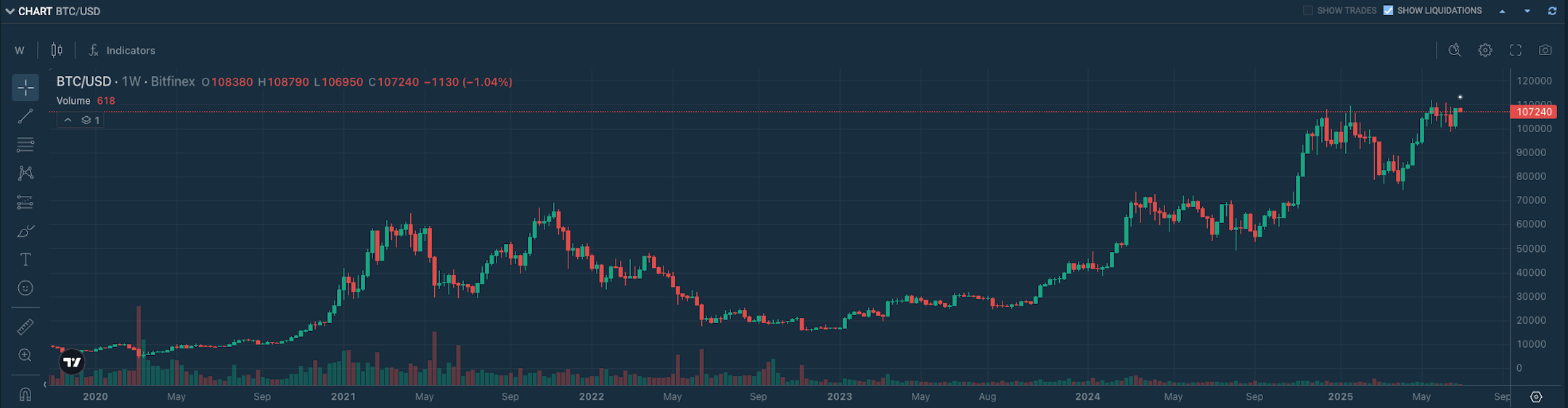
Every four years, Bitcoin goes down around 80%. Then it spends about a year floundering around and recovering slightly, and the next two years in a powerful bull market. If it goes down 80% next year, you swing like Happy Gilmore!

See how it works? Dumb money stays winning!

Have a great weekend.

Disclaimer: This should go without saying, but the information contained in this blog is not investment advice, or an incentive to invest, and should not be considered as such. This is for information only.
Liquid refreshment

The hot summer months usually mark a quiet period for markets, but there are no signs of a lull so far this year.

While the upper house election last weekend likely had a limited impact on stocks, the trade deal announced shortly after certainly got things moving. The Nikkei 225 index surged over 3% on 23 July and is creeping up on ¥42,000 as I type today.

Shigeru Ishiba may have lost his ‘mandate from heaven’, but the Japanese auto industry is saved!

Perception really is a funny thing. Automaker stocks surged yesterday as investors cheered a 10% ‘reduction’ in US import tariffs from the 25% touted by Trump. However, before Trump took office, the tariff on cars was 2.5%. So there has actually been a 12.5% increase. Trump’s big stick negotiation tactics may be crude, but they appear to be working.

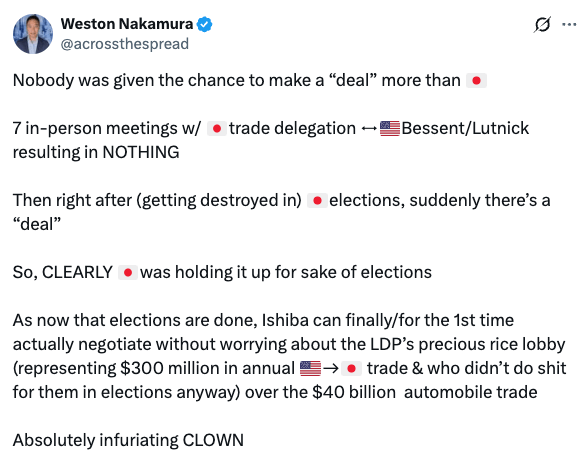
By the way, Weston Nakamura isn’t buying the coincidental timing of the trade deal announcement.

Probably the biggest pressure release for markets will be the end of tariff uncertainty. If Trump can secure a similar deal with the EU, then we are likely through the worst of it.

He’ll still have to come up with a pretty big distraction from the Epstein files, though, so we should stay on our toes.

Anyway, moving swiftly on

I find a lot of people struggle to understand the concept of currency debasement. If this is you, I highly recommend this episode of Forward Guidance with Raoul Pal and Julien Bittel:

You only actually need to listen to the first 10 minutes to get the picture, although it’s all good stuff.

A quick summary:

  • Governments restructured their debts after the ‘debt jubilee’ that followed the 2008 financial crisis, forming an almost perfect 4-year liquidity cycle
  • We’re in the 4th year of that cycle now, where the larger part of the debt is due
  • The liquidity that gets added never really gets taken back and is rising at a rate of around 8% per year
  • That is about the rate of debasement of fiat currency
  • If you divide an asset by the rate of global liquidity, you find out it’s true performance vs debasment
  • The S&P 500 is basically flat, same with other countries’ indexes
  • Gold is also flat, as it should be
  • The only assets that outperform debasement are tech stocks and crypto

Governments are now just servicing their debt. i.e. paying interest and not repaying the principal. GDP is falling due to the declining birth rate and shrinking labour force. And so, governments are debasing currency to pay for the debt.

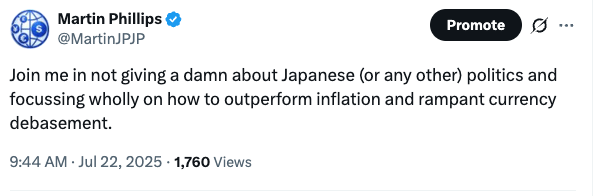
Until political parties appear that are willing to tackle this problem, elections and politics are pretty much meaningless when it comes to investing. And, of course, no party wants to deal with the giant elephant in the room as it will mean years, likely decades of pain. That’s the reality. If you don’t want your spending power to get eroded over time, you need to be invested appropriately.

Now, should you only own tech stocks and crypto? Clearly not. But, in my humble opinion, you would be crazy not to have an allocation to them.

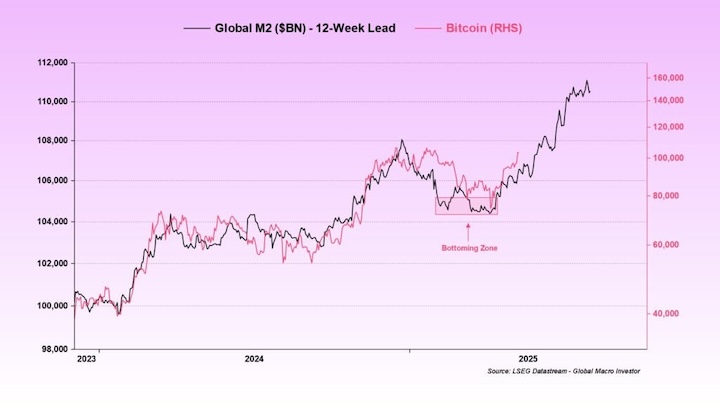
Incidentally, the Bitcoin 4-year cycle dovetails remarkably neatly with the 4-year liquidity cycle. I have come to realise that this is also not a coincidence. In fact, BTC lags global M2 money supply by around 90 days. Here is Julien Bittel’s chart of projected M2 from back in May:

Are you surprised that BTC is now near $120k? You shouldn’t be!

Now imagine if the Fed cuts rates in the next few months…

As long as that M2 line keeps going up, expect risk assets to follow. If you see it turn down later this year, that’s the purest signal possible that the Bitcoin bull market is nearing its end.

Inject that chart directly into my veins!

If you want to get deep into the weeds on liquidity, Arthur Hayes writes some entertaining posts. His latest is here. Be warned, Arthur is a liquidity/crypto uberbull.

Meanwhile, here in Japan, stocks are in celebration mode. I don’t see any reason to fade the mood, although my bullishness is always tempered by the fact that I’m living right here next to the canary in the debt/demographics coalmine.

You can only worry so much, though. Stay cool, and if the world ends, it will probably be a great time to buy stocks!

Top image by Jonas KIM from Pixabay

Disclaimer: This should go without saying, but the information contained in this blog is not investment advice, or an incentive to invest, and should not be considered as such. This is for information only.
Be uncorrelated

I keep seeing posts declaring the 60/40 portfolio dead. No sh*t, Sherlock! Markowitz’s Modern Portfolio Theory dates back to 1952. I learned that 60/40 was no longer relevant in 2005. Where the hell have you been?

In case you are not familiar with it, the 60/40 refers to the traditional portfolio strategy that allocates 60% to stocks and 40% to bonds. The stock part aims for long-term growth while the bonds smooth out the volatility in rough periods.

Markowitz advanced this idea by blending a range of assets to produce a more efficient portfolio, recognising that the typical investor wants reasonable returns without excessive risk. See my post on Asset Allocation for more on this.

Can’t I just long equities?

Yes, it’s perfectly acceptable to just average into one or two stock ETFs and hold them for the long term, especially if you’re young. In fact, you can do that and read no further – you don’t need any help!

However, if you believe in passive investing and market indexing, which many people do these days, you must understand that the market encompasses more than just stocks.

Also, if you are investing a significant amount of money, it’s unwise to be 100% invested in one asset class, unless you have specific knowledge and overwhelming conviction. (which, by definition, a passive investor does not)

What’s a lot of money then? Great question! It’s different for everyone, but let me put it this way: If you are a passive investor, 100% in stocks, and you are starting to get concerned about the damage a market crash could do to your net worth, you might be getting close!

The funny thing about the 60/40 idea is that young people these days are probably already allocated 60/40, but to tech stocks and crypto!

Yeah, crypto, so where does that fit in?

This question is doing the rounds. If crypto is a new asset class, then where does it fit in a diversified portfolio? How big should the allocation be?

I saw this article recently: Bigger bitcoin HODL: Time for 10% to 40% of portfolio in crypto, says financial advisor Ric Edelman

I was not familiar with Ric Edelman, but it turns out he is pretty much a superstar financial adviser – check out this clip:

We can argue all day about whether the allocation should be closer to 10% or 40%. It clearly depends on an individual’s situation, risk profile, level of conviction, etc. The notable thing about this article is how it mixes up the whole Bitcoin vs. crypto terminology.

It mentions Bitcoin to start, but then it refers to crypto. So you should be putting 10-40% of your portfolio in what exactly? Bitcoin ETFs? Cryptocurrencies? Which ones? It’s not very clear.

I mean, they’re all the same thing, right?

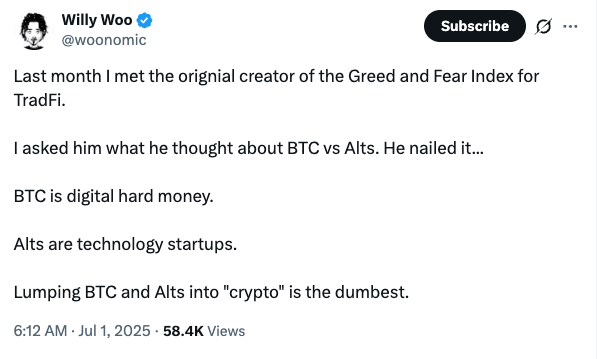
Not even close! And ETH is the second-largest digital asset. Think how many coins have gone to zero since 2017! In my opinion, if you’re going to allocate part of your portfolio to this asset class, you need to get smart about it.

Here’s a pretty solid definition:

I’m not saying you can’t have mad conviction on a particular coin and hold it as an investment. If you have that level of certainty, then go for it. Hardcore XRP hodlers don’t care what I think, and they shouldn’t. They believe in the coin. But should the average investor put 10% of their net worth into it? Of course not!

The mainstream media are leading lambs to the slaughter if they can’t get their terminology straight.

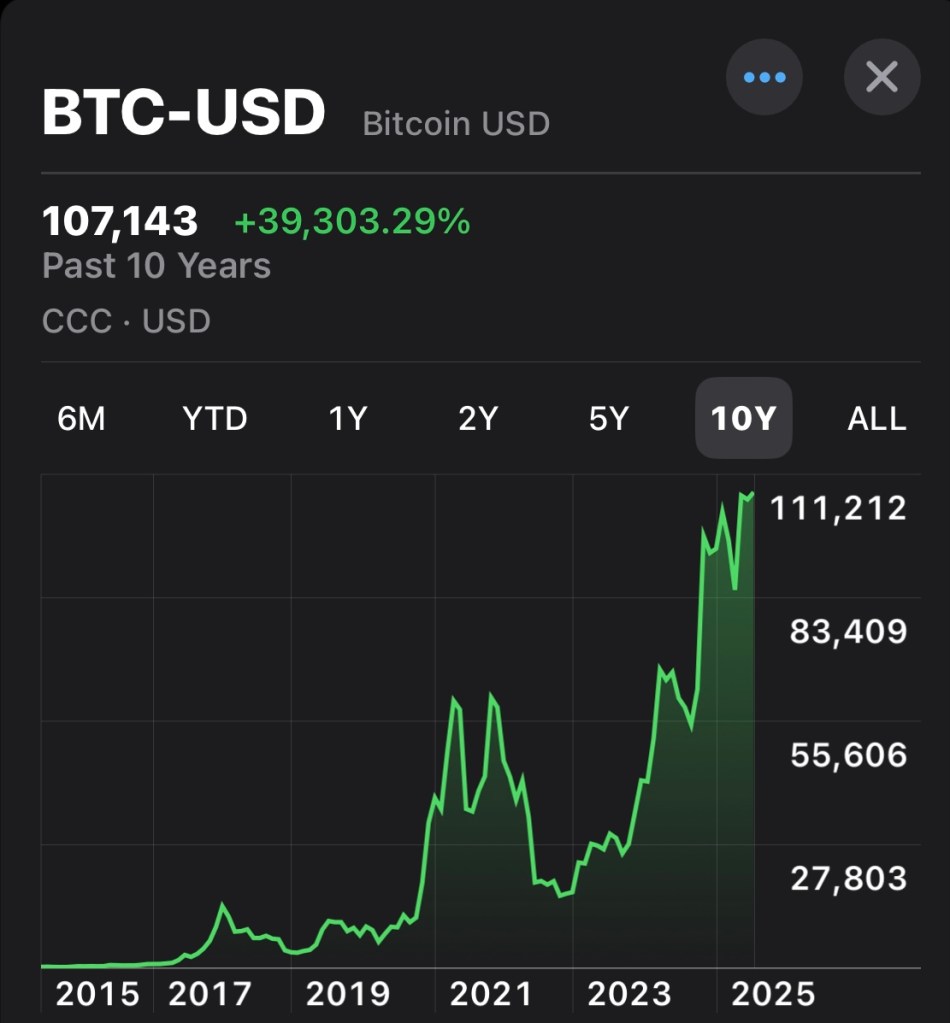
Here’s the only truly investable cryptoasset in my humble opinion. Doesn’t it look beautiful?

Uncorrelated assets for the win

The modern portfolio enhances 60/40 by adding assets that are uncorrelated or only lightly correlated to stocks and bonds. That’s how you achieve better risk-adjusted returns. (similar or better returns with less risk) Back in 2005, I never imagined a shiny new, uncorrelated asset would emerge. It really is a remarkable thing.

If you are interested in understanding how a modern diversified portfolio benefits from the addition of Bitcoin (and even other crypto), this report from 21shares is worth a read: Primer: Crypto assets included in a diversified portfolio – Q1 2025

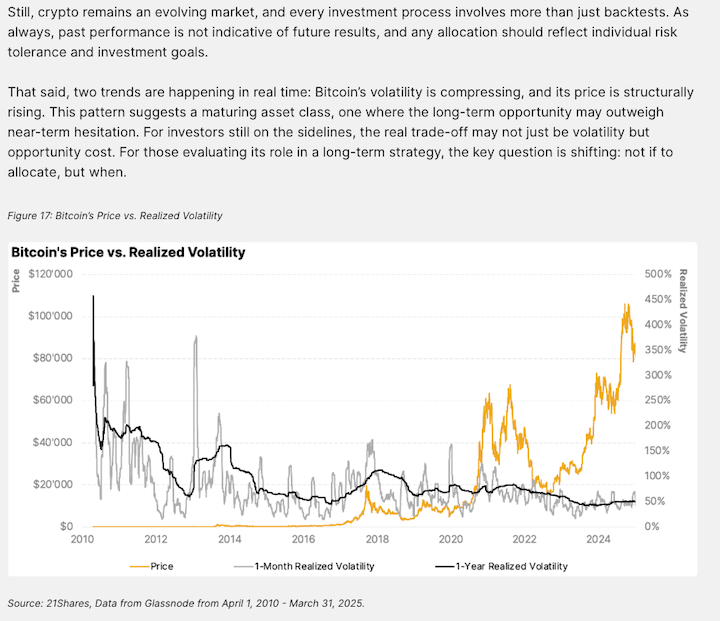
Here’s a quick summary: between April 2022 and March 2025, Bitcoin’s correlation to the rest of the asset universe was 36%. People like to compare Bitcoin to tech stocks, but its correlation to them was only 40%. These levels are significantly lower than traditional assets’ correlation to each other, which typically comes in at around 60-70%. This makes Bitcoin an ideal asset to add to a diversified portfolio in order to beef up returns without meaningfully increasing risk.

What makes Bitcoin especially interesting is how sometimes it behaves like a risk asset, like equities, and other times, it acts as a defensive asset, like gold. Over time, it is expected to become more of a gold-like store of value asset.

“This makes Bitcoin unlike any other asset in the market. It is structurally independent, behaviorally adaptive, and still offers significant asymmetric upside relative to legacy safe-haven assets. For portfolio construction, Bitcoin stands out as both a potential long-term hedge, and a high-impact diversifier at present.”

Adding a 1% allocation to Bitcoin to a modern portfolio over the 3 years resulted in stronger risk-adjusted returns. (It improved both cumulative returns and shape ratios)

Adding Bitcoin did not increase downside risk.

When scaling up to a 5% Bitcoin allocation, the risk-adjusted returns were even stronger, and the volatility remained manageable. Interestingly, they also tried a 3% allocation to the top 5 cryptoassets and achieved a similar uplift in performance without greatly increasing the risk.

So what’s the conclusion to be drawn here? You don’t have to go 40% into Bitcoin! Just a modest allocation increases portfolio efficiency without meaningfully increasing risk.

What are we trying to do again?

The whole point of investing is to beat inflation in your base currency. Doing it most efficiently with the least amount of risk is just being smart.

You can be overweight certain satellite holdings if you have a high level of conviction in them.

I still run a boring diversified portfolio, despite currently exceeding the recommended daily dosage of Bitcoin and Japanese stocks.

What’s my level of certainty?

Disclaimer: This should go without saying, but the information contained in this blog is not investment advice, or an incentive to invest, and should not be considered as such. This is for information only.
It’s going up forever, Laura

What if the market just goes up forever?

I am starting to see people discussing the idea that the stock market has been so pumped up on debt steroids that it simply won’t be allowed to go down for an extended period again. Normally, this kind of talk would be a massive flashing sell signal, but it’s not an idea that is being broadly discussed. It’s just popping up in pockets here and there.

Of course, stock markets go up and down. In fact, the mighty US market took a hit in April due to the Liberation Day tariff malarkey. But did you notice how quickly it bounced back? Pretty much a V-shaped recovery. Same in March 2020.

I’ve said it before: the money has been funny since the 2008 global financial crisis. Many institutions that should have gone under were propped up at the expense of taxpayers and we’ve been getting screwed ever since. Economies and big business have become addicted to liquidity.

Sounds like tin foil hat stuff?

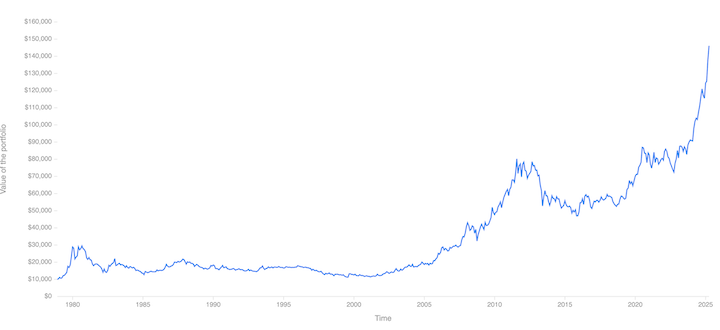
That’s the MSCI World Index. See what happens after the 2008 crash?

Here’s the gold chart for comparison.

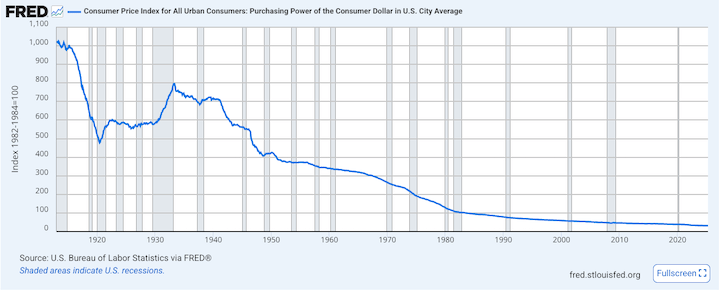
So, are the assets going up, or is the unit of account going down? Check out the purchasing power of a dollar over time.

Ding ding ding ding ding! So, 2008 clearly wasn’t the start of the pattern. It just intensified after that.

The Federal Reserve of St. Louis puts together some pretty charts, doesn’t it?

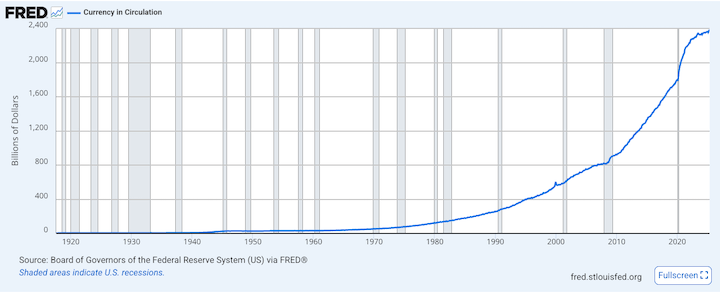
Take a look at this one – currency in circulation:

Hello! So, if you keep creating more dollars, the purchasing power of a dollar goes down, and the value of assets and other stuff goes up against your inflated currency. I’m picking on USD here, but everywhere else looks the same. Probably worse.

Here’s a question I get asked a lot: “How do I convince my very conservative partner that we need to invest more?”

Answer: Just teach them that the market is going up forever!

If assets are going up forever, you’d better own some! You probably don’t need to fret too much about timing the market. Just make sure you keep a nice cash reserve so you don’t have to dip into your investments in a crisis, and yolo the rest into stocks, commodities, real estate, bitcoin and anything else that isn’t cash in the bank.

Of course, this is all somewhat tongue-in-cheek. But is it really much more complicated than that?

Please don’t misunderstand. Stocks can still go down 30-50% at any time. Bitcoin can still dump 50-80% and probably will next year. You should be prepared for these outcomes and never let yourself become a forced seller. But, over the long term, these assets go up and to the right because the denominator is cooked. Did you notice how long the whole DOGE ‘let’s reduce wasteful government spending’ drive lasted? It’s not even June, and Elon and Trump are melting down in public.

If you’re wondering why you have to become a money manager just to break even with inflation, here you go:

Nothing stops this train.

I leave you with this classic 2021 clip of Michael Saylor on Laura Shin’s podcast: “It’s going up forever, Laura.”

Act accordingly.

Top image by Peter Eichler from Pixabay

Disclaimer: This should go without saying, but the information contained in this blog is not investment advice, or an incentive to invest, and should not be considered as such. This is for information only.

Inflection point

You might have noticed an uptick in articles covering bonds recently. In particular, bond yields and bond auctions. Bonds are confusing, and it’s often easier to just go and read something else, but you might be getting the sense that something is happening in the bond market. Like it’s trying to tell us something.

If you need a refresher on bonds, feel free to read my post, Bond investing – a simple guide.

The market always finds something to worry about, and usually, those worries are temporary. This year alone, we’ve had inflation, stagflation, recession, tariffs, and trade wars, and the sky hasn’t fallen yet. But now the market is worried about bonds. And it’s not just worried about US treasuries. The same concerns surround UK gilts, Euro bonds, and Japanese government bonds.

Here’s a Reuters article about record yields on Japanese long-dated bonds.

This week, the US 30-year treasury yield has been flirting with the closely watched 5% level. Last Friday’s Moody’s US credit downgrade got things rolling. Then, on 21 May, there was a weak treasury auction, and the 30-year closed at 5.09%.

As yields move inversely to price, rising yields indicate that investors are selling bonds. The weak treasury auction, like recent weak gilt and JGB auctions, illustrates a lack of appetite for new bonds. So why are people so worried about bonds these days?

It’s the debt, stupid

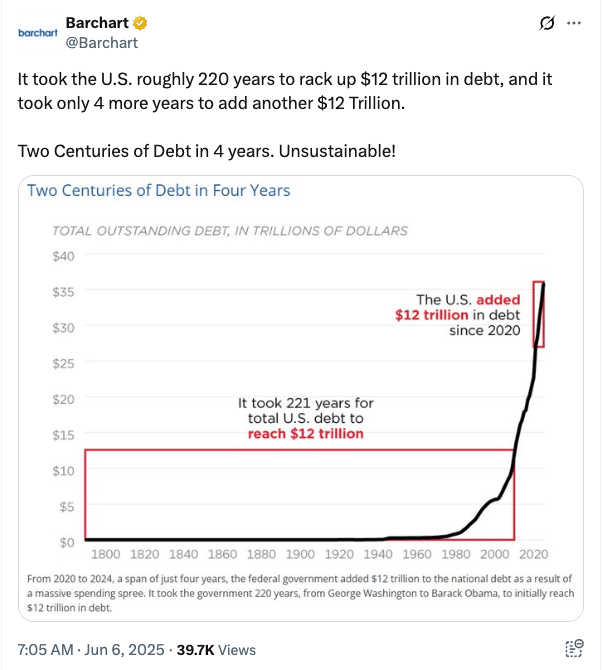
At 237%, Japan is the heavyweight champion in debt-to-GDP. The UK is at 96% and the US is at 124%. None of these figures is encouraging. Japan is clearly not paying that back. The UK economy is in disarray, and you may remember Liz Truss almost blowing up the bond market in September 2022.

Trump talks a lot of smack, but his big beautiful tax bill is only going to inflate the problem over time. Anyone who believes he is going to cut deficit spending lives in MAGA fantasyland.

The bond market clearly doesn’t like it.

Is it happening?

The macro-heads I read are all fixated on yields, deficit spending and the massive risk flashing in the bond market. But is something really going to break, or is this just another worry that will soon make way for the next thing?

I’m not going to macro larp here, and I dislike doomers, so here’s a solid thread from Capital Flows on why we could be at an inflection point. It’s recommended reading for anyone trying to get their head around the current situation.

The tldr: Central banks are behind the curve – surprise! Meanwhile, banks are issuing debt like there’s no tomorrow. These big credit deals are feeding money into the economy and preventing a slowdown in growth. When central banks fall behind in a credit cycle like this, bond markets can crash because growth and inflation rise while everyone expects a recession.

Does this mean I should not own bonds?

This is an important question. For traders, the trade is definitely sell long-term bonds. (TLT)

For investors with a diversified portfolio, should they be dumping their bonds and buying gold, copper, bitcoin, etc? I don’t think so. This is short-term tactical thinking and only for people who know what they are doing. By nature, a strategically diversified portfolio is always going to contain some assets that aren’t doing so well. Right now, it’s just the turn of bonds. Unless your time frame has changed dramatically, you can just sit tight.

Big developed economies losing control of yields is a scary proposition, and they are likely to do whatever they can to kick the can down the road and avoid the pain. Just last month, a surge in treasury yields caused Trump to back down on tariffs, remember?

Is this why Bitcoin is ripping?

It’s one of the reasons, yes. BTC is fundamentally a release valve for macro liquidity (I was dying to say that, but I got it from Capital Flows too!) What it means is, the more liquidity that gets pumped into the system, the higher the BTC price goes.

Here’s the Capital Flows report to read if you want to geek out on that one: Bitcoin Strategy – The Macro Liquidity Release Valve

BTC is also going up because it’s at that stage of its own 4-year cycle. But it’s funny how that seems to align so well with global liquidity cycles. There’s probably a bit of mileage left in this bull market yet!

Right now, let’s enjoy the all-time highs. It takes me back to this post from February 2023: Do you want to be right, or do you want to make money?

Sometimes you get to have both.

Disclaimer: This should go without saying, but the information contained in this blog is not investment advice, or an incentive to invest, and should not be considered as such. This is for information only.

Sit tight

“It never was my thinking that made the big money for me. It always was my sitting. Got that? My sitting tight! It is no trick at all to be right on the market. You always find lots of early bulls in bull markets and early bears in bear markets. I’ve known many men who were right at exactly the right time, and began buying or selling stocks when prices were at the very level which should show the greatest profit. And their experience invariably matched mine–that is, they made no real money out of it. Men who can both be right and sit tight are uncommon.” – Jesse Livermore, in Edwin Lefèvre’s “Reminiscences of a Stock Operator”

We are so back!

Little more than 6 weeks after Donald Trump nuked markets with his “Liberation Day” blusterf**k, stock indices are right back where they started. Congratulations on surviving! The circus is far from over, but it feels like we just went through boot camp on how to operate under this administration. My personal goal from now on is to ignore every word the man says and focus on what actually gets done. There is way too much noise!

Anyway, check in on the doomers. They probably need to come out of the bunker, touch some grass and catch some Vitamin D.

The great dealmaker is in Saudi Arabia now, doing deals, I presume. Note the presence of Nvidia’s Jensen Huang among the tech CEOs there with him – I would not bet against that company to emerge from the chaos stronger than ever.

So what’s going on?

Checking on the news, Nvidia isn’t the only AI/semiconductor play catching a bid. Advantest, Tokyo Electron and Disco are all perking up too.

Softbank Group is also on the rise after posting its first full-year profit in four years.

Department store operator Mitsukoshi Isetan announced an expected net profit of ¥60 billion for the current fiscal year, up 14% year-on-year. Those tourists must be spending hard while we plebs struggle to buy rice!

Things don’t look so rosy for the Japanese auto industry, though, with Honda and Nissan crumbling under the uncertainty around tariffs. There is more than tariffs at play here as both have struggled with sales in the US and China. The two companies abandoned plans to join forces earlier this year and who knows where they go from here. Nissan is clearly worse off and will shut 7 vehicle plants and cut 20,000 jobs globally.

Gold rush?

Meanwhile, The Mainichi reports that gold investment is booming in Japan. Investors appear to be snapping up everything from coins and bullion to used gold accessories. They are also buying gold funds and ETFs for the NISA accounts.

Come for the global recession fears, stay for the long-term debasement of the yen!

USD/JPY is back around ¥147 after the BOJ needed a breather from raising rates. If they are planning to wait for some respite from global economic uncertainty before hiking further, we will be back in the ¥150s soon.

Wakey wakey

If you own crypto, I can’t stress this enough: the best thing you can do is go to sleep for about 3 months. Block out the noise.” – I wrote this in my opening post of the year in January. There have been many dips and ‘it’s so overs’ since then, and yet here we sit in mid-May with Bitcoin back over $100k.

It’s probably time to start paying attention again. Metaplanet is creeping back towards the highs. I sold half of my holding in the run-up in Jan/Feb, and it’s looking like time to start averaging out the rest. Maybe take out half in the next few weeks and save the rest for Valhalla?

Even Ethereum has woken up!

Alts have been battered in the dips. With a tidal wave of ETF inflows, BTC dominance shows no sign of slowing down. Alt holders would like to see the orange coin break the all-time high and then chill for a while. Will they get their alt season? The exit is narrow and it won’t be open for long…

Where does BTC top? Gun to my head, I say we get a run now, followed by a quiet summer, then one more assault on the summit in autumn.

However, if you are looking to take profit, don’t listen to me or any other people on the internet. Nobody knows anything. The smart money is scaling out already. Execute your plan.

If you are a long-term BTC investor, and for at least part of your stack you should be, all you gotta do is sit tight!

Top image by Pexels from Pixabay

Disclaimer: This should go without saying, but the information contained in this blog is not investment advice, or an incentive to invest, and should not be considered as such. This is for information only.
Sell America?

Remember when everyone thought a Trump presidency would be business-friendly?

I admit to belonging to that camp initially. Stocks soared the first time he was elected, when most people expected them to tank. They also ripped between the election and the beginning of his second term, as people bet on a golden age of deregulation. Remember all the tech CEOs at the inauguration?

And then the madness began.

I’m not interested in getting into political commentary, but I will say this: it really couldn’t have been handled much worse. Anyone who has read Chris Voss’s book knows that you don’t start a negotiation with belligerence and threats and expect everyone to come meekly to the table. Anyway, my opinion doesn’t matter. The markets have spoken. So far, Trump 2.0 has been an unmitigated disaster.

Wall Street is openly disussing a “Sell America” trade. The great dealmaker must hate that one. It’s happening, though – look at treasury yields, look at the S&P 500, look at the dollar. And look at gold!

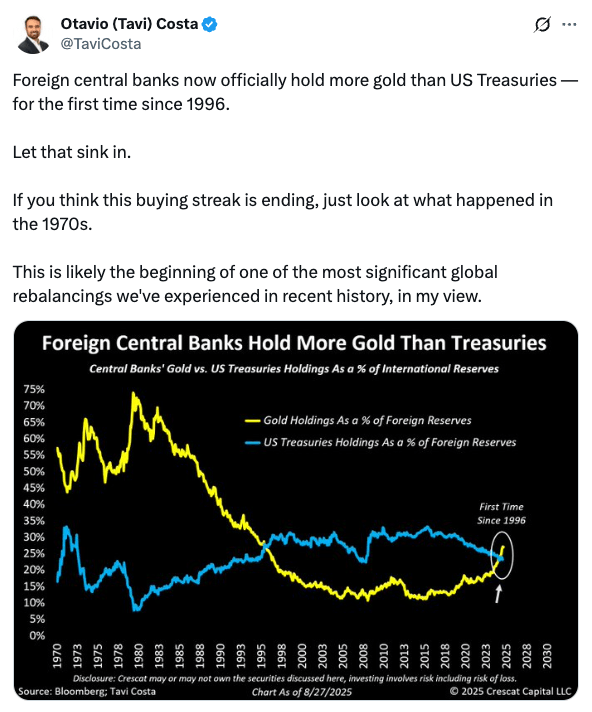
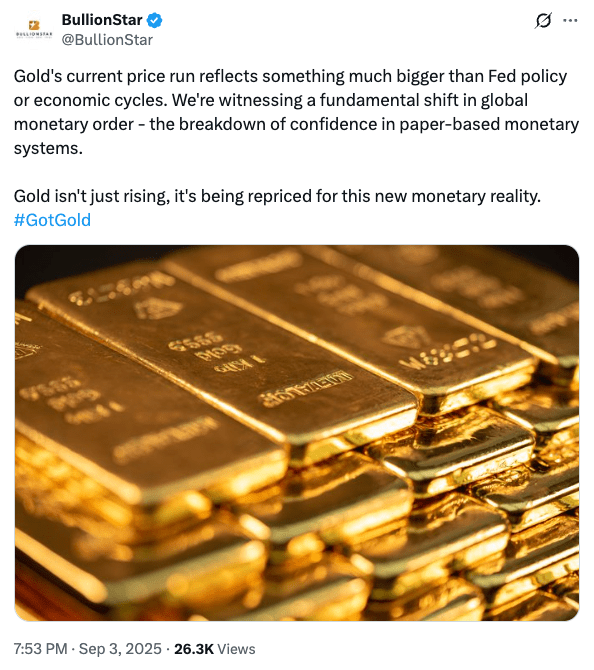
Gold isn’t just a safety trade here. It represents a stampede away from USD-denominated assets. European and emerging market stocks are also seeing inflows, but they come with their own risks as the haphazard tariff ‘negotiations’ blunder ahead.

So what happens now?

Is America really done? Does gold go up forever?

No and no are the short answers. However, the world is clearly changing before our eyes. Here’s an excellent thread summarising Howard Marks’ recent comments on what is happening. Like it or not, globalisation made a lot of things cheaper. As countries become more inward-looking and focus on domestic production, prices will rise. America is still expected to outperform in the long run, but it will need to work harder to attract capital. It is no longer the obvious go-to market, at least while all this chaos is raging.

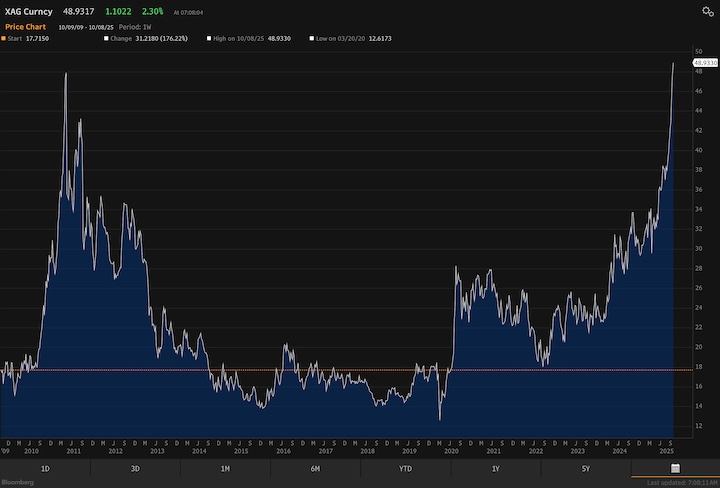
Can gold still go higher? For sure, but it’s starting to look like Bitcoin does in blow-off top phases. Weekly cycles also suggest it is close to a top. If you’re a long-term diversified investor, continue to hold it. If you’re looking for the next trade, then digital gold is where it’s at.

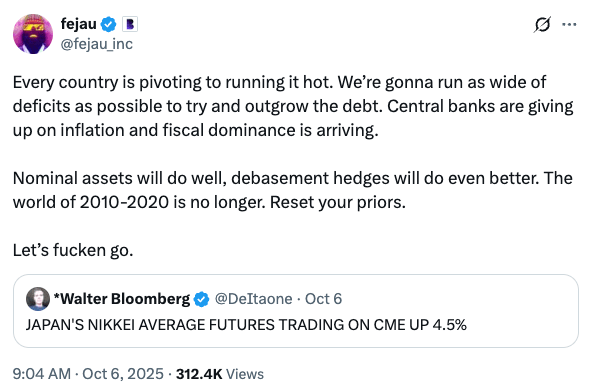
Even the macro guys are starting to agree that Bitcoin looks good right now. This article from @fejau_inc puts it all together nicely and is a must read.

Here’s the conclusion from that piece for easy reference: “And so, for me, a risk-seeking macro trader, Bitcoin feels like the cleanest trade after the trade here. You can’t tariff bitcoin, it doesn’t care about what border it resides in, it provides high beta to a portfolio without the current tail risks associated with US tech, I don’t have to take a view on the European Union getting their shit together, and provides a clean exposure to global liquidity, not just american liquidity.

This market regime is what Bitcoin was built for. Once the degrossing dust settles, it will be the fastest horse out of the gate. Accelerate.”

Meanwhile, the Financial Times reported that Howard Lutnick’s son, Brandon is cooking up a $3 billion Bitcoin acquisition investment vehicle with Cantor Fitzgerald, Softbank Group, Tether and Bitfinex. Reuters summary here.

Is the yen strengthening going to hold?

If you are looking for proof that capital is flowing out of America, it’s right there in the exchange rate, currently around ¥142 to the dollar. It’s quite possible the yen could strengthen further from here, but beware the orange man running his mouth. If Bessent can put the gag on him for a while and they get a few wins on the board in terms of trade deals, then the picture can change very quickly.

Yes, I’m aware that the typical trade deal takes around 18 months to complete. Most likely Trump extracts a few concessions from the major partners, including Japan, and declares some ‘tremendous trade deals’. Then he can move onto pumping the markets back up before the mid-terms.

Long term, I believe the yen is cooked. Nothing has changed there. Short term, we could be at ¥120 just as easily as ¥160 in a month or two. Who knows?

So, sell America or not?

Traders gotta trade, and right now the trade is sell America for anything else you can lay your hands on. For long-term investors, I would view cheaper US asset prices as an opportunity to accumulate. Don’t change your monthly investment allocation too hastily!

Top image by Mediamodifier from Pixabay

Disclaimer: This should go without saying, but the information contained in this blog is not investment advice, or an incentive to invest, and should not be considered as such. This is for information only.
Taps the sign

It’s been a long week. Is it me, or are +/-9% swings on the Nikkei 225 index starting to feel normal? Traders must be loving this – at least the good ones.

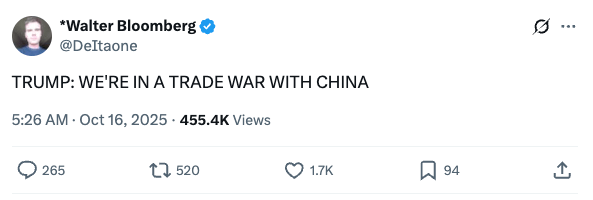
I’m not so impressed. Of course, there are buying opportunities, but it gets a bit tiresome when markets swing this wildly based on the pronouncements of one guy who just can’t STFU for 5 minutes.

Orange Swan Event.

Click it, I dare you! And don’t get me started with the Simpsons memes.

Where was I? Tapping the sign, right. The free lunch quote has been attributed to Harry Markowitz, although I have heard Ray Dalio say something similar. It’s a drum I have been banging for years, sometimes with minimal effect.

When the stock market is going up, nobody cares about diversification. Why would I want to own bonds and gold and other stuff when stocks are on a tear? Just buy the index and chill, right? It’s easy to forget that stocks take the stairs up and the elevator down.

Until you get a reminder.

In 2002, psychologist Daniel Kahneman won the Nobel Memorial Prize in Economic Sciences for his work on the psychology of judgement and decision making. Kahneman points out that individuals are more depressed with investment losses than they are satisfied with equivalent returns. In other words, people hate losing money considerably more than they like making money.

Big liquidation events are like waking up after a party. It was fun, but now it’s time to sober up and review your time horizon, risk profile and asset allocation.

Are you diversified enough?

If recent events haven’t troubled you, and you have barely looked at your investments, the answer to this question is probably yes. Carry on!

If things have been a little nervy, then maybe you were over-exposed.

Don’t get me wrong, I’m all for buying stock indices and holding them forever. It’s not a bad strategy, as long as you can stomach the downturns. And as long as you don’t need the money soon. And, it’s not like a diversified portfolio doesn’t go down in times like these either. When panic sets in, people will sell anything they can get their hands on, but pretty soon you will see a flight to safety.

An underappreciated aspect of diversification is the opportunity to tactically rebalance and take advantage of market events. I sold some of a gold ETF this week near all-time highs and bought stocks while everyone was puking them. I didn’t need dry powder. Just a little reallocation.

You can’t do that if you don’t own the gold in the first place. You have to find more cash.

A quick thought experiment

If you are reasonably young and earning good money, then the recent market gyrations are just a blip, but do me a favour: imagine you are 65 years old, about to retire, with a nice fat nest egg invested in the MSCI World Stock index.

And the market dumps 20% in a couple of days. It takes a breather over the weekend and then resumes dumping in earnest. 30% of your retirement pot is gone. Financial media is screaming about recession, trade war, deleveraging or whatever it is this time. Remember in March 2020, when the market crashed and we faced the reality that the entire world was about to shut down? The doomer economists are running victory laps, and the market looks like it is never coming back from this.

How do you feel?

Remember that feeling when you are making future investment decisions, especially as you get closer to spending the money.

Of course, what happened after March 2020 was that central banks slashed interest rates and unleashed a tidal wave of stimulus, and the markets came roaring back before the year was even over. But that type of thing comes at a cost – that’s why your hard-earned cash doesn’t buy as much stuff any more…

Ok, so how do we do this diversification thing?

There are various ways to get yourself a diversified portfolio. How hands-on do you want to be?

For the people who want to put as little effort as possible into it, you can simply buy multi-asset ‘balanced’ mutual funds. I recently came across a collection of Japanese funds that are divided up by age group: “Happy Aging 40”, “Happy Aging 50”, “Happy Aging 60”. The allocations get more conservative the higher the age. These types of funds are available everywhere. Simply dump your money into the fund that fits your time horizon and get back to whatever you’d rather be doing.

In my advisory business, for larger chunks of money, I recommend professionally managed investment portfolios fitted to the client’s base currency and risk profile. Yes, they cost more than an ETF, but they are incredibly well diversified. The asset allocation is reviewed annually, and every quarter the managers implement a ‘tactical overlay’ and buy more of the assets they like and sell some of those they don’t. These guys don’t just buy a broad stock index – they are breaking equity holdings down by style: value, growth, small/large cap, etc. Of course, the entire portfolio is rebalanced annually.

I also recommend a core/satellite approach for even broader diversification. That’s how you slot in the algorithmic trend following strategy that trades stocks, interest rates, currencies, metals and other commodities with very little correlation to any one market. Funnily enough, it likes volatile times like this.

For coaching clients, I take the knowledge I have gained from watching professional money managers and help them develop their own asset allocation using low-cost ETFs. Click the coaching link to find out more.

Keep it simple

Here are a few action points if you want to take on this job yourself:

Separate regular and lump sum money. Regular is the money you invest every month in a pension, savings plan or Tsumitate NISA. If you are relatively young, you can just allocate all of this to stock indices/funds. Let Dollar Cost Averaging do the work for you.

Lump sum money is a chunk of cash you have saved up that you are looking for a better return on. Here, you are going to want more diversification, and you should focus on the currency you are most likely to spend the money in (your base currency). The asset classes you want to look at are: cash, domestic (base currency) bonds, overseas bonds, domestic stocks, overseas stocks, property, and commodities. Hold more stocks if you are young, and more bonds and cash if you plan to spend the money soon. Allocate 70-80% of the lump sum to this broad portfolio, and the remainder can go into satellite holdings to beef up the areas you are most bullish on. For example, if you like Bitcoin, that’s a great satellite holding.

I have written plenty about base currency, asset allocation and core/satellite in the past. Feel free to take a look at earlier posts.

If you are gonna get really serious though, you are going to want to diversify your bonds.

Peace out!

Disclaimer: This should go without saying, but the information contained in this blog is not investment advice, or an incentive to invest, and should not be considered as such. This is for information only.
Put it all on red

“The line between gambling and investing is artificial and thin. The soundest investment has the defining trait of a bet (you losing all of your money in hopes of making a bit more), and the wildest speculation has the salient characteristic of an investment (you might get your money back with interest). Maybe the best definition of “investing” is “gambling with the odds in your favor.” ― Michael Lewis, The Big Short: Inside the Doomsday Machine

I recently came across this post lamenting how young people are being tricked into treating investing as gambling.

“Most investing apps aren’t for investing. They are dopamine-fueled casinos — flashing charts, fake “free” trades, and endless FOMO to keep you chasing.”

There is probably some truth to this. Certainly, investment products look quite different these days from when I started in the advisory business. However, here’s a funny thing: I’m currently reading an old classic, Jack D. Schwager’s ‘Market Wizards’, and it’s shocking to find how many of the ‘wizards’ have a background in gambling. What’s more, almost all of them use gambling analogies in relation to trading.

In case you don’t know the book, which was published in 1989, it is a series of interviews with top traders, exploring how they made their money. Despite being a little dated, it’s a fascinating read if you like that sort of thing. I haven’t finished it yet and am making some notes as I go. Here is a note I made from the interview with Gary Bielfeldt, who was known for his sizable trades in treasury bonds in the 1980s:

On poker and the concept of playing the percentage hands:

You don’t just play every hand and stay through every card, because if you do, you will have a much higher probability of losing. You should play the good hands and drop out of the poor hands, forfeiting the ante. When more of the cards are on the table and you have a very strong hand – in other words, when the percentages are skewed in your favor – you raise and play that hand to the hilt.

Apply the same principles to trading. Wait for the right trade. If a trade doesn’t look right, you get out and take a small loss; it’s precisely equivalent to forfeiting the ante by dropping out of a poor hand in poker.

When the percentages seem to be strongly in your favor, be aggressive and really try to leverage the trade, similar to the way you raise on the good hands in poker.

Of course, not all gamblers are made the same. Those who understand probability fare much better than those just out to have some fun.

“If you do not manage the risk, eventually it will carry you out” – Larry Hite

One of the recurring themes from the book is risk management. This is a broad subject, but almost all of the traders talk about how they scale back their activity when they are trading poorly. In golf parlance, a bogey is one bad shot; a double bogey is a bad shot followed by a stupid shot.

Cutting losers quickly while letting winners run is another common theme. Ed Seykota’s three golden rules are: Cut losses, cut losses, cut losses! Paul Tudor Jones’ mantra is “never average losers”.

Jones says: “Never trade in situations where you don’t have control. For example, I don’t risk significant amounts of money in front of key reports, since that is gambling and not trading.” That’s an interesting comment considering the number of people I see trying to trade the latest inflation report or Fed meeting.

Bruce Kovner’s first rule of trading is “Don’t get caught in a situation in which you can lose a great deal of money for reasons you don’t understand”.

All of these great traders stress that making mistakes is not only normal, but an important part of the process. PTJ is known for catching major turning points in markets however, he is not the sniper that many people imagine. He may try repeated trades over a period of weeks, getting out as the market moves against him before probing again until he finally finds that turning point.

Larry Hite notes: “You can lose money even on a good bet. If the odds of the bet are 50/50 and the payoff is $2 versus a $1 risk, that is a good bet, even if you lose. The important point is that if you do enough of those trades or bets, eventually you have to come out ahead.”

Trading vs investing

Schwager makes two key distinctions between trading and investing: First, a trader will go short as readily as long. In contrast, the investor – for example, the portfolio manager of a mutual fund – will always be long. If he is uncertain about the market, he may only be 70% invested, but he is always long.

Second, a trader is primarily concerned about the direction of the market. Is it going up or down? The investor is more concerned about picking the best stocks to invest in.

Of course, neither traders nor investors are limited to stocks only. Take a look at this absolutely insane chart from @TimmerFidelity
The chart shows the annualised volatility vs annualized return of various assets since 2020. Notice anything funny?

If you like the Magnificent 7 stocks outperformance, you’re gonna love Bitcoin!

Many will look at the asset in the top right corner and assume that is where the investing/trading ends and gambling begins. Those in the know will note the efficient frontier line you get when you own everything in the chart. My investing philosophy is that’s exactly what you want to do. The only question is how you weight each asset.

Just FYI, Paul Tudor Jones’ largest holding these days is the iShares Bitcoin Trust (IBIT). It’s around 4.5% of his total portfolio.

More from PTJ here in Facing inflation – the four assets you should own.

“Don’t be a hero. Don’t have an ego. Always question yourself and your ability. Don’t ever feel that you are very good. The second you do, you are dead.” – Paul Tudor Jones
Finally, a somewhat sobering message. Two quotes so far stopped me in my tracks and made me think of Japan and its mountain of debt (although they were actually about another economy):

“And you are saying that people look at the deficit year after year and think, “Well, it can’t be so bad, the economy is strong,” and one day everyone wakes up. It is like having termites in the foundation of your house. You may not notice them until one day they gnaw away a big chunk and the house collapses. I don’t think anybody should take a large amount of comfort in the fact that things appear to be holding together.” – Richard Dennis

“If the economy starts to go with the kind of leverage that is in it, it will deteriorate so fast that people’s heads will spin. I hate to believe it, but in my gut that is what I think is going to happen. I know from studying history that credit eventually kills all great societies.” – Paul Tudor Jones

If you do not manage the risk, eventually it will carry you out.

Top image by Greg Montani from Pixabay

Disclaimer: This should go without saying, but the information contained in this blog is not investment advice, or an incentive to invest, and should not be considered as such. This is for information only.