Lock in

I hope you are enjoying Obon and the summer holiday. After a market crash and a Nankai Trough earthquake warning, things feel a little calmer this week. Hopefully, there won’t be any more ‘big events’ in August other than the local matsuri.

However, September is approaching and it feels like that will be the time to get locked in and focused. So here are a few thoughts as we speed into the last four months of the year!

US markets

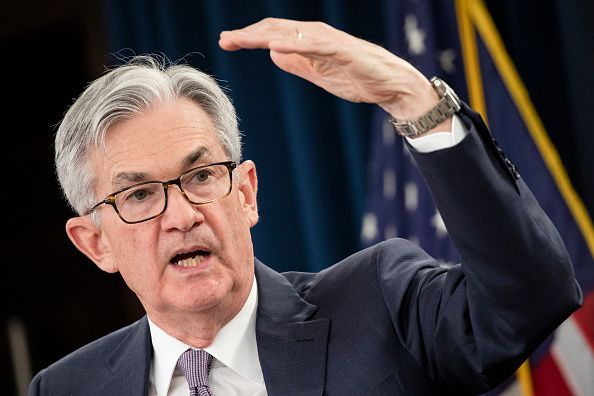
There is a slew of economic data coming out of America this week, with the Producer Price Index (PPI) coming in a little softer than expected last night. CPI is tonight and another soft print will heighten expectations of a Fed rate cut in September. Toys will be thrown if Chair Powell does not deliver, but I’m also becoming a little more cautious about the outlook for stocks if he does go ahead and cut. History favours a recession scenario at the end of a hiking cycle. A lot of effort has gone into the soft landing narrative, so we should be on our guard. No reason to make adjustments to long-term investments but things rarely go as smoothly as the crowd expects.

That said, the completion of the US election will remove a lot of uncertainty, regardless of who wins.

Yen / Japan stocks

After starting August with a bang, the Bank of Japan has swiftly backed down from any plan to raise rates again this year. They got as far as 0.25% and the stock market melted down. They didn’t even get to the bond market jitters part of the project. I would love to hear from anyone who can explain how the BOJ will go about a meaningful tightening from here. Imagine what rates at 0.5% would look like. How about 1%?

I just saw a Bloomberg headline that said that PM Kishida is stepping down in favour of a leader who is supportive of the central bank’s efforts to normalise policy. Best of luck to whoever picks up that poison chalice!

Let’s just call BS, shall we? You can’t normalise a ponzi.

Nonetheless, if the Fed does begin to cut, the yen should strengthen. I don’t know how far it will get. 130? 120? 100? It doesn’t matter, because once that cycle is over it is only going the other way. You can save the bond market or the currency and no one is sacrificing the bond market.

I have said it before but I’m nothing if not a broken record: if you are going to spend your future money outside of Japan, you should forget about those alluringly cheap Japanese value stocks and get your money out of yen and into your base currency while you have the opportunity.

If you are here for the long haul, by all means, have at it. In the shorter term, Japanese stocks should do ok and I would even be tempted to look for names that will benefit from a stronger yen. Exporters that did well under the weak yen don’t seem such a great idea going forward.

Getting hard

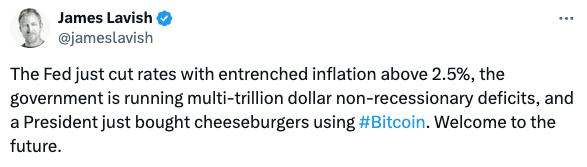
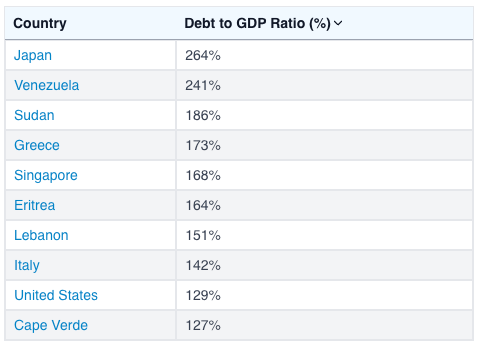
With the US election looming, the cynical among us would be watching out for a liquidity boost to pump up the US stock market. Rather than the Fed, we should probably be looking at the treasury to provide the liquid refreshment. This ‘Bad Gurl Yellen’ piece by Arthur Hayes goes deep into the fountain of liquidity that is about to spring forth. In short, the treasury needs to lower the debt-to-GDP ratio, and it will do so by issuing yet more debt.

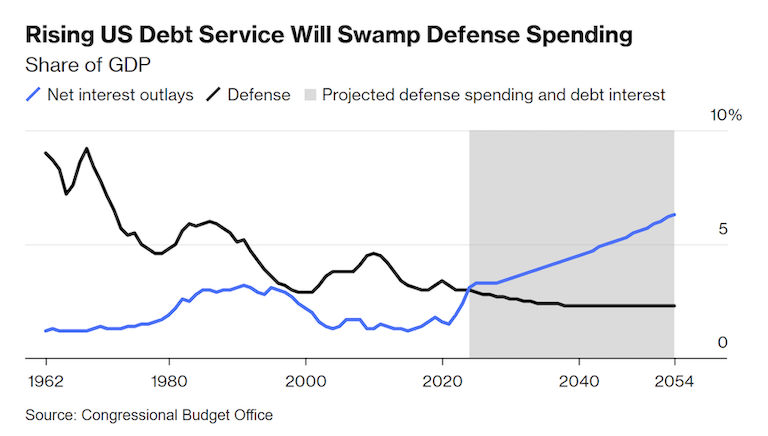
The Congressional Budget Office projects that interest payments on America’s debt will total $892 billion in fiscal 2024 and rise significantly in the next decade.

If you are wondering what that looks like, get a load of this chart:

Tell me you’re gonna print more money without saying you’re gonna print more money…

I wrote about currency debasement and and how to protect yourself in Harden up your assets! If you are looking at stocks to plough your hard-earned money into right now, that’s one way to do it but maybe there is a better option.

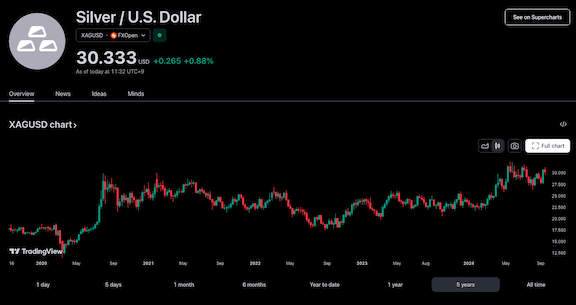
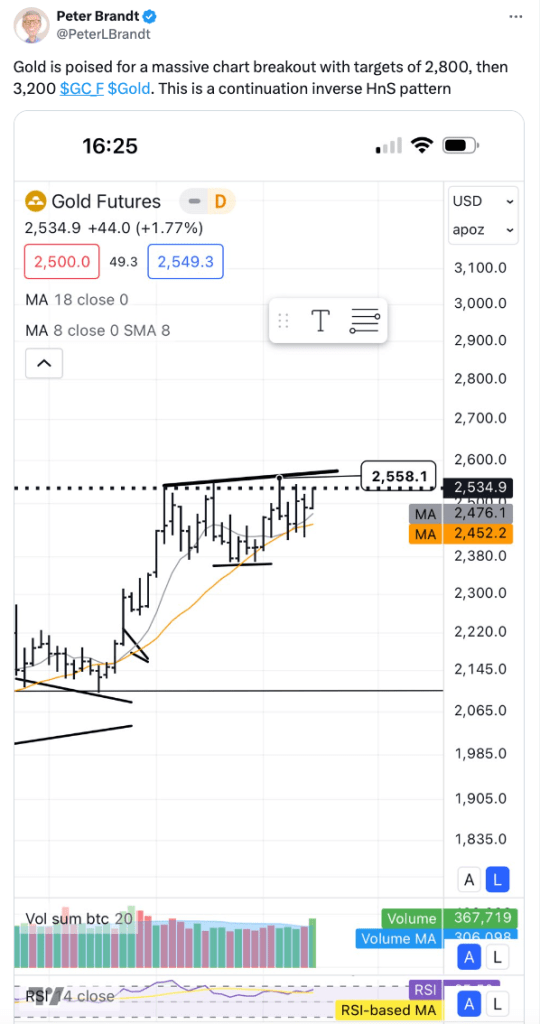
As you can see, some technical traders are getting excited about gold. JP Morgan agrees, arguing that the structural bull market remains intact and forecasting an average price of $2,500 in Q4 and $2,600 in 2025. Geopolitical tensions, rate cut expectations, central bank buying and ETF flows all point to elevated gold prices – report here.

Of course, those are short-term targets and the real point of owning gold is to protect against currency debasement over time. Remember, this is what you’re up against:

Digital gold

Ever the broken record, allow me to point out once more that the boring phase of the Bitcoin bull market is drawing to a close. We probably bounce around for a few more weeks, maybe even a couple of months. The timing is difficult to predict but I expect significantly higher prices by the end of the year. And more to come in 2025. If you are thinking of getting on the train, you don’t have long left…

Despite a reshuffle of the Democratic nominee, pretty much everything I wrote in the Bitcoin bull market update still stands. All aboard!

If you are still trying to get your head around the hardest asset on the planet, the presentations from Michael Saylor’s keynotes are a great resource.

Don’t say I didn’t warn you!

Disclaimer: This should go without saying, but the information contained in this blog is not investment advice, or an incentive to invest, and should not be considered as such. This is for information only.

Hansei-kai

The haters said I couldn’t do it. And they were right. Honestly, great call by the haters.

Stairs up, elevator down.

If you have been diligently investing in stocks these last few years, especially Japanese stocks, you are probably not feeling too great right now. You are probably feeling a little sick in the stomach. And maybe a bit stupid. I’m here to tell you it’s alright to feel bad for a while but don’t beat yourself up too much. Nobody saw a crash like this coming. Hell, the day the BOJ raised rates, the market went up! Don’t listen to the smart-asses who tell you they knew this would happen and traded it perfectly – most of them didn’t even have any skin in the game.

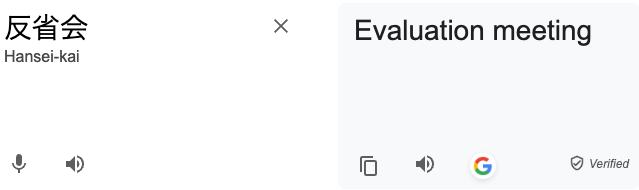
However, if you are going to take a beating in the markets, you better learn something from it. Otherwise, it really was all for nothing. Welcome to the Hansei-kai.

The Google translation is kind of cute. Whenever I hear this word actually used, it’s more like: ‘We screwed up, now we have to examine why and drown our sorrows’. Maybe it’s just the company I keep!

The purpose of this post is not to bore you with another deep-dive analysis of the unwinding of the yen carry trade. You have probably had enough of that already and there are people more qualified to talk about it than me. The idea is to try and learn something from the experience that will be helpful in the future.

There are always signs!

I haven’t lost my shirt in this crash and I hope you haven’t either. However, I was sitting on some rather profitable satellite positions, mostly in Japanese stocks, and I was thinking about selling some of them. I know this because I wrote about it just six weeks ago in Are we shaking?

What’s worse, I had figured out that if anything was going to derail the Japanese equity bull market, it would be the Bank of Japan. I know this because I wrote about it in January: 2024 – Here goes nothing!

The call was coming from inside the house!

Aren’t I the clever one! I had it all figured out and I didn’t sell.

I am a regular viewer of the Nikkei News Next program on BS TV Tokyo. These last few months, I couldn’t shake this nagging impression of hubris as the presenters and guests lauded the performance of the Japanese stock market and talked about the prospects of the BOJ raising rates like it would be just another positive. Don’t get me wrong, it’s a serious news program asking the right questions, but my feeling was that they were a little too caught up in the hype.

And I didn’t sell!

Ok, ok. I said we weren’t going to beat ourselves up. But you get the picture. The signs were there. And of course, they are a hundred times more obvious in hindsight. I’m not even that mad at myself. I never had any intention of touching my core investments and I have dry powder at the ready to allocate once the panic subsides. My point is that if your gut is telling you something, maybe you should listen to it.

Sell euphoria. Sell euphoria. Sell euphoria. I’m not going to get the tattoo but it has been imprinted on my brain.

What happens next?

After the Hansei-kai, it’s time to move forward. It’s still a little early for me to think about how to allocate money. US futures are down bad and it’s probably going to be a long week. I don’t feel the need to dive in immediately and any stocks I buy will be with a minimum 5-year timeframe. I’m a lot better at buying fear than I am at selling euphoria!

So, more on that at a later date. For now, go easy on yourself, learn the lessons and get ready to step up to the next level.

And f**k the BOJ lol!!!

Disclaimer: This should go without saying, but the information contained in this blog is not investment advice, or an incentive to invest, and should not be considered as such. This is for information only.

Buckle up!

It’s the 1st of August. The two big central bank decisions are behind us and summer is in full swing. So what comes next? Where will markets be at the end of this year? Nobody knows the answer to that question but I can almost guarantee you one thing: there is turbulence ahead.

Just like Japanese summer, the volatility already got started in July. However, we seem to have entered a new phase and central banks are the main drivers of the momentum shift.

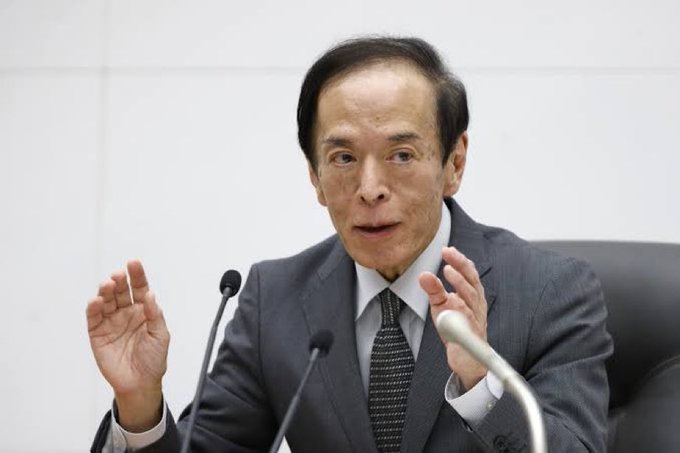
Having hiked rates to levels unseen in 15 years, there is little doubt that the BOJ has entered a tightening cycle. Governor Ueda did not rule out another hike this year and the yen responded quickly to his comments, rising to 150 against the dollar. Today it is trading at around 149. Weston Nakamura sees 152 as the most important price level in global macro right now and we are already well beyond it.

Japanese stocks reacted positively to yesterday’s decision, pumping across the board. However, the Nikkei 225 index slumped -2.5% today as exporters felt the pinch of a stronger yen.

US tech investors rotate into small caps

In the US, Fed chair Powell left rates unchanged while hinting that he is getting closer to a cut. The market fully expects this to happen in September and there will be visible disappointment in people’s brokerage accounts if it doesn’t. Volatility is already rearing its head. Tech stocks have sold off over the past month amid fears that the AI bubble might be bursting. Nvidia has been trending down from its 6 June high of $140.76 and a -7% dump on 29 July seemed ominous, but last night it pumped +12.7% after AMD’s better-than-expected earnings release. Go figure…

Hats off to strategist Tom Lee for calling the rotation into small caps. IWM has been the main beneficiary of the tech selloff.

The crypto coaster rolls on

Not to be outdone by chipmakers, crypto remains unpredictable over short time frames. At the Bitcoin conference in Nashville last week, none other than Donald Trump showed up to play to the crowd. His list of “promises” included: keeping the Bitcoin the US government has seized as a strategic reserve, (yes, wow!) firing Gary Gensler on day 1, ending the democrat’s war on crypto and making the US a leader in mining.

The air quotes around “promises” don’t need much explanation. Trump has zero interest in crypto and is plainly exploiting the dem’s antagonistic stance toward the industry for votes. But don’t let that distract you from the bigger picture: governments are examining Bitcoin as a strategic hedge against their own money-printing excess. The fact that this conversation is even happening is remarkable. Bitcoin game theory is going to get very interesting in the months and years ahead.

Bitcoin is back in the $64,000 range today, as it appears that the Biden/Harris camp may be selling off the reserve that Trump promised to keep. It’s never boring. See my Bitcoin bull market update for more.

Meanwhile, investors in Japan received a lesson in FOMO from Bitcoin proxy Metaplanet Inc. this week. Shares went on a tear after the company announced its Bitcoin treasury strategy in April and many people piled in late. Now the stock is coming back down to earth with a bang as the excitement wears off. Shares are down over -70% from their 24 July high and the move down doesn’t look done yet. Of course, every man and his dog wanted the stock when it was skyrocketing and nobody is interested now. There’s a clear lesson there. That said, I wouldn’t be surprised if Metaplanet makes another run if/when Bitcoin makes a decisive break above its previous all-time high and enters the parabolic phase of the cycle. Timing is everything in narrative-driven trades.

So, what to do?

I have noticed an uptick in clients trying to position and trade some of these macro moves, particularly the USD/JPY angle. The problem with access to unlimited information, content and opinion is the urge to react to it and do something. So here’s my two cents:

The summer, and perhaps the rest of the year, will see some turbulence. Volatility goes both up and down. Overall, the backdrop keeps me optimistic. Rate cuts in the US are coming – it’s just a question of when. As things currently stand, it would not be a panic cut, which is constructive for risk assets. US stocks, gold and crypto should react accordingly. Regardless of who wins, the US election will remove a lot of uncertainty. If you are broadly diversified, you could do a lot worse than fastening your seatbelt and taking a nap for a while.

If the BOJ is tightening and the Fed is loosening, the yen should continue to strengthen. This is going to put some strain on export-related Japanese stocks and the market as a whole looks more unpredictable than the US. Governor Ueda said he doesn’t think the rate hike will damage the Japanese economy. He’s probably right for now, but let’s see what kind of toll a series of hikes will take. The last time the BOJ tried to hike was 2007/2008 and that move was reversed in a hurry…

If you have been waiting for your chance to escape JPY and get into your base currency, that window is opening. Don’t miss it – long term it does not look good for the yen.

Stay hydrated folks!

Disclaimer: This should go without saying, but the information contained in this blog is not investment advice, or an incentive to invest, and should not be considered as such. This is for information only.

Gradually, then suddenly

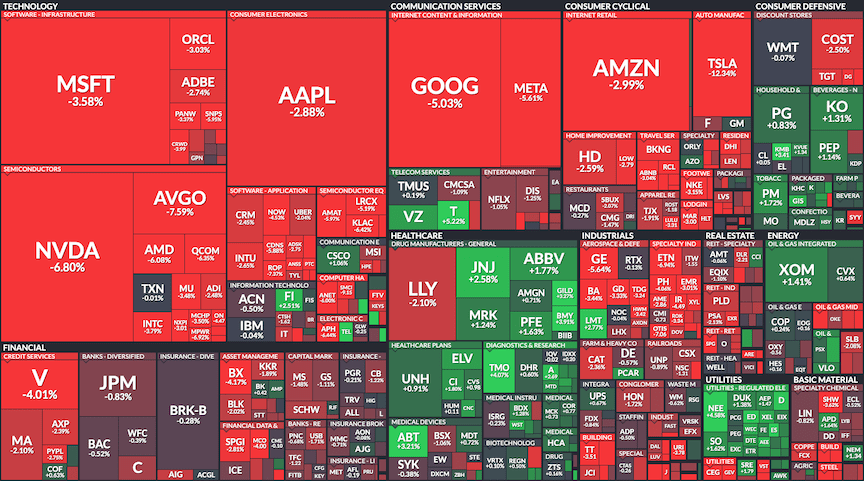
After showing signs of wobbling the last few weeks, US markets slumped on 24 July with big tech shares leading the move down. Tesla Inc (TSLA) fell -12.3% after a Q2 earnings miss while Alphabet Inc (GOOGL) dropped -5% despite beating earnings expectations. That was enough to trigger an avalanche and the NASDAQ ended -3.6% lower and the S&P 500 endured its worst day since 15 December 2022, falling -2.2%.

Correction territory

Japanese shares followed the US market down, with the Nikkei 225 index falling -3.3% today as exporters laboured under a strengthening yen. The benchmark index peaked on 11 July at ¥42,426 and has trended downwards since then. It turns out that I wasn’t imagining things when I asked Are we shaking? at the end of June.

Investors will now be wondering if this is simply a healthy correction after a big run-up or the start of a larger move downwards. It is too early to begin talking about a bear market but we are certainly in correction territory. A correction is defined as a fall of -10% from a recent high and the Nikkei closed today down -10.7% from the 11 July peak.

At 3pm today, USD/JPY was trading at ¥152.7. The current rebound in the yen is being driven by expectations that the Bank of Japan will raise rates at its policy meeting next week. In addition, the US Federal Reserve appears to be moving in the direction of rate cuts starting in September. A sustained sell-off in stocks may well need confirmation of rate cuts in order to stabilise.

Semiconductor stocks fall hard, Lawson delisted

Semiconductor-related stocks are bearing the brunt of the current selloff with Disco Corporation (6146) falling for seven straight days. Disco fell a further -4% today to close at ¥46,850, well off its peak of ¥68,850 set on 11 July.

In other news, convenience store operator Lawson Inc. was delisted from the TSE on 24 July following a successful tender offer from KDDI Corp. KDDI will partner with Lawson’s parent company, Mitsubishi Corp to take the company private.

A stock to watch

Crypto followed the trend in traditional markets with Bitcoin falling to around the $64,200 mark. Ethereum is down around -8% despite the successful launch of the Ethereum ETFs in the US on 23 July. 

Meanwhile, Japanese Bitcoin proxy Metaplanet Inc. (3350) has been on a wild ride. The stock has risen more than +1,100% since the company announced its Bitcoin treasury strategy in early April. However, the FOMO really kicked in this week with shares accelerating to ¥300 on 24 July. Metaplanet is back trading around ¥220 today but is still a stock to watch as investors try to front-run the potential decisive break of Bitcoin’s all-time high in the coming months. 

It seems likely that traders view Metaplanet as a tax-efficient way to gain exposure to Bitcoin price moves. Crypto in Japan is taxed as miscellaneous income, whereas stocks are taxed as capital gains.

Disclaimer: This should go without saying, but the information contained in this blog is not investment advice, or an incentive to invest, and should not be considered as such. This is for information only.

We’re so back!

The all-time highs keep coming. On Monday 9 July, the Nikkei 225 index made its highest ever close at ¥41,580.17. Semiconductor-related stocks led the way, while other notable movers included Hitachi Ltd (6501) and Fujikura Ltd (5803).

Not to be outdone, the S&P 500 and NASDAQ Composite also closed at record highs on 9 July. Gains were heavily weighted to big tech stocks as the AI narrative continues to drive market sentiment. Fed Chair Jerome Powell stuck to the script during his first day of testimony, reiterating that the Fed’s objective is to cool the economy and progress towards the 2% inflation target without cooling it too much. Market consensus continues to favour a soft landing scenario, with one or two rate cuts expected later this year. CPI data is due on Thursday and if that comes in line with expectations, the positive mood should continue.

Meanwhile, Tesla Inc (TSLA) continued its rebound, closing higher for the 10th consecutive day.

Japan’s real wages fall again, BOJ discussing cuts in bond purchases

Despite the good times in the stock market, much of Japan’s economy still looks relatively weak. Real wages fell by 1.4% in May, marking a record 26th month in decline. Wages are actually rising at the fastest pace in 31 years, but the increases are being offset by inflation, meaning households have less purchasing power.

USD/JPY is trading around ¥161.47 with no end to yen weakness in sight.

This week sees the Bank of Japan meeting with major market players to discuss the tapering of the central bank’s bond purchases. Some market participants are calling on the BOJ to cut bond purchases in half while others favour a more gradual reduction. The final plan is expected to be revealed at the BOJ’s end-of-July meeting.

Semiconductor shares remain strong, Hitachi and Fujikura impress

Chip stocks are once more powering ahead with Advantest Corp (6857) and Tokyo Electron Ltd (8035) gaining +4.1% and +3.8% respectively on 9 July. Chip materials maker Resonac Holdings Corp (4004) announced that it will form a consortium with nine other Japanese and US firms to collaborate on the development of semiconductor technologies for generative AI. Resonac shares surged +8.7% on the news.

Hitachi shares jumped +5.2% on reports that the company is increasingly focused on improving shareholder returns. On 2 July, the electronics giant provided an update on the progress of its buyback of up to 21 million shares at a cost of up to ¥200 billion. The company is targeting a total return ratio of around 50%, including dividends and buybacks – that would be on an expected net profit of 600 billion this fiscal year. Hitachi shares are up +89% year-to-date.

Another big mover was Fujikura Ltd, which jumped +11.4% on 9 July. Fujikura is an electrical equipment manufacturer that develops a range of telecommunication system products, including devices for optical fibres. It appears that Fujikura’s surge was spurred by a 12% move by Corning Inc (GLW) on 8 July after the company revised its sales forecast upward. Fujikura gained a little more today and is now up +228% in 2024.

Japanese stocks rose again today with the Nikkei 225 closing at another record high of ¥41,831.99. Financial stocks were up again on hopes that higher interest rates would bring improved profits. Mitsubishi UFJ Financial Group (8306) has gained over +8% in the past month and almost +50% year-to-date.

Bitcoin also bounced back from its current correction somewhat, moving from around $57,000 to $59,000 despite an increase in market supply from Mt Gox and the German government. Bitcoin ETF flows were positive again and traders eagerly await the SEC decision on Ethereum ETFs.

Disclaimer: This should go without saying, but the information contained in this blog is not investment advice, or an incentive to invest, and should not be considered as such. This is for information only.

Are we shaking?

Anyone who has lived in Japan for a while knows the feeling: a faint tremor, something moving in your peripherals, like the train next to yours slowly pulling away and you’re not sure which carriage is moving. You look up at your partner/friend/co-worker…

Are we shaking?

Earthquakes are not always so subtle of course. Sometimes that faint rumble becomes something bigger. And sometimes, it’s just a heavy truck passing by outside.

Did you feel that? Maybe it was just me? Of course, the market is not just one stock but, if you had to pick a name that has driven US markets to new highs this year, it would be Nvidia. Sure, your Apples and your Microsofts have been strong too, but nothing quite like this. And last week we finally saw a hint of weakness. It would hardly be the first dip this year – questions were asked in mid-February and again in mid-April. What we haven’t really seen is a broadening out of the stock rally into other industries. Charlie Bilello points out here that the top 5 holdings in the S&P 500 now make up 27% of the index, the highest concentration since 1980. He also notes here that the index’s P/E ratio moved above 25 last week, the highest level since Q1 2021.

So, the AI hype-driven tech boom (or is it a bubble?) is still the dominant narrative driving the US market. George Soros once said: ‘When I see a bubble forming, I rush to buy, adding fuel to the fire.’ This is precisely what less savvy investors do too. However, they are rarely as clever as Soros when it comes time to take profits and get out.

Pockets of recession

US economic data continues to come in better than expected. Certainly better than small businesses and low-income families are feeling at this point. To wildly misquote one of my favourite writers, William Gibson: ‘Recession is already here – it’s just not evenly distributed.’

This one-hour podcast with James Lavish is worth a listen if you want to get a better understanding of the impending US debt crisis. He talks about how pockets of recession are already forming, they just haven’t spread broadly across the economy yet.

Are Japanese stocks stalling?

Speaking of debt crises, how is Japan doing? USD/JPY is creeping ever closer to the ¥160 level. Rubbing salt into the wound, the US has just put Japan back on the currency manipulator watch list. This could all be solved by the Bank of Japan raising rates in a hurry but it’s the debt that makes that rather difficult. Bad demographics, sky-high debt to GDP and a doomed currency – good thing we choose to live here for the harmony and the mild weather, desho?

After a fantastic run, there are signs that Japanese stocks are stalling too. (are we shaking?) Foreign investors, who played a significant role in driving the market to post-bubble highs, have largely been unloading in the last couple of weeks in the face of lacklustre economic data and persistent yen weakness. The Bank of Japan can no longer be relied on to buy ETFs on down days either. Stocks take the stairs up but they’re known to take the elevator back down…

Meanwhile, the Norinchukin Bank has gotten itself into quite a pickle. The fishers, farmers and foresters cooperative was long US treasuries and, trying to be sensible, it was currency hedged. That meant it endured the two-year rout in US bonds without any of the benefit of the strong dollar when converting holdings back into yen. As a result, it is having to fire sale around $60 billion of its $310 billion in foreign assets and eat the loss. I have preached for some time that currency is the biggest risk most investors don’t know they are taking, but I never considered getting burned like this by being currency hedged – ouch!!!

To sell or not to sell?

This is beginning to sound like a terribly negative post, but it’s really just a reflection of my thoughts about taking some profit and de-risking for a while. Just to be clear here, I am talking about adjusting tactical or satellite holdings. I don’t see any reason to make any changes to my long-term core investments. I own US tech stocks and a range of Japanese stocks in my core portfolio and am happy to keep them. However, I also own some of these same assets tactically – that’s to say I bought them at an opportune time with a shorter time frame in mind. Those are the ones I am getting tempted to sell.

Everyone is a genius in a bull market. You will notice though, that no one wants to tell you when to sell. Except maybe the macro doomers, but they’ve been telling you to sell the whole time markets have been rising, so let’s leave them out of this. For sure, it is smart not to fight the trend, and in US tech and Japanese equities, the trend has been unmistakably upward. There is also the fear of leaving money on the table and looking silly if markets pump after what turned out to be a minor correction.

However, we are talking tactical and that means buy low, sell high. If you are yen base currency and you bought US tech stocks a couple of years ago, not only have you made nice gains in the stocks, but the weak yen has boosted your profits significantly. You could be forgiven for cashing out back to yen and taking the win. The same can be said if you got trapped in yen and instead bought Japanese stocks to counter inflation and the market then went off to the races. That’s a nice win too, but you have to sell before you take the victory lap.

The big question is, supposing you sell, what do you do with the money next? If you are going to spend it on a sports car or a nice holiday, good for you! But if you still have to worry about keeping pace with inflation and currency debasement, you are going to have to find a suitable home for it. Sitting in cash for a few months and then catching a big drop in markets would be ideal, but we are not playing on easy mode here.

These are the thoughts I have on a Monday afternoon with the Nikkei up +0.5% to ¥38,804 and US stock futures looking steady. Perhaps I’ll just sit on this one for a while. Doing nothing is frequently the smartest play, but did you feel that? Maybe we are shaking?

Disclaimer: This should go without saying, but the information contained in this blog is not investment advice, or an incentive to invest, and should not be considered as such. This is for information only.

All-time highs!

I spent the last year and a half writing financial content for a broker. I enjoyed the experience immensely and learned a lot in the process. Unfortunately, the contract ended, but I now have 10-12 hours a week that have been returned to me. So, readers of this blog may notice some extra market commentary/analysis being posted here. I hope it is useful.

It’s central bank week, with both the Federal Reserve (Fed) and the Bank of Japan (BOJ) conducting their policy meetings. As expected, the Fed held rates steady at 5.25-5.5% while CPI came in marginally cooler than expected. The Fed was surprisingly hawkish, forecasting just one rate cut in 2024.

Some think the BOJ may actually tighten at their meeting. If they do, it will likely be a minor adjustment. There will certainly be discussion about reducing the purchase of government bonds.

USD/JPY is currently trading close to the ¥157 level. With no major change in the US/Japan interest rate differential, we can expect the yen to remain weak for some time.

US markets hit all-time highs

In the US, the S&P 500 and the NASDAQ hit fresh all-time highs overnight. Apple Inc (AAPL) rose again after jumping +7.3% on 11 June when it unveiled a range of AI-enabled features and software for its devices. Apple overtook Microsoft Corporation (MSFT) to once more become the world’s most valuable company. Apple’s market cap now stands at a staggering $3.27 trillion.

Oracle Corporation (ORCL) surged +13.3% after the cloud technology company announced two new partnerships with OpenAI and Google Cloud while also forecasting strong revenue growth in fiscal 2025. Broadcom Inc (AVGO) jumped +14.6% after hours on strong earnings and a big stock split.

TDK and Hitachi set new highs since listing

Japanese stocks are largely in wait-and-see mode as the BOJ meeting kicks off today. TDK Corp (6762) has set another new high since listing as electronic parts stocks related to Apple are bought up. TDK announced in December that it will manufacture lithium-ion battery cells for iPhones in India.

Hitachi Ltd (6501) also hit a new high since listing of ¥17,340 on 11 June. On 7 June, its subsidiary, Hitachi Energy announced that it will invest $4.5 billion to increase production of power transmission and distribution equipment by 2027. Hitachi shares have cooled a little in the last couple of days, despite the announcement of plans to invest ¥300 billion in generative AI in fiscal 2025.

At lunchtime on 13 June the Nikkei 225 index is up slightly to ¥38,831.

Crypto stocks rise

Bitcoin, being the quickest asset to react to economic data and central bank policy, fell the day before the CPI data release and immediately bounced when the numbers came in soft. At the time of writing BTC is trading at around the $68,000 mark. Crypto stocks fared well with both Microstrategy Inc (MSTR) and Marathon Digital Holdings Inc (MARA) up overnight. Meanwhile, in Japan, Metaplanet Inc (3350) announced the purchase of an additional 23.35 Bitcoin on 11 June. The company now holds 141.07 Bitcoins, acquired at an average price of ¥10,278,391 per coin. Shares are up +494% since Metaplanet announced the adoption of Bitcoin as its core treasury asset on 8 April.

Disclaimer: This should go without saying, but the information contained in this blog is not investment advice, or an incentive to invest, and should not be considered as such. This is for information only.

Ad-hoc update and market observations

Once more, I find myself short of time to post here. However, it is not due to a lack of things going on in markets these days. So, here I am on a Friday afternoon with a little time to spare to share some observations. Let’s do it quick and dirty!

Macro

We seem to be at the mercy of central banks these days. The number of Fed watchers and Fed experts is growing exponentially, especially among those with high exposure to risk assets who are gasping for a rate cut! Inflation is coming down, but not as fast as Mr. Powell would like. (remember falling inflation still means prices are going up, just not as quickly as they were) You may notice how the US stock market pumps whenever Fed officials say anything vaguely dovish. It also jumps on any weak economic data. Bad news is good news – ie. if the economy is slowing, the Fed is more likely to cut rates and pump our stocks. Weak jobs report = market up. GDP lower than expected = market up. Whatever you think of the Fed’s performance, they have been abundantly clear that they are data dependent. If inflation comes down and/or the economy weakens significantly, cuts are more likely. My guess is not until late this year, maybe next year.

Despite all this, the US market is near all-time highs. Stocks sure do like to climb a wall of worry!

Of course, there is an election coming. Biden has rather brashly said on camera that he thinks rates will come down. Yes, the Fed is independent and not susceptible to political pressure, right? The last time Trump won, the market went up. And you can bet the orange one will be applying heavy pressure for rate cuts if he wins again.

Of course, worsening economic data puts recession firmly on the table. Stocks do not like the R-word. However, recession also means rate cuts and the mere whiff of them may be enough to reignite irrational exuberance across risk assets. It’s going to be interesting…

Japan

The Nikkei is trading over ¥38,000 with bond yields pushing 1% and the yen at ¥157 to the dollar. If you had predicted this a few years ago, nobody would have believed you! I keep seeing articles about ‘the sun rising on a new Japanese bull market’. I don’t know where these writers have been for the last 2 years… I keep getting tempted to take some profits but doing nothing has worked nicely so far. Still, you might want to make sure your seatbelt is securely fastened. Turbulence is no fun, as we learned in recent news about a UK to Singapore flight.

In theory, rate cuts in the US will reduce the interest rate differential between the US/Japan and the yen should strengthen. Again, I don’t think it will be until later this year at the earliest, and maybe well into next year, but there may be some relief for the yen in the near term. Long term looks dark though, ladies and gents. If you got stuck in yen but it’s not your base currency, I would take any chance you get to reverse that. The market doesn’t owe you anything.

Time to get long on electricity generators?

Remember when Bitcoin was boiling the oceans and drinking swimming pools full of water like tequila shots? Crypto is forgiven. There’s a new bad guy in town and ChatGPT is hungry for electricity and in dire need of a drink! I’m pressed for time so you can google yourself, but data centres for AI are consuming mucho power and they get hot while they do it – I literally saw an article this morning about some crazy number of swimming pools needed to cool everything down. If you think demand for power is going anywhere but up, I don’t know what to say to you.

While on the topic of AI, chip giant Nvidia nailed earnings yet again. And raised their guidance to suggest more next quarter. Absolute monster company. Semiconductors, AI, data centres: all going bonkers.

The stock is up +594% over the last 3 years. Expect volatility, sure, but it’s not slowing down yet…

Crypto bull market progress

The Bitcoin halving is behind us. We got a pretty good pullback to $56k from $70k and now we are back at $67k. We didn’t even get to the good part yet. I still think people are underestimating how crazy this cycle will get. Another thing to strap in for!

The Biden admin, spearheaded by Senator Karen (sorry, Warren) has been openly hostile towards the industry ever since Sam Bankman-Fried torched them. These guys could rival the EU in crushing innovation. But then a funny thing happened: Trump came out and said ‘If you like crypto, you better vote for me’. Then he started accepting donations in crypto. Suddenly the crypto vote is leaning heavily towards orange man. And what do you know? We got an Ethereum ETF. Believe me when I say, there was ZERO chance of an ETH ETF getting approved a few weeks ago.

ETH has underperformed this whole cycle. And judging by today’s weak ETF reaction, the PTSD is real. The Bitcoin ETFs blew away expectations in terms of inflows. Watch for ETH doing the same.

There are many ways to play the crypto bull. Metaplanet Inc, a Japanese company no one had ever heard of, (they do hotel development and some web3 stuff) announced on 8 April that they were adopting Bitcoin as their core treasury asset, a la Microstrategy. The stock went from ¥19 to ¥36 on the news. Now it’s at ¥57, having touched ¥120 on 23 May. They’ve got Mark Yusko on the board and Dylan LeClair as Director of Bitcoin strategy.

I’m not saying you should buy this stock. (Disclaimer below!) I’m saying you should put it on your watchlist and forget about it until Bitcoin breaks out past the previous cycle all-time high, goes parabolic and then you can kick yourself for not owning such an obvious play on the bull market. (insert wink emoji here)

Supply and demand

Being dumb but with a high appetite for risk if you can explain something to me in simple terms, I own a copper ETF. (1693) I was hearing for some time that the demand for copper is going to far outstrip supply, so I got some exposure. So far, so good. A lot of clever people are saying the move is overdone and we are going lower, but these are low-time frame traders and from what I can tell, the long-term supply/demand dynamics are unchanged. But what do I know? Regardless, we’re gonna need some popcorn over here, please.

A note here: we are talking about satellite holdings and my long term diversified portfolio is completely unchanged, moisturised, happy in its lane etc etc.

I’m out of time here but lastly, somebody helpfully reminded me that Ben at Retire Japan is offering a 50% discount if you pre-order his 2024 Guide to NISA. I don’t see how you can afford to miss that. Click here!

Until next time!

Disclaimer: This should go without saying, but the information contained in this blog is not investment advice, or an incentive to invest, and should not be considered as such. This is for information only.

Harden up your assets!

With the weather warming up, I’m starting to get the itch to get back out on the golf course. I know people who don’t play the game struggle to see what is so interesting about golf, but I can tell you there is a lot more to it than just chasing a little white ball around the countryside. Golf may be a competitive sport professionally, and many amateurs like to put a bit of money on the line against their mates. However, anyone who has played the game knows that it’s never you against the other player. It’s all about the battle between you and the golf course. Or, more accurately, the battle between you and that space between your ears. If you focus on what the other guy is doing, you are always going to lose. Knowing who the real opponent is is the key to improvement.

The same can be said for investing. If you’re a trader, you are playing a zero-sum game. Every time you win, someone on the other side of the trade loses. However, it’s not like this for investors. It’s not a competition between you and other people. What everyone else is doing is irrelevant. You need to master yourself, and more importantly, you have to know what it is you are competing against.

People tend to think they are trying to beat the market but that is really not the case. The market just is. It doesn’t even know you exist. It’s the sum of all the information available driven by the impulse of human emotion. You cannot conquer this beast. The market just tells you the price of things, no matter how crazy it may seem.

Know your enemy

If you are going to be successful at investing, you better know what you are up against. What exactly is it you are trying to beat? Think about that for a minute. Why is it that you have to expend all this time and energy trying to run your own personal hedge fund? Why do you have to pay some ‘expert’ to guide you through this lifelong struggle? Why can’t you just put your money in the bank and get on with more important things?

The standard answer to these questions can be summed up in one word: inflation. But what does that mean? Well, here’s the definition: inflation is the rise in the cost of goods and services over time. It sounds almost innocent, doesn’t it? The price of things just goes up a little over time, so you should invest to keep pace with it. No big deal right? Any half-decent financial planner can help you put a plan in place to handle that.

The truth is a little more sinister. That 2-3% inflation number that governments and central banks report to you every month is heavily manipulated to begin with. But it doesn’t even come close to measuring the size of the monster that is actually eating up your spending power. The final boss, the thing you are really playing against is much more significant than a natural rise in the price of stuff over time.

You are competing against currency debasement.

What the hell is that you ask? Well, in the old days, when coins were made out of gold and silver, debasement was the act of mixing base metals with the precious metals, therefore reducing the amount of the ‘good stuff’ in money. By using less gold and silver in the coins, the issuer lowered the value of the currency.

These days, debasement takes place when a government prints money, increasing the money supply without a corresponding increase in output. Debasement gifts more money to governments for spending and bailing out their banker friends, and the result for citizens is inflation.

Can you think of a country where that may be happening?

Gold was long considered money, and still is by many people. A good way to judge if your currency is being debased is to take a look at how it is performing against gold.

Gold vs JPY

Hmmmm, maybe printing all that money in order to escape deflation has more than achieved the expected result…

And before we rag too hard on the Bank of Japan, here’s the US dollar. And yes, the chart goes back to 1832 – can you spot where the currency came off the gold standard?

Gold vs USD

If that doesn’t make you mad, I don’t know what will. It certainly answers the question of why we have to spend so much time learning to invest.

You are probably understanding that investing is not a choice here. If you don’t learn how to do it, your spending power is toast. Do you think these governments are going to stop?

If anything, debasement is picking up the pace. The world’s economies took on too much debt and are not producing nearly enough to pay it back. The only way out of this hole is to inflate the currency which means that you and me get screwed.

Oh, and if you want to see what monetary debasement looks like when combined with climate change, take a look at cocoa these days:

Cocoa vs USD

Better stock up on Easter eggs folks!

Yes, all Fiat currency

I know I said let’s not rag on Japan, but let’s rag on Japan, shall we? Finance Minister Suzuki has been out every day this week expressing his ‘concern’ over ‘excessive’ moves in the currency. After printing to infinity, he even had the nerve to blame the weakness in the yen on, wait for it, ‘speculators’!

It’s straight-up gaslighting and I’m ‘speculating’ that with debt to GDP at 263%, they are going to continue to incinerate the yen. Don’t get me wrong, this isn’t Turkey – the liras of this world are on their death bed and there isn’t long left to say your goodbyes. Japan has a highly developed and productive economy so the currency isn’t going to implode tomorrow, but have no doubt, it is going to die a slow and painful death and that pain will be felt by you if you don’t protect yourself.

The US dollar is the global reserve currency. This doesn’t free the US from the endgame of its own excessive money printing. It just means it will be the last man standing. All currencies will go down against the dollar. The dollar will go down after the demise of everything else.

No double bogeys!

Back to the golf analogy – I don’t know who said it but there’s a quote that goes something like: ‘A bogey is one bad shot. A double bogey is one bad shot followed by a stupid shot.’

If getting yourself into a position where you have money in yen that you one day want to spend in another currency was your mistake, it’s time to make sure your next shot isn’t a stupid one.

Even if you are planning to stay in Japan and spend your yen here, sitting in cash will devour your spending power. So how do you fight currency debasement? You have to own assets. Assets, like food and other goods, are ‘stuff’. A currency that is being debased goes down against stuff. The Nikkei 225 is not at ¥40,000 by accident. The denominator is going down against shares in companies. Japan’s average land prices rose by 2.3% last year. The denominator is going down against land. I look at my stocks app and a Japanese gold ETF is up over 3% today. It seems like people are getting the message. (great thread about that from Weston Nakamura here)

Harden up your assets

If you’ve been reading my blog for a while, you will be familiar with how I like to structure investments: a ‘core’ diversified portfolio that holds a broad range of assets combined with ‘satellite’ holdings of tactical assets that fit current market conditions. The satellite holdings you want to beef up in order to stave off currency debasement are ‘hard assets’. By this, we mean tangible assets or assets that have a fundamental value. Real estate is a good example. Commodities, especially gold, are another.

You don’t have to buy houses, office buildings and bars of gold to achieve this. You can own Real Estate Investment Trusts (REITs) for a small amount of money. You can own a gold ETF. Is the real thing better? Sure, but we don’t have to be purists about it. The currency is going down against gold ETFs – problem solved.

You’re going to talk about Bitcoin again, aren’t you?

Nah, I’ll just post a chart.

Rock hard supply-capped digital asset vs currency debasement

Happy Easter everyone!

Put this blog post in a tweet

Disclaimer: This should go without saying, but the information contained in this blog is not investment advice, or an incentive to invest, and should not be considered as such. This is for information only.

2024 – Here goes nothing!

Happy New Year everybody! I hope you all enjoyed a peaceful winter holiday and are back, raring to go and make big things happen.

For some reason, I had a feeling that this was going to be a challenging year and it didn’t really get off to the best start in Japan. For those interested, I was googling around yesterday trying to figure out the best way to donate to disaster relief on the Noto Peninsula. I found this page run by Ishikawa Prefecture. You can download a form here to request a receipt for your donation for tax purposes. Donations qualify for the donation deduction and there is a useful FAQ on the tax treatment of donations here.

So yeah, earthquakes, runway collisions, fires and we’re only a third of the way through January!

From a personal finance and investing perspective, there is some exciting stuff going on though. The New NISA has launched. I logged into my SBI account and it was pretty simple to get started. I have already set up the ‘tsumitate’ allocation and started buying some stocks for the ‘growth’ allocation. Clearly, everyone else is doing the same thing as the Nikkei is pumping so far this year!

I posted a couple of interesting takes on Japan on ‘X’ yesterday: an optimistic look at the year ahead from Jesper Koll and a much darker look at the demographic issues facing Japan from author Nire Shūhei. It always pays to look at both sides.

So how to invest in the year ahead? If you have been reading this blog over time, you will know that I divide investments up into core and satellite allocations. The core is a diversified portfolio weighted heavily to your base currency that just gets rebalanced once a year. This would typically account for around 70-80% of your investments and the idea is to keep adding to it as much as you can. If it’s a bit dull and boring, you are probably doing it right!

The other 20-30% can be allocated to satellite holdings, which may be a little more racy and exhibit a higher risk-return profile. If this part isn’t fun, then you are probably doing it wrong!

Satellite holdings will change over time depending on the economic environment we are in. So how are things looking?

Some thoughts

On the one hand, things look pretty much like they did for most of last year. The Fed funds rate is 5.5%. People who are obviously long risk assets have been trumpeting the start of rate cuts as early as March, but Mr Powell doesn’t look like he’s in much of a hurry to me. Although the Bank of Japan has adjusted its yield curve control policy and allowed long-term interest rates to rise a little, it is still continuing with its negative interest rate policy. There has been a significant amount of speculation, from both within and outside Japan, about when the BOJ will ‘normalise’ rates – I do love this term, like there is a way to return to normal with government debt to GDP at 264%! Gulp…

Despite noises being made about an exit from negative rate policy, it’s notable how quickly these ideas get put on the shelf. Comments I have heard recently include: ‘The earthquake will make it harder to normalise rates’. Probably true, but any excuse to avoid the inevitable. The Labour Ministry’s November report showed that real wages have declined for the past 20 months in a row, so there’s no sign of the mystical ‘virtuous cycle’ of wages outpacing price rises that would signal a move from the central bank.

It’s not going to happen, is it?

So if you’re waiting for the yen to get back to something sensible against the US dollar, good luck! Markets can remain irrational longer than you can remain solvent enough to go on a nice holiday abroad…

Japanese stocks, for the most part, are loving the weak yen. Any company with significant exports and profits abroad will see those profits magnified when converted back to yen. If you’re wondering why your Toyota shares are doing so well, there you are.

What kind of market is this?

Some time ago, I read the book Reminisces of a Stock Operator by Edwin Lefèvre. It’s considered somewhat of a bible by many investors. While there are some interesting tales of hi-jinks and high leverage, there was only really one key thing I got out of the book, but that one thing has stuck with me: Traders and investors should always know if we are in a bull market or a bear market.

It’s always the simple things that have the most impact, right? The protagonist in the book is a stock trader and his big-picture strategy is very simple: If he is in a bull market, he trades with a long bias. If he is in a bear market, he trades with a short bias. If you don’t know what kind of market you are in, you have no business trading, he says. The author coined the phrase ‘bulls and bears make money; pigs get slaughtered’.

Now, if you are a long-term investor, you don’t have to be concerned with trying to short-sell. You are more than likely to get into trouble. Simply replace the terms ‘long’ and ‘short’ with ‘risk-on’ and ‘risk-off’. Again, I am talking about satellite holdings here. You don’t have to overthink the core part of your portfolio.

Bull or bear?

The Nikkei 225 index gained around 28% last year. After such a positive start to the year, it is widely expected to keep on trucking. It’s pretty clear we are currently in a bull market. If you live in Japan and have a need for JPY base currency, then Japanese stocks are a good place to be.

The only question is what could go wrong? What could bring an end to the bull market?

I think the main short-term danger is a recession in the US. Although the financial press continues to focus on the ‘soft landing’ narrative, history tells us that rate-tightening cycles rarely have a happy ending. Depending on the depth of the recession, US stocks could fall anywhere between 20-50%. I don’t see how Japan just keeps sailing on if that happens, no matter how much better value stocks here may be. If you have already loaded up your investments for the year, I don’t think that’s a bad thing but be prepared to navigate some choppy seas. So it may not be a reason to go risk-off, but be prepared for some volatility.

The BOJ is another matter. If they actually did try to raise rates we would probably experience more than a minor squall. My expectation is they daren’t even try but let’s keep an eye on them. At year-end, I was watching a news feature where they interviewed Japanese business leaders and asked them their views on the stock market for 2024. When asked what they thought was the biggest danger to the Nikkei bull market, the majority of them said ‘the election of Donald Trump’. Interesting…my feeling is these guys need to look a little closer to home.

I’m not even going to get into geopolitics. Lots of risk there, but what are you gonna do?

Outside of Japan, US markets are making all-time highs. However, when you look under the hood, the good cheer is really driven by one group of stocks, known as the Magnificent Seven. If this is a new term to you, the stocks are Alphabet, Amazon, Apple, Meta, Microsoft, Nvidia and Tesla. The size of this group is truly staggering – last time I looked, the combined market cap was around $11.7 trillion. That’s about equivalent to the entire stock markets of Japan, the UK and Canada combined! This group returned around 107% in 2023.

So this bull market is clearly a Magnificent Seven bull market, and the narrative driving it is AI. If you own any kind of global stock fund, go and check their top ten holdings. I’ll bet you that these seven stocks feature prominently.

This group of stocks are a must-own. If you feel you don’t own enough of them, a US recession and corresponding sell-off in the stock market could present a nice opportunity.

Emerging markets could be worth a whole new post, but here’s the tldr: everyone is buying India, not China.

US government bonds got clobbered through this rate hike cycle. If you bought them after the clobbering, you will probably do well as rates eventually subside.

I’m from the UK, so I usually keep an eye on the market over there, but wow, that does not look to me like a place I would want to allocate capital unless I was actually moving back there. Everything about it screams bear…

The biggest bull of all

Of course, the heavyweight champion of satellite holdings is my personal favourite. Yes, the Bitcoin-led crypto bull market is upon us. I already wrote the post on that, it’s right here. You know what to do.

Or do you? I saw a great tweet by Tuur Demeester earlier, in which he said that many people will adopt crypto reluctantly. ‘Hate buying’ he calls it. He also points out how the SEC just ‘hate approved’ the spot Bitcoin ETFs. So why are people going to buy something they hate in the end?

The answer, perhaps, lies in the ongoing debasement of Fiat money, which has accelerated considerably since the 2008 financial crisis. Raoul Pal talks about this a lot and has some great charts. You think your stocks are going up, but really it’s just the purchasing power of your money going down, and you are barely breaking even. People are gradually waking up to this. And there are not many assets that are likely to outperform this money debasement over time. Gold is not getting there. Tech stocks will probably do it, and crypto will likely do it too. Maybe you’re not ready yet, but one day you will be, and you might hate it, but you will probably buy it in the end. Better to rip off the band-aid now perhaps?

On that note, I wish you a happy and prosperous 2024!

Disclaimer: This should go without saying, but the information contained in this blog is not investment advice, or an incentive to invest, and should not be considered as such. This is for information only.