In this economy?

It’s been another interesting week. ‘Big Short’ legend Michael Burry returned to X to call out the AI bubble, posting charts that question whether the ongoing mega AI capex boom really matches demand. Burry pops up every now and then to predict disaster, and his hit rate post-2008 is not all that spectacular. However, he followed up by filing his investment firm’s 13F 11 days early, showing that he is short 1 million Nvidia shares and 5 million Palantir shares.

Money where his mouth is.

The market took notice and US tech stocks tumbled on 4 November. Japanese stocks followed suit, with Softbank Group dumping almost -17% over 2 days. This comes at a time when the US government shutdown is blocking the liquidity faucet and tightening things up considerably.

Crypto didn’t like it either, but hey…

Predictably, President Trump issued some positive comments about stocks and Bitcoin overnight, and the situation calmed down. Every time I think this market is ready to begin its descent into hell, I’m reminded that the guy in charge of America has a vested interest in keeping it above ground…

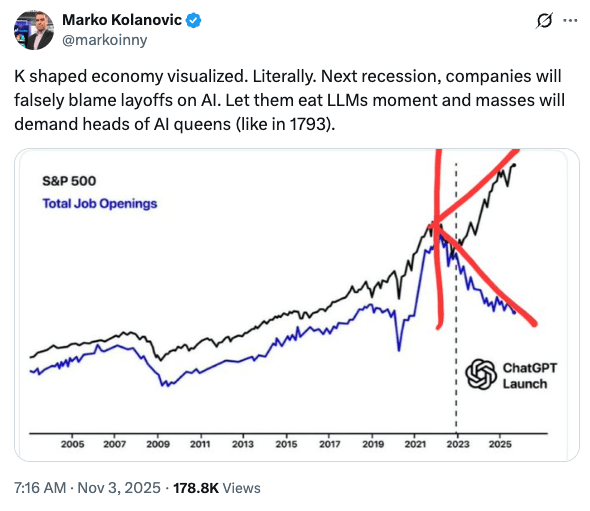
Clearly, Burry is hitting a nerve with AI bubble enjoyers. Here’s a great thread from Marko Bjegovic covering why he is probably correct.

The ‘K-shaped’ economy

You are probably hearing this term lately. The K-shape represents the latest expression of wealth inequality. Essentially, high earners and large corporations are getting richer as asset prices rise, while low-income households and small businesses, the lower leg of the K, are struggling to get by.

High-end products are selling, while companies like Chipotle are finding their customers poorer and less inclined to visit.

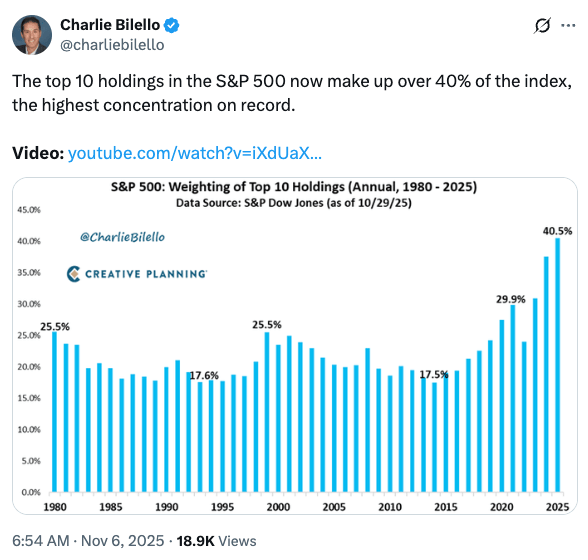
Here’s another way of looking at the K-shape, from a different Marko:

Speaking of liquidity and the AI bubble, Ray Dalio just posted about how the Fed is stimulating at an odd time. I’m not sure the Fed is really beginning QE, as he says, but it is certainly ending QT, cutting rates and taking an expansionary stance. This is something it would generally do when the economy is in trouble. Instead, the backdrop for the Fed’s easing is high asset valuations, a relatively strong economy, inflation above target and abundant credit. Not to mention a bubble in AI-related stocks – the elephant in the room, so to speak.

The Trump administration is taking a bold and probably reckless bet on growth, and particularly AI growth. What could go wrong???

Time to take profit?

We’ve been talking about a melt-up before a melt-down, but that’s by no means guaranteed, and we’ve already melted up a lot.

Stock investors, belonging to the top leg of the K, have done very well, but are now faced with a choice: remain invested and ride through the bubble or protect capital. As Michael Burry experienced in 2008, bubbles can keep inflating and punishing shorts for a long time before they finally pop. Younger investors can probably handle the drawdown, provided they are disciplined enough not to sell the bust. We all know the drill when panic hits: as the last desperate few capitulate, central banks will cut rates, stimulate, and markets will surge back over the next 12-18 months.

People who are getting closer to spending their investment money should probably think more carefully. There may not be a better opportunity to take risk off the table and diversify for some time. Nobody ever went broke taking profit, especially around all-time highs.

For people in between, US treasuries are holding up as a safe haven as well as anything else at this time. Spreading some of the risk also serves an often overlooked purpose: offering the opportunity to rebalance and buy the bottom in stocks if we do suffer a crash. I stand by my belief that anyone with a meaningful amount of money should be well diversified at a time like this.

The stock market is not the economy

Here in Japan, we are enjoying the Nikkei holding above the ¥50,000 mark. That doesn’t mean we escaped the K-shaped economy. In a rare quiet moment the other evening, I was thinking about Japan’s economy and why interest rates don’t seem to go up much. Aside from the rich asset holders, many people are struggling. Wages still lag inflation. 5kg of rice is almost ¥5,000. The lower/middle classes do not have a lot of money to spend.

Fewer people spending money is bad for the economy. The general expectation seems to be that interest rates will rise gradually. They certainly won’t rise quickly. Higher rates would mean higher interest payments on government debt. PM Takaichi is focused on growth, not inflation.

Should we really expect a meaningful rise in interest rates? I simply can’t see it.

If rates can’t rise, then the yen remains weak, prices increase, stocks and Tokyo property appreciate, and low-income families continue to struggle.

If all this is true, then what’s the trade?

Own dollars, own financial assets, own hard assets, and be kind…

Disclaimer: This should go without saying, but the information contained in this blog is not investment advice, or an incentive to invest, and should not be considered as such. This is for information only.

What’s your Japan plan?

I started this site in 2017 and ran out of things to say about the basics of financial planning some time ago. If you are just getting started, I put together a thread of simple financial planning tips from my early posts, which you can view on X here.

The basics don’t change, but the environment can change drastically. If you plan to live in Japan for the long term, you are probably now figuring out how to adjust from living in a country where deflation was the norm to one where prices are rising. Looking into the future, one of the big questions is whether this inflationary environment will stick, or will Japan be back at zero interest rates and falling prices in a few years? How can we plan when we don’t know the variables we will likely deal with?

Prediction is very difficult, especially if it’s about the future. – Niels Bohr

I have a client who was an economist at a financial institution for many years. He told me he always felt it was his job to have a view. For some reason that has stuck with me and I think it is important in my job too. It’s also important not to be wrong, though! I wish I could tell you I have always held the correct view and never been wrong, but I doubt you would believe me. I have, however, gained some experience over the years, which has helped me develop some skills in dealing with the uncertain future we face.

Strong views, loosely held.

Having a view is helpful but you don’t have to marry it. If something changes or evidence comes to light that proves you wrong, you can simply change your view. Don’t get caught up in the social media battle to be right about everything. In just the last few years, people have pivoted from being epidemiologists to vaccine experts to geopolitical analysts to macroeconomists to AI gurus and now, tariff experts.

It’s exhausting.

So, I thought today I would take a look at some basic data about the Japanese economy and share my view on what a person living here should focus on in terms of financial planning and investment.

Debt is a problem

Japan still has a strong, productive economy but it is not expected to grow fast. The predicted real GDP change for 2025 is 1.1%. (IMF) Government debt to GDP is currently 255%. (Trading Economics)

December 2024 CPI (inflation) was 3.6% and, in response, the Bank of Japan recently increased the overnight interest rate to 0.5%. The 10-year yield on government bonds currently stands at around 1.2%.

Japan is clearly not going to grow out of its debt problem. Demographics do not support the level of growth required to meaningfully reduce the size of the mountain. When governments can’t outgrow their debt, they usually end up inflating their way out. I struggle to see how the BOJ leadership can raise rates high enough to head off this outcome but they will of course delay it as long as possible.

It doesn’t look good for the yen

In January 2023, I wrote a post charmingly titled How screwed is the yen? It actually holds up pretty well for a two-year-old post. The problems facing the currency have not changed very much and we are still hanging around at 155 yen to the dollar.

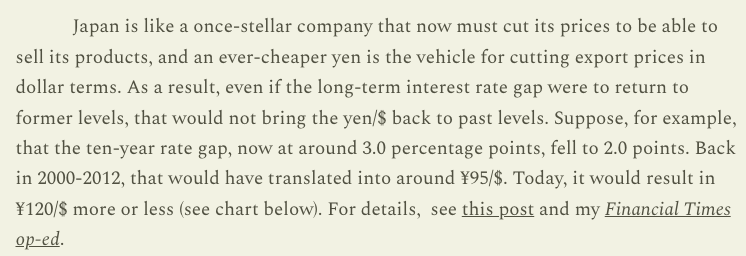
I have re-read this excellent post by Richard Katz several times: The BOJ, the Fed and The Future Of The Yen. He notes that although the gap between US and Japan overnight rates may close, the gap between the two countries’ long-term yields is unlikely to follow suit, meaning the yen probably won’t recover as strongly as some think it will. Here’s an excerpt from that piece:

Some of the issues people in Japan are facing when planning for their financial future are as follows:

  • Continuing yen weakness
  • Concern that the pension system will not meet their retirement needs
  • Rising interest rates, but not rising too far
  • Negative real rates (interest rates lower than the rate of inflation)
  • Rising wages but negative real wages relative to inflation

People are already feeling the pinch. If you bought rice recently, you know what I mean. Furthermore, prices of 1,656 food items are set to rise this month according to this Japan Times article.

So, what can we do?

If you are a regular reader, I am probably repeating myself, but here are some action items to consider:

Check your base currency – are you really going to spend all of your future money in Japan? Are there big expenses overseas that you are likely to be on the hook for in future? If so, you need to save and invest some or all of your money in that currency. More on that here: What is your base currency?

JPY cash is trash – even if your base currency is yen, you are going to lose against inflation over time if you keep all of your money in the bank. Sure, you need to keep a liquid emergency cash reserve, but everything else needs to go somewhere more productive. CPI was 3.6% in December. The BOJ’s target inflation rate is 2%. How much is your bank paying you in interest?

Fill up tax-free vehicles first – another no-brainer. If you are eligible for NISA and/or iDeCo, they are the first stop for investment money. NISA especially is an incredible deal as you can access the money freely if you really have to. Bad luck if you are a US citizen – you should explore options for investing back home. And remember, if your spouse is eligible, they should be maxing out tax-advantaged options, too.

Yen-cost average – if you are young, regular investment in a global stock index fund/ETF is a perfectly good strategy. You can worry about diversification later.

Learn to diversify – lump sum investments require more care. And the closer you get to spending your capital, the more you need to protect it. Diversification across asset classes (not geographical areas) is how you do this. Own some bonds, stocks (growth, value, dividend), property (physical or REIT), commodities and alternatives. Use a core/satellite allocation to dial up/down risk.

Explore dividend stocks – Japanese dividend stocks offer a great way to keep pace with inflation in yen terms. More here: How to beat inflation with Japanese dividend stocks

Lever up – if you are here for the long run, owning property is still better than renting. Even if you are risk averse, I am still seeing 35-year fixed-rate mortgages at under 2%. Floating rates are still well below 1% and, in some cases lower than 0.5%. It is still very cheap to borrow money for a home in Japan.

Stack gold and bitcoin – the two kings of hard assets and possibly the only satellite holdings you need. Average in over time and hold. More here: Facing inflation – the four assets you should own

A fistful of dollars – if you are the entrepreneurial type, I recommend brainstorming ways to earn money in USD. As the global reserve currency, it will be the last one standing in the Fiat race to the bottom. Read up on the dollar milkshake theory. If you can get paid in bitcoin, even better!

To summarise: have a view, make a plan and adjust it as you go. If you need help, don’t be shy about getting some. You will get better at this with practice.

Top image by tawatchai07 on Freepik

Disclaimer: This should go without saying, but the information contained in this blog is not investment advice, or an incentive to invest, and should not be considered as such. This is for information only.

PlanetDAO: A new approach to preserving Japanese cultural properties

Today, we have a guest post from the team at PlanetDAO. I discovered their Facebook ad last week and was intrigued by their focus on protecting cultural heritage whilst embracing the principles of decentralisation. After exploring their website, I made a modest investment in the Hayama Bamboo Forest House project – not primarily for financial gain, but because I believe in the project and want to be part of it. I’m excited about engaging with the local community and other co-owners.

This is not a paid post, and there are no affiliate links. I’m sharing simply because I admire PlanetDAO’s work and the DAO model.

And now, I will turn it over to PlanetDAO to explain more.

Contributed by the PlanetDAO Team

PlanetDAO was launched to address a growing challenge in Japan: the preservation of cultural and historical properties. As local economies evolve and traditional inheritance patterns shift, many significant buildings risk being lost to time. This innovative model addresses this challenge by connecting global investors with Japanese cultural properties.

The Challenge of Cultural Preservation

Historic properties in Japan, particularly temples and traditional houses called kominka, struggle with maintenance and preservation when local resources can no longer sustain them. PlanetDAO’s mission is to unlock these properties’ potential through the collective participation of a diverse global community.

A Collaborative Model

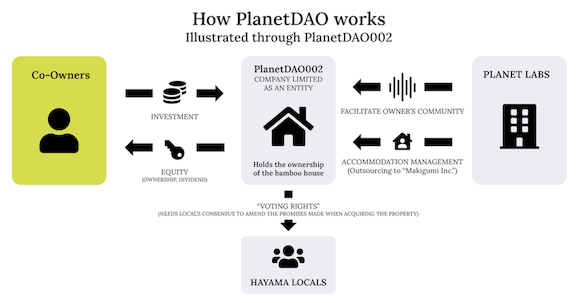
The model operates in four distinct phases. The process begins with identifying properties and building relationships with local communities during the sourcing phase. In the fundraising phase, opportunities open for interested parties to participate in property ownership. Throughout renovation, the focus shifts to property transformation while maintaining cultural integrity. The operational phase then combines vacation rental management with community engagement.

Participant Engagement

Participants who join the PlanetDAO community become co-owners, part of something larger than traditional property investment. The term “co-owners” rather than “investors” reflects the collaborative nature of these projects. Co-owners participate in voting on key decisions, engage with fellow community members through both digital platforms and in-person events, and play an active role in shaping the future of these cultural properties.

First Success: Ryogonji Temple (PlanetDAO001)

PlanetDAO’s first project, Ryogonji Temple, demonstrates the potential of this innovative approach. Located in the historic Irokawa district, this 170-year-old temple gained recognition as a registered Tangible Cultural Property in 2021. Adding to its historical significance, the stone stairs leading up to the temple have also been recognized as cultural heritage, symbolizing the enduring craftsmanship and cultural richness of the region. Despite its relevance, only four local supporters remained, leaving the temple’s future uncertain.

Through community investment, the project raised ¥34,540,000 for preservation and development. Today, the project has 134 co-owners from 15 countries actively participating in its development. Co-owners engage through regular online meetings and voting, and several have already visited the property in person, demonstrating the genuine community involvement that the model fosters.

The project is now entering an exciting phase, with architects submitting proposals for the renovation. Co-owners will be involved in key decisions throughout this process, maintaining their active role in the property’s evolution. The property is scheduled to open for bookings in early spring 2026.

Current Project: Bamboo Forest House (PlanetDAO002)

The second project focuses on an 80-year-old residence in Hayama’s Kamiyamaguchi district, recognized as one of Japan’s top 100 Satoyama landscapes. The Bamboo Forest House holds historical significance as a former farmer’s residence and a cherished gathering place for local artisans.

The property features an impressive 7,199 square meters of bamboo forest, offering a tranquil retreat from urban life. The surrounding bamboo grove, carefully maintained for decades by the local community, creates a natural sanctuary that embodies traditional Japanese landscape aesthetics.

The project is currently open for investment, with detailed information about participation opportunities available on the PlanetDAO website.

Building Trust in a New Model

While the first project demonstrated the potential of this innovative approach, each new project brings its own challenges. The global nature of the DAO model, which invites participation from people worldwide who share a commitment to cultural preservation, requires building trust across borders and cultures.

Connecting with potential participants who may be unfamiliar with this investment approach takes time and patience. While in-person conversations often help address initial skepticism, establishing credibility in the digital age remains an ongoing journey. This challenge reinforces the importance of transparency and community building in PlanetDAO’s commitment to cultural property preservation.

Looking Forward

PlanetDAO continues to evolve its approach to cultural preservation. The team is exploring opportunities to expand to additional properties across Japan while developing new ways to engage global participants in local cultural preservation.

Those interested in joining this community of cultural preservation enthusiasts, or learning more about current and future projects, can visit the PlanetDAO website. The team welcomes scheduling online calls to share more about their vision and answer any questions.

Disclaimer: This post is for information only. It should not be considered personal financial advice and does not constitute an offer or solicitation to invest in any of PlanetDAO’s projects. Investments like these carry specific risks and readers should conduct their own research before proceeding.

Harden up your assets!

With the weather warming up, I’m starting to get the itch to get back out on the golf course. I know people who don’t play the game struggle to see what is so interesting about golf, but I can tell you there is a lot more to it than just chasing a little white ball around the countryside. Golf may be a competitive sport professionally, and many amateurs like to put a bit of money on the line against their mates. However, anyone who has played the game knows that it’s never you against the other player. It’s all about the battle between you and the golf course. Or, more accurately, the battle between you and that space between your ears. If you focus on what the other guy is doing, you are always going to lose. Knowing who the real opponent is is the key to improvement.

The same can be said for investing. If you’re a trader, you are playing a zero-sum game. Every time you win, someone on the other side of the trade loses. However, it’s not like this for investors. It’s not a competition between you and other people. What everyone else is doing is irrelevant. You need to master yourself, and more importantly, you have to know what it is you are competing against.

People tend to think they are trying to beat the market but that is really not the case. The market just is. It doesn’t even know you exist. It’s the sum of all the information available driven by the impulse of human emotion. You cannot conquer this beast. The market just tells you the price of things, no matter how crazy it may seem.

Know your enemy

If you are going to be successful at investing, you better know what you are up against. What exactly is it you are trying to beat? Think about that for a minute. Why is it that you have to expend all this time and energy trying to run your own personal hedge fund? Why do you have to pay some ‘expert’ to guide you through this lifelong struggle? Why can’t you just put your money in the bank and get on with more important things?

The standard answer to these questions can be summed up in one word: inflation. But what does that mean? Well, here’s the definition: inflation is the rise in the cost of goods and services over time. It sounds almost innocent, doesn’t it? The price of things just goes up a little over time, so you should invest to keep pace with it. No big deal right? Any half-decent financial planner can help you put a plan in place to handle that.

The truth is a little more sinister. That 2-3% inflation number that governments and central banks report to you every month is heavily manipulated to begin with. But it doesn’t even come close to measuring the size of the monster that is actually eating up your spending power. The final boss, the thing you are really playing against is much more significant than a natural rise in the price of stuff over time.

You are competing against currency debasement.

What the hell is that you ask? Well, in the old days, when coins were made out of gold and silver, debasement was the act of mixing base metals with the precious metals, therefore reducing the amount of the ‘good stuff’ in money. By using less gold and silver in the coins, the issuer lowered the value of the currency.

These days, debasement takes place when a government prints money, increasing the money supply without a corresponding increase in output. Debasement gifts more money to governments for spending and bailing out their banker friends, and the result for citizens is inflation.

Can you think of a country where that may be happening?

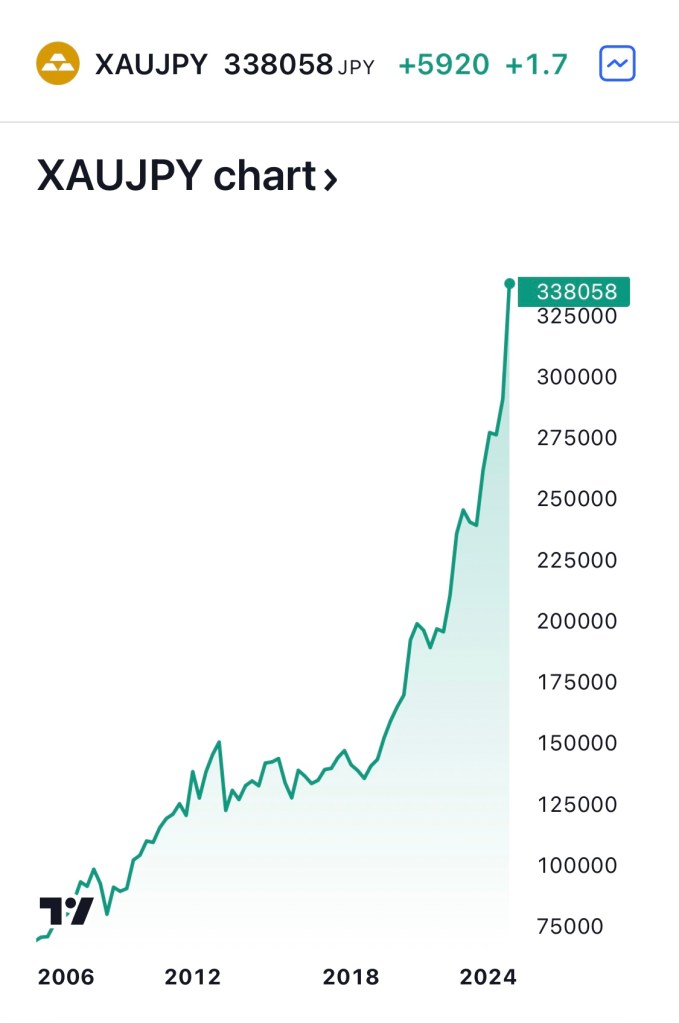
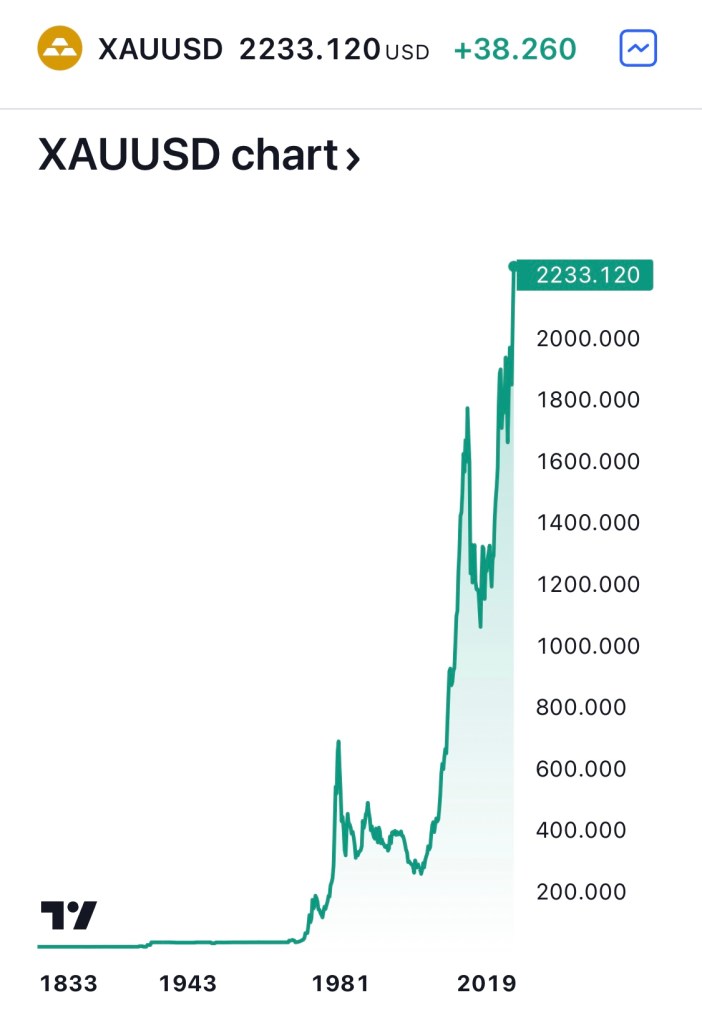
Gold was long considered money, and still is by many people. A good way to judge if your currency is being debased is to take a look at how it is performing against gold.

Gold vs JPY

Hmmmm, maybe printing all that money in order to escape deflation has more than achieved the expected result…

And before we rag too hard on the Bank of Japan, here’s the US dollar. And yes, the chart goes back to 1832 – can you spot where the currency came off the gold standard?

Gold vs USD

If that doesn’t make you mad, I don’t know what will. It certainly answers the question of why we have to spend so much time learning to invest.

You are probably understanding that investing is not a choice here. If you don’t learn how to do it, your spending power is toast. Do you think these governments are going to stop?

If anything, debasement is picking up the pace. The world’s economies took on too much debt and are not producing nearly enough to pay it back. The only way out of this hole is to inflate the currency which means that you and me get screwed.

Oh, and if you want to see what monetary debasement looks like when combined with climate change, take a look at cocoa these days:

Cocoa vs USD

Better stock up on Easter eggs folks!

Yes, all Fiat currency

I know I said let’s not rag on Japan, but let’s rag on Japan, shall we? Finance Minister Suzuki has been out every day this week expressing his ‘concern’ over ‘excessive’ moves in the currency. After printing to infinity, he even had the nerve to blame the weakness in the yen on, wait for it, ‘speculators’!

It’s straight-up gaslighting and I’m ‘speculating’ that with debt to GDP at 263%, they are going to continue to incinerate the yen. Don’t get me wrong, this isn’t Turkey – the liras of this world are on their death bed and there isn’t long left to say your goodbyes. Japan has a highly developed and productive economy so the currency isn’t going to implode tomorrow, but have no doubt, it is going to die a slow and painful death and that pain will be felt by you if you don’t protect yourself.

The US dollar is the global reserve currency. This doesn’t free the US from the endgame of its own excessive money printing. It just means it will be the last man standing. All currencies will go down against the dollar. The dollar will go down after the demise of everything else.

No double bogeys!

Back to the golf analogy – I don’t know who said it but there’s a quote that goes something like: ‘A bogey is one bad shot. A double bogey is one bad shot followed by a stupid shot.’

If getting yourself into a position where you have money in yen that you one day want to spend in another currency was your mistake, it’s time to make sure your next shot isn’t a stupid one.

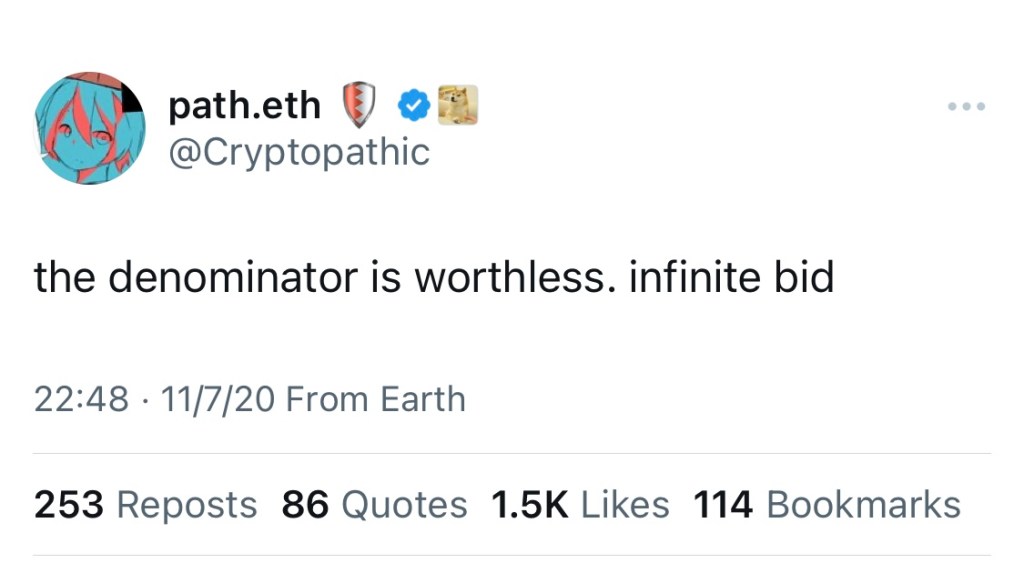
Even if you are planning to stay in Japan and spend your yen here, sitting in cash will devour your spending power. So how do you fight currency debasement? You have to own assets. Assets, like food and other goods, are ‘stuff’. A currency that is being debased goes down against stuff. The Nikkei 225 is not at ¥40,000 by accident. The denominator is going down against shares in companies. Japan’s average land prices rose by 2.3% last year. The denominator is going down against land. I look at my stocks app and a Japanese gold ETF is up over 3% today. It seems like people are getting the message. (great thread about that from Weston Nakamura here)

Harden up your assets

If you’ve been reading my blog for a while, you will be familiar with how I like to structure investments: a ‘core’ diversified portfolio that holds a broad range of assets combined with ‘satellite’ holdings of tactical assets that fit current market conditions. The satellite holdings you want to beef up in order to stave off currency debasement are ‘hard assets’. By this, we mean tangible assets or assets that have a fundamental value. Real estate is a good example. Commodities, especially gold, are another.

You don’t have to buy houses, office buildings and bars of gold to achieve this. You can own Real Estate Investment Trusts (REITs) for a small amount of money. You can own a gold ETF. Is the real thing better? Sure, but we don’t have to be purists about it. The currency is going down against gold ETFs – problem solved.

You’re going to talk about Bitcoin again, aren’t you?

Nah, I’ll just post a chart.

Rock hard supply-capped digital asset vs currency debasement

Happy Easter everyone!

Put this blog post in a tweet

Disclaimer: This should go without saying, but the information contained in this blog is not investment advice, or an incentive to invest, and should not be considered as such. This is for information only.

Japan Mortgages – Fixed or Floating?

I know….

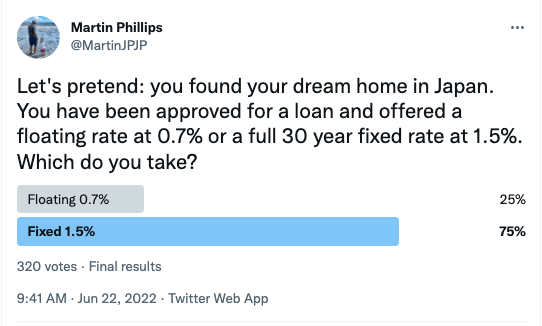
Things are heating up in Japan in more ways than one. Scrolling through Twitter I have recently seen a lot of chatter about what is happening to the yen and the Japanese economy, so I tried a little sentiment check and ran a Twitter poll as follows:

I was genuinely surprised to see fixed win this one so easily. Of course there is no wrong answer, and your choice depends a lot on your attitude to risk and overall financial confidence. However, there is also an element of prediction involved. Will mortgage rates increase in the years to come? If so, by how much? If rates pop up over 1.5%, you’re suddenly going to wish you had taken that fixed rate deal. A variable rate mortgage in the US is around 5.2% now and rising. Imagine that in Japan! Seven years ago, when we bought our house, my wife and I bit the bank’s hand off for a floating rate loan. No way were rates going up in our lifetime! I’m fairly sure we would still make the same choice now, but we would certainly think about it a little more…

So why the hesitation? Everyone knows that interest rates in Japan have been near zero for a quarter of a century, and raising them, even a little, would lead to financial chaos. Well, as the US and Europe are raising rates in order to fight inflation, suddenly all eyes are on the one country that hasn’t blinked yet. And right there in the spotlight is Haruhiko Kuroda, Governor of the Bank of Japan. Since his nomination in 2013, Kuroda has spearheaded the BOJ’s loose monetary policy and, despite accusations from the west of deliberately weakening the yen to favor Japanese exporters, he has always maintained that his policy goal is the break out of deflation by targeting the magic 2% inflation level. In pursuit of this target the Bank of Japan has employed both quantitive and qualitative easing, meaning it has not only purchased vast quantities of government bonds, but also stocks and REITs. 2016 saw the start of yield curve control and negative interest rates. Yes everything but the kitchen sink has been thrown at the deflation problem and guess what? It finally worked!

You would think that reaching the holy grail of 2% inflation (actually it stands at 2.5% right now) would be greeted with celebrations, however over the past 25 years the Japanese populace has gotten rather used to things staying much the same price. Wages have also remained stagnant, making people rather sensitive to price hikes, as Kuroda himself found recently after remarking that households were “becoming more accepting of price rises”. The rebuke from the public was swift and clear: times are tough in the households of Japan.

And so the global media has begun to speculate over what comes next. The rise in rates in the US in particular has made the yen less attractive and it has quickly slid as far as 136 yen to the dollar, a 24 year low. What’s more, Japanese bond yields have been surging, with the Bank of Japan deploying vast amounts of money to defend its 0.25% yield curve control target. It appears that Kuroda-san can save the bond market or the yen, but not both. Given the massive JGB holdings held in pensions alone, you can bet it will be the bond market.

Now it’s being reported that a $127 billion hedge fund called BlueBay is attempting to pull a Soros by attacking the BOJ’s yield curve control position in an effort to force it to adjust its monetary policy.

It all sounds a little scary, doesn’t it?

It is not, however, the BOJ’s first rodeo. Betting against the central bank has long been known as the widowmaker trade. And many widows have been made in the last 20 years. It turns out that bringing a knife to a bazooka fight is not a smart move.

Japan’s debt to GDP is estimated to be around 248%, the highest in the world. Proponents of Modern Monetary Theory (MMT) will argue that as long as the fiscal deficit spending leads to an increase in the share of GDP retained by households, the funding of the debt is not an issue. However, who trusts the government to make sure the money ends up in the right places? After all, this is the country that just spent 1.42 trillion yen on the Olympics. How many households felt the benefit of that I wonder? And what is the the next sector up for a big spending spree in Japan? Defense…

So can you really just keep printing more money to pay back the debt? It looks like we are going to find out at some point, but we may be surprised how long this seemingly unsustainable status-quo can be maintained. Fresh after making a killing betting on the European debt crisis a decade or so ago, Kyle Bass turned his attention to the widowmaker trade, memorably declaring investing in Japanese stocks as “picking up dimes in front of a bulldozer”. However the bulldozer still hasn’t rumbled into town and Kyle has moved on to other trades. Inflation at 2.5% hardly calls for drastic action when the US is at 8.5%, but that can change.

So if you have a floating rate mortgage can you relax for now? Most likely yes, you have nothing to worry about in the near future. The BOJ is clearly ready to do whatever it takes to keep rates where they are. At some point further down the line though, that could lead to a continued weakening of the yen, which in turn would bring a rise in “imported inflation” as the cost of foreign goods would continue to grow in yen terms. If that gets bad enough then something drastic will have to be done…

In the short term, a drop in inflation later this year would certainly take the pressure off Kuroda-san somewhat, and Jerome Powell too for that matter!

Let’s all hope “This is fine”…

My Twitter poll, of course, only offered two options and, as people rightly pointed out in the comments, you can mix fixed and floating rate mortgages. 10 years fixed and floating after that is quite typical in Japan. If you do have a floating rate, it is always a good idea to save up money separately so you have the option to pay the loan off quicker if rates were to rise. For fixed rate mortgages you can also check if you are eligible for Flat 35.

Disclaimer: This should go without saying, but the information contained in this blog is not investment advice, or an incentive to invest, and should not be considered as such. This is for information only.

Coronavirus and Markets – What Can We Learn from SARS?

coronavirus-4817450_640

There is still a lot of uncertainty about the the severity and duration of the current coronavirus epidemic, with some health experts predicting it will all be over by April, while others see a large proportion of the global population at risk of infection. When it comes to the effect on markets, it’s logical to take a look the impact of the SARS crisis for guidance. However, it’s important to remember that, not only are we talking about two distinct disease profiles, but we are living in a different world economically from seventeen years ago.

The SARS epidemic, which originated in Guangdong province in China, ran from November 2002 to July 2003. It had a significant, but relatively short term, market and economic impact. The most heavily hit sectors were tourism, retail (particularly luxury), airlines, casino and property. For 2003 GDP growth fell about 1% for China and 2.5% for Hong Kong. Hong Kong’s economy went into recession in April 2003 before recovering substantially.

The MSCI China fell 8.6% on the SARS outbreak, but rebounded by more than 30% in the three months after April 2003. Stocks in Hong Kong fell by a fifth but also came back strongly. Cathay Pacific shares dropped almost 30% from December 2002 to April 2003, before bouncing back to almost double through the next year. In Japan the Nikkei 225 also dropped by almost 6% but was quickly restored once the crisis was deemed over.

The Hong Kong property market was already suffering the after-effects of the Asian financial crisis, and SARS extended the decline by a year or so. Home prices fell by 8% in the first seven months of the SARS epidemic before rebounding for the rest of the year. Conversely the current coronavirus has come along at a high point in the housing cycle.

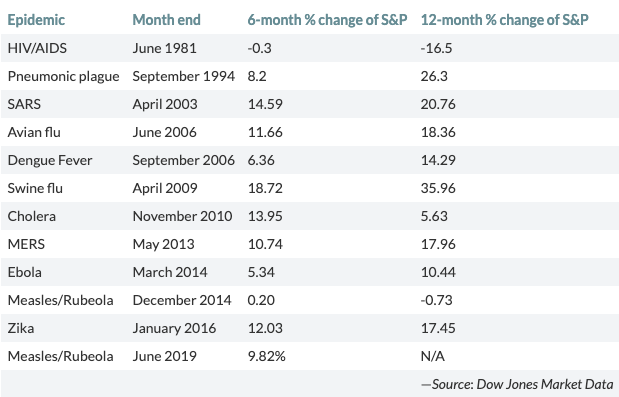
The US stock market tends to shrug off epidemics somewhat easily. The table below, taken from Dow Jones Market Data in this MarketWatch article, shows how the S&P 500 has reacted over 6 months and 12 months in previous outbreaks:

Screen Shot 2020-02-13 at 6.22.38 PM

When assessing the likely impact of the current Covid-19 coronavirus, it is important to note some major differences in the Chinese and global economies between now and 2003:

  • In 2003 China’s GDP was 4% of the global total. Now it stands at 17%.
  • China’s economy was largely manufacturing and trade seventeen years ago, compared to consumption and services / tourism today. Government-imposed bans on travel will hurt more in the current environment. This is a blow to Japan’s inbound tourism boom for example.
  • In 2003 the Chinese currency was still pegged to the dollar. Now currency markets are freer, which could mean a weakening of the Yuan.
  • The global economy in 2003 was in a much earlier phase of the business cycle and global cooperation in trade was increasing, in contrast to the “trade wars” that have characterised the last 12 months.
  • On the other hand, monetary policy in both China and the west is now far more supportive than it was in 2003.

Clearly the economic impact this time around will depend on how long the epidemic lasts and how far it spreads. Countries close to China will obviously be impacted more severely. Typically the effect of a disease outbreak on market confidence can far exceed it’s actual impact. Once things are under control the recovery should be fairly swift, although there are plenty of other factors that could influence markets in the coming months.

Once again, refraining from panic decisions and staying diversified is perhaps the best advice for investors.

Disclaimer: This should go without saying, but the information contained in this blog is not investment advice, or an incentive to invest, and should not be considered as such. This is for information only.


Property Investing Part 5 – The Art of the Flip

house-435618_640

Welcome to Part 5 of our series on property investing with Graeme. This time we look at the strategy to “flip” a property.

Flip Strategy 

There are 2 ways of making money in property – cash flow or capital gains. Unlike the previous articles on cash flow strategy, a flip is a capital gains strategy where you buy a house cheaply, refurbish it to a good standard and sell it at a profit – you buy cheap and sell high.

This article will give an overview of the principles and practices of a straightforward flip. In this article we will not discuss big flips which need planning permission or architecturally-inspired reconfigurations. This article will give you the basics of a simple flip so you can decide if you want to go further down this business path. Questions to examine include: What are the suitable economic conditions for a flip? What is a suitable neighborhood? Who are the necessary team members? And what are the key calculations to confirm your target property works as a flip.

Don’t be a fish 

A common adage in China is “A fish doesn’t know it swims in water.” This means a fish doesn’t truly know the environment it moves in. Many investors who flip are like fish, they just find a cheap house, refurbish it and then try to sell it. The problem is they don’t know the economic environment, they don’t know how much they can sell the property for, who will buy it, whether there are currently a lot of buyers in the market nor what type of refurbishment the typical buyer wants. As a flipper you shouldn’t be a fish so rule number one of a successful flip is, understand the environment you are working in.

Your first research is to check that the target property can definitely sell. Flips work best in warm and hot markets where properties are selling quickly. One property investor I know was flipping in Canada recently during the boom where wealthy Chinese wanted to move their money out of China and into Canadian real estate. To put it bluntly this is a wet dream for a property investor! Chinese investors were pouring money into the local property market and he was very successful. This is an example of a great market to flip in, however there are still many skills and techniques to learn as well as a lot of hard work in order to make your flip a success. So ask the question…what is pushing prices up in your area? (e.g. Chinese investors) or what is holding prices down? (e.g. too few mortgage products available). You need to know why flipping is a good strategy in your particular target area at this particular time.

Another example of a good flipping market is a country where there are many mortgage products available. Many mortgage products means more people have the means to buy houses and therefore you have more potential buyers. You can find this information online or simply call a mortgage broker and ask “How many mortgage products were available 2 years ago? one year ago? and today?”  You can also ask “How many products do you think will be available in one years time?” If the numbers are increasing each year it is a positive sign.

Key Question: How easy is it to get a mortgage?

Successful flipping is about supply and demand – not only the supply and demand of houses but also the supply and demand of mortgages.

Another quick way to understand the economic environment of your flipping area can be found on property websites.  A decent property website e.g. Rightmove.co.uk (in the U.K) has maps that show a map of your investment area. Look at your area and find how many properties are actually for sale, then find how many properties are sold subject to contract (STC). STC means that a buyer and the seller have agreed a price and now the buyer is doing his due diligence i.e. getting a survey, confirming mortgages products available. If there are a number of STC properties in your searches that can be a strong indication that properties in your area are proceeding towards sale.

You find the STC statistics by looking at the top of the online map for number of properties for sale. Then check the STC filter and count the number of properties. What percent of properties are STC?  The higher the percentage, the higher your chance of a successful flip. 10% isn’t very good. 40% is probably good (it should be noted that 25% of all STC’s fail mainly due to bad finance i.e. the buyer fails to get a mortgage, but this research is still a good indicator of the area’s overall economic environment).

Another question related to mortgages is: “Is my target property mortgageable”? This is crucial because most buyers use a mortgage. Even if you buy with cash, confirm you can get a mortgage on the property for the next buyer. If you are planning a reconfiguration of the property the mortgage may be denied if the property is a leasehold property, as you will need permission from the freeholder. Make sure you know the tenure of the property (preferably freehold) Ask this question to your mortgage broker and your solicitor.

Using online websites is a quick way to sense the local flipping market and you can compare other areas by using the maps on property websites to get a sense of all your potential investing areas. Most importantly, while you are online check the Done Up Value (DUV) of the properties in your area (how much has a similar property in good condition sold for). The DUV is vital information because this is the price you can expect to sell your property for. Find the DUV by looking for recently sold, similar properties nearby. Look at the photos and description to check the property has the same number of bedrooms and similar layout and was sold in good condition.

Don’t be a fish, means you must know your area. Your flipping area may well be different to your cash flow area because a flipping area is an area where house prices are higher and you have found the worst house in a good neighborhood. The need for refurbishment is how you have managed to drive your buying price down.

As an investor I like to buy rental properties between 40K – 80K (GBP) but a flip property is typically 100K-150K. This higher price bracket means bigger margins and therefore a bigger cushion in case of financial risk. If, for example, the refurbishment costs increase by 5k and your sale is 5k under expectation then your profit on a cheaper property will be wiped out. Despite these losses your margins on a bigger property are more likely to still yield a profit and therefore you focus on higher price properties in order to protect yourself.

Another important area question to ask is: Typically how long is a property on the market for in this area? six weeks? six months? three years? You want to be able to sell quickly. Ask your local estate agent “If I brought you a house that you could sell tomorrow what would it be? Where would it be and what would it sell for in good condition?” Spend time with estate agents, talk to at least three different agents and explain your strategy. Where do they all agree is a good flipping area?

Furthermore get a map of the area and, with agents, identify schools, transport hubs, retail parks…or drug dens, anything that will positively or negatively influence the area. Also note any long streets in your area. If you are buying on a long street sometimes one end of the street has higher prices than the other end and so the asking prices on the same street could be significantly different. Make sure you are paying the price that corresponds with the correct end of the street. Talk to local agents and ask: “Is the market slower or busier than one or two years ago?” Confirm what one agent says with at least two other agents.

Don’t just talk with agents, get onto the streets and talk with everyone in your area: taxi drivers, shop owners, locals in the street, ask “How’s business doing compared with two years ago?” Get online and gather information about your area – any long term improvements in the area? New hospital? Hotels? A nearby port development? Other transport developments? What are the shops like on the high street? Any boarded up commercial units? If so what percent are empty? Read the local newspaper and build your area knowledge. Is your area on the up, down or staying steady?

Ride the Wave, Don’t Create it

As you talk with local agents in your area identify who is buying houses. Is it first time buyers? Is it families? Pensioners in search of bungalows? Who most likely is going to buy your house? One popular strategy is to flip bungalows to pensioners because often this segment of the population are downsizing and have a lump cash sum from the sale of their larger family home and therefore they will buy with cash. So ask yourself the question would a bungalow strategy work in my area because ideally you want a cash buyer to circumnavigate the extra hassle and slowness of the mortgage industry. Your buyer could even be your business partner, but you need to understand not only how warm the market is, but who is making the market hot so that you can cater your property to their desires. e.g. Ask your agent “Do the buyers want plastering on walls or wallpaper”? “Do they want carpets or lino on the floor”? “Does the market want 2 or 3 bedrooms”? Factor all these points into your search for the right house to buy and flip. The principal here is “Ride the wave, don’t create it”. Find out what buyers in your market want and go along with that. Ask your agents: “What are the main criteria a typical buyer is looking for”? Another key practice is to approach five local agents for done up value of your target property. If 4 agents say 150K but 1 says 130K disregard 130K, however if 3 agents say 150K and 2 say 130K then you need to consider 130K.

You could even pose as a buyer and view houses on the market that the agents say are good examples of what the market wants. This will give you a good idea of the quality of refurbishment that is typical in your neighborhood. In other words let the current market give you the answer to your refurbishment questions. A lot of beginner investors worry about the standard of refurbishment, which is sensible because you want to attract buyers however you can simply get the answer from other good properties in the area – Find the best property in your area and copy it!

As you walk the streets of your investing area, when you get an opportunity make sure you talk with neighbors who have good houses. Bring your business card and introduce yourself. Say you are planning to buy a property here and want to make it really nice. It is surprising how friendly and interested people can be. There have been many times when I’ve had a good, long chat with a neighbor and they have invited me in for a cup of tea. Often they have had refurbishments done so ask to see the quality of the builders work, ask about the quality of their builders work, get contact details of the builder, ask about satisfaction with work, cost and time frame of the work. If you are a beginner and don’t yet have a good builder sometimes local people can provide the solution to that issue and many others. One of the skills of an investor is to get good at having cups of tea with people you’ve never met before (of course you should always be safe and it may not be recommended for women to do this alone). Let people in your investing area help you and remember, ride the wave don’t create it.

When you start viewings and engaging directly with your flip area, set up a database and record each offer and then reoffer every three weeks. Your flip database should include date of viewing, address, type of property, DUV, refurbishments and cost of the refurbishments.

Flipping Figures

The basic flip calculation is simple but crucial. It is amazing how some investors love to do complicated calculations when the essence of knowing at what price your flip works is straightforward.

The Flip Calculation 

DUV – profit – refurbs – other costs = Maximum Purchase Price.

So try this quick calculation – DUV is 100K, desired profit is 12K, refurbishment cost is 10K and other costs are 4K. What is your max purchase price?

And one more – DUV is 150K desired profit 25K, refurbishment 20K, other costs 7K. What is your max purchase price?

The key questions are:

What is the property’s DUV?

What is my intended profit?

How much are the refurbishments?

What are my other costs?

What can I buy it for?

 15K profit is good for a small 2 bedroom property. 10K profit is ok if the process is easy, and your first flip should be easy as you are testing the market, your systems and your team’s ability to deliver. The purpose of your first flip is to make a fair profit and learn, learn, learn so that you can do bigger flips more safely next time.

One of the core principles of a professional investor is: You make your money when you buy. You must buy at the right price and you know the right purchase price based on the flip calculation above. Be accurate with your Done Up Value. Check the DUVs online and check with at least 3 agents. Remember that agents like to over price to make you feel good about the property so challenge them if you think their DUV is too high. Let them know you have done your research and you are no fool.

Bizarrely some amateur investors spend a lot of time refurbishing a property without a sense of their end profit!! Make sure you know your profit required. Regarding profit, many professional investors look for 10%-20% of the done up value on a simple flip. Don’t be greedy, be realistic and get the property sold quickly. The problem with a flip is that it is intense work. A flip is a type of trading and this is an active, cash strategy that takes effort and we only make money once. Some investors don’t even consider flipping as a type of investing but more like a well-paid job. Sometimes we get emotionally attached to the property therefore we want an even higher price than is reasonable. When we get greedy we often don’t get the property sold.

So once you have your overall flip calculation, plan your project in detail and understand what you’re involved in. What exactly are all the costs? How much are your solicitor fees (about £1k in the UK) How much is your survey (about £500 in the UK) How much tax will you pay? Is that stamp duty, council tax or capital gains… or do you have a strategy to legally avoid paying any tax? Will you buy in a limited company or as an individual? What are the buying, holding and selling costs? What are the agent’s selling fees? Will you buy with a mortgage, cash or another source e.g. bridging finance? What is the cost of borrowing? e.g. 100k at 4% (this is an example of a holding cost)

Do your calculations, arrange your finances and team, then put in your offers and buy. Furthermore consider what’s the exit strategy if you cannot flip? Remember from article 4 that you need a second exit. If you cannot flip how much will it rent for? Some smart investors buy a property, do it up, rent it until the market is hot and when prices are high they sell. They are combining the cashflow and capital gains strategy based on market conditions. Remember a smart investor always has a second exit.

Master Your Refurbishments

Miscalculating refurbishment costs is the second big mistake investors make. Even good investors get this wrong and suffer for it. Most people only get involved in a property transaction one or two times in a lifetime therefore most people don’t know the real cost of materials and labor so they pay too much.

As much as possible make refurbishment costs simple. Some investors like to have 3 types of refurbishment costs – 5K,10K and 15K.

5k is a fluff and buff.

10K is a fluff and buff and new kitchen.

15K is a fluff and buff, new kitchen and new bathroom.

In reality it is not that simple but this is a starting place. Have a rough figure you will pay for the refurbishment in your head and sharpen that number by getting a builder to walk through the property with you when you get close to agreeing a price with the vendor. Alternatively you could get a surveyor to survey the property and draw up a list of refurbishment works and then get a quote from three builders to ascertain the costs. Whatever you decide, it’s important to remember that when you’re beginning, it’s crucial to have a professional identify the repairs necessary. Even the most advanced investors do this and benefit from it.

You should always hire professionals for your flips, however on your first few flips be heavily involved – walk the property with the builder, do grunt work such as stripping out the property, filling the skips, grouting and helping to prepare paint for the painter. Learn the cost of your materials. Be involved to know:

  1. the refurbishment process.
  2. the costs.

Refurbishments are very important to get right yet this is where a lot of investors pay too much or don’t do a good job and therefore don’t get the selling price they need. Refurbishments are a crucial part of property investing and we will explore this important topic in a later post but for now here are some basics:

The Four Stages of Refurbishing

  • Clear out property
  • First fix
  • Second fix
  • Snagging

There are four main phases of refurbishing and the first is clearing out the property and preparing it for the tradesmen to do their jobs.

When you clear out your property you will probably need a skip or two to remove the waste. This is grunt work you can help with. If the property is empty, ask the seller if you can start this work even before you have completed the sale process. Get to work quick!

First fix means putting the skeleton of the house together: wiring, copper piping, door frames, then the plasterer comes in and plasters the walls, then plumber comes in to do any plumbing work.

Second fix is when each of the tradesmen comes in to finish their jobs. The finishing work includes sockets in the walls, the boiler is connected and pressurized, doors in doorframes, radiators on walls etc.

Second fix may include installing a new bathroom and kitchen and finally carpets. Get the building lit up with low energy bulbs. Stage the property in neutral colors e.g. beige, magnolia and white. Then get the building warm and breathing and ready for carpet day. Carpet day is the final day of refurbishing. When you put the carpets in and do a final check (snag). Now you’re really ready to take your property to the market.

The first time you do a flip I would suggest getting the head builder to organize all the workers, check safety conditions and do the administration. This job is called project management and we will explore more in the refurbishments article. As you get more skilled you can do the project management yourself as this will save you money but for your first flip hire a professional project manager and watch and learn.

When you flip a property you want to create a “Wow” factor. At the very least make sure all the rooms are smart and done to a good standard. In particular focus on the kitchen and bathroom as these are the two rooms that really sell the property. Make them smart and light. How can you maximize light in these rooms? For example if the kitchen looks onto a walled yard, paint the yard wall white to reflect natural light into the room. A good flip looks smart and sharp because this will attract buyers.

Flow Like a River

The principle of flow is important in relation to your time, money, systems and your property layout. Make sure your property has flow. This means the property is easy to move through. If you cannot move quickly through the property what are the solutions? Is there a stud wall that needs to come down? Is it worth it? On a larger scale, does the neighborhood flow? Can traffic move easily through it? Is there parking available on road or off road?

The principle of flow is also relevant to your financial situation. When you are borrowing money to buy a property and have time pressure, for example bridging finance with expensive costs for late repayment, you need to be careful of exceeding this time frame. Get a loan for longer than you anticipate you need it. If you plan a flip for six months get a loan for 9 to 12 months.

Time Flow starts before buying the rundown property. When you get close in negotiations i.e. the agent says you just need to increase your offer by 2000 or 3000 this is the time to get your team ready. Get your tenders active and ask 3 tradesmen from each skill (electrician, plumber, plasterer) to visit the property and give you his fees. Then choose one, (later we will discuss how to choose your build team).

Take control of the deal and when you have a deal you choose the contract exchange day. On a project always ask the seller for keys access. This means you get access to the property between exchange of contracts and completion of the sale. This can mean you have one extra day to start work or based on your agreement one extra month!

Flow is important because delays are remarkably easy. Delays could include planning delays, utility delays, builder goes bust, legal issues with the contract, mortgage broker fails to do job on time either for you or your buyer, solicitor goes on holiday without telling you etc. Always check with all your workers that they will be around for the whole flip process.

Try to be three deep with your tradesmen. Three deep means having back-up tradesmen for each task, (preferably two back-ups). If your first tradesman suddenly gets divorced or sick or goes on holiday you want somebody else to get in there and do a good job, quickly. Flow of workers is important and so is the right order of workers – organize start and finish dates in the property. After each tradesman finishes make sure property is swept out, clean and dry and ready for the next tradesman.

Have all your workers dates lined up. If your tradesman causes delays say “You’ve given me a price you’ve shown me your schedule and your profits. If it overruns I have serious fees to pay.” Get a specific day for finishing the project, “I would like the building finished by 5:30 PM on X day in X month.” Remember your relationship with the tradesmen – you are the client and they should respect that.

Make sure your tradesmen are flowing into the property on time. Check with them several times before the project that they know their start date and duties. Give a bonus to your tradesmen if job is done well and done on time. This increases their motivation and helps flow. Incentivize your tradesmen! While you incentivize your tradesmen you should still have a contingency for time and money and throughout the process remember to keep an eye on the quality of the works. Are these refurbishments good enough to attract buyers in your area?

Even with professional investors delays still happen. When you encounter a delay it is important to compartmentalize the problem, learn something from it and maintain your long-term vision. Think positive, can these delays be good for your taxes!?

A flip, from start to finish, can easily take six months and the process includes:

1. Check area and economy

2. Viewings and offers (know 2nd exit)

3. Buy (exchange and complete)

4. Refurbish (at least eight weeks)

5. Viewings (loads of them)

6. Buyer gets mortgage (weeks or months)

7. Sell

Selling

As soon as you’ve bought the property put a For Sale sign outside it. This will give potential buyers weeks or months to stop and have a look.

Interview 3 or more agents for the sale. If you have an agent who regularly overvalues note this, and the same if another agent regularly undervalues. Ideally when buying you want an undervaluing agent and when selling an overvaluing agent so you can buy cheap and sell high. This means you may change agent in the buying and selling process.

When advertising use the phrase “fully refurbished home”. The word “home” carries more positive emotion than “house” or “property”.

Ask your estate agent “How are you marketing my property?” Do they use Facebook or other SNS avenues as well as the usual agent website and advert in the shop window? Do they use the largest property websites which take all properties on the market from all agents?

As the viewings increase, call the agent every Friday and ask “How many viewings this week? “What was the reaction, what was the feedback about the property – good points and weak points?” “And how many buyers did we get this week?” Keep a database of this information for current use and future deals.

 When a potential buyer makes a suitable offer always ask the buyer “Are you buying with cash? If mortgage ask “Are you sure you have all the documents for the mortgage company?” Incentivize your buyer to get the mortgage as quickly as the mortgage broker says is possible e.g. 400 pounds discount on the property. This action encourages flow and more importantly you will quickly know if the mortgage fails and you can get a new buyer ASAP.

 One final cost I’m going to suggest is a buyer incentive. In most markets a smart investor will drop his selling price. Some investors will sell for 5-8% below the DUV because they want to give a buyer’s incentive so the property doesn’t hang around on the market. In great markets e.g. foreign investors piling into the market with more money than sense or a market with a lack good properties for sale you don’t need to do this. However to complete your flip strategy I would recommend giving a buyer incentive which means you should recalculate your maximum purchase price.

One final truth about flips. I know investors who simply don’t go hunting for a flip because it is an opportunistic strategy. Most investors prefer cashflow because the cashflow strategy is like a steady salary that gives you more stable financial freedom, unlike the uncertainty of flips. However sometimes when you go hunting for fish you catch a shark and a smart investor may see that a flip strategy will work even if that wasn’t his original strategy. For me personally a flip is a back up strategy however I will be the first to admit there are investors who make good money from the flip strategy in a hot market.

To summarize, the 3 most important points I hope you have taken from this article are:

  1. Know your area and market very well.
  2. Buy at a great price according to the flip calculation
  3. Manage your refurbishments very well and with a trusted build team.


Paying Down Debt vs Saving and Investing

money-2724235_640

The question of whether to focus on paying down debt or to prioritise saving and investing is one that many people wrestle with. Like most trade-offs there are several variables to consider, so let’s see if we can simplify this into some workable strategies.

Firstly, you cannot come to a conclusion unless you have a handle on your budget. Getting clear on your income and expenditure is the first step. That way you will know exactly how much you have left at the end of the month to allocate.

The next thing is to make sure you have some basic financial security. If you don’t have any savings it is perhaps prudent to pay off the minimum on your debt until you can build up an emergency cash reserve. Aim for a minimum of three months expenses so you have some breathing space if you lose your current source of income.

Obviously you want to try to pay off any high interest debt first. Credit cards are the number one offender here. With APR often as high as 18% it is wise to clear this as quickly as possible.

Student loans often come next. For people who studied in the US for example, student loan interest rates seem to be around 6-7%. If you are thinking of investing the money to get a better return and pay off the debt later, this is not an easy hurdle to clear without taking a lot of risk.

Where the trade-off question gets interesting is with home loans, particularly for people living in Japan with floating interest rates below 1%. There’s a strong argument for making your minimum monthly payments and saving and investing everything you can. I certainly wouldn’t disagree with that, but everyone feels differently about debt. I know people who never bought their own home because they couldn’t stand the idea of owing the bank that much money. If it keeps you awake at night, there’s nothing wrong with paying off your mortgage as fast as you can.

Once again, it’s good to make sure you are clear on your budget. Then make sure you have an emergency cash reserve, and have protected yourself in case you get sick or injured and are unable to work. In Japan you are required to buy life insurance to cover the loan in case of death, but in other countries you may need to consider this yourself. Paying into some kind of pension plan counts as one of the basics too and I would prioritise that over paying down debt. In his book Rich Dad Poor Dad: What The Rich Teach Their Kids About Money That the Poor and Middle Class Do Not!, Robert Kiyosaki talks about the concept of paying yourself first – make sure you are saving and investing for your future before paying the bank back more than you have to.

That said, if you are hitting your targets for saving and investing, then paying down debt is certainly not a bad thing. It reduces the amount of interest you will need to pay over time and the number of years it will take to repay the loan. Even 1% per year adds up!

For people in Japan, here’s an unexpected bonus: In order to get a mortgage in Japan you are required to appoint a guarantor. For expats this usually means paying a loan guarantor company, and you pay them up front when the loan is arranged. If you make ad-hoc lump sum payments to reduce the debt, the guarantor’s liability is reduced and they actually pay you back some of their guarantor fee. We recently made a payment of ¥1,000,000 on our home loan and received almost ¥60,000 back from the guarantor.

So to summarise, cover the basics first, prioritise high interest debt, and make sure you are saving and investing for the future whilst paying off the rest.


Property Investing Part 4 – Income for Life


calculator-1680905_640

Welcome to Part 4 of our series on property investing with Graeme, focussing on the “income for life” part of the property investor’s mantra:

This is the second half of an article explaining how serious property investors make money from property without using their own money, and how you can too.

You’ll remember from the previous post that our aim is to buy a property below market value (BMV), refurbish the property to a good standard, pull our money out using a mortgage, end up with equity in the property and each month benefit from rental income……and then repeat the process thus building a successful portfolio that generates passive income. With this strategy it’s crucial to buy BMV. The money in, money out mantra works if you buy at the right price and then add value with refurbishments.

In the previous article we learned how to pull money out of a property so in this article we will move on to the final part of the mantra – how to generate income for life. What we mean by income for life is making sure each property will give us monthly rental income. This is also known as positive cashflow.

Cashflow is the single most important word for most investors.

Cashflow is the life blood of a property investment. If there is one word to remember from today’s post it is cashflow

Focus on cashflow

Cashflow is either a positive number or a negative number. Investors aim for positive cashflow because it means money is flowing into our bank account. The cashflow equation is simple but crucial.

Income – expenses = Cashflow

Income is the monthly rent our tenant pays and, on the other side of the equation, monthly expenses include our mortgage payments and property management fees. So to be more specific the calculation is:

Monthly rent – monthly expenses = monthly cashflow

If, for example, the rent is 500 and expenses are 300 then we have a positive cashflow of 200. Conversely if we have rent of 650 but monthly expenses of 750 then we suffer from a negative cashflow of minus 100.

Before buying a property the most important thing to do is research. In order to find property that yields positive cashflow we must accurately find our projected income and expenses, then we will know if the property will generate positive cashflow and this decides if we buy the property. Fortunately, in the internet age, our research can be done mostly online and with a few phone calls.

So how can we accurately calculate our income and expenses?

What exactly is my monthly income?

As stated, our monthly income is the rent paid by our tenant. When researching rent we should receive for our target property it’s important to use established property websites. In the UK two well-known sites are Zoopla and Rightmove. Simply go to the website’s rental page and insert into the search engine properties that are as similar as possible to your target property. Insert the relevant postcode and property type e.g. 2 bedroom or 3 bedroom, and find property currently being advertised to rent. Examine the photos of the advertised properties to make sure they are a similar standard to the property you plan to buy, refurbish and let. Find 3 such properties and take the lowest rent as the assumed rent. Of course we want to get higher rent but to protect ourselves while calculating the property’s cashflow let’s take the lowest number.

In the UK another method to find the base rent of an area is to use Local Housing Allowance (LHA) rents. LHA is rent money given to tenants claiming government benefits because they are unemployed or too sick/disabled to work. LHA rent is usually the lowest rent in an area and therefore can be the gauge for the base rent we can expect. Calculating cashflow based on LHA rates doesn’t mean our tenant will be unemployed (although that is one strategy) it simply means we know the guaranteed rent we can get in a certain street/area. This information is online. Simply type into google the name of the town and LHA rates. Then you will see there are 5 different rent levels given based on the number of bedrooms in a property. The rates are: shared housing rate, 1bedroom (br), 2br, 3br and 4br.

I am for example currently looking to buy a 2 br property in my investment area of Liverpool. I simply go online and find the 2br LHA rate for Liverpool is 454 and I use this figure as my monthly income in the cashflow calculation.

Liverpool Bedroom Rate RATE PER MONTH
Shared £250.34
1 Bedroom £393.90
2 Bedroom £454.52
3 Bedroom £523.55
4 Bedroom £673.13

A third option for finding rent in an area is to call three local lettings agents and tell them the street of your target property and number of bedrooms. Ask the standard rent for such a property in good condition and once again take the lowest rental figure as the assumed monthly rent.

Finding our projected rental income can be done in 30 minutes. Even so there are plenty of amateur investors who do not do the research or use unrealistic, sky-high rents to calculate overblown cashflow. Do not get carried away by a lettings agent who says you will get sky-high rent. Usually they do this because they want your business and you will end up with an empty property because you got too greedy demanding rent that no one wants to pay. If you do get higher rent than expected that is great, but for now stay focused and assume a lower rent in your cashflow calculation because this will let us know if the property is really worth buying.

Now we know how to accurately find our monthly income, next we need to accurately calculate the property’s monthly expenses.

What exactly are my monthly expenses?

There are 3 main monthly expenses an investor covers.

  1. Monthly mortgage payment
  2. Management fee,
  3. Monthly Operating Expenses (MOE)

The most important monthly expense to pay is the mortgage. You absolutely must pay the monthly mortgage, however you pay without using your money. Who pays for it? The tenant pays your mortgage with their monthly rental payment.

For people who hate the debt of paying a mortgage you can use your own money to buy houses but you will soon run out. Even if you are wealthy, buying houses quickly leaves a large dent in the bank account. The art of property investing is the art of managing debt to sustainably make money. So our first monthly expense to pay is the mortgage and the point is someone else pays this mortgage – our tenant.

In the UK interest only mortgage rates currently stand around 2.5%.

Again property websites provide a calculator to calculate how much we must pay per month, simply insert the relevant figures (purchase price, deposit, interest rate). The mortgage market however is broad and constantly changing so I strongly recommend you use a mortgage broker who can quickly find the best deal for you based on your situation. It is a small cost to use a broker but they perform an important task finding the best mortgage deal and could save you thousands of pounds over the years and decades to come. The broker’s fee is also tax deductible.

If you want to calculate the mortgage cost yourself the formula is quite simple. There are a few key numbers you will need:

  1. The property’s Done up Value (DUV). As explained in the last article this means the value of the property after your refurbishments
  2. The loan to value (usually 75% in UK)
  3. The mortgage interest rate e.g. 2.5%
  4. And the number 12 because there are 12 months in the year (therefore 12 mortgage payments to make in a year)

 The monthly mortgage payment calculation is:

DUV x 75% x mortgage interest rate /12 = monthly mortgage payment

(If you didn’t understand these terms please see the previous post).

So using our example of a 100K property from the last post, and knowing from our mortgage broker that the best mortgage rate is 2.5%, the calculation looks like this.

100K x 75% x 2.5% / 12 = 156.25

Therefore the monthly mortgage payment is 156.25 which we can round off to 156 pounds.

As we are in an historically low interest rate environment (which means monthly mortgage payments are low) amateur investors get very excited and want to go out and buy anything on the market.

Before rushing out and trying to buy everything, professionals do the exact same calculation as above but they also do it a second time with a higher mortgage interest rate of 5%.

So if we do the exact same calculation again at 5% we get a higher monthly mortgage payment:

100 x 75% x 2.5% / 12 = 312

This calculation confirms the property is worth buying.

Why do professionals do this second calculation? Because we want to stress test the mortgage. When interest rates increase (at some point they will) we want to make sure the property at least breaks even with mortgage payments and we do not fall into negative cashflow.

So in order to protect ourselves the calculation is done twice – first, work with the real life mortgage rate and then check again at 5% as a stress test.

Now some people will say “Don’t worry about stress tests, just buy the house and get some income”, but do you remember the professional’s mantra?

Money in money out, asset for free, income for life.

Income for life…….not income for 15 months until I suffer negative cashflow from rate hikes and have to sell the property at a loss.

And when this happens and you have to sell the property at a loss because the bank repossessed it, guess who will be buying the property at a bargain price? – Some irritating professional who wants income for life and has done their homework properly. I therefore want you to be protected too so please do both calculations and then you will have a much safer and stronger property portfolio which will stand the test of time.

The second monthly expense we need to consider is management fees. Professional lettings agents will provide long-term management for your property for a fee. Management fees vary between 8-12% of monthly rent – the agents I work with all charge a flat 10% of rent. For example if the rent is 500 pounds the agent’s monthly fee is 50 pounds. This fee covers finding suitable tenants, credit checking the tenant, organizing repairs, taking rent, and dealing with arrears.

Property investors use other people’s money (OPM) to buy property and they use other people’s time (OPT) for the long-term management of their portfolio. Long distance investors will definitely need an agent to manage the property, however local, amateur investors who live in their investing area sometimes want to save the management fees and manage the property themselves. Think carefully about this because if my agent is doing a good job I am happy to pay the agent’s fees, which are tax deductible. Getting a good agent frees an investor to carry on building the portfolio or doing their day job or whatever they want to do. The point is if you have a good agent pay them well, remember to deduct their costs from your taxable income and benefit from the extra free-time!

The final expense is Monthly Operating Expenses (MOE).

MOE includes the required annual gas check, annual building insurance (the only legally required insurance) and savings for wear and tear. It could also include void money and ground rent if the property is a leasehold. If you have a good property in a desirable area then some of these MOE costs should be minimal e.g. voids and wear and tear, at least for the first 5 years. MOE is generally calculated at 10% of monthly rent although some investors prefer a slightly higher figure.

I personally have a separate bank account as my MOE pot of money. The pot starts with 3000 pounds and over time empties as I pay MOE expenses, but every month I transfer 10% of the portfolio’s rent into this account to top it back up. Professionals have a system in place so savings for operating expenses are automatically taken care of.

Et Voila! Here we have the information and methods to accurately assess our cashflow.

Income – Expenses = Cashflow

Rent         Mortgage

Management (10% of rent)

MOE (10% of rent)

The property feeds you

This post is all about achieving positive cashflow and another cashflow principle is that you only buy a property if you can achieve a positive cashflow of at least 100 pounds per month. Be very careful about buying a property below 100 pounds cashflow because if you have a sudden significant cost e.g. boiler breaks, storm damages the roof or damp issue, your cashflow is wiped out and you have to dip into life savings to pay for the house. Remember – you shouldn’t feed the property, the property should feed you.

Now 100 pounds per month doesn’t sound like a lot of money but considering you have a property for free and equity, you’re literally getting 100 pounds every month, for life, for free. Furthermore the cumulative effect of building a portfolio and buying 2 or 3 or 4 times, year on year, will make a fundamental financial difference to most people’s lives.

So can you get the cashflow calculations right?

Before going out and buying property I recommend you run the cashflow calcs at least 50 times on different properties. To get started have a look at the 3 example properties below and run the cashflow calcs and decide which one would you buy?

Liverpool 2br

Rent 454

Mortgage 280

Management 10% rent

MOE 10% rent

Cashflow =


Grimsby 2br

Rent 475

Mortgage =127

Management 10%

MOE 10%

Cashflow =


Hull 3Br

Rent 465

Mortgage 275

Management 10% rent

MOE 10% rent

Cashflow =


Always protect the downside

Richard Branson stands out as probably the most famous British entrepreneur ever. One of his key teachings is:

“Always protect the downside”.

As you read how professional investors operate you will notice there are multiple checks to protect the downside, for example checking the area’s base rent, buying BMV, calculating 100 pounds plus cashflow and stress testing the mortgage. You can make a lot of money from property, but oh boy, you can also lose a lot of money too. Protecting the downside is just common sense – when it is raining you open an umbrella, when you get in a car you use the seatbelt and property investing is no different. Another protection we use is checking we always have 2 exits. This means if our first strategy (buy, refurbish, rent) doesn’t work then we have a second plan. The standard two property strategies are:

  1. Buy, Refurbish, Rent and
  2. Buy, Refurbish, Sell.

So if we really can’t find a tenant for the property for whatever reason we need to know we can find a buyer for the property – the buyer might be a young family or first time buyer or another investor or somebody else.

If you’re strategy is Buy Refurbish Rent, then check your second exit also works i.e. you can sell the property.

Once again view reputable online property websites for sold comparables in the area. What price did similar properties sell for and was the sold house in similar condition to your property? How long were they on the market for? Have any properties sold in the area in the last 6-8 months and how much for? If you can’t find any comparables it means one of two things:

  1. It’s difficult to sell because the area is a war zone.
  2. Residents love the area and don’t want to leave.

It is easy to see if the area is a war zone – just visit the area and look for dilapidated houses, graffiti, loitering youths and litter on the streets. Are the cars in good condition or not? Are the registration plates new or old? A great tool is google street view. If you’re doing this research online drive the street and nearby streets using google street view and check for signs of trouble.

You will quickly figure out which type of neighbourhood it is.

If it is a war zone think long and hard if you want the hassle of being a landlord in a troubled neighbourhood. You can make positive changes to a property but will find it much, much harder to influence an entire neighbourhood.

These two connected articles have illustrated the core principle which skillful property investors use to build passive income. When we follow the same steps i.e. buy cashflowing property and take our money out of deal, the great thing is then we can go shopping again! Amateurs think they have to use their own money and therefore soon run out of funds and stop investing, but property investment is a low capital investment……….if you know how.

Property Investing Part Three – Money in, Money Out, Asset for Free, Income for Life

mortgage-295211_640.png

Welcome back to part three of our series on property investing with Graeme. In this installment he shows us how to use mortgages to our advantage:

Above is the number one mantra of a professional property investor, and if you want to build a successful portfolio it really helps to know how you can get a property for free and income for life.

Property is a major route to life-changing wealth and the main reason is because you can use other people’s money to make money. Even if you use your own money, an important point is how you buy a property and get your money back whilst making a rental profit each month. In many countries, (UK, USA, Canada, Australia, New Zealand etc.) not only can you pull your money out of a property by remortgaging and make a monthly rental income, you can also increase the property’s equity over time.

Money Out with a Mortgage

The principle of money in money out works because of mortgages. Mortgages are available in all countries, however the calculation to find money in money out deals may vary slightly from one country to another. For example, in the UK we focus on getting our money spent on a property back in 6 months because this is the legal amount of time it takes to get a remortgage after purchase. In other countries this time frame may be slightly different, however the basic principle of using mortgages (the bank’s money) to return your personally invested money is the same around the world.

To use the U.K. example, whenever a serious investor analyses a property he or she asks the question:

What is this property worth, refurbished to a good standard in 6 months time?

We want to refurbish properties to a good standard because the mortgage company will increase the loan amount and six months after purchase we can get all our invested money out of the property. Furthermore we want to refurbish a property to a good standard because we want to be good landlords – property is a people business and a good property attracts good tenants who stay longer and pay full rent on time. Initially it costs more to refurbish a property to a good standard but in the long run this is the smart business thing to do.

So how do we know what is a money in money out deal? This is best explained with an example:

Money In Money Out Example

Lets say we find a property on the market and comparables suggest it is worth 100K in good condition. To keep things simple and based on standard UK mortgage lending we will assume a loan of 75% to the value of the property.

If we want to get all our money back we do a simple calculation:

100K x 75% = 75K (loan amount)

– refurbs e.g. 5K

– other costs 2K (legal fees, survey)

= 68K

So we know our maximum offer to the seller is 68 K and we can invest a total of 75K if we want to get all our money back on the remortgage.

With this example let’s assume we have the 75K in savings and our offer of 68K is accepted. We buy the property for 68K, pay the survey and legal fees and refurbish the property with 5K. Then 6 months later, when the property is already rented, we take a remortgage and the mortgage company’s surveyor looks for comparables in the area and finds the fair market value is 100K, and because most UK mortgage companies give 75% of a property’s value, they give us 75K and hey presto we now have the 75K spent back in our bank account.

Comparing Apples with Apples

“How do we find good comparables?” you may ask. “How do we know the true value of a property?”

Well, we have to think like a surveyor because surveyors are the people who actually put the values on properties.

A surveyor looks at similar properties that have sold in the same area recently. In the U.K. we use websites such as nethouseprices.com, mouseprice.com or ourproperty.co.uk as these websites use Land Registry data. (the organization which stores official property title deeds)

Specifically we want to know if anything has sold within the last 6 months that is very similar to our property, in particular comparables should have the same number of bedrooms. Ideally these comparables are in the same street. If not the same street then within ¼ of a mile, and if not then expand your search out further which is easy to do when you input your information into a property website’s search engine.

Look for properties in a high price range and in good condition.

If the comparables are a bit tired or fully distressed call 3 estate agents and ask for an honest appraisal and take the average of the 3 predictions. Another method is to call a local surveyor and ask “What will this property value at in the current market, once refurbished?”

To be extra safe you can use all the techniques together and take the average.

The Power of Persistence

Now, one mistake amateur investors make is believing the seller’s asking price. Our research tells us the value of our example property is 100k after refurbishment, however the asking price might be 110k or 130K or 90K or whatever the seller thinks it is worth. The only thing you need to remember is: The asking price is irrelevant!

Of course you may say, “This is all very interesting but no seller will accept such a low offer” and you would be right that it is unusual. However it is possible, and successful investors actively search for such below market value (BMV) deals.

Property investing courses say that 1 in 40 such BMV offers are accepted. The truth is it depends on the market. It might be 1 in 60 BMV offers in a buoyant market, but when sellers are desperate you might only have to make 20 such offers. The point is there are motivated sellers in every market and professional investors have a variety of ways of finding them.

As you can see you will have to experience a lot of rejections in order to get a real BMV deal. You will have to kiss a lot of frogs to find a prince. Amateurs hate rejection but it is part of the game, and if you don’t embrace rejection it may crush you to the point of giving up. However, just because someone says “No” it does not mean they won’t say “Yes” at a later date. If a seller rejects your offer simply record the offer in your property database and move onto the next property. Then 3 weeks later re-offer. You will probably offer 3 or 4 times on the same property and that is fine. Your database is a simple chart that shows property address, offer, date of offer, refurb estimate and rent per month. Your database is a simple, powerful tool that will grow and, given time, help you find good BMV deals. Remember to put all your offers into the database because as my mentor likes to say, “The money is in the database”.

The number one mantra of a professional property investor is:

Money in, money out, asset for free, income for life.

In the next article we will examine the final piece of the mantra i.e. how to get rental income for life, even while paying a mortgage on the property. For now however, let’s summarize this piece which has focused on getting your money out of a property and gaining an asset for free.

Summary

  1. Research and make many BMV offers
  2. Buy BMV
  3. Refurbish
  4. Roll onto long-term finance with a bank.