
Bitcoin bull market update

Are we having fun yet?

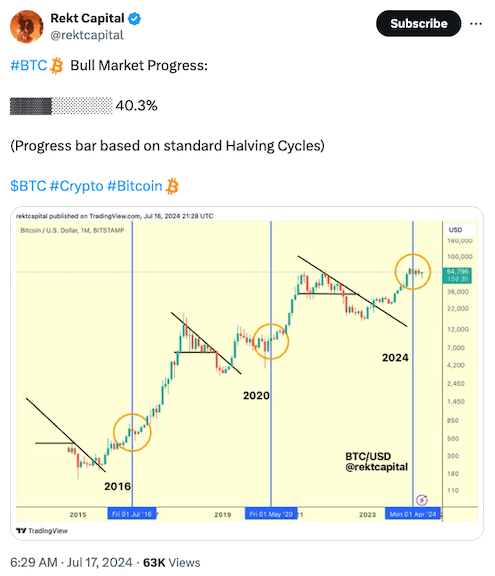
It’s been almost 8 months since my Bitcoin bull market prep post Bitcoin – Pump up the Volume. It feels like it’s time to check in and see how things are going. I don’t know how accurate Rekt Capital’s estimation of progress will turn out to be but it feels about right. When I talk to people about Bitcoin, which I probably do far too much, I’m still stunned to find how little the halving cycle is understood. Nobody is interested in buying in the bear phase, but when the price starts going up and making news, people start asking if they should be getting involved.

For those of us who bought in the bear market, this is supposed to be the fun part. However, the timeline has been strangely depressed. I think a lot of people got sucked into alts and memecoins when they were rallying earlier this year and are stuck there. This is why I tell beginners to focus on Bitcoin. As volatile as it may appear to outsiders, it is actually quite predictable. So, what’s going on at the moment?

ETFs

The spot Bitcoin ETFs that launched in the US in January have been wildly successful. Blackrock’s IBIT took just 137 days to reach $20 billion in assets. The fastest before that took 985 days. The ‘sell the news’ traders did not come out of this well. The five US spot ETFs are at around $56.5 billion in assets. There is nothing complicated here – increased demand for a finite asset is going to have an effect on price and year-to-date the leading crypto asset is up a little over +50%.

What’s more, Blackrock CEO Larry Fink, previously a crypto sceptic, is regularly on TV talking about his belief that Bitcoin is a legitimate financial instrument which has a role in portfolios. Note the repost from Michael Dell:

Playing defense

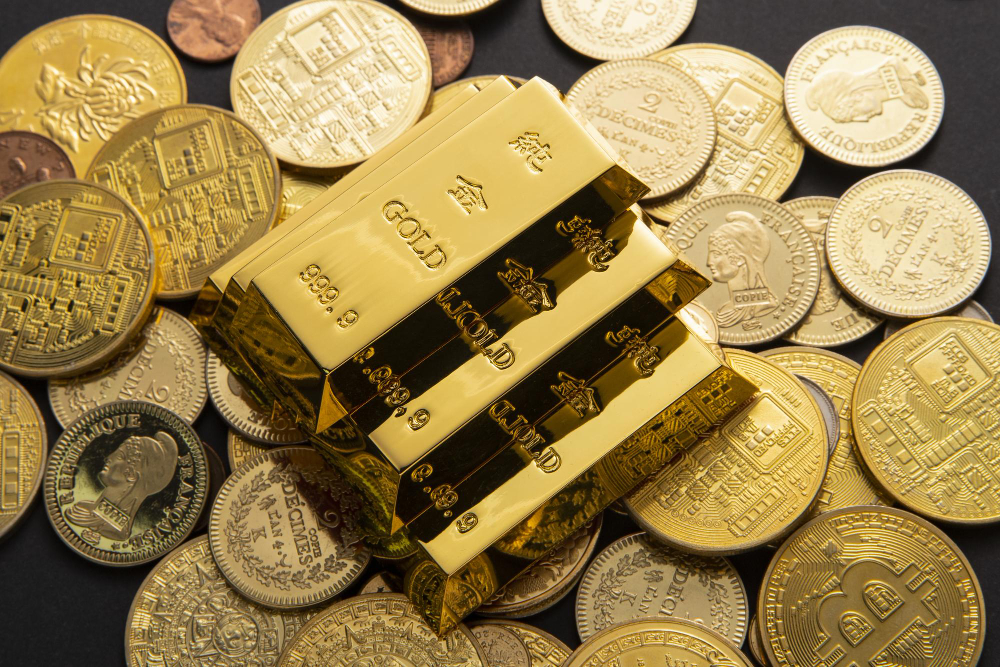
Larry might be talking his own book, but he has actually grasped another thing that the majority of people are missing: that rather than a get-rich-quick scheme, Bitcoin is actually a defensive asset that can protect against currency debasement and other economic ills.

I’ll say that again: Bitcoin is a defensive asset. Let’s be real here, it’s not going to replace fiat currency as the base layer of the financial system. Governments have far too much invested in the status quo to let it go. And they are going to continue recklessly printing fiat money and inflating their debt. That money is going to go down in value against hard assets over time. Read Harden up your assets for more on that.

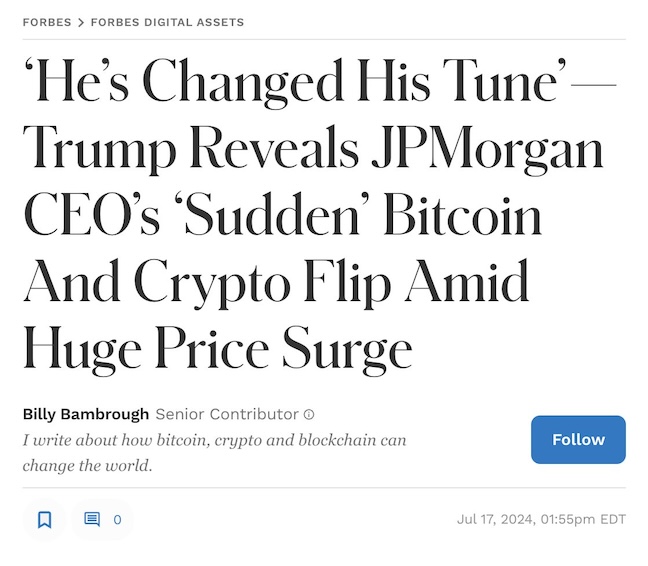
Guess who else seems to have just changed their opinion on Bitcoin?

You think Dimon flipped and doesn’t own any? Dips are for buying in the bull market folks.

Ever the opportunist, Donald Trump has seized on the Democrat’s hostility towards crypto and is speaking at a Bitcoin conference in Nashville later this month. I like the orange coin much more than I like the orange man but a Trump victory in November would likely be a full-bull mania catalyst.

Who are your bets on for Prez these days?

Never mind the parabolics, it’s the banana zone!

Maybe this cycle will be different. Nothing is certain in life. We could be wrong here after all. But if we’re not, the next phase of the bull market is banana-shaped. Raoul Pal is a bit excited:

Ahhhh, liquidity

Summer in Japan officially starts now. It’s going to be a hot one and there will be much call for regular liquid refreshment. And, what comes after summer?

That’s right, rate cuts in the US!

Jerome Powell is now pretty openly signalling that he intends to begin cutting this year, possibly as soon as September. The market believes him too. The biggest investing lesson I learned in the last few years is that liquidity drives markets. Liquidity is coming back and Bitcoin is thirsty. Don’t get me wrong, stocks love liquidity too but Bitcoin slurps it up with the highest intensity of all.

I don’t know if I’m as bullish as Raoul, but I’m not far off.

So, to sum up, we’ve got an asset that has been through three consecutive 4-year bull/bear cycles and is potentially 40% of the way through the current bull phase. We’ve got a bullet-dodging potential US President speaking at a Bitcoin conference. We have the kings of fiat finance changing their tune. And JPow is about to cut rates.

Am I forgetting anything? Oh, yeah. Ethereum ETFs look set to go live next week!

Disclaimer: This should go without saying, but the information contained in this blog is not investment advice, or an incentive to invest, and should not be considered as such. This is for information only.
We’re so back!

The all-time highs keep coming. On Monday 9 July, the Nikkei 225 index made its highest ever close at ¥41,580.17. Semiconductor-related stocks led the way, while other notable movers included Hitachi Ltd (6501) and Fujikura Ltd (5803).

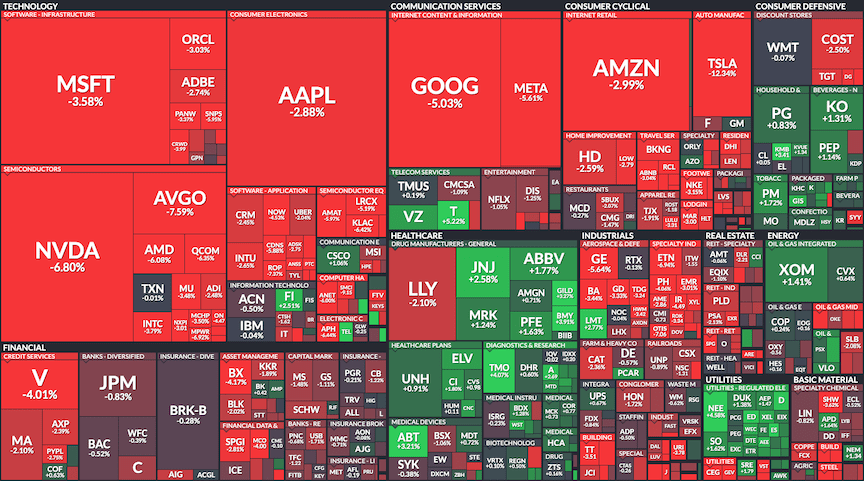
Not to be outdone, the S&P 500 and NASDAQ Composite also closed at record highs on 9 July. Gains were heavily weighted to big tech stocks as the AI narrative continues to drive market sentiment. Fed Chair Jerome Powell stuck to the script during his first day of testimony, reiterating that the Fed’s objective is to cool the economy and progress towards the 2% inflation target without cooling it too much. Market consensus continues to favour a soft landing scenario, with one or two rate cuts expected later this year. CPI data is due on Thursday and if that comes in line with expectations, the positive mood should continue.

Meanwhile, Tesla Inc (TSLA) continued its rebound, closing higher for the 10th consecutive day.

Japan’s real wages fall again, BOJ discussing cuts in bond purchases

Despite the good times in the stock market, much of Japan’s economy still looks relatively weak. Real wages fell by 1.4% in May, marking a record 26th month in decline. Wages are actually rising at the fastest pace in 31 years, but the increases are being offset by inflation, meaning households have less purchasing power.

USD/JPY is trading around ¥161.47 with no end to yen weakness in sight.

This week sees the Bank of Japan meeting with major market players to discuss the tapering of the central bank’s bond purchases. Some market participants are calling on the BOJ to cut bond purchases in half while others favour a more gradual reduction. The final plan is expected to be revealed at the BOJ’s end-of-July meeting.

Semiconductor shares remain strong, Hitachi and Fujikura impress

Chip stocks are once more powering ahead with Advantest Corp (6857) and Tokyo Electron Ltd (8035) gaining +4.1% and +3.8% respectively on 9 July. Chip materials maker Resonac Holdings Corp (4004) announced that it will form a consortium with nine other Japanese and US firms to collaborate on the development of semiconductor technologies for generative AI. Resonac shares surged +8.7% on the news.

Hitachi shares jumped +5.2% on reports that the company is increasingly focused on improving shareholder returns. On 2 July, the electronics giant provided an update on the progress of its buyback of up to 21 million shares at a cost of up to ¥200 billion. The company is targeting a total return ratio of around 50%, including dividends and buybacks – that would be on an expected net profit of 600 billion this fiscal year. Hitachi shares are up +89% year-to-date.

Another big mover was Fujikura Ltd, which jumped +11.4% on 9 July. Fujikura is an electrical equipment manufacturer that develops a range of telecommunication system products, including devices for optical fibres. It appears that Fujikura’s surge was spurred by a 12% move by Corning Inc (GLW) on 8 July after the company revised its sales forecast upward. Fujikura gained a little more today and is now up +228% in 2024.

Japanese stocks rose again today with the Nikkei 225 closing at another record high of ¥41,831.99. Financial stocks were up again on hopes that higher interest rates would bring improved profits. Mitsubishi UFJ Financial Group (8306) has gained over +8% in the past month and almost +50% year-to-date.

Bitcoin also bounced back from its current correction somewhat, moving from around $57,000 to $59,000 despite an increase in market supply from Mt Gox and the German government. Bitcoin ETF flows were positive again and traders eagerly await the SEC decision on Ethereum ETFs.

Disclaimer: This should go without saying, but the information contained in this blog is not investment advice, or an incentive to invest, and should not be considered as such. This is for information only.
Number go up

Being a financial planner by trade, I try to organise our financial future as efficiently as possible without going overboard. My wife and I both work and we have a reasonable income. We have a plan, we know what our numbers are for later in life and the big events in between. Most of all, we are flexible in that plan – our core investments are set and forget, but they can be adjusted easily. The tactical stuff is fun for me and I see it as a bit of a challenge.

Of course, things can go wrong: ill health, accidents, economic change and shifts in specific industries. You prepare for these as best you can and get on with living. Eat well, exercise, look both ways crossing the street, buy insurance etc. etc.

However, there are a few bigger things that bother me. I don’t think about them all the time, but they lurk in the back of my mind. For example, I don’t think AI is going to take over my job, but it could change the world considerably – gotta keep up with developments there. I could classify these things as outliers and conspiracies. Some may or may not have a meaningful impact and others feel a little ‘out there’. The best conspiracy theories have an element of truth, though, don’t they?

So, here are a few things I think about and how they relate to money, investing and how big your number should be:

Climate

I must confess, I don’t allow myself to dwell on what we are doing to the planet. We are clearly having an adverse impact and most of the damage is being done by big business interests who will not stop. The paper straws are cute, but they are hardly going to offset the widespread burning of fossil fuels and other environmental destruction. It’s not that I don’t think it’s important – it’s crucial to our survival as a species. I just know there isn’t much I can do about it. I separate our garbage, cut down on plastic and try not to waste resources, but I’m not losing sleep. Half the people in the developed world don’t even believe climate change exists so good luck to us coming together and taking action as a species. Do you remember the Covid mask and vaccine debates?

It is certainly getting hotter though! And it’s hotter for longer than it was before. After 27 years in Japan, it’s noticeable how spring and autumn are shrinking while summer gets longer year by year. What’s that going to be like in 10 years? How about 20?

I hardly think Yokohama will become unlivable in our lifetime but it could become pretty unpleasant. Imagine Japanese summer from April to October! Would that change your planning? Could it mean your ‘number’ needs to be bigger? The ability to escape Kanto, and maybe even Japan, for several months a year could become a key lifestyle choice. Maybe some people will want to escape for good. Wouldn’t that mean that the cooler, more livable climates in the world are going to see an influx of people who can afford to move? Parts of India are already hitting 50°C as a matter of course. That kind of temperature is more manageable in the developed world with aircon but doesn’t higher demand for a cool place mean higher prices?

As we move from climate change to climate crisis, how are governments going to address it? Again, remember Covid? It was all the people’s fault that it was spreading. They had to be stopped from travelling and confined to their homes in some countries.

Climate lockdowns anyone? Do you think they won’t do it?

It’s a dark thought, but people with flexibility financially will fare better than those who are struggling for money. Does that change your number?

Japan’s economic decline

Honestly, this one would bother me more if I was younger. I’m not sure Japan is a place I would be trying to build a life, career or business given the demographics and the economic outlook if I was in my twenties. But I’m not that young any more and I’m happy where I am. I would, however, want my kids to have the opportunity to live and work overseas if they choose.

The yen is a major concern though. My view is that short term it should recover somewhat when America begins cutting rates. I can see it getting to ¥130 or even ¥120 in the next year or so. However, longer term I expect the yen to steadily lose ground, particularly against the dollar. I talked about it in my ‘How screwed is the yen?’ post a year and a half ago. Staying alert for opportunities to earn in other currencies, investing in a combination of domestic and overseas assets and accumulating Bitcoin remain priorities for me.

Financial shenanigans

Grab your tinfoil hats for this one! In simple terms, the money has been funny since the 2008 global financial crisis. A lot of institutions that should have died were propped up at the expense of taxpayers and we’ve been getting screwed ever since. Economies and big business have become addicted to liquidity: cheap money, low rates. Low interest rates foster inflation, which is a tax on us all, but especially a tax on people who do not own financial assets.

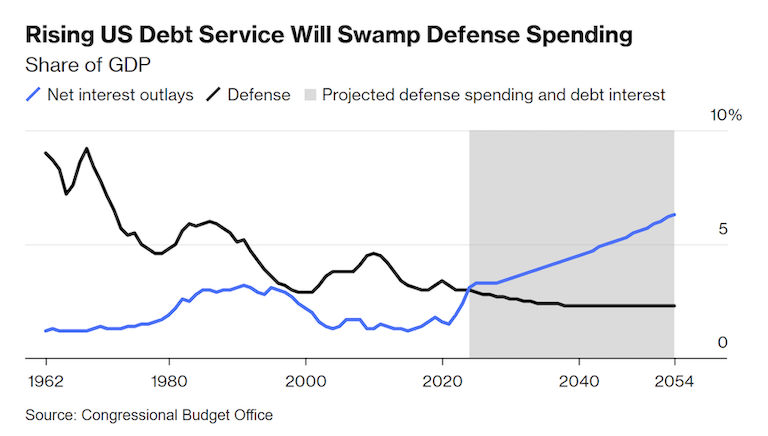
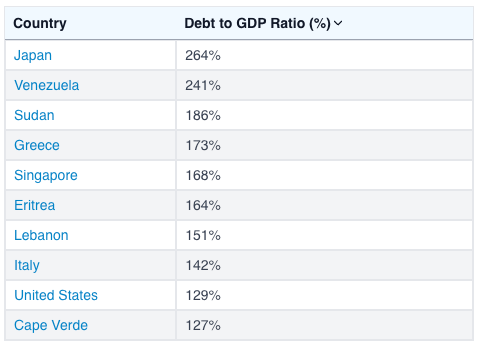
Countries have too much debt and are not producing enough to pay it back. Japan is perhaps the worst offender, at least in the developed world. The debt spiral is probably terminal. That’s why the yen is doomed, and after that so are the pound, the euro and the dollar. I covered currency debasement in ‘Harden up your assets.’ There are tools to fight it that need to be deployed. Otherwise, your money buys less and less.

This is why governments are getting interested in the idea of Central Bank Digital Currencies. (CBDCs) At some point, they are going to need to perform a reset and substitute the current failing money with an alternative. And the powers that be never want to waste an opportunity to seize more control.

In essence, CBDCs are just another form of fiat money. But they come with a whole new opportunity for manipulation. Here’s an interesting video of Rishi Sunak being asked how he would enforce national service in the UK:

Controlling ‘access to finance’ is a government wet dream and CBDCs will make it easy. If you think that the possibility of losing permanent residence due to unpaid taxes is bad, wait until they freeze your bank account or apply a negative interest rate to your money until you pay up.

The public is sleepwalking into this one. You can already imagine how half the population won’t have any issue with it at all. ‘If you don’t have anything to hide, why would you need to keep your money private?’ will be the refrain. People who are well off have no concept of how less fortunate people can run into money trouble and fall behind on bills and taxes. The rich just don’t want to pay for a bunch of ‘layabouts and immigrants’.

The Bank of Japan already has a page on its website about Central Bank Digital Currency by the way. Cute, huh? No plans to implement it at present, but they are looking into it…

CBDC is one thing I think is really worth fighting against, but it will most likely be a losing battle. Sooner or later some crisis will come along and CBDC will have to be implemented ‘for our protection’. You can already see it happening with the AML/CFT mission creep.

Call me crazy, but I think that accumulating Bitcoin and other crypto is the best we can do to prepare for what is coming. Any money sitting in the fiat system will be caught in the net. In many countries, people who want to withdraw a few thousand dollars in cash already have to explain to the bank what they are planning to do with it.

Assuming the number will go up

So there it is. Like you didn’t have enough to worry about! From a financial planning perspective, my take on this is that whatever your number is, you will probably need more.

That’s to say, whatever amount of money you think will be enough to secure your future, maybe add another 10-20% for safety.

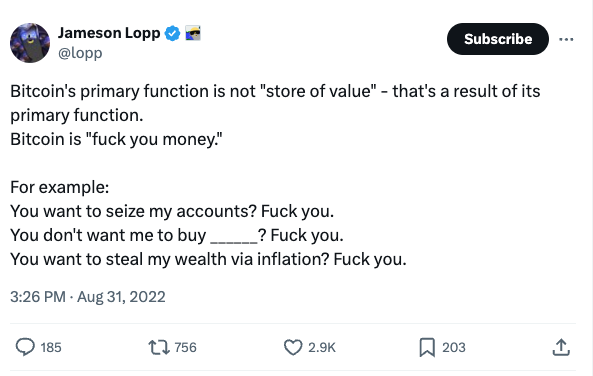
This is why I recommend dividing investments into core/strategic and satellite/tactical. The long-term strategic investments are focused on hitting the number. The tactical assets are aiming for a little extra. The crypto holdings are a shot at f**k you money.

Number go up. Act accordingly.

Disclaimer: This should go without saying, but the information contained in this blog is not investment advice, or an incentive to invest, and should not be considered as such. This is for information only.