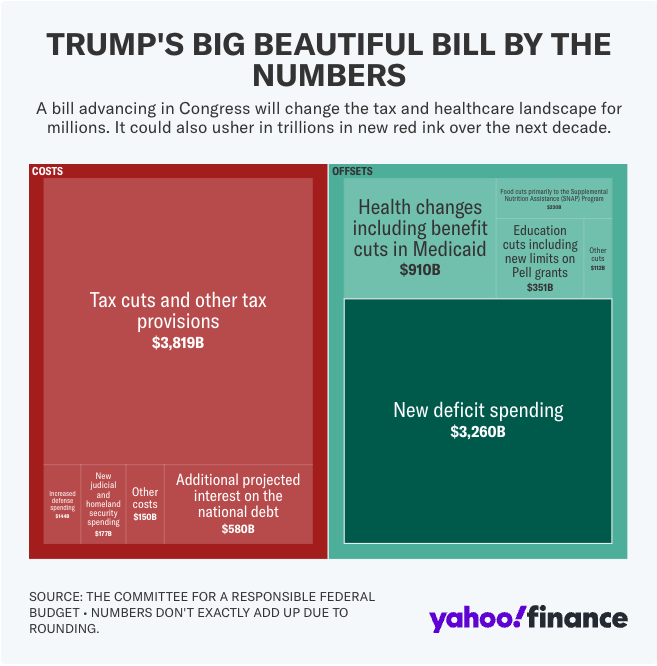
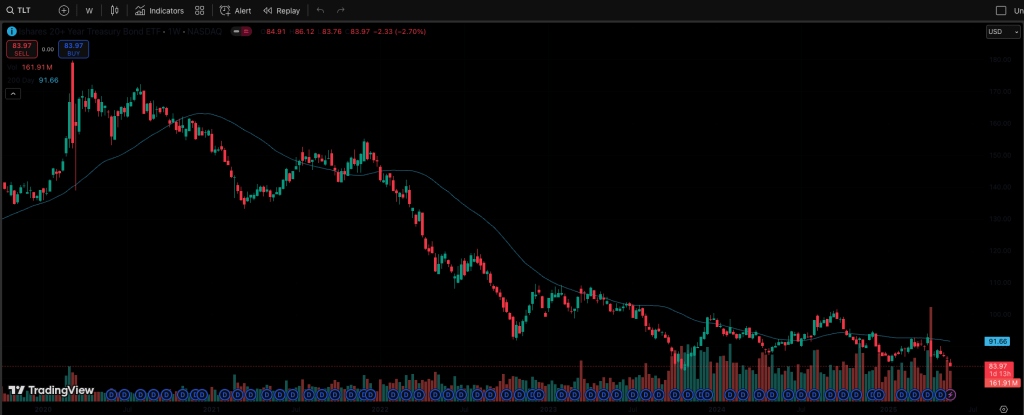
Taps the sign

It’s been a long week. Is it me, or are +/-9% swings on the Nikkei 225 index starting to feel normal? Traders must be loving this – at least the good ones.

I’m not so impressed. Of course, there are buying opportunities, but it gets a bit tiresome when markets swing this wildly based on the pronouncements of one guy who just can’t STFU for 5 minutes.

Orange Swan Event.

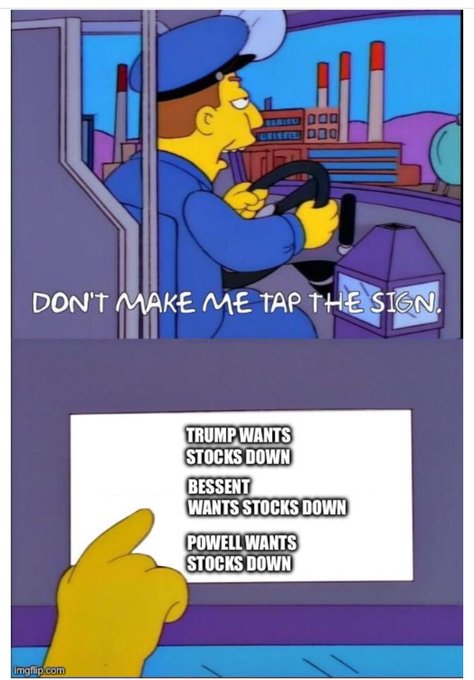
Click it, I dare you! And don’t get me started with the Simpsons memes.

Where was I? Tapping the sign, right. The free lunch quote has been attributed to Harry Markowitz, although I have heard Ray Dalio say something similar. It’s a drum I have been banging for years, sometimes with minimal effect.

When the stock market is going up, nobody cares about diversification. Why would I want to own bonds and gold and other stuff when stocks are on a tear? Just buy the index and chill, right? It’s easy to forget that stocks take the stairs up and the elevator down.

Until you get a reminder.

In 2002, psychologist Daniel Kahneman won the Nobel Memorial Prize in Economic Sciences for his work on the psychology of judgement and decision making. Kahneman points out that individuals are more depressed with investment losses than they are satisfied with equivalent returns. In other words, people hate losing money considerably more than they like making money.

Big liquidation events are like waking up after a party. It was fun, but now it’s time to sober up and review your time horizon, risk profile and asset allocation.

Are you diversified enough?

If recent events haven’t troubled you, and you have barely looked at your investments, the answer to this question is probably yes. Carry on!

If things have been a little nervy, then maybe you were over-exposed.

Don’t get me wrong, I’m all for buying stock indices and holding them forever. It’s not a bad strategy, as long as you can stomach the downturns. And as long as you don’t need the money soon. And, it’s not like a diversified portfolio doesn’t go down in times like these either. When panic sets in, people will sell anything they can get their hands on, but pretty soon you will see a flight to safety.

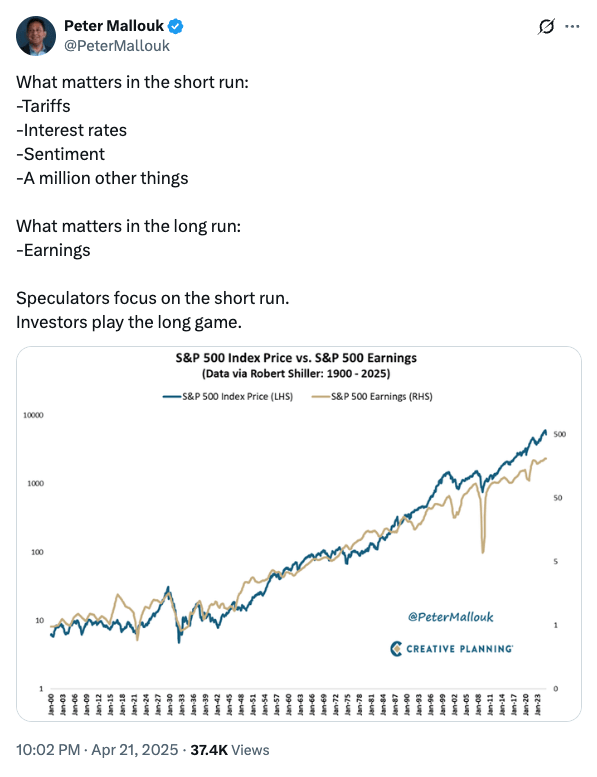
An underappreciated aspect of diversification is the opportunity to tactically rebalance and take advantage of market events. I sold some of a gold ETF this week near all-time highs and bought stocks while everyone was puking them. I didn’t need dry powder. Just a little reallocation.

You can’t do that if you don’t own the gold in the first place. You have to find more cash.

A quick thought experiment

If you are reasonably young and earning good money, then the recent market gyrations are just a blip, but do me a favour: imagine you are 65 years old, about to retire, with a nice fat nest egg invested in the MSCI World Stock index.

And the market dumps 20% in a couple of days. It takes a breather over the weekend and then resumes dumping in earnest. 30% of your retirement pot is gone. Financial media is screaming about recession, trade war, deleveraging or whatever it is this time. Remember in March 2020, when the market crashed and we faced the reality that the entire world was about to shut down? The doomer economists are running victory laps, and the market looks like it is never coming back from this.

How do you feel?

Remember that feeling when you are making future investment decisions, especially as you get closer to spending the money.

Of course, what happened after March 2020 was that central banks slashed interest rates and unleashed a tidal wave of stimulus, and the markets came roaring back before the year was even over. But that type of thing comes at a cost – that’s why your hard-earned cash doesn’t buy as much stuff any more…

Ok, so how do we do this diversification thing?

There are various ways to get yourself a diversified portfolio. How hands-on do you want to be?

For the people who want to put as little effort as possible into it, you can simply buy multi-asset ‘balanced’ mutual funds. I recently came across a collection of Japanese funds that are divided up by age group: “Happy Aging 40”, “Happy Aging 50”, “Happy Aging 60”. The allocations get more conservative the higher the age. These types of funds are available everywhere. Simply dump your money into the fund that fits your time horizon and get back to whatever you’d rather be doing.

In my advisory business, for larger chunks of money, I recommend professionally managed investment portfolios fitted to the client’s base currency and risk profile. Yes, they cost more than an ETF, but they are incredibly well diversified. The asset allocation is reviewed annually, and every quarter the managers implement a ‘tactical overlay’ and buy more of the assets they like and sell some of those they don’t. These guys don’t just buy a broad stock index – they are breaking equity holdings down by style: value, growth, small/large cap, etc. Of course, the entire portfolio is rebalanced annually.

I also recommend a core/satellite approach for even broader diversification. That’s how you slot in the algorithmic trend following strategy that trades stocks, interest rates, currencies, metals and other commodities with very little correlation to any one market. Funnily enough, it likes volatile times like this.

For coaching clients, I take the knowledge I have gained from watching professional money managers and help them develop their own asset allocation using low-cost ETFs. Click the coaching link to find out more.

Keep it simple

Here are a few action points if you want to take on this job yourself:

Separate regular and lump sum money. Regular is the money you invest every month in a pension, savings plan or Tsumitate NISA. If you are relatively young, you can just allocate all of this to stock indices/funds. Let Dollar Cost Averaging do the work for you.

Lump sum money is a chunk of cash you have saved up that you are looking for a better return on. Here, you are going to want more diversification, and you should focus on the currency you are most likely to spend the money in (your base currency). The asset classes you want to look at are: cash, domestic (base currency) bonds, overseas bonds, domestic stocks, overseas stocks, property, and commodities. Hold more stocks if you are young, and more bonds and cash if you plan to spend the money soon. Allocate 70-80% of the lump sum to this broad portfolio, and the remainder can go into satellite holdings to beef up the areas you are most bullish on. For example, if you like Bitcoin, that’s a great satellite holding.

I have written plenty about base currency, asset allocation and core/satellite in the past. Feel free to take a look at earlier posts.

If you are gonna get really serious though, you are going to want to diversify your bonds.

Peace out!

Disclaimer: This should go without saying, but the information contained in this blog is not investment advice, or an incentive to invest, and should not be considered as such. This is for information only.


Put it all on red

“The line between gambling and investing is artificial and thin. The soundest investment has the defining trait of a bet (you losing all of your money in hopes of making a bit more), and the wildest speculation has the salient characteristic of an investment (you might get your money back with interest). Maybe the best definition of “investing” is “gambling with the odds in your favor.” ― Michael Lewis, The Big Short: Inside the Doomsday Machine

I recently came across this post lamenting how young people are being tricked into treating investing as gambling.

“Most investing apps aren’t for investing. They are dopamine-fueled casinos — flashing charts, fake “free” trades, and endless FOMO to keep you chasing.”

There is probably some truth to this. Certainly, investment products look quite different these days from when I started in the advisory business. However, here’s a funny thing: I’m currently reading an old classic, Jack D. Schwager’s ‘Market Wizards’, and it’s shocking to find how many of the ‘wizards’ have a background in gambling. What’s more, almost all of them use gambling analogies in relation to trading.

In case you don’t know the book, which was published in 1989, it is a series of interviews with top traders, exploring how they made their money. Despite being a little dated, it’s a fascinating read if you like that sort of thing. I haven’t finished it yet and am making some notes as I go. Here is a note I made from the interview with Gary Bielfeldt, who was known for his sizable trades in treasury bonds in the 1980s:

On poker and the concept of playing the percentage hands:

You don’t just play every hand and stay through every card, because if you do, you will have a much higher probability of losing. You should play the good hands and drop out of the poor hands, forfeiting the ante. When more of the cards are on the table and you have a very strong hand – in other words, when the percentages are skewed in your favor – you raise and play that hand to the hilt.

Apply the same principles to trading. Wait for the right trade. If a trade doesn’t look right, you get out and take a small loss; it’s precisely equivalent to forfeiting the ante by dropping out of a poor hand in poker.

When the percentages seem to be strongly in your favor, be aggressive and really try to leverage the trade, similar to the way you raise on the good hands in poker.

Of course, not all gamblers are made the same. Those who understand probability fare much better than those just out to have some fun.

“If you do not manage the risk, eventually it will carry you out” – Larry Hite

One of the recurring themes from the book is risk management. This is a broad subject, but almost all of the traders talk about how they scale back their activity when they are trading poorly. In golf parlance, a bogey is one bad shot; a double bogey is a bad shot followed by a stupid shot.

Cutting losers quickly while letting winners run is another common theme. Ed Seykota’s three golden rules are: Cut losses, cut losses, cut losses! Paul Tudor Jones’ mantra is “never average losers”.

Jones says: “Never trade in situations where you don’t have control. For example, I don’t risk significant amounts of money in front of key reports, since that is gambling and not trading.” That’s an interesting comment considering the number of people I see trying to trade the latest inflation report or Fed meeting.

Bruce Kovner’s first rule of trading is “Don’t get caught in a situation in which you can lose a great deal of money for reasons you don’t understand”.

All of these great traders stress that making mistakes is not only normal, but an important part of the process. PTJ is known for catching major turning points in markets however, he is not the sniper that many people imagine. He may try repeated trades over a period of weeks, getting out as the market moves against him before probing again until he finally finds that turning point.

Larry Hite notes: “You can lose money even on a good bet. If the odds of the bet are 50/50 and the payoff is $2 versus a $1 risk, that is a good bet, even if you lose. The important point is that if you do enough of those trades or bets, eventually you have to come out ahead.”

Trading vs investing

Schwager makes two key distinctions between trading and investing: First, a trader will go short as readily as long. In contrast, the investor – for example, the portfolio manager of a mutual fund – will always be long. If he is uncertain about the market, he may only be 70% invested, but he is always long.

Second, a trader is primarily concerned about the direction of the market. Is it going up or down? The investor is more concerned about picking the best stocks to invest in.

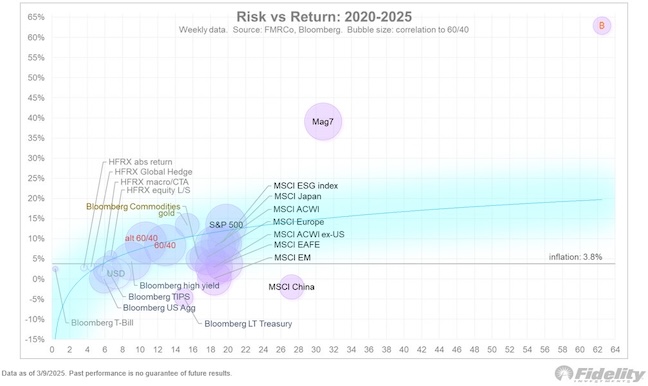
Of course, neither traders nor investors are limited to stocks only. Take a look at this absolutely insane chart from @TimmerFidelity

The chart shows the annualised volatility vs annualized return of various assets since 2020. Notice anything funny?

If you like the Magnificent 7 stocks outperformance, you’re gonna love Bitcoin!

Many will look at the asset in the top right corner and assume that is where the investing/trading ends and gambling begins. Those in the know will note the efficient frontier line you get when you own everything in the chart. My investing philosophy is that’s exactly what you want to do. The only question is how you weight each asset.

Just FYI, Paul Tudor Jones’ largest holding these days is the iShares Bitcoin Trust (IBIT). It’s around 4.5% of his total portfolio.

More from PTJ here in Facing inflation – the four assets you should own.

“Don’t be a hero. Don’t have an ego. Always question yourself and your ability. Don’t ever feel that you are very good. The second you do, you are dead.” – Paul Tudor Jones

Finally, a somewhat sobering message. Two quotes so far stopped me in my tracks and made me think of Japan and its mountain of debt (although they were actually about another economy):

“And you are saying that people look at the deficit year after year and think, “Well, it can’t be so bad, the economy is strong,” and one day everyone wakes up. It is like having termites in the foundation of your house. You may not notice them until one day they gnaw away a big chunk and the house collapses. I don’t think anybody should take a large amount of comfort in the fact that things appear to be holding together.” – Richard Dennis

“If the economy starts to go with the kind of leverage that is in it, it will deteriorate so fast that people’s heads will spin. I hate to believe it, but in my gut that is what I think is going to happen. I know from studying history that credit eventually kills all great societies.” – Paul Tudor Jones

If you do not manage the risk, eventually it will carry you out.

Top image by Greg Montani from Pixabay

Disclaimer: This should go without saying, but the information contained in this blog is not investment advice, or an incentive to invest, and should not be considered as such. This is for information only.

It’s so over until we’re so back

Are we winning yet? It’s tricky explaining to people why investing isn’t gambling when the markets continue to exhibit the qualities of a casino. Where to start?

Even my favourite investing question, ‘Are we in a bull market or a bear market?’ is a tough one to answer right now. Maybe we can get there by the end of this post!

US stocks first

I know many people doubt that Trump actually has a plan, and crediting him for deliberately cooling down the US stock rally seems a bit of a stretch. But you have to remember that he’s got Scott Bessent sitting in the treasury. I lean towards there being method in the madness.

We should listen to what they are telling us. Both Trump and Bessent have been quoted as saying we should expect some turbulence. The sharp drop on Monday was a warning shot. I sit in the camp that says we get 3 to 4 months of significant uncertainty before they start focusing on pumping things up before the midterms in November.

Markets hate uncertainty. It’s going to be a bumpy ride.

The cooler US CPI print last night provided some welcome relief. We are moving towards an economy that is ready for more rate cuts. However, tariffs won’t show up in inflation numbers until next month. Trump & Co. can’t force Powell to cut short-term rates, but Bessent has said that they are focused on bringing down the 10-year bond yield. Something to keep an eye on.

Talk of a recession seems overblown. The US economy is slowing, not sputtering.

Japanese stocks and bonds

Shout out to Japan Stock Feed for this excellent summary of a recent interview with ‘legendary salaryman investor’ Tatsuro Kiyohara.

A few quotes:

“For the first time, Japanese companies truly belong to their shareholders. That’s a massive structural shift—a revolution.”

“Yes, risks remain. But this governance transformation is so significant that it outweighs them. That’s why, even if a crash comes, I focus on making money from the rebound rather than betting on the decline.”

“Put simply: If share buybacks and dividend hikes continue, stock prices will rise.”

“I’ve said before that I’m terrible at predicting markets, but if we zoom out, I’m bullish on Japan.”

The TSE campaign to make life better for Japanese stock investors has been a roaring success. Who says things never change in Japan?

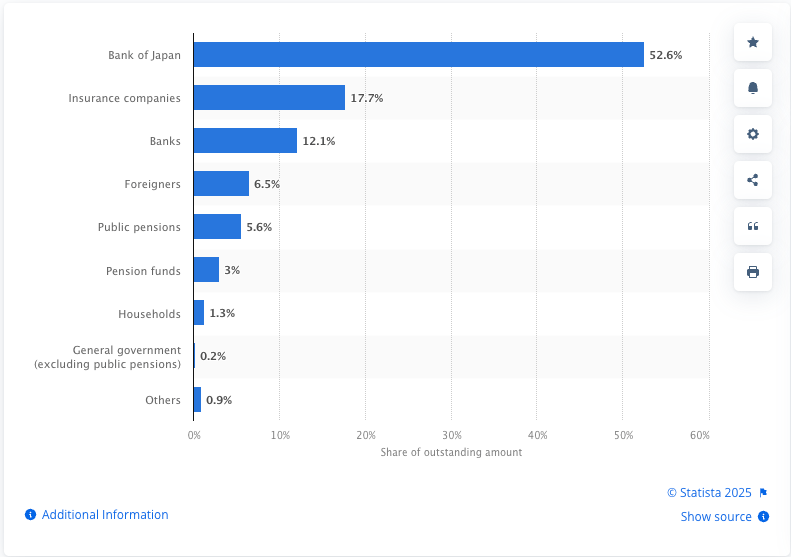
Much as I like Japanese stocks, the macro outlook terrifies me! Long-term bond yields are rising, and you have to wonder how much higher they can go before the Bank of Japan loses control. If the BOJ is not going to continue Yield Curve Control to reign in yields, then it is going to endure the full force of the crash in bond prices when yields get away from it. Maybe the BOJ can endure and hold to maturity, albeit with massive damage to its credibility. But who else is going to suffer?

Statista: Distribution of Japanese Government Bond (JGB) holders as of September 2024

This Japanese stock vs. macro dilemma reminds me of the ever-present earthquake risk. It’s really nice living in Japan, but your house could get destroyed tomorrow! The difference is that the Japanese bond market will take the rest of the world with it if it falls. Fun times!

Crypto

You knew I would get into crypto soon enough, right? More specifically, Bitcoin, seeing as everything else has been trashed. I distinctly remember that, about three weeks ago, we were on a nice trend back towards $100k – there was this beautiful procession of green candles, and I went to bed that night feeling quite confident that I would wake up to six figures again in the morning.

Bybit got hacked by North Korea that night.

Most crypto thing ever lol…

Then we had a poor reaction to Trump’s strategic reserve announcements, and before you knew it, we were fighting to hold $80k.

It is what it is.

I see this going much the same way as US stocks: a few months of ‘It’s so over’ and then ‘We are so back!’.

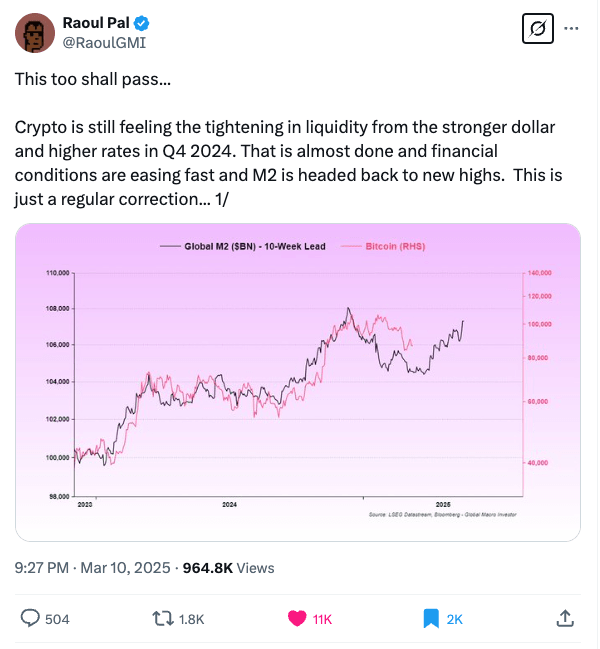
Follow the money supply. I will cover the Strategic Reserve and US regulation changes in a future post. Suffice it to say that most people are offsides and bearish. I would be concerned if it were any other way.

So, bull or bear?

US stocks – mini bear inside a bull

Japanese stocks – bull

Japanese bonds – don’t look up!

Bitcoin – bull

That’s how I see it. Red days on US stocks are for buying. I will treat the next 3 to 4 months as an opportunity to accumulate.

Japanese stocks, particularly value/dividend stocks, are a great tool to counter JPY inflation.

Diversification across asset classes for serious money.

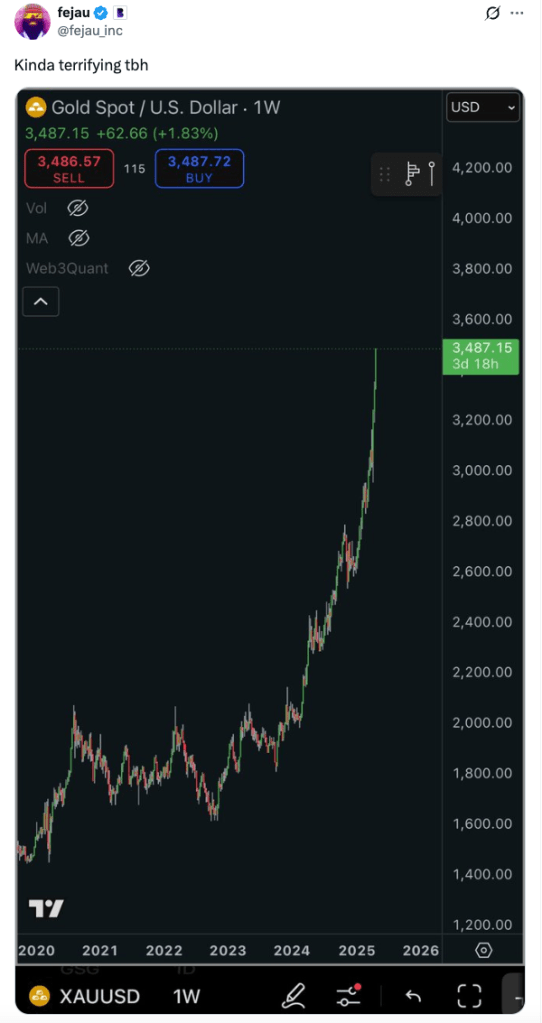
USD, Bitcoin and gold are insurance policies on the macro risk. Fingers crossed on the earthquakes!

Disclaimer: This should go without saying, but the information contained in this blog is not investment advice, or an incentive to invest, and should not be considered as such. This is for information only.
Exit liquidity

Welcome to another fun-packed week in crypto. This week, Metaplanet reached ¥6,880 per share and game company Gumi Inc (3903) announced plans to purchase $6.6 million worth of Bitcoin. As I edit this post, I note that GME is considering buying BTC and other crypto.

I am hearing more rumours that Japanese regulators are considering reclassifying crypto as security, paving the way for ETFs and sensible tax treatment. My guess is that it’s likely to take until 2026 but this is a reasonably high probability outcome.

As we approach the sharp end of the Bitcoin bull market, here are a few thoughts and observations:

It’s truly a Bitcoin-driven market

The last 12 months in crypto have clearly been all about Bitcoin. Meme coins had a hot moment in Q1 of 2024 but that market is now saturated and the attention span on new coins is down to a few hours. People are talking about being in “the trenches” when really they are just at the casino.

Similarly, altcoins have mostly struggled to live up to expectations. There are simply too many coins and not enough money to make them all go up at once. AI coins never really had any tech and utility coins never really did much.

Ethereum continues to disappoint. Among the other L1s, Solana has had its moments, mostly driven by the memecoin casino. Hyperliquid and SUI have also shown periods of strength. Binance seems to be toying with launching memes on BNB, which has driven up the price in the last week or so.

If you don’t follow crypto Twitter, I can tell you the mood has been downright depressed for weeks. Many of these people have been hyping the bull market for the last two years and don’t even own any Bitcoin. They are knee-deep in trash and crying for alt season or central bank quantitative easing. (QE)

Meanwhile, Bitcoin is at $96k. It’s up almost 350% from the same time two years ago.

Are you not entertained?

The debate about Bitcoin’s institutional appeal is over

It has been fun frontrunning mainstream adoption but now the suits are here. Blackrock is here, tradfi is here. The US has a crypto-friendly administration that is just picking up steam. 16 US states are debating creating strategic Bitcoin reserves and a federal SBR is under consideration.

Read that last part again.

Institutional money is pumping into Bitcoin. It is not flowing down into other crypto assets like in previous bull markets. It goes into the spot ETFs and stays there.

Serious money is not coming to buy your altcoin bags.

I sound like one of those sanctimonious Bitcoin maxis, don’t I? But identifying what is actually happening is the key, not being right about this coin or that coin.

The harsh truth

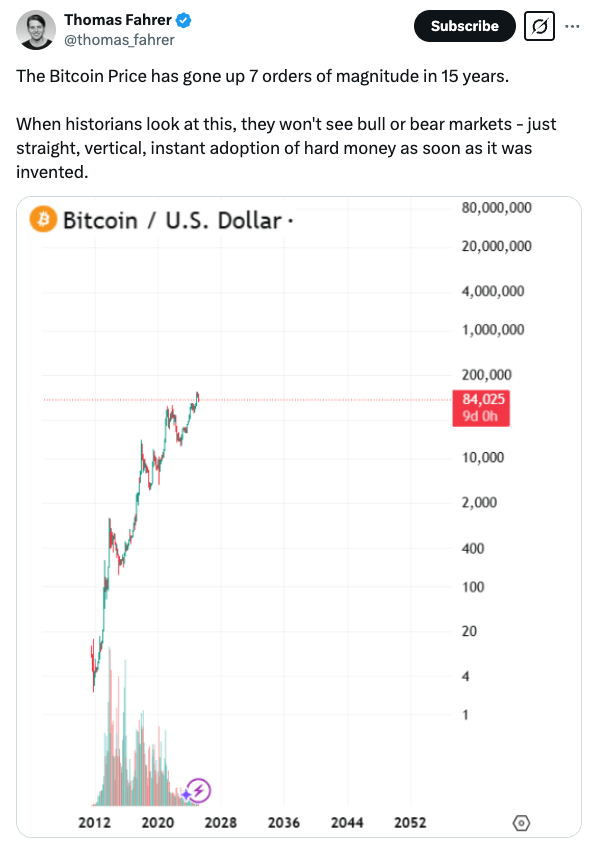
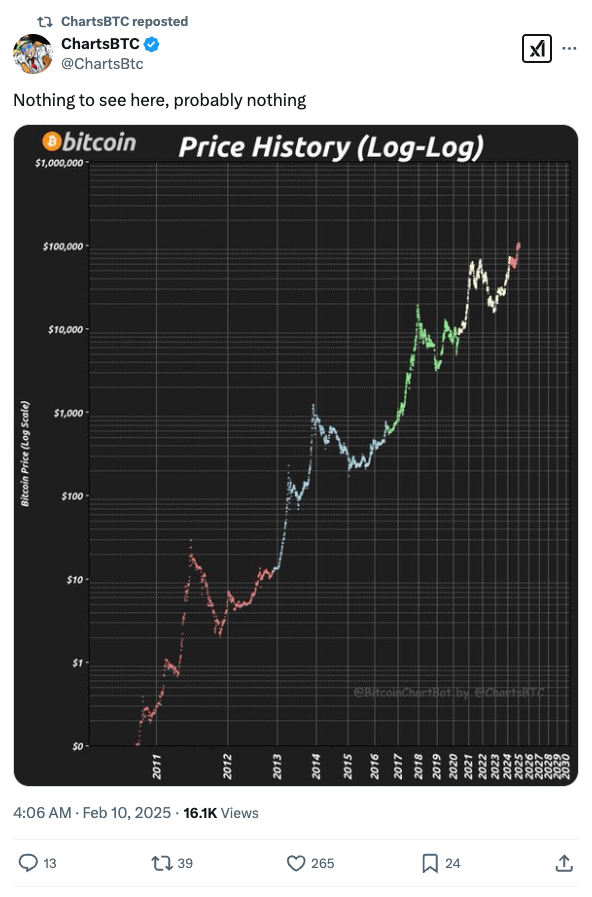
Most people looked at this chart for the last 10 years and failed to act because they couldn’t figure out what the use case was, or it just seemed silly to them. “If Bitcoin is money, why can’t I buy my coffee at Starbucks with it?” It must have taken an incredible amount of overthinking not to buy the asset going up and to the right faster than anything else, but people managed it somehow.

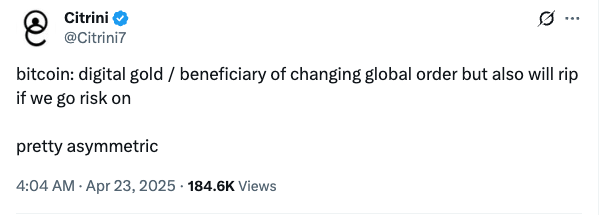
Bitcoin began as a solution looking for a problem. Much mental gymnastics have been performed in defining what it is actually useful for, but years of ZIRP (Zero Interest Rate Policy) and QE (Quantitive Easing) eventually provided the answer: Like gold, Bitcoin is the countertrade to the wanton destruction of Fiat currency by governments and central banks.

It’s the hardest of the hard assets. And now the big boys are buying it.

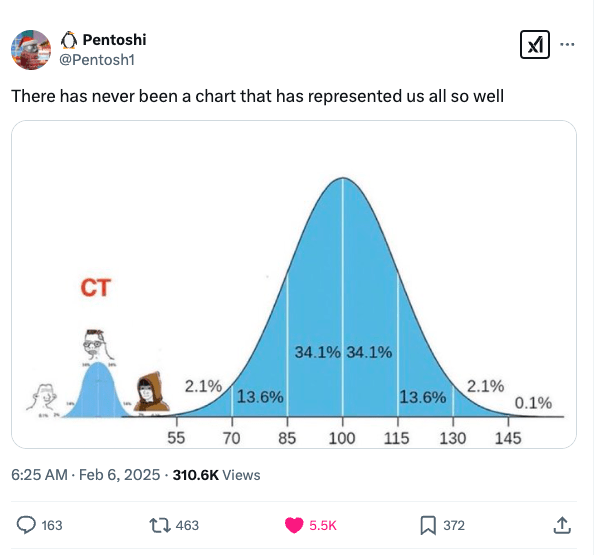
You may think the crypto people were either lucky or very clever, but the reality is so much funnier:

It’s only a 10x to $1 million per Bitcoin. Do you know how many times this thing has 10x’d? If I sound like the left-curve guy here, it’s because I am.

The volatility will continue to fall and Bitcoin will become another boring tradfi asset, albeit one you can’t afford not to own. Expect diminishing returns from here on.

It’s still going to a million, though. That outcome is right there if you can discipline yourself to accumulate and then sit on your hands for 5-10 years. How much do you need to own to change your financial life?

Study up on the state of global liquidity. This Raoul Pal interview with @crossbordercap is worth a watch. (particularly 27:22 Japan’s Role in US-China Financial Tensions)

FOMO

“Am I too late to on crypto?”

“What do you think about Metaplanet?”

I’ve been getting more of these messages recently. People who couldn’t bring themselves to buy before are now scared they are going to miss out. It’s the signal that we are down to the last couple of innings of this bull market.

Hell, we may already have topped, but I doubt it. For those looking to take profit, the next leg up will offer an opportunity to start moving towards the exit. And there’s only one door, remember.

Beware of unit bias. The big mistake that people make at this stage is deciding that Bitcoin is too expensive at $96k so they need to buy something cheaper to catch up.

The people who own those “cheap alts” have a name for you guys: Exit liquidity

It’s their last chance to offload their bags to a newbie with FOMO.

Be smart.

It’s not too late

This post is meant as a warning but here’s some encouragement:

There will still be opportunities to get on the train. When the dust settles, sometime in 2026, Bitcoin will once again lurk in the buy zone. Below $80k is cheap. Below $50k is deep value.

That’s the chance to get on the train. While it is stationary. Getting on now is like trying to jump on a moving Shinkansen. Just understand that next year everyone else will be getting off and puking on the platform as you try to board…

If you really want to get started now, it’s ok, but go slow. Average in and prepare for the next bear market to really deploy capital.

And stick to Bitcoin. Don’t become some gambler’s exit liquidity.

Top image by Kev from Pixabay

Disclaimer: This should go without saying, but the information contained in this blog is not investment advice, or an incentive to invest, and should not be considered as such. This is for information only.
What’s your Japan plan?

I started this site in 2017 and ran out of things to say about the basics of financial planning some time ago. If you are just getting started, I put together a thread of simple financial planning tips from my early posts, which you can view on X here.

The basics don’t change, but the environment can change drastically. If you plan to live in Japan for the long term, you are probably now figuring out how to adjust from living in a country where deflation was the norm to one where prices are rising. Looking into the future, one of the big questions is whether this inflationary environment will stick, or will Japan be back at zero interest rates and falling prices in a few years? How can we plan when we don’t know the variables we will likely deal with?

Prediction is very difficult, especially if it’s about the future. – Niels Bohr

I have a client who was an economist at a financial institution for many years. He told me he always felt it was his job to have a view. For some reason that has stuck with me and I think it is important in my job too. It’s also important not to be wrong, though! I wish I could tell you I have always held the correct view and never been wrong, but I doubt you would believe me. I have, however, gained some experience over the years, which has helped me develop some skills in dealing with the uncertain future we face.

Strong views, loosely held.

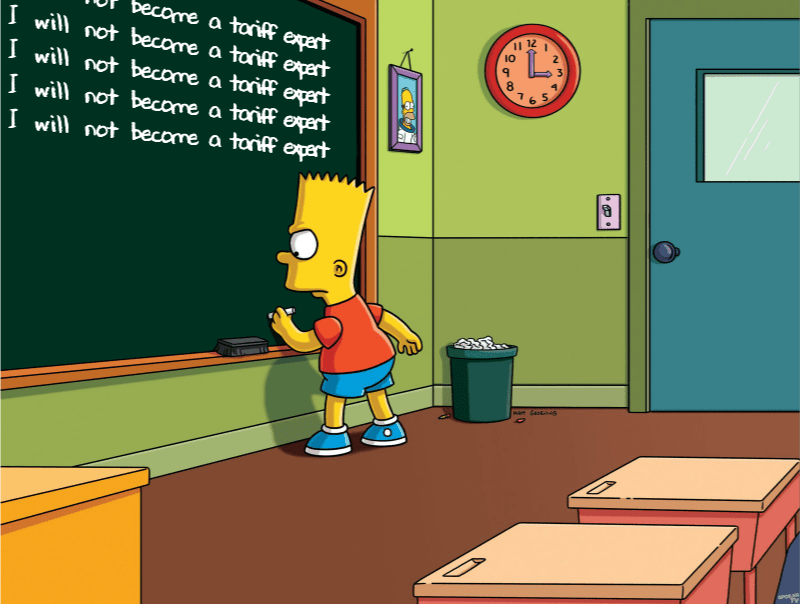
Having a view is helpful but you don’t have to marry it. If something changes or evidence comes to light that proves you wrong, you can simply change your view. Don’t get caught up in the social media battle to be right about everything. In just the last few years, people have pivoted from being epidemiologists to vaccine experts to geopolitical analysts to macroeconomists to AI gurus and now, tariff experts.

It’s exhausting.

So, I thought today I would take a look at some basic data about the Japanese economy and share my view on what a person living here should focus on in terms of financial planning and investment.

Debt is a problem

Japan still has a strong, productive economy but it is not expected to grow fast. The predicted real GDP change for 2025 is 1.1%. (IMF) Government debt to GDP is currently 255%. (Trading Economics)

December 2024 CPI (inflation) was 3.6% and, in response, the Bank of Japan recently increased the overnight interest rate to 0.5%. The 10-year yield on government bonds currently stands at around 1.2%.

Japan is clearly not going to grow out of its debt problem. Demographics do not support the level of growth required to meaningfully reduce the size of the mountain. When governments can’t outgrow their debt, they usually end up inflating their way out. I struggle to see how the BOJ leadership can raise rates high enough to head off this outcome but they will of course delay it as long as possible.

It doesn’t look good for the yen

In January 2023, I wrote a post charmingly titled How screwed is the yen? It actually holds up pretty well for a two-year-old post. The problems facing the currency have not changed very much and we are still hanging around at 155 yen to the dollar.

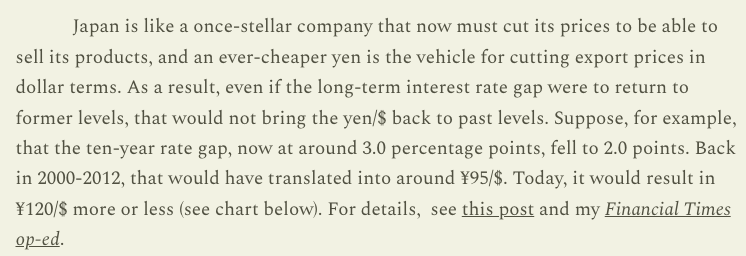
I have re-read this excellent post by Richard Katz several times: The BOJ, the Fed and The Future Of The Yen. He notes that although the gap between US and Japan overnight rates may close, the gap between the two countries’ long-term yields is unlikely to follow suit, meaning the yen probably won’t recover as strongly as some think it will. Here’s an excerpt from that piece:

Some of the issues people in Japan are facing when planning for their financial future are as follows:

  • Continuing yen weakness
  • Concern that the pension system will not meet their retirement needs
  • Rising interest rates, but not rising too far
  • Negative real rates (interest rates lower than the rate of inflation)
  • Rising wages but negative real wages relative to inflation

People are already feeling the pinch. If you bought rice recently, you know what I mean. Furthermore, prices of 1,656 food items are set to rise this month according to this Japan Times article.

So, what can we do?

If you are a regular reader, I am probably repeating myself, but here are some action items to consider:

Check your base currency – are you really going to spend all of your future money in Japan? Are there big expenses overseas that you are likely to be on the hook for in future? If so, you need to save and invest some or all of your money in that currency. More on that here: What is your base currency?

JPY cash is trash – even if your base currency is yen, you are going to lose against inflation over time if you keep all of your money in the bank. Sure, you need to keep a liquid emergency cash reserve, but everything else needs to go somewhere more productive. CPI was 3.6% in December. The BOJ’s target inflation rate is 2%. How much is your bank paying you in interest?

Fill up tax-free vehicles first – another no-brainer. If you are eligible for NISA and/or iDeCo, they are the first stop for investment money. NISA especially is an incredible deal as you can access the money freely if you really have to. Bad luck if you are a US citizen – you should explore options for investing back home. And remember, if your spouse is eligible, they should be maxing out tax-advantaged options, too.

Yen-cost average – if you are young, regular investment in a global stock index fund/ETF is a perfectly good strategy. You can worry about diversification later.

Learn to diversify – lump sum investments require more care. And the closer you get to spending your capital, the more you need to protect it. Diversification across asset classes (not geographical areas) is how you do this. Own some bonds, stocks (growth, value, dividend), property (physical or REIT), commodities and alternatives. Use a core/satellite allocation to dial up/down risk.

Explore dividend stocks – Japanese dividend stocks offer a great way to keep pace with inflation in yen terms. More here: How to beat inflation with Japanese dividend stocks

Lever up – if you are here for the long run, owning property is still better than renting. Even if you are risk averse, I am still seeing 35-year fixed-rate mortgages at under 2%. Floating rates are still well below 1% and, in some cases lower than 0.5%. It is still very cheap to borrow money for a home in Japan.

Stack gold and bitcoin – the two kings of hard assets and possibly the only satellite holdings you need. Average in over time and hold. More here: Facing inflation – the four assets you should own

A fistful of dollars – if you are the entrepreneurial type, I recommend brainstorming ways to earn money in USD. As the global reserve currency, it will be the last one standing in the Fiat race to the bottom. Read up on the dollar milkshake theory. If you can get paid in bitcoin, even better!

To summarise: have a view, make a plan and adjust it as you go. If you need help, don’t be shy about getting some. You will get better at this with practice.

Top image by tawatchai07 on Freepik

Disclaimer: This should go without saying, but the information contained in this blog is not investment advice, or an incentive to invest, and should not be considered as such. This is for information only.

Pump my bags!

I know I shouldn’t be posting about the guy everyone is sick of hearing about this week, but he’s proving hard to ignore.

I always argue that political changes have far less impact on asset markets than people expect, and I still believe that is true, but you have to hand it to the new Prez – he is pumping everything!

I write this following a highly enjoyable meet-up in Tokyo last night. We finished at a very responsible hour but I can’t say I am firing on all cylinders today – that’s the price of getting old. So, I will try to make this update as quick and painless as possible.

We all know about the flood of executive orders issued in the past few days. Trump sure loves a good fanfare. However, it was his online address to the World Economic Forum that caught my bleary eye this morning:

Trump said he would ask OPEC to lower the oil price and “with oil prices going down, I’ll demand that interest rates drop immediately,” adding that “likewise they should be dropping all over the world.”

Fed chair Jerome Powell will have something to say about that, of course, but it’s clear that Trump’s intention is for the US to lead global interest rates on a downward path. The S&P 500 reacted by notching its first all-time high close of 2025, rising +0.53% to $6,118.71.

Powell is not the type to be bullied and the Fed is actually signaling a slowdown in rate cuts this year as it awaits further economic data. However, the central bank is going to come under a lot of pressure to pave the way for higher asset prices.

Trump wants a booming stock market to brag about.

He wants higher crypto prices, too.

Last night he signed an executive order establishing the Presidential Working Group on Digital Asset Markets. Here are the main points:

  • Secure America’s position as the world’s leader in the digital asset economy
  • Create a federal regulatory framework for digital assets
  • Prohibit the creation of a central bank digital currency
  • Evaluate the potential of a strategic national digital asset stockpile

Hot on the heels of the executive order, the SEC rescinded the controversial SAB 121 accounting guidance, opening the door for banks to custody crypto assets. This one is bigger than many people realise, although it brings new risks as tradfi will surely make the same mistakes crypto lenders made last cycle – you shouldn’t dabble in under-collateralised fractional reserve lending on an asset you can’t print. But no doubt they will try!

The Bitcoin price whipsawed overnight, rising initially and then dumping in disappointment that the order did not explicitly mention Bitcoin or plans to acquire more Bitcoin. The most likely outcome seems to be that the government will hold onto existing crypto assets seized in legal proceedings.

My two cents: traders and Bitcoin maxis have become too fixated on the idea of the Strategic Bitcoin Reserve and are probably going to end up disappointed. However, the new administration’s appetite for clear regulation and openness is a huge positive for the industry. It is probably also going to provide a healthy level of support for the ongoing bull market. Too much good news all at once could easily have led to a Q1 blow-off top.

Let’s hope the shenanigans I wrote about earlier this week in Are you tired of winning yet? were a blip and the new admin will focus on the long-term health of the industry rather than pumping dumb stuff. I can’t say I’m convinced on that one…

Meanwhile in Japan

It’s BOJ day! Japan didn’t get the memo about cutting rates. No shocks this time as the Nikkei Shinbun was ahead of the decision to raise rates to 0.5%, the highest in 17 years. The BOJ expects wages to rise this year with inflation at around 2.5%. Real interest rates are expected to remain negative and policy is still largely accommodative.

The Japanese stock market is calm this afternoon but let’s give it a day or so before we judge the reaction. Part of me hopes for chaos next week and a chance to allocate the rest of my NISA with blood in the streets but I think I would prefer peace and quiet.

All roads lead to inflation?

In the US, the Fed is cutting rates without first scoring a decisive victory over inflation. Trump’s tariffs, if enacted, are likely to be inflationary. The resurgence of inflation appears to pose the biggest risk to markets this year.

With debt to GDP at 263% and little chance of growing out of the hole, Japan seems destined for higher inflation. It’s going to be tough for the BOJ to raise rates high enough to prevent this outcome and the weak yen will only accelerate price rises. JPY cash remains a bad place to hang around for too long.

I covered the four assets to own to face inflation back in late October and I don’t see any change there. Bitcoin, commodities, gold and tech stocks remain the best plays. If you don’t own Bitcoin already, I would caution jumping in at this point in the bull market. I don’t know what innings we are in but it’s certainly not early. If you own it and are planning to exit this year, we are approaching the time to begin averaging out. I sold around a third of my Metaplanet holding just before the inauguration as expectations of something special from Trump drove it close to ¥5,000. Euphoria and hopium should be sold more and more aggressively in my opinion.

The last word on Trump: he loves to brag about stock market performance as proof he’s doing a great job and has even started taking credit for the Bitcoin price. I wouldn’t bet against US stocks and BTC this year while he is in the driver’s seat.

Disclaimer: This should go without saying, but the information contained in this blog is not investment advice, or an incentive to invest, and should not be considered as such. This is for information only.
Are you tired of winning yet?

Yes, on 20 January, Donald J. Trump will be sworn in as the 47th President of the United States of America. The orange man is expected to unleash a flurry of executive orders on day one. We’re talking about deportations, tariffs, and maybe, just maybe, some crypto-related announcements.

If you were holding out for an executive order to create a strategic Bitcoin reserve, I don’t quite know what to tell you. In classic Trump style, the first crypto president has spectacularly missed the point and befuddled the market with a ‘winning’ combination of grift and incompetence.

Where to begin? Over the weekend, whilst holding a black tie pre-inauguration crypto ball, the Trump team decided to launch a $TRUMP meme coin. Traders and degens scrambled to verify if it was official and when they did, the new coin went from zero to around $14 billion market cap in 7 hours.

People got rich. One of those people being the man himself, whose team owns 80%+ of the supply. The potential for a rug pull did not deter traders and the coin looked poised to continue its rise. And then, a truly crazy thing happened.

They released another meme coin.

Early this morning, news began circling of the launch of $MELANIA. Before long, Trump himself reposted the announcement. I bet you can’t guess what happened?

Yes, the minute the market realised the Melania coin was real, they dumped the Trump coin in droves to hop on the next train, sending $TRUMP crashing from around $72 back to $40. They also managed to overload the Solana blockchain to the point where it could no longer cope and chaos ensued as people struggled to get their money out of one ridiculous shitcoin and into the other.

I learned a new term today: grift dilution. That’s where you release a second grift, right on the heels of the first one, and it diminishes the impact of the first grift without creating any more profit via the new one.

Talk about snatching ‘it’s so over’ from the jaws of ‘we’re so back’…

The initial Trump coin had already sucked the liquidity out of all altcoins except Solana. The Melania coin managed to knock over Solana and even caused Bitcoin to dump about 6% in one candle.

Magnificent! And tomorrow the real chaos begins!

To add insult to injury, Trump’s World Liberty Financial purchased around $48 million of Ethereum (for whatever stunt they are planning to pull next, no doubt) and the price of ETH, wait for it…, did not move at all!

Cursed that coin is.

I know what you’re thinking: isn’t releasing meme coins with massive rug potential right before taking the highest office in the land kind of, well you know…criminal? But never fear, because the new administration is replacing all the top dogs at the SEC with their own people.

Not that anyone in crypto is sad to see Gary Gensler head out of the door. But somehow I can’t imagine that David Sacks, the new crypto czar, would have been prepared for this level of insanity. Who knows, though?

I write this with full knowledge that people outside crypto probably don’t even know any of this happened and are just going about their Monday. Metaplanet (3350) just made another all-time high today as investors pile in hoping that Trump will announce something monumental related to Bitcoin overnight. While he may do so, he could of course just launch a $BARRON meme coin instead.

It’s going to be a weird four years…

As I edit this hasty missive, I see that $TRUMP is back at around $58 a coin, which is approximately $11.6 billion market cap. $MELANIA is at $1.7 billion. So maybe it is a successful grift after all? The mind boggles.

Before we all get too down on crypto, OG Eric Voorhees actually explained things rather well in this post:

Amen to that. Take care out there, folks!

Disclaimer: This should go without saying, but the information contained in this blog is not investment advice, or an incentive to invest, and should not be considered as such. This is for information only.

2025 – Snakes and elephants

Happy New Year, everyone! Welcome to the year of the snake. Just as we get back in the swing of things, a three-day holiday lies ahead. I watched the news last night and was reliably informed for 20 continuous minutes that it is snowing in the places where it always snows at this time of year. It’s nice when things go to plan, huh?

If you enjoy winter sports, it looks like a great season for it!

It would be nice if the investment climate was equally predictable, but alas, it’s complicated. In many ways, 2024 was smoother than expected. Global stocks gained around 19%, led by the Magnificent Seven and the hype around the AI trade. Japanese stocks kept pace well, although gains were concentrated in the first half of the year and things got a little scary for a minute there in August!

I had a look back and over the year I wrote 26 posts, covering the usual financial planning and asset allocation stuff along with macro views, currency, stocks to watch, crypto, AI, quantum computing and more. I hope it kept you entertained and maybe provided some actionable ideas. I plan more of the same in 2025, with the focus remaining on action. There’s already far too much information out there and the key for me is uncovering what we can actually do with it.

January is prime NISA allocation season and I’m sure many of you are already getting your accounts organised. If you are a ‘keep it simple’ type and have already completed this task, I salute you! Just like the gym, most of the battle is simply showing up and getting stuff done.

If you haven’t started yet, here are some things to consider:

Consensus views

So what is the forecast for 2025? The Bloomberg Outlook is always an interesting read. In short, the ‘experts’ are calling for more of the same: a strong US economy, a continued AI-led boom, albeit with a slightly tempered outlook on stocks.

Smart consensus sees US interest rates continuing lower, a weaker dollar, gold higher, and oil lower, with a mild stock market correction likely, but no bear market. Simple enough!

The potential spanner in the works is inflation reigniting as you know who takes office in the US. For what it’s worth, I think a lot of Trump’s tariff talk is bluffing/negotiating but we will know more in a few weeks. All bets are off if he invades Greenland lol! The inflation risk is a more pressing concern. You may have noticed how slightly stronger PMI data sent rate-cut expectations plummeting earlier this week. The market is near all-time highs, yet ultra-sensitive to the rates higher-for-longer narrative.

Liquidity drives markets. How high will risk assets go? Well, that probably depends on the money supply more than anything else.

Bubble watch

Getting away from the consensus views, this morning I found legendary investor Howard Marks writing about bubbles – his memo here is worth a read.

If you want to skip to the Tldr and know where the potential bubble could be, get a load of this:

So much for Mr & Mrs Watanabe being conservative. In my experience, the average ‘balanced’ Japanese investor has half of their money in the bank and the other half in whatever went up the most last year. And they are buying this with a weak yen???

So, how about Japanese stocks?

Global asset allocators that I pay attention to are still overweight Japan. And why not with USD/JPY at ¥158! There are many positives here in the land of snow in winter, with companies expected to post record profits for the 5th year straight. On average, wages increased +5.1% in 2024 and are expected to rise again this year, which is good news for consumer spending. The question is whether the hikes will keep pace with inflation. Remember, real wages have been down only over the last three years…

Still, there are several good reasons to own Japanese stocks: the TSE has successfully pushed companies to enhance returns for investors, resulting in a marked increase in dividends and buybacks. Companies also continue to unwind cross shareholdings.

Of course, the elephant in the room is the Bank of Japan. Having skipped a December rate hike, the BOJ is poised to continue its efforts to ‘normalise’ in 2025. In true Galapagos fashion, Japan boasts the only developed-world central bank trying to tighten policy this year. If you’re looking for a potential wrecking ball, look no further. A sharp upward move in the yen would severely curtail exporters’ profit. Not to mention the whole carry trade unwind thing. (oh, another elephant!)

On the other hand, banks will benefit from rising interest rates due to improved margins on their loan business. Homeowners won’t enjoy that one so much.

With demand for electric vehicles and smartphones flattening, the semiconductor sector will rely heavily on AI growth. A lot is riding on the rise of the machines.

All in all, though, the outlook is constructive for Japanese equities.

Time for some action!

Ok, I promised some action points. Obviously, I can’t give broad advice here, but this is how I am organising NISA this year:

  • Tsumitate is set and forget. I’m at 40% JPX 400, 30% All Country, 30% NASDAQ
  • Growth – I allocated about a third this week and plan to allocate the rest in the next week or two
  • I am leaning toward a much broader ETF allocation this year rather than trying to pick stocks. The last two years have been too easy – you could just throw darts and the stocks you hit would go up. I’m not convinced it will be so simple this year
  • At ¥158 to the dollar, I will keep a sizeable allocation to Japanese stocks. 1489 High Dividend is a favourite of mine and I also like the 1624 Machinery ETF

Can we forget about Bitcoin now?

Bitcoin has crashed to $93,000. These are desperate times!

If you are new to crypto, allow me to remind you that -30% dips are normal in a bull market. We had a -50% dump right in the middle of 2021. You get used to it, kind of…

If anything, the drawdowns have been mild so far. Unless you own Alts – those dips sting!

If you own crypto, I can’t stress this enough: the best thing you can do is go to sleep for about 3 months. Block out the noise.

I think we are all aware that 90% of what the orange man says is hot air, so if you are relying on the President-elect to send your bags higher, you may be disappointed. However, make no mistake, the new administration in the US is massively crypto-friendly compared to that of the outgoing dinosaur dude. It will be a factor.

The best indicator is right here – keep an eye on it: (chart from MacroMicro)

Money supply has just taken a dip of its own, hence the market reaction. However, it won’t stay down for long. Unless inflation really runs wild, conditions will loosen.

You may think I am nuts. A year ago I wrote The Investment Case for Bitcoin with the price at just under $40,000. Some guy on Facebook called me a scammer and proceeded to spout a bunch of talking points I recognised from mainstream media circa 2017. These people are everywhere and they are brimming with confidence. I wonder if he has any other assets he thinks we should avoid?

Currently, sentiment is remarkably bad for $93k. ‘Crypto influencers’ are stressing over every dip. When we reach the top, these same people will tell you that dips are mathematically impossible and we are going up forever. Welcome to magic internet money musical chairs!

Long term, it’s going way higher than you think against Fiat. Don’t sweat it if you fail to execute a perfect dismount from the bull. Just don’t FOMO in money you can’t afford to sit on for a few more years.

If you haven’t subscribed, feel free to do so to get my posts by email. If you need help, please check out the coaching link, and follow me on X for jokes and details of Tokyo meetups.

I wish you all the best for the year ahead. Let’s make it a sensational one!

Top image by Freepik

Disclaimer: This should go without saying, but the information contained in this blog is not investment advice, or an incentive to invest, and should not be considered as such. This is for information only.

2024 Final Boss

I don’t mean to think about the Bank of Japan this much.

As we enter December, US markets continue to push to all-time highs and Wells Fargo just got all bulled up and issued a target of $7,007 for the S&P 500 in 2025. Here in Japan, stocks have hardly been in easy mode but are still up around +17% year-to-date. Yesterday, the Nikkei 225 index jumped +1.91% as hopes rose that Japan will be spared the wrath of the incoming US President’s trade controls. These days people seem to love Japan as a destination for investment as much as they do for tourism.

What could go wrong?

The Bank of Japan meets on 18/19 December. For some reason, these dates are marked on my schedule. It must be some kind of PTSD hangover from the July meeting. Remember when they surprised markets with a hike then? I bet you remember the few days that followed. Is Governor Ueda poised to spoil our Santa rally?

Judging by Ueda-san’s recent comments, he aims to avoid any surprises this time around. Earlier this week, he told the Nikkei that rate hikes are ‘nearing’ as economic trends line up with the central bank’s forecasts. The market is interpreting the comments as a signal of a hike with bond yields rising and the yen strengthening against the dollar. In fact, you could say it would be more of a surprise if the BOJ didn’t raise rates this month.

I’m not saying we will see volatility like early August but, once again, Japan’s mainstream financial media seems remarkably calm about the potential impact on markets. With the US in a rate-cutting cycle, tightening in Japan will drive a stronger yen and could lead to another dramatic carry trade unwind. A stronger yen is also not kind to Japanese stocks.

Keep an eye on the Nikkei news for early leaks of the BOJ decision to soften the impact.

What do I care?

Given how quickly markets recovered from the August plunge, it doesn’t seem like there is much to worry about for long-term holdings. However, I once more find myself sitting on some Japanese stocks that have done rather well. And again, I am tempted to take some profits while the going is good. The benefit here is that I could use this money in January to fund my NISA instead of adding more cash. I’m sure I’m not the only one considering this. Imagine how clever we’ll feel if we sell before the meeting, sidestep the crash and buy it all back cheaper in January. (of course, it is never that easy)

Given the possibility of impending central bank shenanigans, the deadline for profit-taking is looming. I’ll give it a few more days and see.

What else is going on?

In other news, Fast Retailing Co. Ltd (9983) shares got a boost as the clothing giant announced a 12.2% rise in domestic same-store sales for November. People must be stocking up on their heat tech!

Donald Trump seems intent on blocking Nippon Steel Corp’s (5401) takeover of U.S. Steel. U.S. Steel released a statement on Tuesday in support of the acquisition. The company is crying for help but foreign takeovers are not a great fit with Trump’s ‘America First’ agenda.

SBI Holdings Inc. (8473) seems to be the beneficiary of the demise of DMM Bitcoin. DMM is giving up the ghost after losing some ¥48.2 billion worth of crypto in a leak back in May. Customer assets will be transferred to SBI VC Trade Co. by around March next year. SBI shares have seen a nice move as a result. One thing about Japanese crypto exchanges – the customers tend to get their money back these days.

Staying with crypto, I’ve joked before that it’s time to sell when hostesses start trading on their smartphones, so make what you will of this post:

Bull market things…

Finally, Saxo has released its annual Outrageous Predictions list, which is always a fun read. Nvidia surging to double the value of Apple, the end of OPEC and Trump blowing up the dollar feature on this year’s list of unlikely, yet intriguing events.

You never know…

Disclaimer: This should go without saying, but the information contained in this blog is not investment advice, or an incentive to invest, and should not be considered as such. This is for information only.

Bitcoin – when do I sell?

As I sit here on a calm November afternoon, Bitcoin is trading right around the $90,000 mark. In yen, we are getting close to ¥14 million per BTC. Quite a number, huh? The Bitcoin market cap just overtook silver. Yes, silver. And the total crypto market cap briefly touched an all-time high of $3.01 trillion today.

The mainstream media have picked up on the feverish price action since the US election. Being mainstream media, they are making the mistake of reporting on it as a ‘Trump trade’. I have seen this on the BBC, the evening Nikkei news and elsewhere.

Here’s the first thing to note: the bull market was already in motion and primed to enter the parabolic phase. Trump was just a catalyst. It was going to happen anyway. Something else would have kicked it off if it hadn’t been Trump’s victory. If you think this is about Trump, you have missed the point.

That said, the incoming US administration is going to be far more crypto-friendly than the current one, which is something I covered in my previous post, Full Send.

I discussed bull market catalysts back in my October 2023 post: Bitcoin, Pump up the Volume! I was wrong about the US entering recession (so far), but that wouldn’t have stopped the bull market either.

Here is an excellent explanation of how the halving, which took place in April this year, squeezes miners and eventually leads to a surge in price:

The key takeaway: the bull market mania phase was going to happen regardless. Trump was a catalyst. Central banks entering a rate-cutting cycle was a catalyst. They lit the fuse, and now we get to watch the fireworks.

So, when do I sell?

Take it easy now. The decisive break of the 2021 cycle top was only a week ago!

We need to be careful who we listen to when things go parabolic. One week in and crypto ‘analysts’ are already calling the top.

It’s been interesting to note that over the past week, during Asia daytime, price has tended to dip. People are taking profit at these levels. Some of these people probably bought the 2021 top, of course. Then overnight, when Blackrock and the other ETFs start buying, price moves up again. ETF inflows for the first 3 days of this week totalled $2.4 billion. Retail FOMO is only just getting started.

Some have lamented how people are now going to pile in and end up buying high and getting stuck holding the bag. Yes, that’s what is going to happen. It happens everywhere when the price of an asset shoots up. It’s not limited to crypto. Your job is not to join the legions of people who make this mistake.

Study this tweet. Ponder it. There’s a whole chapter of George Soros’ best-selling book in those 6 words. (look up reflexivity from ‘The Alchemy of Finance’)

An asset may start to rise due to fundamentals, an economic or political event, a drag on supply, or whatever. Once it starts going up, people notice and react to the price, pushing it higher. This can get extreme during bull markets and bubbles.

Things are about to get silly. Focus.

Professional traders and investors are generally very good at buying low. Research shows that they are mostly pretty average when it comes to selling high. It’s actually really difficult. Sell too early and you regret leaving money on the table. Wait too long and you get fixated on the all-time high and start willing it back up there when you should be hitting the exit.

It’s hard. Don’t let anyone tell you otherwise.

You are not going to sell the top

Accept this. It’s not going to happen.

So, what to do?

Have a plan

Are you even going to sell? Bitcoin is going way higher over the next 10 years. It’s perfectly acceptable to hodl and ignore all the noise. You don’t have to complicate matters. If that’s your plan, it’s a good one. Please enjoy doing something else!

Many intend to sell during the bull run so they can accumulate more in the inevitable bear market that follows. That requires a plan of action. I can’t tell you exactly what that plan should look like. It’s an individual thing. But have a plan.

Some people need to build a spreadsheet. Some just need a few calendar reminders. Here are some general pointers:

Avoid round numbers – everyone wants to sell $100k. Yep, they did in 2021 too. The market does not owe you a particular number. Your favourite analyst says we are going to $125k – giddyup!!! This is how people screw up. Waiting for a number that never comes. Your favourite influencer says the bull market will run until February 2026 – red flag!!! Don’t get sucked into this kind of thinking. Nobody knows anything.

I would be much more willing to bet that BTC reaches $1 million sometime in the future than I would to bet on it reaching any particular number in the next 10 months.

Average out – the chances are you didn’t buy all of your Bitcoin at the stone-cold bottom of $16k. More likely, you bought little by little during the bear market and the early bull market. Dollar-cost averaging is a great way to buy a volatile asset. It’s also a great way to sell a volatile asset. Exiting a little at a time over the coming months means you will get out at an average price, which is a lot better than round-tripping the whole bag back to the bottom. You might even sell the top on one of those orders!

Alts go first – I stressed this in my previous post: Bitcoin and crypto are not the same thing. Any non-Bitcoin crypto asset needs to be aggressively sold when things get crazy. That means ETH, SOL, SUI, dogs, cats, squirrels. Whatever crazy coin you got yourself into that is destined for the moon. It’s going to crash 90%. And then it’s going to get cut in half again. Most meme coins are going to zero. (don’t worry, Doge will survive!)

Sell catalysts

The 2021 bull market peaked at $69k in November of that year. At that time, crypto influencers were loudly calling for a push to $100k by around February 2022. Euphoria reigned. Meanwhile, Jerome Powell and his pals at the Fed were just getting to grips with the fact that inflation was not going to be transitory like they thought. Bitcoin rolled over as it became apparent we were about to enter a rate hike cycle. Maybe we would have got $100k without it, maybe we wouldn’t. I wish I could say I correctly identified this glaring top signal, but I didn’t. I know one or two traders who did, but we are talking about a very small minority.

Just like there are catalysts that ignite a bull market, there are events and conditions that usher in the bear. Whilst averaging out, look for the signs. Averaging out may well require selling on both sides of the cycle top.

The number one thing to look out for is euphoria. When everyone thinks we are going up forever, take cover.

Don’t forget the tax man – assuming you did a great job and averaged out, you should end up with some handsome profits. But don’t rush out and buy the lambo just yet. Remember, you are going to have to declare your winnings and pay the man. Many a successful trader has fallen into this trap and ended up in debt.

Reinvest – make sure you reinvest profits for the future. You don’t have to lump it all back into crypto. Splitting part of the gains into a well-diversified portfolio is a smart move. Past bear markets have seen Bitcoin drop by around 80% from its peak. Start getting greedy again when we get to those levels.

Enjoy the ride – bull markets are fun! Laugh at the memes, smile at the gains, take profits and just beware of euphoria.

Or simply never sell.

Top Image by starline on Freepik

Disclaimer: This should go without saying, but the information contained in this blog is not investment advice, or an incentive to invest, and should not be considered as such. This is for information only.