

Property investments with strong and sustainable income in Tokyo

I don’t cover property so much on this site, so today I’m happy to introduce a guest post from Jin’s Homes, a boutique real estate firm focused on the execution of short-term rental investments in Tokyo. The firm is led by Yoshihiro Jinzaki (“Jin”, Founder & CEO). Born and raised in Japan in an international environment, Jin is a native English speaker with a global mindset and a practical understanding of Japanese social norms, local expectations, and regulatory realities.

I met Jin at an event recently and had a really good chat with him. He’s friendly, engaging and is the perfect guide to Tokyo’s short-term rental market. I hope you enjoy this post:

Most professionals and investors in Japan consider property investment at some point – and then hesitate.

Financing conditions for investment properties are typically stricter than for primary residences. Compared to using a residential mortgage, investment loans often require higher equity and carry less favorable terms. At the same time, yields in Tokyo appear relatively low.

As a result, investors frequently look toward suburban areas in search of higher ROI.

But suburban investments come with their own concerns:

Will occupancy remain stable?

Will the asset hold its value long term?

Will resale liquidity be strong enough?

Faced with this trade-off, many potential investors ultimately decide not to invest at all.

A Different Approach: Short-Term Rental

One strategy that has gained increasing attention is licensed short-term rental (commonly known as minpaku).

A short-term rental operated by Jin’s Homes

In Tokyo’s main residential and commuter areas – including both central wards and well-connected cities within the Greater Tokyo area – properly structured short-term rental properties can meaningfully outperform traditional long-term leases in net income terms – often in the range of 1.5–2x when structured correctly.

Because of this income profile, short-term rental has attracted attention not only from domestic investors but also overseas non-residents whose only option is to purchase in cash.

The appeal is straightforward: enhanced income potential within areas that still maintain strong asset stability. 

A Tailwind: Tourism as a National Priority

Tourism is one of Japan’s strategic growth industries. The government continues to actively promote inbound travel, and international visitor numbers have reached record highs. 

At the same time, developing large-scale hotels in major cities is capital-intensive and increasingly difficult due to land constraints and rising construction costs.

In that context, small-scale licensed accommodations – when compliant and professionally managed – play a complementary role in meeting demand.

A short-term rental operated by Jin’s Homes

This does not mean every property is suitable.

But it does suggest that well-positioned short-term rental assets are operating within a structurally supported market. 

The Real Concerns

Of course, short-term rental is not without challenges.

Investors typically worry about three things:

  1. Can the property obtain the necessary licenses?
  2. Will the projected returns actually materialize – and allow the capital invested to be recovered as expected?
  3. Can the operation maintain good relationships with neighbors and remain stable long term?

In Japan, licensing requires coordination between multiple authorities – including the public health center, fire department, and building department. Each has its own standards, and approval must be obtained from all.

For those whose first language is not Japanese, navigating this process can be particularly complex.

Even after licensing, sustainable income depends heavily on professional setup, compliance discipline, and operational management. Poorly managed properties can damage both returns and community relationships.

Short-term rental is not simply about listing a property online.

It requires clear planning before purchase and disciplined management after launch.

A Turnkey Approach for Foreign Investors

For investors who prefer not to navigate the system alone, Jin’s Homes offers an integrated approach tailored to international clients.

Jin’s Homes works specifically with international investors, handling:

• Narrowing down viable property options based on licensing feasibility and projected profitability

• Pre-purchase regulatory consultation to reconfirm approval potential

• Bilingual brokerage and transaction support

• End-to-end project management covering permit acquisition, design, and launch

• Direct operational management and proactive neighborhood relationship building

We operate under a structured management framework designed to cover the full lifecycle of a short-term rental investment – from compliance to daily operations – allowing investors to remain focused on strategy rather than execution.

Since launch, every guest stay has been rated five stars – a measurable indicator of operational consistency.

Why Structure Matters

The difference between an average short-term rental and a strong, sustainable one often comes down to:

  • Selecting the right property from the beginning
  • Verifying licensing feasibility before purchase
  • Designing for the target guest demographic
  • Maintaining proactive communication with neighbors
  • Managing operations with professional standards

When these elements align, the income profile of Tokyo real estate can shift meaningfully – while still preserving the underlying stability of the asset.

If you are exploring whether this approach could fit into your broader property strategy, an initial feasibility discussion may help clarify what is realistically achievable before capital is committed.

An initial discussion can be scheduled here:

We write unique blogs on short-term rentals

Visit our website

Disclaimer: This should go without saying, but the information contained in this blog is not investment advice, or an incentive to invest, and should not be considered as such. This is for information only.
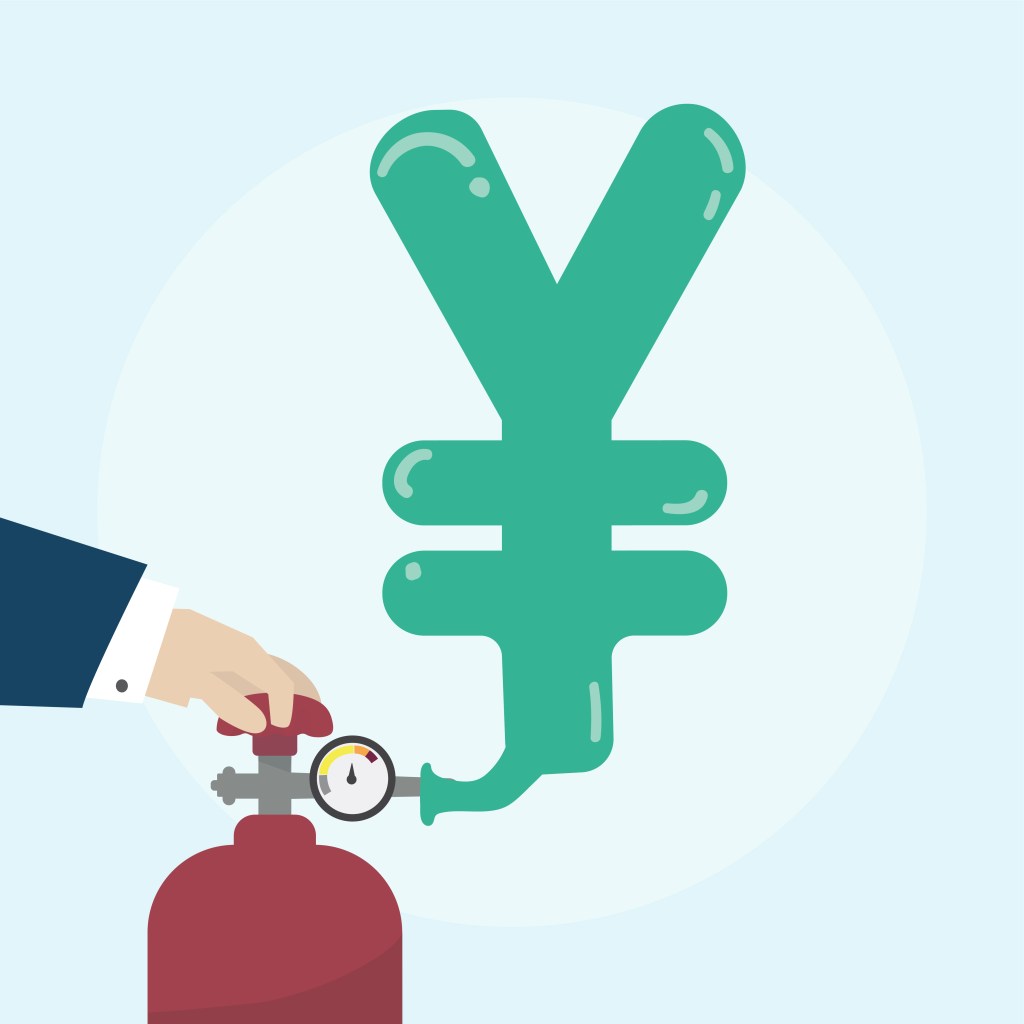
How to beat inflation with Japanese dividend stocks

Deflation in Japan is a thing of the past.

After years of trying to escape the spiral of falling prices, the Bank of Japan seems to have finally succeeded in its goal. The official inflation rate now sits at around 2.5%, and prices have been hiked on everything from electricity to rice. We foreign residents of Japan have long been concerned with how the spending power of our yen is eroded by inflation in our home countries, but now we are facing a new dilemma.

We are losing spending power in yen terms, too.

Holding JPY cash has been unattractive for decades but is a much worse proposition now. However, with Japanese government bonds still yielding very little whilst carrying significant capital risk, there is no ‘risk-free’ way to counter inflation.

Fortunately, Japan is somewhat of a dividend stock haven. Many quality companies offer a solid return on your hard-earned yen, albeit with some price volatility. But how should investors determine which stocks to buy? Let’s explore a few ideas.

How do dividends work?

First, some basics: dividends are the percentage of a company’s earnings paid to its shareholders as their share of the profits. They are typically paid quarterly, but in some cases, they may be paid semi-annually or annually.

Investors often buy stocks anticipating capital growth but dividend income is also valuable. Established companies that pay a stable dividend are in demand globally and nowhere more so than in Japan.

There are a few key dividend dates to look out for:

  • Announcement date – the date a company’s next dividend is announced
  • Ex-dividend date – the day on which a stock trades without the benefit of the next scheduled dividend payment. If the ex-dividend date is 30 March, investors who want to earn the next dividend need to own the stock at least one business day before that date
  • Record date – the cutoff date to determine which shareholders are eligible to receive the dividend
  • Payment date – the date the dividend is credited to investors’ accounts

When checking out potential dividend stocks, the ex-dividend date is the most important one to pay attention to. If you miss that date, you will have to wait for the next dividend. The stock price can also fluctuate significantly around the ex-dividend date. Popular dividend stocks tend to be bought as the ex-dividend approaches and then sell off after the date has passed.

The easy way to collect dividends

If you like to keep things simple, the low-stress way to own the best dividend stocks is through an Exchange Traded Fund (ETF). ETFs are ubiquitous these days and cover all of the major investment themes. Do a search for ‘high dividend yield ETF’ or ‘高配当株’ and you will find plenty of options.

Here are a few examples I found after a quick search in my SBI account (not investment advice):

  • NEXT FUNDS Nikkei 225 High Dividend Yield Stock 50 Index Exchange Traded Fund (1489)
  • NEXT FUNDS Japan High Dividend Equity Active Exchange Traded Fund (2084)
  • One ETF High Dividend Japan Equity (1494)
  • NEXT FUNDS Nomura Japan Equity High Dividend 70 ETF (1577)
  • Daiwa ETF TOPIX High Dividend Yield 40 Index (1651)

Yahoo Finance is as good a place as any to get a simple overview of these ETFs. Then, if you want to know more, search for the company website and read more about the fund strategy, holdings etc.

These ETFs can be purchased in either the growth portion of NISA or a regular taxable trading account. For the tsumitate part of NISA, search for dividend-focussed mutual funds.

Picking stocks

If you want to pick out some dividend stocks for yourself, the top holdings of these ETFs are a great source of ideas. I am no stock analyst but this is how I got started with dividend stocks. I bought the Next Funds 1489 ETF first and then I went to the ETF page on the issuer’s website and found that you can download the full list of holdings there. (see information on underlying investments) Then, I did some research and picked out a few stocks I wanted to own directly.

Looking through the holdings in the ETFs listed above, it is clear that several industries tend to foster good dividend stocks (again, not investment advice):

  • Pharmaceutical/healthcare: names like Takeda Pharmaceutical Company Ltd (4502) and Astellas Pharma Inc (4503) yield over 4% p.a.
  • Trading companies – Warren Buffett has acquired around a 9% stake in each of Japan’s big five trading companies. He borrows yen at around 1% and collects his dividends, which are between 3-4%. If you are looking for ideas outside of the big five, perhaps take a look at Sojitz Corp (2768) or Kanematsu Corp (8020)
  • Steelmakers – Nippon Steel Corp (5401) has been in the news due to its proposed acquisition of US Steel, but it is also a highly rated dividend stock. Kobe Steel Ltd (5406) and JFE Holdings Inc (5411) are also good plays.
  • Banks – Japan’s megabanks are known as solid dividend payers and even upstarts like Seven Bank Ltd (8410) pay a nice income. Be aware that banks are sensitive to Bank of Japan interest rate decisions though.
  • Shipping Companies – Japan’s big three shipping companies also feature prominently in the dividend ETFs. They are Nippon Yusen Kabushiki Kaisha (9101), Mitsui O.S.K. Lines Ltd (9104), Kawasaki Kisen Kaisha Ltd (9107)

This is by no means an exhaustive list and good dividend stocks are not limited to the industries mentioned above. Perhaps the most popular Japanese dividend stock is Japan Tobacco Inc (2914) – interestingly that stock has been down a bit recently due to some legal issues in Canada. Remember that the price of dividend stocks can and will go up and down. However, as long as you keep hold of them, you will be paid your dividends.

As for the question of ETFs vs. picking your own stocks, keep in mind that ETF holdings will be regularly updated depending on the particular ETF’s criteria. Over the shorter term, you will mostly find the same companies but the weighting of each stock will change. Picking stocks can be fun, but buying an ETF saves you from having to do detailed analysis whilst providing broader exposure.

In summary:

  • JPY cash is trash, inflation will eat up your spending power
  • ETFs are a great way to get started with dividend stock investing and, for most people, offer the most straightforward option
  • One way to find individual stocks is to dive into the ETF holdings to see what their top positions are
  • Do your own research on stocks from industries known for paying steady dividends
  • Bonus: look out for companies that have a record of increasing their dividends year after year

Happy hunting and let’s pump up that spending power!

Top image by rawpixel.com on Freepik

Disclaimer: This should go without saying, but the information contained in this blog is not investment advice, or an incentive to invest, and should not be considered as such. This is for information only.