Property investments with strong and sustainable income in Tokyo

I don’t cover property so much on this site, so today I’m happy to introduce a guest post from Jin’s Homes, a boutique real estate firm focused on the execution of short-term rental investments in Tokyo. The firm is led by Yoshihiro Jinzaki (“Jin”, Founder & CEO). Born and raised in Japan in an international environment, Jin is a native English speaker with a global mindset and a practical understanding of Japanese social norms, local expectations, and regulatory realities.

I met Jin at an event recently and had a really good chat with him. He’s friendly, engaging and is the perfect guide to Tokyo’s short-term rental market. I hope you enjoy this post:

Most professionals and investors in Japan consider property investment at some point – and then hesitate.

Financing conditions for investment properties are typically stricter than for primary residences. Compared to using a residential mortgage, investment loans often require higher equity and carry less favorable terms. At the same time, yields in Tokyo appear relatively low.

As a result, investors frequently look toward suburban areas in search of higher ROI.

But suburban investments come with their own concerns:

Will occupancy remain stable?

Will the asset hold its value long term?

Will resale liquidity be strong enough?

Faced with this trade-off, many potential investors ultimately decide not to invest at all.

A Different Approach: Short-Term Rental

One strategy that has gained increasing attention is licensed short-term rental (commonly known as minpaku).
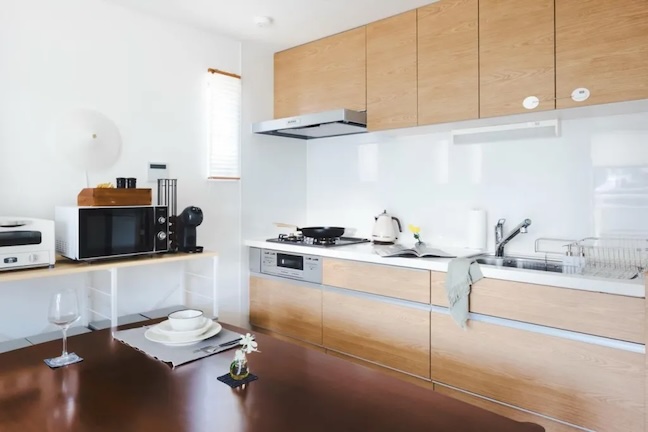
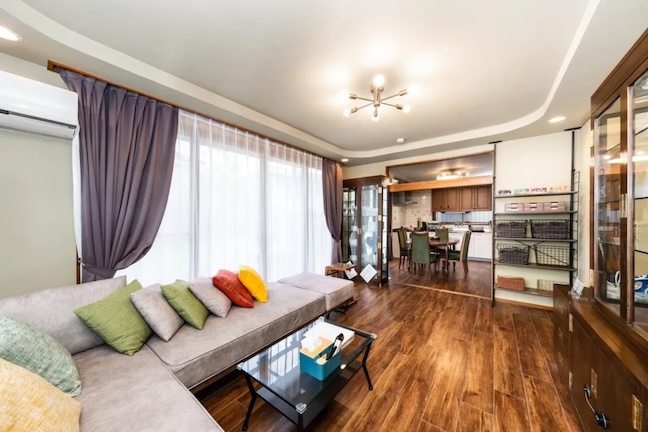
A short-term rental operated by Jin’s Homes

In Tokyo’s main residential and commuter areas – including both central wards and well-connected cities within the Greater Tokyo area – properly structured short-term rental properties can meaningfully outperform traditional long-term leases in net income terms – often in the range of 1.5–2x when structured correctly.

Because of this income profile, short-term rental has attracted attention not only from domestic investors but also overseas non-residents whose only option is to purchase in cash.

The appeal is straightforward: enhanced income potential within areas that still maintain strong asset stability. 

A Tailwind: Tourism as a National Priority

Tourism is one of Japan’s strategic growth industries. The government continues to actively promote inbound travel, and international visitor numbers have reached record highs. 

At the same time, developing large-scale hotels in major cities is capital-intensive and increasingly difficult due to land constraints and rising construction costs.

In that context, small-scale licensed accommodations – when compliant and professionally managed – play a complementary role in meeting demand.
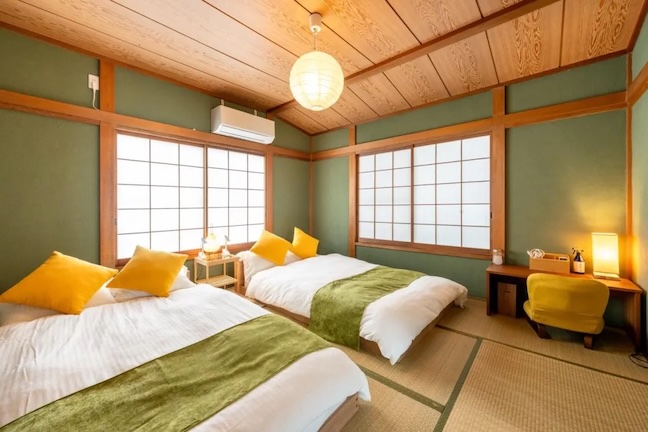
A short-term rental operated by Jin’s Homes

This does not mean every property is suitable.

But it does suggest that well-positioned short-term rental assets are operating within a structurally supported market. 

The Real Concerns

Of course, short-term rental is not without challenges.

Investors typically worry about three things:

  1. Can the property obtain the necessary licenses?
  2. Will the projected returns actually materialize – and allow the capital invested to be recovered as expected?
  3. Can the operation maintain good relationships with neighbors and remain stable long term?

In Japan, licensing requires coordination between multiple authorities – including the public health center, fire department, and building department. Each has its own standards, and approval must be obtained from all.

For those whose first language is not Japanese, navigating this process can be particularly complex.

Even after licensing, sustainable income depends heavily on professional setup, compliance discipline, and operational management. Poorly managed properties can damage both returns and community relationships.

Short-term rental is not simply about listing a property online.

It requires clear planning before purchase and disciplined management after launch.

A Turnkey Approach for Foreign Investors

For investors who prefer not to navigate the system alone, Jin’s Homes offers an integrated approach tailored to international clients.

Jin’s Homes works specifically with international investors, handling:

• Narrowing down viable property options based on licensing feasibility and projected profitability

• Pre-purchase regulatory consultation to reconfirm approval potential

• Bilingual brokerage and transaction support

• End-to-end project management covering permit acquisition, design, and launch

• Direct operational management and proactive neighborhood relationship building

We operate under a structured management framework designed to cover the full lifecycle of a short-term rental investment – from compliance to daily operations – allowing investors to remain focused on strategy rather than execution.

Since launch, every guest stay has been rated five stars – a measurable indicator of operational consistency.
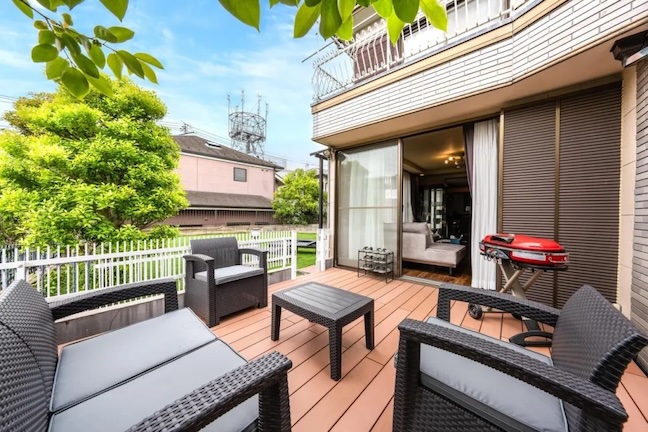
Why Structure Matters

The difference between an average short-term rental and a strong, sustainable one often comes down to:

  • Selecting the right property from the beginning
  • Verifying licensing feasibility before purchase
  • Designing for the target guest demographic
  • Maintaining proactive communication with neighbors
  • Managing operations with professional standards

When these elements align, the income profile of Tokyo real estate can shift meaningfully – while still preserving the underlying stability of the asset.

If you are exploring whether this approach could fit into your broader property strategy, an initial feasibility discussion may help clarify what is realistically achievable before capital is committed.

An initial discussion can be scheduled here:

We write unique blogs on short-term rentals

Visit our website

Disclaimer: This should go without saying, but the information contained in this blog is not investment advice, or an incentive to invest, and should not be considered as such. This is for information only.

PlanetDAO: A new approach to preserving Japanese cultural properties

Today, we have a guest post from the team at PlanetDAO. I discovered their Facebook ad last week and was intrigued by their focus on protecting cultural heritage whilst embracing the principles of decentralisation. After exploring their website, I made a modest investment in the Hayama Bamboo Forest House project – not primarily for financial gain, but because I believe in the project and want to be part of it. I’m excited about engaging with the local community and other co-owners.

This is not a paid post, and there are no affiliate links. I’m sharing simply because I admire PlanetDAO’s work and the DAO model.

And now, I will turn it over to PlanetDAO to explain more.

Contributed by the PlanetDAO Team

PlanetDAO was launched to address a growing challenge in Japan: the preservation of cultural and historical properties. As local economies evolve and traditional inheritance patterns shift, many significant buildings risk being lost to time. This innovative model addresses this challenge by connecting global investors with Japanese cultural properties.

The Challenge of Cultural Preservation

Historic properties in Japan, particularly temples and traditional houses called kominka, struggle with maintenance and preservation when local resources can no longer sustain them. PlanetDAO’s mission is to unlock these properties’ potential through the collective participation of a diverse global community.

A Collaborative Model

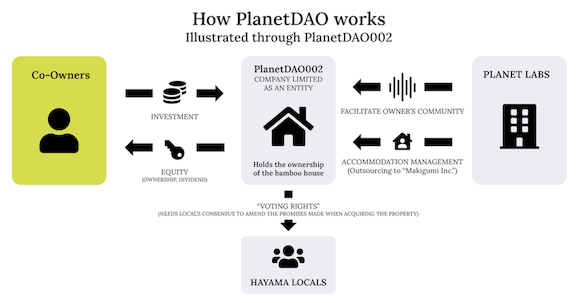
The model operates in four distinct phases. The process begins with identifying properties and building relationships with local communities during the sourcing phase. In the fundraising phase, opportunities open for interested parties to participate in property ownership. Throughout renovation, the focus shifts to property transformation while maintaining cultural integrity. The operational phase then combines vacation rental management with community engagement.

Participant Engagement

Participants who join the PlanetDAO community become co-owners, part of something larger than traditional property investment. The term “co-owners” rather than “investors” reflects the collaborative nature of these projects. Co-owners participate in voting on key decisions, engage with fellow community members through both digital platforms and in-person events, and play an active role in shaping the future of these cultural properties.

First Success: Ryogonji Temple (PlanetDAO001)

PlanetDAO’s first project, Ryogonji Temple, demonstrates the potential of this innovative approach. Located in the historic Irokawa district, this 170-year-old temple gained recognition as a registered Tangible Cultural Property in 2021. Adding to its historical significance, the stone stairs leading up to the temple have also been recognized as cultural heritage, symbolizing the enduring craftsmanship and cultural richness of the region. Despite its relevance, only four local supporters remained, leaving the temple’s future uncertain.

Through community investment, the project raised ¥34,540,000 for preservation and development. Today, the project has 134 co-owners from 15 countries actively participating in its development. Co-owners engage through regular online meetings and voting, and several have already visited the property in person, demonstrating the genuine community involvement that the model fosters.

The project is now entering an exciting phase, with architects submitting proposals for the renovation. Co-owners will be involved in key decisions throughout this process, maintaining their active role in the property’s evolution. The property is scheduled to open for bookings in early spring 2026.

Current Project: Bamboo Forest House (PlanetDAO002)

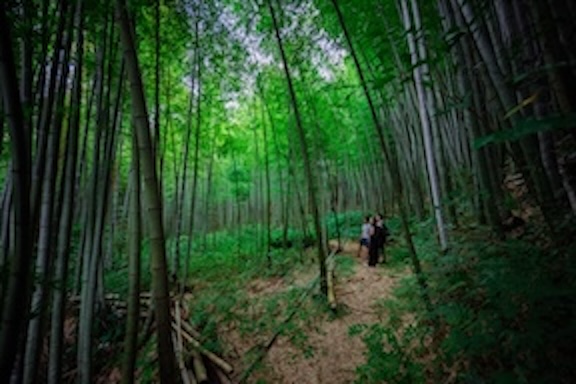
The second project focuses on an 80-year-old residence in Hayama’s Kamiyamaguchi district, recognized as one of Japan’s top 100 Satoyama landscapes. The Bamboo Forest House holds historical significance as a former farmer’s residence and a cherished gathering place for local artisans.

The property features an impressive 7,199 square meters of bamboo forest, offering a tranquil retreat from urban life. The surrounding bamboo grove, carefully maintained for decades by the local community, creates a natural sanctuary that embodies traditional Japanese landscape aesthetics.

The project is currently open for investment, with detailed information about participation opportunities available on the PlanetDAO website.

Building Trust in a New Model

While the first project demonstrated the potential of this innovative approach, each new project brings its own challenges. The global nature of the DAO model, which invites participation from people worldwide who share a commitment to cultural preservation, requires building trust across borders and cultures.

Connecting with potential participants who may be unfamiliar with this investment approach takes time and patience. While in-person conversations often help address initial skepticism, establishing credibility in the digital age remains an ongoing journey. This challenge reinforces the importance of transparency and community building in PlanetDAO’s commitment to cultural property preservation.

Looking Forward

PlanetDAO continues to evolve its approach to cultural preservation. The team is exploring opportunities to expand to additional properties across Japan while developing new ways to engage global participants in local cultural preservation.

Those interested in joining this community of cultural preservation enthusiasts, or learning more about current and future projects, can visit the PlanetDAO website. The team welcomes scheduling online calls to share more about their vision and answer any questions.

Disclaimer: This post is for information only. It should not be considered personal financial advice and does not constitute an offer or solicitation to invest in any of PlanetDAO’s projects. Investments like these carry specific risks and readers should conduct their own research before proceeding.