
Sell America?

Remember when everyone thought a Trump presidency would be business-friendly?

I admit to belonging to that camp initially. Stocks soared the first time he was elected, when most people expected them to tank. They also ripped between the election and the beginning of his second term, as people bet on a golden age of deregulation. Remember all the tech CEOs at the inauguration?

And then the madness began.

I’m not interested in getting into political commentary, but I will say this: it really couldn’t have been handled much worse. Anyone who has read Chris Voss’s book knows that you don’t start a negotiation with belligerence and threats and expect everyone to come meekly to the table. Anyway, my opinion doesn’t matter. The markets have spoken. So far, Trump 2.0 has been an unmitigated disaster.

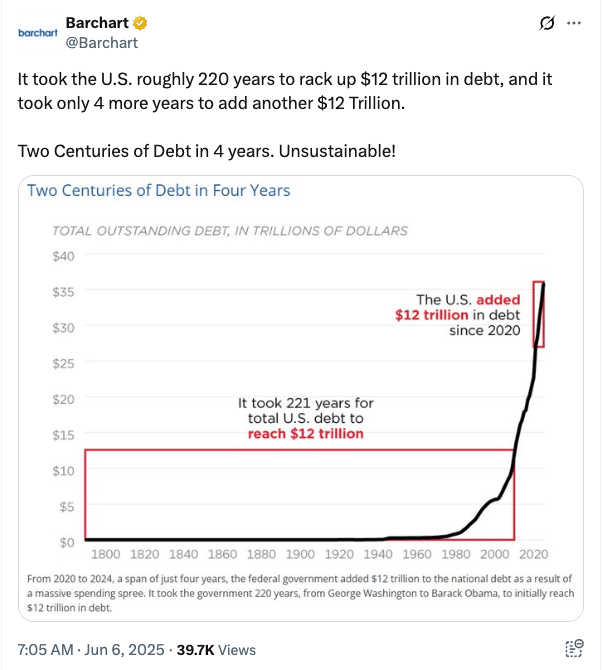
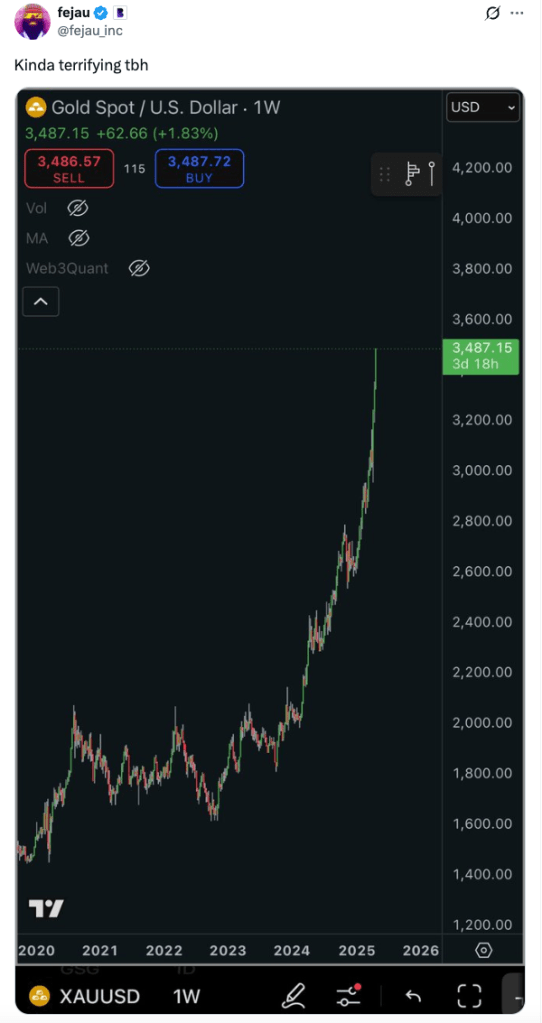
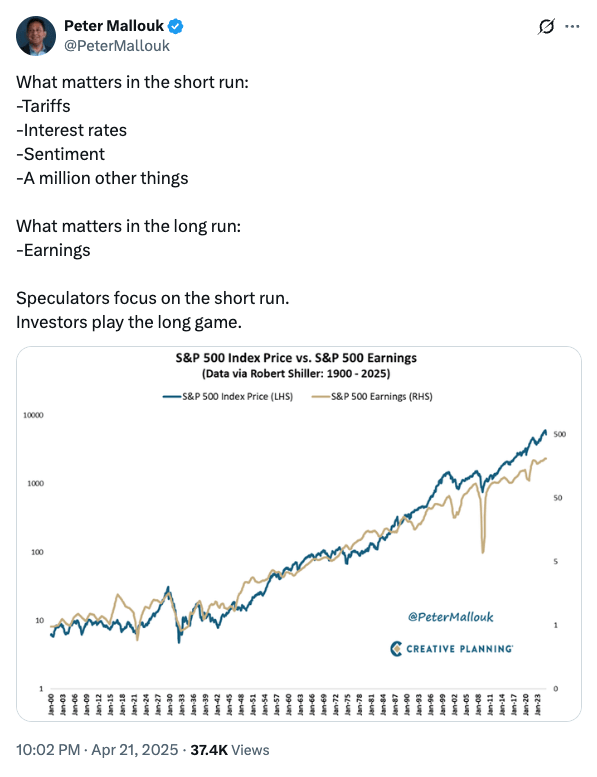
Wall Street is openly disussing a “Sell America” trade. The great dealmaker must hate that one. It’s happening, though – look at treasury yields, look at the S&P 500, look at the dollar. And look at gold!

Gold isn’t just a safety trade here. It represents a stampede away from USD-denominated assets. European and emerging market stocks are also seeing inflows, but they come with their own risks as the haphazard tariff ‘negotiations’ blunder ahead.

So what happens now?

Is America really done? Does gold go up forever?

No and no are the short answers. However, the world is clearly changing before our eyes. Here’s an excellent thread summarising Howard Marks’ recent comments on what is happening. Like it or not, globalisation made a lot of things cheaper. As countries become more inward-looking and focus on domestic production, prices will rise. America is still expected to outperform in the long run, but it will need to work harder to attract capital. It is no longer the obvious go-to market, at least while all this chaos is raging.

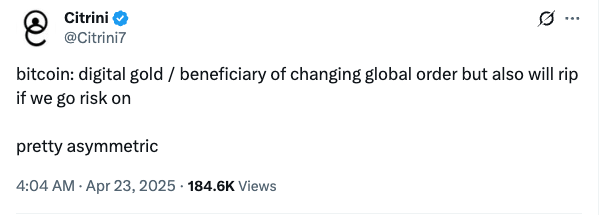
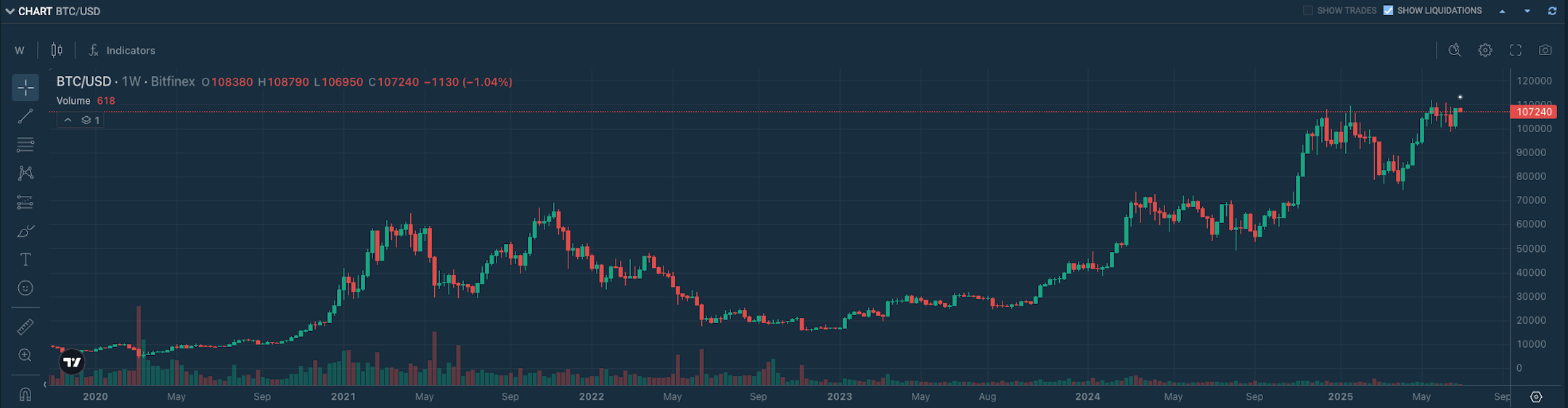
Can gold still go higher? For sure, but it’s starting to look like Bitcoin does in blow-off top phases. Weekly cycles also suggest it is close to a top. If you’re a long-term diversified investor, continue to hold it. If you’re looking for the next trade, then digital gold is where it’s at.

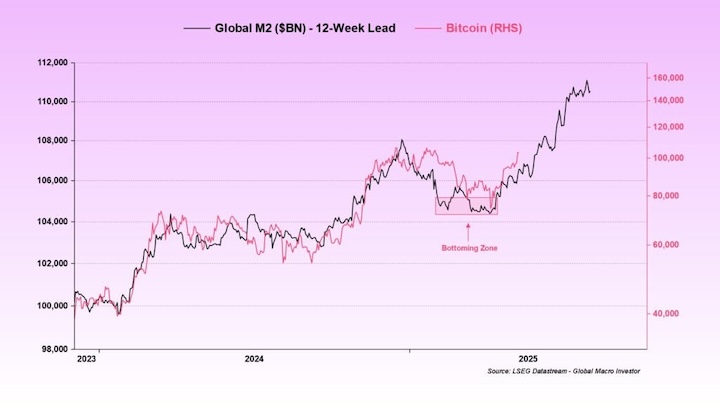
Even the macro guys are starting to agree that Bitcoin looks good right now. This article from @fejau_inc puts it all together nicely and is a must read.

Here’s the conclusion from that piece for easy reference: “And so, for me, a risk-seeking macro trader, Bitcoin feels like the cleanest trade after the trade here. You can’t tariff bitcoin, it doesn’t care about what border it resides in, it provides high beta to a portfolio without the current tail risks associated with US tech, I don’t have to take a view on the European Union getting their shit together, and provides a clean exposure to global liquidity, not just american liquidity.

This market regime is what Bitcoin was built for. Once the degrossing dust settles, it will be the fastest horse out of the gate. Accelerate.”

Meanwhile, the Financial Times reported that Howard Lutnick’s son, Brandon is cooking up a $3 billion Bitcoin acquisition investment vehicle with Cantor Fitzgerald, Softbank Group, Tether and Bitfinex. Reuters summary here.

Is the yen strengthening going to hold?

If you are looking for proof that capital is flowing out of America, it’s right there in the exchange rate, currently around ¥142 to the dollar. It’s quite possible the yen could strengthen further from here, but beware the orange man running his mouth. If Bessent can put the gag on him for a while and they get a few wins on the board in terms of trade deals, then the picture can change very quickly.

Yes, I’m aware that the typical trade deal takes around 18 months to complete. Most likely Trump extracts a few concessions from the major partners, including Japan, and declares some ‘tremendous trade deals’. Then he can move onto pumping the markets back up before the mid-terms.

Long term, I believe the yen is cooked. Nothing has changed there. Short term, we could be at ¥120 just as easily as ¥160 in a month or two. Who knows?

So, sell America or not?

Traders gotta trade, and right now the trade is sell America for anything else you can lay your hands on. For long-term investors, I would view cheaper US asset prices as an opportunity to accumulate. Don’t change your monthly investment allocation too hastily!

Top image by Mediamodifier from Pixabay

Disclaimer: This should go without saying, but the information contained in this blog is not investment advice, or an incentive to invest, and should not be considered as such. This is for information only.

It’s so over until we’re so back

Are we winning yet? It’s tricky explaining to people why investing isn’t gambling when the markets continue to exhibit the qualities of a casino. Where to start?

Even my favourite investing question, ‘Are we in a bull market or a bear market?’ is a tough one to answer right now. Maybe we can get there by the end of this post!

US stocks first

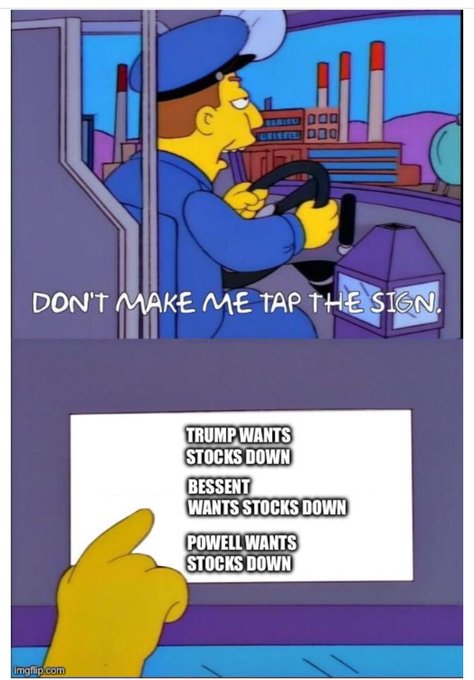
I know many people doubt that Trump actually has a plan, and crediting him for deliberately cooling down the US stock rally seems a bit of a stretch. But you have to remember that he’s got Scott Bessent sitting in the treasury. I lean towards there being method in the madness.

We should listen to what they are telling us. Both Trump and Bessent have been quoted as saying we should expect some turbulence. The sharp drop on Monday was a warning shot. I sit in the camp that says we get 3 to 4 months of significant uncertainty before they start focusing on pumping things up before the midterms in November.

Markets hate uncertainty. It’s going to be a bumpy ride.

The cooler US CPI print last night provided some welcome relief. We are moving towards an economy that is ready for more rate cuts. However, tariffs won’t show up in inflation numbers until next month. Trump & Co. can’t force Powell to cut short-term rates, but Bessent has said that they are focused on bringing down the 10-year bond yield. Something to keep an eye on.

Talk of a recession seems overblown. The US economy is slowing, not sputtering.

Japanese stocks and bonds

Shout out to Japan Stock Feed for this excellent summary of a recent interview with ‘legendary salaryman investor’ Tatsuro Kiyohara.

A few quotes:

“For the first time, Japanese companies truly belong to their shareholders. That’s a massive structural shift—a revolution.”

“Yes, risks remain. But this governance transformation is so significant that it outweighs them. That’s why, even if a crash comes, I focus on making money from the rebound rather than betting on the decline.”

“Put simply: If share buybacks and dividend hikes continue, stock prices will rise.”

“I’ve said before that I’m terrible at predicting markets, but if we zoom out, I’m bullish on Japan.”

The TSE campaign to make life better for Japanese stock investors has been a roaring success. Who says things never change in Japan?

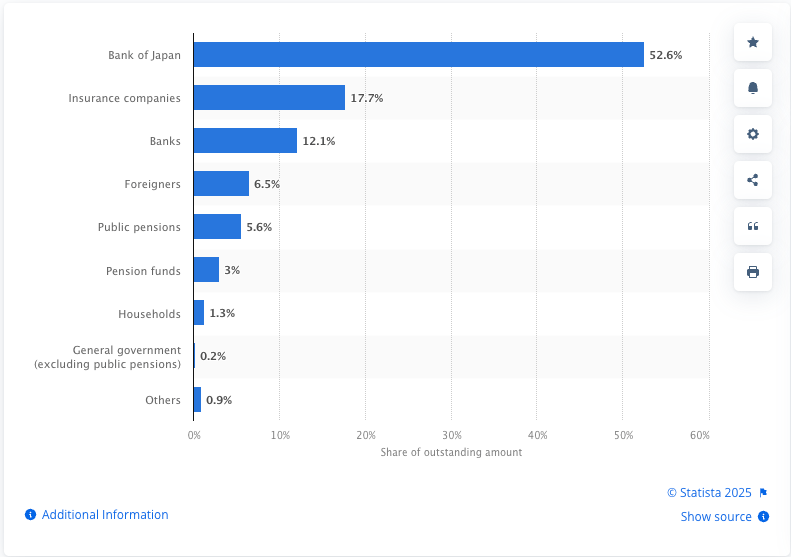
Much as I like Japanese stocks, the macro outlook terrifies me! Long-term bond yields are rising, and you have to wonder how much higher they can go before the Bank of Japan loses control. If the BOJ is not going to continue Yield Curve Control to reign in yields, then it is going to endure the full force of the crash in bond prices when yields get away from it. Maybe the BOJ can endure and hold to maturity, albeit with massive damage to its credibility. But who else is going to suffer?

Statista: Distribution of Japanese Government Bond (JGB) holders as of September 2024

This Japanese stock vs. macro dilemma reminds me of the ever-present earthquake risk. It’s really nice living in Japan, but your house could get destroyed tomorrow! The difference is that the Japanese bond market will take the rest of the world with it if it falls. Fun times!

Crypto

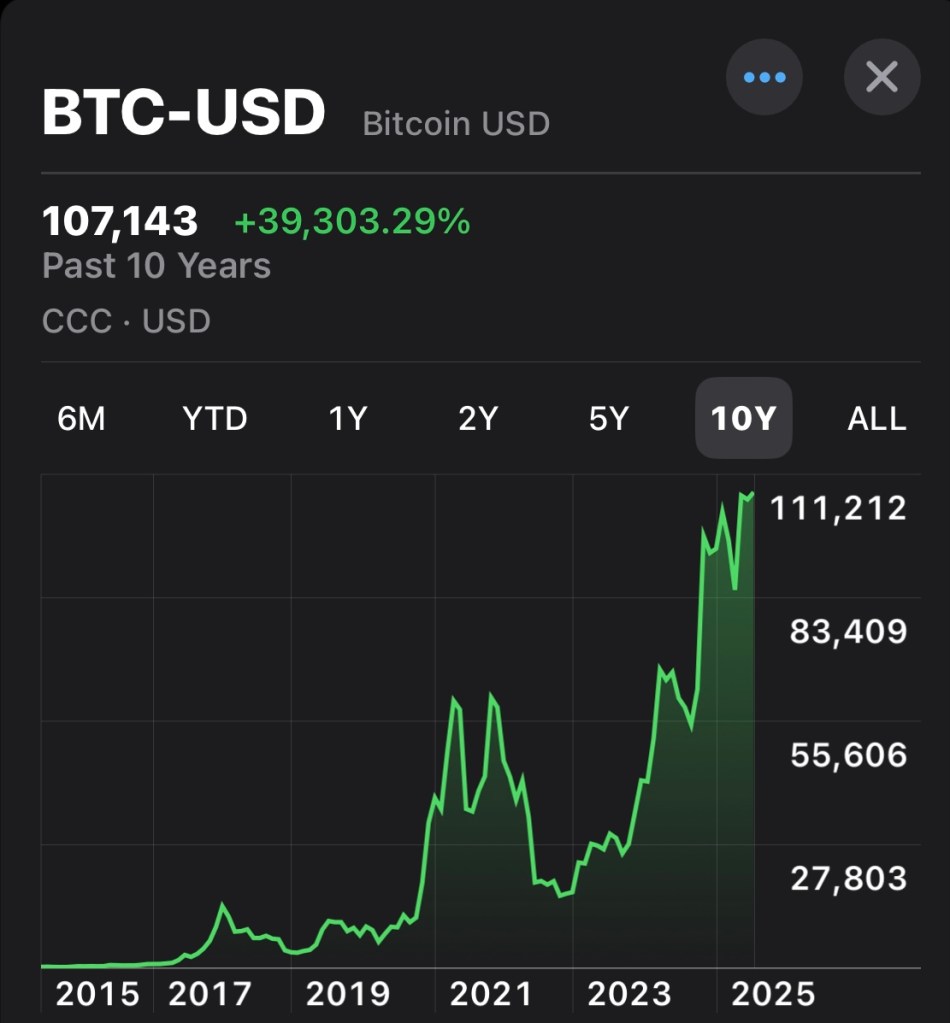
You knew I would get into crypto soon enough, right? More specifically, Bitcoin, seeing as everything else has been trashed. I distinctly remember that, about three weeks ago, we were on a nice trend back towards $100k – there was this beautiful procession of green candles, and I went to bed that night feeling quite confident that I would wake up to six figures again in the morning.

Bybit got hacked by North Korea that night.

Most crypto thing ever lol…

Then we had a poor reaction to Trump’s strategic reserve announcements, and before you knew it, we were fighting to hold $80k.

It is what it is.

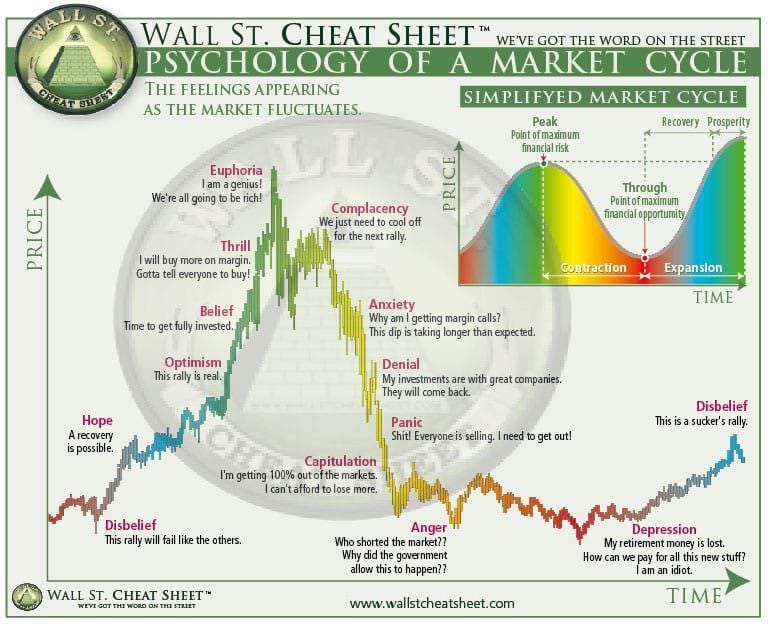
I see this going much the same way as US stocks: a few months of ‘It’s so over’ and then ‘We are so back!’.

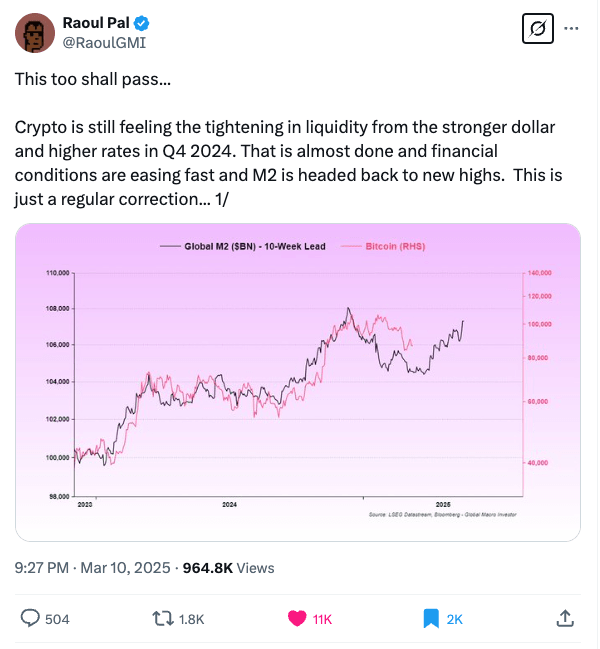
Follow the money supply. I will cover the Strategic Reserve and US regulation changes in a future post. Suffice it to say that most people are offsides and bearish. I would be concerned if it were any other way.

So, bull or bear?

US stocks – mini bear inside a bull

Japanese stocks – bull

Japanese bonds – don’t look up!

Bitcoin – bull

That’s how I see it. Red days on US stocks are for buying. I will treat the next 3 to 4 months as an opportunity to accumulate.

Japanese stocks, particularly value/dividend stocks, are a great tool to counter JPY inflation.

Diversification across asset classes for serious money.

USD, Bitcoin and gold are insurance policies on the macro risk. Fingers crossed on the earthquakes!

Disclaimer: This should go without saying, but the information contained in this blog is not investment advice, or an incentive to invest, and should not be considered as such. This is for information only.
Time in the market

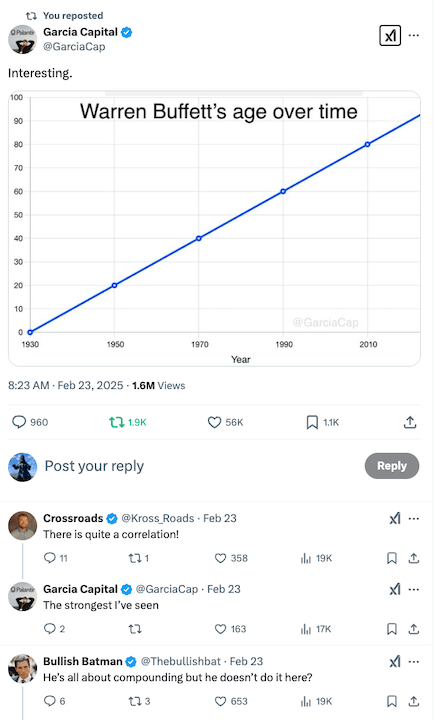
With markets looking a little shaky of late, it’s worth remembering the old saying that time in the market beats timing the market. With Warren Buffett once more making news in Japan this week, this post and Bullish Batman’s comment tickled me:

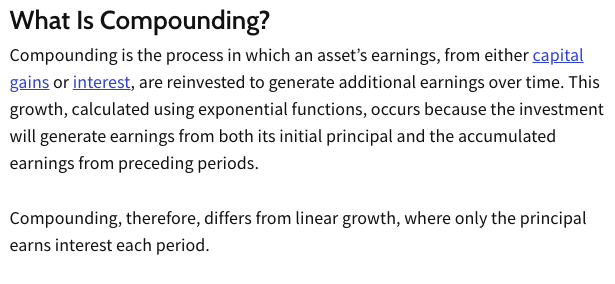
I think readers of this site will have at least a basic understanding of the benefits of compounding on investments. That said, it can take some time to actually experience its power. I have noticed that one of my accounts, which started small and took a while to grow, has picked up momentum in the last 12 months. I haven’t added new money to it for a while but have been diligently reinvesting capital gains and dividends, resulting in a significant acceleration in growth.

Here’s the Investopedia definition of compounding:

I shared a simple example of the Power of Compounding back in 2017.

It’s a great reminder that, although short-term price moves make headlines, we should focus on investing for the long term. Accumulate good assets and hold onto them!

Is Uncle Warren coming back?

Warren Buffett has mastered the art of buying quality stocks and allowing them to compound over the long term. In his recent letter to shareholders, the Berkshire Hathaway CEO commented that he is keen to increase his investment in Japan’s big five trading companies. You may remember that Buffett has been playing a very smart game in Japan, issuing debt at around 1% in yen to buy solid companies that pay around 4% income. Shares in those trading companies surged this week in anticipation that Buffett may be coming back for more.

Despite The Oracle of Omaha’s endorsement, the trading houses still face significant headwinds related to yen movements and Donald Trump’s tariff policies. The US President’s aggressive stance on that issue is unsettling for companies that rely on smooth international trade. It doesn’t seem to worry Buffett too much, though.

Speaking of the yen, on 25 February it hit a four-and-a-half-month high of ¥148 to the dollar. With inflation on the rise, the Bank of Japan will come under pressure to continue to raise rates while the US Federal Reserve has rate cuts on pause for now.

The Corolla index reaches 50%

This is new to me, but this Nikkei Article refers to a Toyota Corolla index. It measures the affordability of a typical mass-produced Japanese car by dividing the price by the average annual income. During the good times, it has been as low as 20% but currently stands at a whopping 50%. For comparison, in the US it is 30%.

This clearly illustrates that, although wages are rising, they are failing to keep pace with inflation in Japan.

Nvidia beats on earnings again

In the US this morning, Nvidia might well have saved markets from severe pain, at least in the short term. The chip powerhouse once more beat analyst’s expectations and issued solid Q1 guidance. The company reported Q4 revenue of $39.3 billion and expects $43 billion plus or minus 2% in Q1. Shares were up +3.7% in anticipation of the report but are down in after-hours trading.

It seems to take a lot to get investors excited these days. Trump is talking about a 25% tariff on chip imports and the AI behemoth is still weathering the DeepSeek storm. You may remember that Nvidia’s previous earnings also beat expectations but the stock fell afterwards.

Is the US economy slowing?

Despite the S&P 500 trading near all-time highs, sentiment in the US is increasingly muted. The downbeat mood is generally attributed to Trump’s tariff talk, however, in this Yahoo Finance article, Neil Dutta argues that it is more likely because the US economy is slowing down. He points to weaker economic data coupled with the Fed’s pause on rate cuts acting as a “passive tightening of monetary policy”.

That argument makes a lot of sense and could also explain why, despite a slew of good news, Bitcoin failed to break back above $100k and has now broken down instead. People who have been ‘waiting for a dip’ are not so keen now they have one. We may have to endure some economic pain to push the Fed to start cutting again before the bull market resumes. (no, I don’t think it’s over)

Also, it’s notable that hedge-fund manager Steve Cohen recently struck a bearish tone for the first time in a few years. You can see a snippet of his interview here. (in case the embedded link below doesn’t work)

Cohen states that he isn’t expecting a disaster, but things could be difficult over the next year or so, and it wouldn’t surprise him to see a significant correction.

All the more reason to keep a long-term view and focus on compounding those assets over time!

Disclaimer: This should go without saying, but the information contained in this blog is not investment advice, or an incentive to invest, and should not be considered as such. This is for information only.
What’s your Japan plan?

I started this site in 2017 and ran out of things to say about the basics of financial planning some time ago. If you are just getting started, I put together a thread of simple financial planning tips from my early posts, which you can view on X here.

The basics don’t change, but the environment can change drastically. If you plan to live in Japan for the long term, you are probably now figuring out how to adjust from living in a country where deflation was the norm to one where prices are rising. Looking into the future, one of the big questions is whether this inflationary environment will stick, or will Japan be back at zero interest rates and falling prices in a few years? How can we plan when we don’t know the variables we will likely deal with?

Prediction is very difficult, especially if it’s about the future. – Niels Bohr

I have a client who was an economist at a financial institution for many years. He told me he always felt it was his job to have a view. For some reason that has stuck with me and I think it is important in my job too. It’s also important not to be wrong, though! I wish I could tell you I have always held the correct view and never been wrong, but I doubt you would believe me. I have, however, gained some experience over the years, which has helped me develop some skills in dealing with the uncertain future we face.

Strong views, loosely held.

Having a view is helpful but you don’t have to marry it. If something changes or evidence comes to light that proves you wrong, you can simply change your view. Don’t get caught up in the social media battle to be right about everything. In just the last few years, people have pivoted from being epidemiologists to vaccine experts to geopolitical analysts to macroeconomists to AI gurus and now, tariff experts.

It’s exhausting.

So, I thought today I would take a look at some basic data about the Japanese economy and share my view on what a person living here should focus on in terms of financial planning and investment.

Debt is a problem

Japan still has a strong, productive economy but it is not expected to grow fast. The predicted real GDP change for 2025 is 1.1%. (IMF) Government debt to GDP is currently 255%. (Trading Economics)

December 2024 CPI (inflation) was 3.6% and, in response, the Bank of Japan recently increased the overnight interest rate to 0.5%. The 10-year yield on government bonds currently stands at around 1.2%.

Japan is clearly not going to grow out of its debt problem. Demographics do not support the level of growth required to meaningfully reduce the size of the mountain. When governments can’t outgrow their debt, they usually end up inflating their way out. I struggle to see how the BOJ leadership can raise rates high enough to head off this outcome but they will of course delay it as long as possible.

It doesn’t look good for the yen

In January 2023, I wrote a post charmingly titled How screwed is the yen? It actually holds up pretty well for a two-year-old post. The problems facing the currency have not changed very much and we are still hanging around at 155 yen to the dollar.

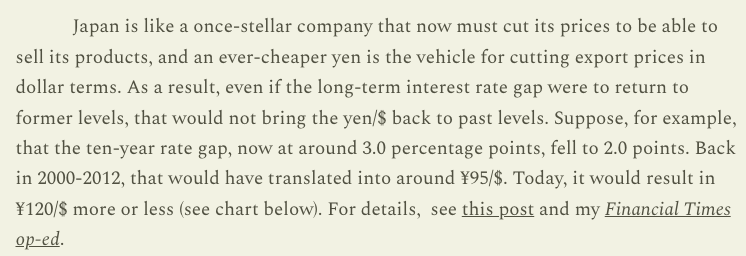
I have re-read this excellent post by Richard Katz several times: The BOJ, the Fed and The Future Of The Yen. He notes that although the gap between US and Japan overnight rates may close, the gap between the two countries’ long-term yields is unlikely to follow suit, meaning the yen probably won’t recover as strongly as some think it will. Here’s an excerpt from that piece:

Some of the issues people in Japan are facing when planning for their financial future are as follows:

  • Continuing yen weakness
  • Concern that the pension system will not meet their retirement needs
  • Rising interest rates, but not rising too far
  • Negative real rates (interest rates lower than the rate of inflation)
  • Rising wages but negative real wages relative to inflation

People are already feeling the pinch. If you bought rice recently, you know what I mean. Furthermore, prices of 1,656 food items are set to rise this month according to this Japan Times article.

So, what can we do?

If you are a regular reader, I am probably repeating myself, but here are some action items to consider:

Check your base currency – are you really going to spend all of your future money in Japan? Are there big expenses overseas that you are likely to be on the hook for in future? If so, you need to save and invest some or all of your money in that currency. More on that here: What is your base currency?

JPY cash is trash – even if your base currency is yen, you are going to lose against inflation over time if you keep all of your money in the bank. Sure, you need to keep a liquid emergency cash reserve, but everything else needs to go somewhere more productive. CPI was 3.6% in December. The BOJ’s target inflation rate is 2%. How much is your bank paying you in interest?

Fill up tax-free vehicles first – another no-brainer. If you are eligible for NISA and/or iDeCo, they are the first stop for investment money. NISA especially is an incredible deal as you can access the money freely if you really have to. Bad luck if you are a US citizen – you should explore options for investing back home. And remember, if your spouse is eligible, they should be maxing out tax-advantaged options, too.

Yen-cost average – if you are young, regular investment in a global stock index fund/ETF is a perfectly good strategy. You can worry about diversification later.

Learn to diversify – lump sum investments require more care. And the closer you get to spending your capital, the more you need to protect it. Diversification across asset classes (not geographical areas) is how you do this. Own some bonds, stocks (growth, value, dividend), property (physical or REIT), commodities and alternatives. Use a core/satellite allocation to dial up/down risk.

Explore dividend stocks – Japanese dividend stocks offer a great way to keep pace with inflation in yen terms. More here: How to beat inflation with Japanese dividend stocks

Lever up – if you are here for the long run, owning property is still better than renting. Even if you are risk averse, I am still seeing 35-year fixed-rate mortgages at under 2%. Floating rates are still well below 1% and, in some cases lower than 0.5%. It is still very cheap to borrow money for a home in Japan.

Stack gold and bitcoin – the two kings of hard assets and possibly the only satellite holdings you need. Average in over time and hold. More here: Facing inflation – the four assets you should own

A fistful of dollars – if you are the entrepreneurial type, I recommend brainstorming ways to earn money in USD. As the global reserve currency, it will be the last one standing in the Fiat race to the bottom. Read up on the dollar milkshake theory. If you can get paid in bitcoin, even better!

To summarise: have a view, make a plan and adjust it as you go. If you need help, don’t be shy about getting some. You will get better at this with practice.

Top image by tawatchai07 on Freepik

Disclaimer: This should go without saying, but the information contained in this blog is not investment advice, or an incentive to invest, and should not be considered as such. This is for information only.

Pump my bags!

I know I shouldn’t be posting about the guy everyone is sick of hearing about this week, but he’s proving hard to ignore.

I always argue that political changes have far less impact on asset markets than people expect, and I still believe that is true, but you have to hand it to the new Prez – he is pumping everything!

I write this following a highly enjoyable meet-up in Tokyo last night. We finished at a very responsible hour but I can’t say I am firing on all cylinders today – that’s the price of getting old. So, I will try to make this update as quick and painless as possible.

We all know about the flood of executive orders issued in the past few days. Trump sure loves a good fanfare. However, it was his online address to the World Economic Forum that caught my bleary eye this morning:

Trump said he would ask OPEC to lower the oil price and “with oil prices going down, I’ll demand that interest rates drop immediately,” adding that “likewise they should be dropping all over the world.”

Fed chair Jerome Powell will have something to say about that, of course, but it’s clear that Trump’s intention is for the US to lead global interest rates on a downward path. The S&P 500 reacted by notching its first all-time high close of 2025, rising +0.53% to $6,118.71.

Powell is not the type to be bullied and the Fed is actually signaling a slowdown in rate cuts this year as it awaits further economic data. However, the central bank is going to come under a lot of pressure to pave the way for higher asset prices.

Trump wants a booming stock market to brag about.

He wants higher crypto prices, too.

Last night he signed an executive order establishing the Presidential Working Group on Digital Asset Markets. Here are the main points:

  • Secure America’s position as the world’s leader in the digital asset economy
  • Create a federal regulatory framework for digital assets
  • Prohibit the creation of a central bank digital currency
  • Evaluate the potential of a strategic national digital asset stockpile

Hot on the heels of the executive order, the SEC rescinded the controversial SAB 121 accounting guidance, opening the door for banks to custody crypto assets. This one is bigger than many people realise, although it brings new risks as tradfi will surely make the same mistakes crypto lenders made last cycle – you shouldn’t dabble in under-collateralised fractional reserve lending on an asset you can’t print. But no doubt they will try!

The Bitcoin price whipsawed overnight, rising initially and then dumping in disappointment that the order did not explicitly mention Bitcoin or plans to acquire more Bitcoin. The most likely outcome seems to be that the government will hold onto existing crypto assets seized in legal proceedings.

My two cents: traders and Bitcoin maxis have become too fixated on the idea of the Strategic Bitcoin Reserve and are probably going to end up disappointed. However, the new administration’s appetite for clear regulation and openness is a huge positive for the industry. It is probably also going to provide a healthy level of support for the ongoing bull market. Too much good news all at once could easily have led to a Q1 blow-off top.

Let’s hope the shenanigans I wrote about earlier this week in Are you tired of winning yet? were a blip and the new admin will focus on the long-term health of the industry rather than pumping dumb stuff. I can’t say I’m convinced on that one…

Meanwhile in Japan

It’s BOJ day! Japan didn’t get the memo about cutting rates. No shocks this time as the Nikkei Shinbun was ahead of the decision to raise rates to 0.5%, the highest in 17 years. The BOJ expects wages to rise this year with inflation at around 2.5%. Real interest rates are expected to remain negative and policy is still largely accommodative.

The Japanese stock market is calm this afternoon but let’s give it a day or so before we judge the reaction. Part of me hopes for chaos next week and a chance to allocate the rest of my NISA with blood in the streets but I think I would prefer peace and quiet.

All roads lead to inflation?

In the US, the Fed is cutting rates without first scoring a decisive victory over inflation. Trump’s tariffs, if enacted, are likely to be inflationary. The resurgence of inflation appears to pose the biggest risk to markets this year.

With debt to GDP at 263% and little chance of growing out of the hole, Japan seems destined for higher inflation. It’s going to be tough for the BOJ to raise rates high enough to prevent this outcome and the weak yen will only accelerate price rises. JPY cash remains a bad place to hang around for too long.

I covered the four assets to own to face inflation back in late October and I don’t see any change there. Bitcoin, commodities, gold and tech stocks remain the best plays. If you don’t own Bitcoin already, I would caution jumping in at this point in the bull market. I don’t know what innings we are in but it’s certainly not early. If you own it and are planning to exit this year, we are approaching the time to begin averaging out. I sold around a third of my Metaplanet holding just before the inauguration as expectations of something special from Trump drove it close to ¥5,000. Euphoria and hopium should be sold more and more aggressively in my opinion.

The last word on Trump: he loves to brag about stock market performance as proof he’s doing a great job and has even started taking credit for the Bitcoin price. I wouldn’t bet against US stocks and BTC this year while he is in the driver’s seat.

Disclaimer: This should go without saying, but the information contained in this blog is not investment advice, or an incentive to invest, and should not be considered as such. This is for information only.
2024 Final Boss

I don’t mean to think about the Bank of Japan this much.

As we enter December, US markets continue to push to all-time highs and Wells Fargo just got all bulled up and issued a target of $7,007 for the S&P 500 in 2025. Here in Japan, stocks have hardly been in easy mode but are still up around +17% year-to-date. Yesterday, the Nikkei 225 index jumped +1.91% as hopes rose that Japan will be spared the wrath of the incoming US President’s trade controls. These days people seem to love Japan as a destination for investment as much as they do for tourism.

What could go wrong?

The Bank of Japan meets on 18/19 December. For some reason, these dates are marked on my schedule. It must be some kind of PTSD hangover from the July meeting. Remember when they surprised markets with a hike then? I bet you remember the few days that followed. Is Governor Ueda poised to spoil our Santa rally?

Judging by Ueda-san’s recent comments, he aims to avoid any surprises this time around. Earlier this week, he told the Nikkei that rate hikes are ‘nearing’ as economic trends line up with the central bank’s forecasts. The market is interpreting the comments as a signal of a hike with bond yields rising and the yen strengthening against the dollar. In fact, you could say it would be more of a surprise if the BOJ didn’t raise rates this month.

I’m not saying we will see volatility like early August but, once again, Japan’s mainstream financial media seems remarkably calm about the potential impact on markets. With the US in a rate-cutting cycle, tightening in Japan will drive a stronger yen and could lead to another dramatic carry trade unwind. A stronger yen is also not kind to Japanese stocks.

Keep an eye on the Nikkei news for early leaks of the BOJ decision to soften the impact.

What do I care?

Given how quickly markets recovered from the August plunge, it doesn’t seem like there is much to worry about for long-term holdings. However, I once more find myself sitting on some Japanese stocks that have done rather well. And again, I am tempted to take some profits while the going is good. The benefit here is that I could use this money in January to fund my NISA instead of adding more cash. I’m sure I’m not the only one considering this. Imagine how clever we’ll feel if we sell before the meeting, sidestep the crash and buy it all back cheaper in January. (of course, it is never that easy)

Given the possibility of impending central bank shenanigans, the deadline for profit-taking is looming. I’ll give it a few more days and see.

What else is going on?

In other news, Fast Retailing Co. Ltd (9983) shares got a boost as the clothing giant announced a 12.2% rise in domestic same-store sales for November. People must be stocking up on their heat tech!

Donald Trump seems intent on blocking Nippon Steel Corp’s (5401) takeover of U.S. Steel. U.S. Steel released a statement on Tuesday in support of the acquisition. The company is crying for help but foreign takeovers are not a great fit with Trump’s ‘America First’ agenda.

SBI Holdings Inc. (8473) seems to be the beneficiary of the demise of DMM Bitcoin. DMM is giving up the ghost after losing some ¥48.2 billion worth of crypto in a leak back in May. Customer assets will be transferred to SBI VC Trade Co. by around March next year. SBI shares have seen a nice move as a result. One thing about Japanese crypto exchanges – the customers tend to get their money back these days.

Staying with crypto, I’ve joked before that it’s time to sell when hostesses start trading on their smartphones, so make what you will of this post:

Bull market things…

Finally, Saxo has released its annual Outrageous Predictions list, which is always a fun read. Nvidia surging to double the value of Apple, the end of OPEC and Trump blowing up the dollar feature on this year’s list of unlikely, yet intriguing events.

You never know…

Disclaimer: This should go without saying, but the information contained in this blog is not investment advice, or an incentive to invest, and should not be considered as such. This is for information only.
Full send – what the US election means for risk assets

The American people have spoken, and it’s about goddamn time! We may argue about politics but I think there’s one thing we can all agree on: there is no need for a presidential election campaign to take all year. Can’t you just get it over with in a month or so?

You have likely already had your fill of election hot takes, so I will spare you mine. I will, however, use this post to explore what the result could mean for our investments over the weeks and months to come.

Risk on, for now at least…

The initial market reaction to Trump’s win was well-expected. Stocks pumped, and Bitcoin surged to a record high. Add to that above-trend GDP growth and gold around all-time highs and you have an intriguing risk cocktail in the mix.

And then, last night, Jerome Powell delivered another rate cut. The Santa rally is well and truly in play.

Financial conditions in the US are easing considerably with a strong economy and inflation not fully defeated. What could go wrong? Many, myself included, think that the Fed is cutting too soon.

It’s one thing to disagree with the man’s strategy. However, don’t go asking him any stupid questions!

I’ll take that as a ‘no’.

On the subject of inflation, Powell also wasn’t afraid to say the quiet part out loud:

Take a moment on that one. Prices don’t come back down. Wages have to catch up. If you live and work in Japan, how are those wage hikes coming along? Data released on 7 November showed that Japan’s inflation-adjusted wages fell for the second month running in September. (you may remember that before that they fell every month for more than two years)

In case you missed it, I covered the four must-own assets for inflationary times in my previous post. All roads lead to inflation. Plan accordingly.

Stocks look likely to remain strong into year-end. If you are wondering what can go wrong after that, the bond market is the place to look. America just came out of the longest period of yield curve inversion in history. (short-term interest rates being higher than long-term rates) Without getting too deep into the weeds here, an inverted yield curve frequently precedes a recession. The consensus, however, seems to be that this time it’s different and the US economy is heading for a soft landing. Time will tell.

If you want to challenge yourself to understand the relationship between bond yields and the Fed, have a crack at this X thread. I’ve read it twice now and I think I still need another go…

How high is Bitcoin going?

Forgive me, I know I have been banging on about Bitcoin for a long time, even longer than the US election! My take is that the 4-year halving cycle is the best predictor of price movement – until it’s not. If that cycle breaks, I will change my view but as of now, it is playing out exactly as expected.

However, the Republican election sweep just added rocket fuel to the fire. In no particular order, here is the crypto bull case for the next 10-12 months and beyond:

  • The Democrats’ war on crypto is over
  • SEC head Gensler is on the way out – see ya buddy!
  • A significant number of incoming senators are pro-crypto/crypto-curious
  • Senator Cynthia Lummis has submitted a bill proposing a strategic bitcoin reserve. The proposal is for the US to buy 1 million BTC over the next 5 years. That’s 548 BTC a day. Currently, only 450 are mined every day.
  • Detroit, Michigan just became the largest American city to accept crypto as payment for taxes
  • Global easing cycle underway
  • Retail didn’t even get interested yet
  • Solana ETF possibly in the works

The parabolic phase of the bull cycle is upon us. I am not making any predictions as to how high it will go. Nobody knows. But the higher it goes, the harder it will fall at the end. That’s how the 4-year cycle runs. Here’s Mark Yusko with his take:

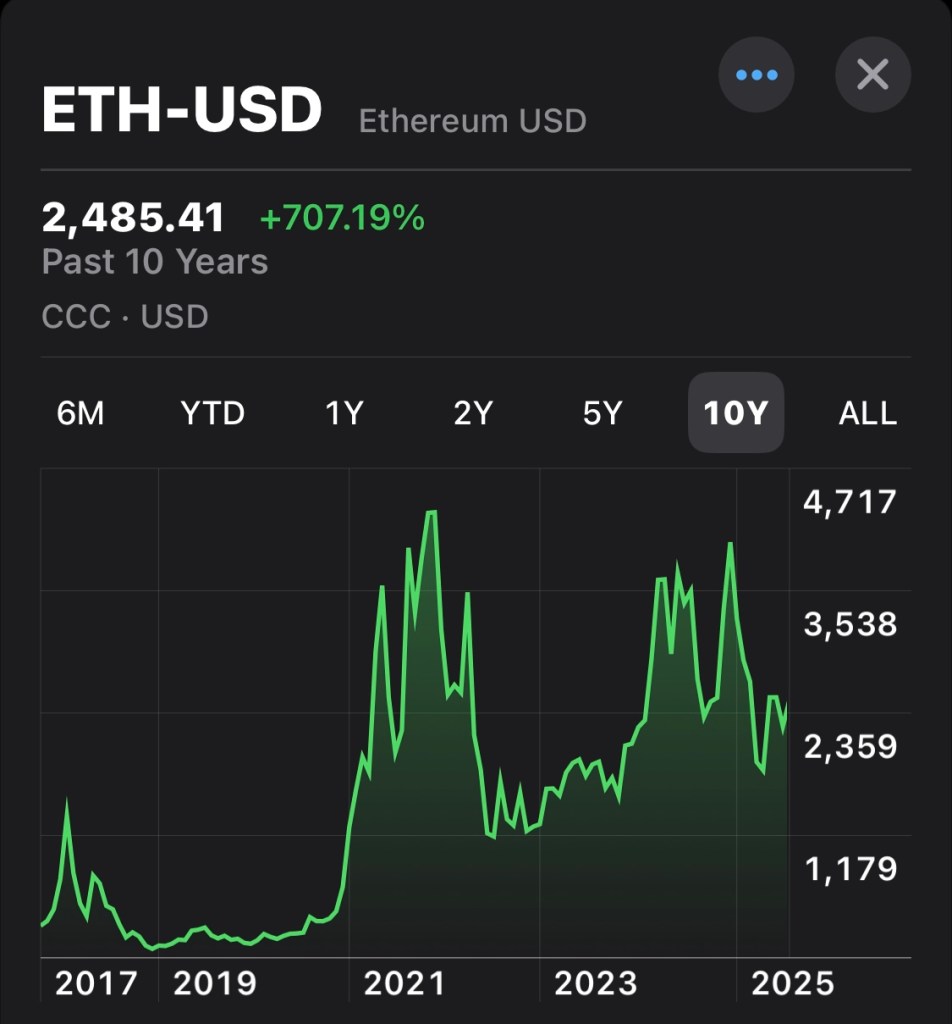
If you own Bitcoin, you need to decide if your strategy is to hodl for the long term or sell during the bull run so you can increase your holdings in the inevitable bear market that follows. Option two sounds great, but it’s harder than you think. Expect more on that in a later post. In my humble opinion, any other flavour of crypto needs to be sold in the bull market. Those Metaplanet shares too. It will all get crushed when the music stops. But for now, enjoy the ride!

Full send. This is not a drill.

Top image from Craiyon.

Disclaimer: This should go without saying, but the information contained in this blog is not investment advice, or an incentive to invest, and should not be considered as such. This is for information only.
Facing inflation – the four assets you should own

Happy Friday! I thought I would provide a quick round-up of what is going on in markets. In case you missed it, here’s the most important five minutes of financial commentary I saw this week:

If you don’t know who PTJ is, here is his Wikipedia page. The Tldr is legendary trader and billionaire hedge fund manager.

The message here couldn’t be clearer: ‘All roads lead to inflation.’ Note the mention of Japan around the 4-minute mark. The playbook for how nations get themselves out of debt trouble is to inflate their way out. This is happening. Think what that means for your spending power. Think what it means for the yen…

So what assets does a guy like this own to face down the inflation threat? Bitcoin, gold, commodities and tech stocks. Hard assets and tech stocks. Simple.

I have had numerous conversations this past few weeks along the lines of ‘I want to own gold, but I feel like I’m too late.’ Yes, this is why I preach having the core of your assets in a diversified portfolio instead of just lumping it all into a global stock ETF. If you owned a diversified portfolio, you would have 3-5% in gold, and that part of your portfolio would be up +30% this year already. You wouldn’t have to scramble to buy some now.

This is an excerpt from a post I wrote in March 2023:

‘But global stocks have outperformed a diversified allocation over the last 12 months.’ – yes, there will be times when they will do that and there will be times when they won’t…

Here’s the simplest way I can put it: if you are young and in the process of accumulating wealth, then maybe a 100% stock allocation is ok. If you have already built up a nice nest egg, you need to think seriously about how to keep it. Spread the risk and sleep well at night.

When it comes to the satellite holdings, it’s pretty clear what needs to be beefed up right now: bitcoin, gold, commodities and tech stocks. You might already have commodities in your diversified portfolio, but with inflation looming, it’s time to get some more. Note that PTJ mentions how commodities are still under-owned.

Bitcoin is coiled

The Bitcoin four-year cycle is playing out exactly as expected and we are about to enter the fun phase.

The BTC ETFs are buying more BTC than is being mined every day. By a long way. Supply shock incoming. I don’t know how to explain it any more clearly.

If you are waiting around for a Japan Bitcoin ETF, I wouldn’t hold your breath – see this Financial Times article.

Meanwhile, Microsoft placed an ‘assessment on investing in Bitcoin’ on the voting ballot for its 10 December annual shareholder meeting. The Microsoft board recommends voting against the proposal, deeming it ‘unnecessary’ as the firm’s management ‘already carefully considers this topic’. This is a conversation that will take place in boardrooms of more and more major companies. Note here that Tesla still owns 9,720 BTC.

Gold breakout is happening now – are you really late?

Tesla leads big tech earnings

Tesla was the first Magnificent 7 company to report earnings this season and it got things off to a good start. The EV manufacturer’s stock just had its best day in the market in over a decade after reporting better-than-expected results. I understand why some people don’t like the CEO, but betting against his companies is a risky business. A +22% gain in a day is going to hurt some short sellers. More on upcoming Mag 7 earnings here.

That’s all I have for today. Wishing everyone a great weekend!

In summary, all roads lead to inflation. A core diversified portfolio and satellite holdings in bitcoin, gold, commodities and tech stocks is the best way to face down the threat to your purchasing power.

Top image by wirestock on Freepik

Disclaimer: This should go without saying, but the information contained in this blog is not investment advice, or an incentive to invest, and should not be considered as such. This is for information only.
How to beat inflation with Japanese dividend stocks

Deflation in Japan is a thing of the past.

After years of trying to escape the spiral of falling prices, the Bank of Japan seems to have finally succeeded in its goal. The official inflation rate now sits at around 2.5%, and prices have been hiked on everything from electricity to rice. We foreign residents of Japan have long been concerned with how the spending power of our yen is eroded by inflation in our home countries, but now we are facing a new dilemma.

We are losing spending power in yen terms, too.

Holding JPY cash has been unattractive for decades but is a much worse proposition now. However, with Japanese government bonds still yielding very little whilst carrying significant capital risk, there is no ‘risk-free’ way to counter inflation.

Fortunately, Japan is somewhat of a dividend stock haven. Many quality companies offer a solid return on your hard-earned yen, albeit with some price volatility. But how should investors determine which stocks to buy? Let’s explore a few ideas.

How do dividends work?

First, some basics: dividends are the percentage of a company’s earnings paid to its shareholders as their share of the profits. They are typically paid quarterly, but in some cases, they may be paid semi-annually or annually.

Investors often buy stocks anticipating capital growth but dividend income is also valuable. Established companies that pay a stable dividend are in demand globally and nowhere more so than in Japan.

There are a few key dividend dates to look out for:

  • Announcement date – the date a company’s next dividend is announced
  • Ex-dividend date – the day on which a stock trades without the benefit of the next scheduled dividend payment. If the ex-dividend date is 30 March, investors who want to earn the next dividend need to own the stock at least one business day before that date
  • Record date – the cutoff date to determine which shareholders are eligible to receive the dividend
  • Payment date – the date the dividend is credited to investors’ accounts

When checking out potential dividend stocks, the ex-dividend date is the most important one to pay attention to. If you miss that date, you will have to wait for the next dividend. The stock price can also fluctuate significantly around the ex-dividend date. Popular dividend stocks tend to be bought as the ex-dividend approaches and then sell off after the date has passed.

The easy way to collect dividends

If you like to keep things simple, the low-stress way to own the best dividend stocks is through an Exchange Traded Fund (ETF). ETFs are ubiquitous these days and cover all of the major investment themes. Do a search for ‘high dividend yield ETF’ or ‘高配当株’ and you will find plenty of options.

Here are a few examples I found after a quick search in my SBI account (not investment advice):

  • NEXT FUNDS Nikkei 225 High Dividend Yield Stock 50 Index Exchange Traded Fund (1489)
  • NEXT FUNDS Japan High Dividend Equity Active Exchange Traded Fund (2084)
  • One ETF High Dividend Japan Equity (1494)
  • NEXT FUNDS Nomura Japan Equity High Dividend 70 ETF (1577)
  • Daiwa ETF TOPIX High Dividend Yield 40 Index (1651)

Yahoo Finance is as good a place as any to get a simple overview of these ETFs. Then, if you want to know more, search for the company website and read more about the fund strategy, holdings etc.

These ETFs can be purchased in either the growth portion of NISA or a regular taxable trading account. For the tsumitate part of NISA, search for dividend-focussed mutual funds.

Picking stocks

If you want to pick out some dividend stocks for yourself, the top holdings of these ETFs are a great source of ideas. I am no stock analyst but this is how I got started with dividend stocks. I bought the Next Funds 1489 ETF first and then I went to the ETF page on the issuer’s website and found that you can download the full list of holdings there. (see information on underlying investments) Then, I did some research and picked out a few stocks I wanted to own directly.

Looking through the holdings in the ETFs listed above, it is clear that several industries tend to foster good dividend stocks (again, not investment advice):

  • Pharmaceutical/healthcare: names like Takeda Pharmaceutical Company Ltd (4502) and Astellas Pharma Inc (4503) yield over 4% p.a.
  • Trading companies – Warren Buffett has acquired around a 9% stake in each of Japan’s big five trading companies. He borrows yen at around 1% and collects his dividends, which are between 3-4%. If you are looking for ideas outside of the big five, perhaps take a look at Sojitz Corp (2768) or Kanematsu Corp (8020)
  • Steelmakers – Nippon Steel Corp (5401) has been in the news due to its proposed acquisition of US Steel, but it is also a highly rated dividend stock. Kobe Steel Ltd (5406) and JFE Holdings Inc (5411) are also good plays.
  • Banks – Japan’s megabanks are known as solid dividend payers and even upstarts like Seven Bank Ltd (8410) pay a nice income. Be aware that banks are sensitive to Bank of Japan interest rate decisions though.
  • Shipping Companies – Japan’s big three shipping companies also feature prominently in the dividend ETFs. They are Nippon Yusen Kabushiki Kaisha (9101), Mitsui O.S.K. Lines Ltd (9104), Kawasaki Kisen Kaisha Ltd (9107)

This is by no means an exhaustive list and good dividend stocks are not limited to the industries mentioned above. Perhaps the most popular Japanese dividend stock is Japan Tobacco Inc (2914) – interestingly that stock has been down a bit recently due to some legal issues in Canada. Remember that the price of dividend stocks can and will go up and down. However, as long as you keep hold of them, you will be paid your dividends.

As for the question of ETFs vs. picking your own stocks, keep in mind that ETF holdings will be regularly updated depending on the particular ETF’s criteria. Over the shorter term, you will mostly find the same companies but the weighting of each stock will change. Picking stocks can be fun, but buying an ETF saves you from having to do detailed analysis whilst providing broader exposure.

In summary:

  • JPY cash is trash, inflation will eat up your spending power
  • ETFs are a great way to get started with dividend stock investing and, for most people, offer the most straightforward option
  • One way to find individual stocks is to dive into the ETF holdings to see what their top positions are
  • Do your own research on stocks from industries known for paying steady dividends
  • Bonus: look out for companies that have a record of increasing their dividends year after year

Happy hunting and let’s pump up that spending power!

Top image by rawpixel.com on Freepik

Disclaimer: This should go without saying, but the information contained in this blog is not investment advice, or an incentive to invest, and should not be considered as such. This is for information only.
All aboard for the Tokyo Metro IPO!

Last week, a reader suggested I write a post about the upcoming Tokyo Metro IPO. This seemed like a great idea, except I have paid precisely zero attention to the offering and would have to spend some time getting up to speed. I don’t really know much about IPO processes and generally see them as a scheme where retail investors provide exit liquidity to venture capital while banks make off with huge fees. Hmmm, I thought maybe I’ll look into it when I have time…

Then, the next day, my wife texted me from work about it. She works with a couple of shrewd investors who were excited about the IPO. Ok, now my wife wants to participate, so I really do have to figure out what the deal is!

First of all, this is clearly going to be a popular offering. You don’t have to be a high-level analyst to determine that the Tokyo Metro is profitable and occupies huge swathes of prime Tokyo real estate. Additionally, this is not a start-up exit to public markets. The Tokyo and national governments are selling half of their holding to the public. (the central government plans to use the proceeds to repay reconstruction bonds issued after the 2011 Tohoku earthquake and tsunami)

What’s the deal?

Tokyo Metro Co. Ltd will be newly listed on the Tokyo Stock Exchange on Wednesday 23 October, 2024. In total, 232,400,000 shares of common stock will be sold to the public. An additional number of shares may be offered depending on demand.

How to participate

Investors who wish to participate can apply through participating securities companies during the application period. If you have an online brokerage account, you will most likely find advertisements and guidance for the offering when you log in.

The price of shares will be determined through a ‘bookbuilding’ process, which is a method to gather investor interest and determine the final price based on demand. The bookbuilding period will be from 8 October to 11 October. This is when you submit your purchase request via your brokerage account. The minimum number of shares you can apply for is 100 – and increments of 100 thereafter. The indicative price per share is ¥1,100. This means the IPO would raise ¥319.55 billion, giving the company an overall value of ¥639.1 billion.

The final offering price and the number of shares to be allocated will be announced on 15 October and the actual public offering period runs from 16 October to 21 October. This is when participants need to deposit sufficient funds to pay for the shares in their brokerage account – make sure you follow the instructions here or you will end up missing out.

There is no guarantee that participants will be allocated all of the shares they apply for. It will depend on the demand for the offering.

Need more info?

For those interested, a Zoom webinar will be held on 3 October at 14.00. You can find details of the offering and a Zoom link here.

About Tokyo Metro

Tokyo Metro operates an extensive subway network with 9 lines mainly in Tokyo’s 23 wards. The most used stations are Ikebukuro (2.487 million daily passengers), Shinjuku (2.165 million), and Shibuya (1.955 million). Total average daily ridership in 2023 was 6.574 million passengers.

The real estate business manages many major properties, including Shibuya Stream, Shibuya Scramble Square, and Tokyo Plaza Ginza. There is also the Shinjuku West Gate Area Project, which is scheduled for completion in 2029.

Tokyo Metro also operates retail businesses such as Echika, a shopping street in some of the metro stations. In-station advertising is, of course, another major business area.

Show me the money!

Tokyo Metro suffered a severe drop in revenue during Covid, but recovered to 95% of pre-pandemic levels by July 2024. The return of inbound tourism, increased population and infrastructure investments played key roles in the recovery.
As part of its growth strategy, Tokyo Metro is focussing on improving accessibility and expanding partnerships with other transport services to increase ridership.

A new trip-planning app is planned for launch this year along with an updated rewards program for frequent passengers – gotta have a point card strategy in Japan!

Tokyo Metro aims to integrate its services better with tourist facilities and provide tailored travel experiences via the app. This is part of the strategy to create more reasons for passengers to use the metro, especially for leisure and tourism. The company is also promoting more contactless payment methods, such as QR codes and credit cards, to streamline fare collection and enhance convenience for passengers.

Tokyo Metro is also working on the expansion of certain metro lines, including the Yurakucho and Namboku lines, which are projected to be completed by 2030.

What to expect from the investment

The share offering is clearly going to be in high demand, with investors looking for a long-term position in a profitable business with a solid dividend. (I’m hearing rumours of a dividend around 3.5% but no idea how accurate that is) There will always be plenty of passengers/customers and the real estate value alone makes the company highly attractive.

On listing, I can imagine a scenario where the share price increases significantly in the first few weeks/months. That may well be followed by a correction in price. Many will view this as a trading opportunity, but remember that you will be trading against every investor in Japan (and many abroad), all of whom will think they have come up with a winning strategy!

My view is that Tokyo Metro will be a solid long-term hold, but admittedly the temptation to sell the initial rally to buy back lower will be strong. If you are going to do so, it’s probably better to be first!

So, there it is. If you are looking to get involved, check your brokerage account and make sure you are prepared to make your bid on 8-11 October.

Best of luck!

Disclaimer: This should go without saying, but the information contained in this blog is not investment advice, or an incentive to invest, and should not be considered as such. This is for information only.