
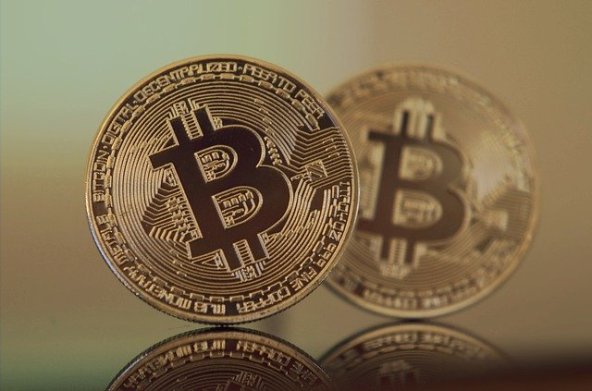
Bitcoin – Are you Accumulating?

2019 Masters

After day two of the recent US Masters Golf, a friend of mine asked me who I thought he should bet on. My answer was somewhere along the lines of “My heart says Tiger, but my head says Molinari”. Shows where rational thinking can get you sometimes…

Luckily, when it comes to calls on a speculative asset like cryptocurrency, you don’t need my opinion to help decide if it’s worth a flutter. Tuur Demeester’s head and heart have been in Bitcoin for many years and he has been writing informative reports on the leading cryptocurrency since 2012. His latest report is here and I highly recommend you read it.

Although a little technical at times, the main points are quite clear:

  • Big investors (whales) are accumulating Bitcoin
  • We’ve seen this kind of bear market scenario before
  • Smart investors don’t try to buy the exact bottom, they accumulate when they know they are around it
  • Lower prices and shocks are still possible
  • Bitcoin expected to trade in a range of $3,000 – $6,500 before the next bull market breakout

Obviously I’m not saying you should be putting all of your savings into crypto, but given the potential for returns it’s worth considering a small allocation of money you can afford to take risk on.

Disclaimer: This should go without saying, but the information contained in this blog is not investment advice, or an incentive to invest, and should not be considered as such. This is for information only.


Financial News – Cut Out the Noise!

earmuffs-2755553_640

If you are a consumer of financial news, you will be used to seeing headlines like this: “The Dow added 141 points because recession fears are fading”. Well that sounds like great news doesn’t it? Onward and upward! Yet only two days ago it was “Dow plunges on recession fears”. So are we afraid of a recession or not? Is the market going up or down?

Of course, the market is going up and down. That’s what markets do. Most of what passes for financial news is just commentary on that particular day. It’s like listening to a report on how the weather was at the end of the day – not much use if you’re trying to figure out if it will be sunny for golf at the weekend…

But surely some of this stuff must be important? What should we be paying attention to and what is just noise? Well firstly, if you are a long term investor with a diversified portfolio that you rebalance at least annually, then almost all of this stuff is noise. It may be helpful if you are making tactical trades with a small portion of your assets, but talk of an inverted yield curve* should not be keeping you awake at night.

Of course I am not trying to discourage you from keeping an eye on what’s going on and trying to become a better investor. But if you want to keep your time spent on this stuff to a minimum, here are some simple tips:

  1. Understand the correlated assets and how they behave over time – here’s a basic guide to cash, bonds and equities.
  2. Understand what stage of the stock market cycle we are in. Most people buy and sell at exactly the wrong time. If you don’t know where we are on the graph below, then how do you know when to be more aggressive or defensive?

Psychology-of-Market-Cycles

3. Know your benchmarks. In particular, know the rate of inflation in your base        currency. This is your key benchmark to compare investment performance to.

For most (non-finance) people, I think this is enough. If you understand how the main asset classes behave over time, what stage of the market cycle we are in, and how your investments are performing relative to the main indices, you probably have more valuable knowledge than you would gain from watching an hour of Bloomberg news a day.

This isn’t to say you shouldn’t read or listen to investment podcasts to broaden your knowledge. Just don’t let yourself be swayed from your long term goals by sensational headlines. I know people who have been following doom and gloom commentators far too closely since the 2008 crisis, and have completely missed the 10 year bull run in equities. Keep in mind what the stock market looks like over the long term:

Stock Market Since 1900

Much like other types of news, focus on a few key things and shut off the rest of the noise for a less stressful life.

If you are looking to go a little deeper, this article provides a simple guide to 16 major leading and lagging economic indicators which are worth keeping tabs on.

*If you really want to know what an inverted yield curve is, there’s an explanation here.

Disclaimer: This should go without saying, but the information contained in this blog is not investment advice, or an incentive to invest, and should not be considered as such. This is for information only.
Investment Fees – Am I Paying Too Much?

flying-2891745_640

I came across an interesting article this week – see here. JP Morgan are launching a US Equity ETF with a fee of just 0.02%. That makes it the lowest fee ETF available at the moment, beating Vanguard, Schwab, and iShares on cost.

This is great news for long term investors, as long as they make money. Now why wouldn’t they make money with a fee of only 0.02% you ask? With the rise of ETFs, there’s a lot of talk these days about how much investors are paying. Fund managers and financial advisers are frequently criticised for charging too much.

But here’s the thing: it doesn’t matter how cheap your investment is if you buy it when the market is doing well and then sell it during a downturn. You are going to lose money!

Here are a couple of excerpts from Tony Robbins’ “Money Master the Game” book:

For the 20 year period from December 31,1993, to December 31 2013, the S&P returned 9.2% annually. However the average mutual fund investor averaged just over 2.5%, barely beating inflation. They would have been better off in US Treasuries.

Another fascinating example is that of the Fidelity Magellan mutual fund. The fund was managed by Peter Lynch, who delivered an astonishing 29% average annual return between 1977 and 1990. However Fidelity found that the average Magellan investor actually lost money over the same time period. How can that be? Well, quite simply, they bought and sold the fund at the wrong time!

So what can we learn from this? Simply that if you focus too hard on fees, be careful not to lose sight of the big picture. If you are prone to making emotional investment decisions when markets are swaying, maybe it’s worth paying for a good adviser who can help you make sound decisions?

If you are able to buy that JP Morgan ETF, hold it forever, and add to it when markets are bleeding, then good for you! You are going to be very happy with the result over the long run.

If watching your investment value go up and down makes you nervous, maybe you are better off paying for a diversified managed fund with a blend of asset classes that is adjusted tactically by the manager. Then you don’t have to worry about buying and selling at the wrong time.

I guess what I am saying is; if you are a disciplined investor you should absolutely be conscious of fees, and minimise them where possible for best results. If discipline is an issue for you, or you simply don’t have the time, it may be worth paying for some help.

Disclaimer: This should go without saying, but the information contained in this blog is not investment advice, or an incentive to invest, and should not be considered as such. This is for information only.
Japan Inflation Watch

yen-1995422_640

It’s been a long time coming… 27 years in the case of a well known soft drinks company. Japan’s top Coca-Cola distributor recently announced that they will be increasing prices by between 6% and 10% as soon as April this year. (article here) They are certainly not the only ones, as spring will see price increases in many of your favourite restaurants, as well as on specific foods such as instant ramen, canned mackerel and even ice cream! Coupled with the planned October increase in sales tax from 8-10% this means that your yen isn’t going to go as far as it has for the last three decades.

This will come as a shock to the Japanese public and long-time Japan residents. We’ve all got used to the size of food and drink portions getting incrementally smaller, so called “shrinkflation”, but it’s really quite a jolt to see the actual price of things going up. Even my barber is raising his prices from next month!

What is this going to mean for us all financially? Well, put simply, the massive debt bubble created by the Bank of Japan means we are unlikely to see a rise in interest rates any time soon. So, money languishing in our Japanese bank accounts is going to be losing spending power. I have talked about base currency over and over, but it still bears repeating: If you are planning to spend the money you make in Japan in the UK, then UK inflation is your minimum benchmark for investments. Holding cash in JPY at zero interest in this case means you are not only losing spending power in your base currency, but taking currency risk as well. Up until now, if you were planning to spend the money in Japan, then holding JPY cash was both safe, and good enough to at least preserve your spending power. Regardless of what government inflation statistics might say, this is clearly no longer the case.

So what action should Japan residents be taking here? Here are a few things you can do:

  1. Review your base currency / currencies – if you are saving to pay for your kids education overseas, or your retirement abroad, you should be saving and investing in the currency you are planning to spend the money in. JPY cash is not the place to be.
  2. That said, if you live and work in Japan, your emergency cash reserve should be in JPY. (unless losing your job would mean leaving Japan immediately)
  3. If you have a future need for JPY as a base currency, you are going to lose spending power in JPY cash / bonds – this means you will have to take some risk with some of your money.
  4. One way to do this would be to look for dividend paying stocks / ETFs. Here is an interesting list of dividend paying ETFs in Japan. Google translate does a pretty good job on this. Remember that you should be looking at the Japan stocks / REITS – anything that invests in overseas assets, like emerging market bonds, carry currency risk that could wipe out your actual return.
  5. You could also consider a diversified Japan fund manager. I invest part of my NISA in Rheos Hifumi Plus, which is one of the most popular NISA investment funds in Japan. (this is not a sales pitch – just what I do)

I hope this helps. Please do get in touch with any interesting price increases you notice here in Japan.

Disclaimer: This should go without saying, but the information contained in this blog is not investment advice, or an incentive to invest, and should not be considered as such. This is for information only.
2019 Investment Outlook

Netflix-Tidying_Up_Marie_Kondo-1296x728-Header-1024x575

Wow is it February already? Apologies that this is a little late, but after a family holiday it’s been a slow start to the year. 2018 marked the arrival of our first child, so it’s been easy, and fun, to take my eye off the ball a little. However, it is time to get back to business, not to mention getting the house in order! I’ve seen a lot of talk recently about the Netflix series “Tidying Up With Marie Kondo”, so perhaps we should make de-cluttering our theme for this post.

So how was 2018 for you? From an investment perspective there was little joy being sparked no matter where you looked. In a year where much of the talk was about the prospects for a continuing bull market in stocks, actual returns were rather bearish. We never really got the crash that many predicted, but we saw a significant correction in February, and a rather painful last quarter where most stock indices dropped double digits.

Some rough numbers for 2018: The S&P 500 finished -6.2%, Euro Stocks were around -13%, Japan -12%, Emerging markets -17%. Gold ended the year strongly but was still down around 2% for the year. Oil fell some 40% from its previous high, losing almost 25% for the year. Furthermore, as interest rates rose, bonds prices fell too. There were not many places to hide in 2018. (let’s not even talk about that crypto portfolio…)

So what can we expect in 2019? Depending on how much information you are able to digest, Bloomberg has compiled a monster article of Wall Street predictions here.

Sticking with the idea of de-cluttering though, here is a short list of key themes:

  • The end of the bull cycle is getting nearer, but it is not here yet.
  • Investors, however, are likely to behave as if the end is right around the corner (this means continued volatility)
  • The US Federal Reserve will continue to normalise rates.
  • The Bank of Japan will continue its accommodative monetary policy.
  • The outcome of trade negotiations with China will be the main driver of USD strength / weakness. (perhaps we’ll see a weaker USD vs. JPY?)
  • Brexit will not have as big an effect on global markets as many commentators make out. (just my personal opinion here)
  • There is, perhaps, excessive pessimism with regard to Japanese stocks. With the end of the Heisei era, and subsequent celebration of the new era, a growing influx of foreign tourists, the Rugby World Cup later this year and the upcoming 2020 Olympics, we could see a real buzz that will be good for business.

So how should you plan your personal investment strategy for 2019? Again let’s keep it simple:

  • Have a plan! Read this post if you don’t have one.
  • Stick to your guns. Don’t let the noise divert you from your commitment to saving and investing.
  • Diversify and rebalance – review your asset allocation.
  • Max out tax advantaged investments such as NISA.
  • Look for Japan stocks that are likely to benefit from the buzz of the next two years.

With that I wish you all the best for 2019. Hope it is filled with things that spark joy!

Disclaimer: This should go without saying, but the information contained in this blog is not investment advice, or an incentive to invest, and should not be considered as such. This is for information only.



Diversifying Through Crypto – How Digital Assets Could Change Your Retirement Plan

puzzle-1713181_640

Sticking with the theme of cryptocurrency this week, I came across this fascinating research paper  on the role that digital assets can play in asset allocation. While I recommend you read the report yourself, I appreciate that not everyone is enraptured by talk of efficient frontiers and Sharpe ratios, so I will attempt to summarise the main points of the paper into something more easily digestible.

First of all, here’s a post I wrote previously about asset allocation, which may be a good refresher. As noted there, modern portfolio theory is about diversification, specifically, blending various asset classes to produce good returns with the lowest possible risk. Over the long term it is possible to estimate the future behaviour of various asset classes and blend them to together to create an efficient frontier portfolio, whereby the return is optimized to the level of risk.

Efficient frontier
https://grayscale.co/a-new-frontier-research-paper/

What makes the development of a new digital asset class so interesting is the opportunity to add it into the mix and create an allocation that is more diversified than traditional portfolios. A well diversified portfolio contains a blend of assets which are not strongly correlated to each other. So the key to success is not necessarily finding better performing assets, but properly combining uncorrelated assets. In short, to widen the net and capture a better return without greatly increasing the risk.

The graphic below shows a simple simulation of how this could work. It takes a typical portfolio that is 60% global stocks and 40% global bonds, (Global 60/40) and shows how the performance and risk characteristics change by simply adding an allocation to bitcoin:

Figure 5
https://grayscale.co/a-new-frontier-research-paper/

As you can see, a 1% allocation to Bitcoin increases the return over the time period without greatly affecting the level of risk. A 5% allocation to bitcoin moves the risk needle a little more, but the cumulative return is almost double that of the Global 60/40.

This can then be taken a step further by adding a blend of digital assets rather than just bitcoin:

grayscale_fig8
https://grayscale.co/a-new-frontier-research-paper/

It seems that the extra diversification achieved through a range of digital assets has a significant positive impact on the risk/return profile of this portfolio. This can be attributed to the fact that although digital assets appear to go up and down together, they are not perfectly correlated.

I’m not going to get into Sharpe ratios in this post but you can get a definition here. From a financial planning perspective I do think it is worth a look at Figure 12 and Figure 13 in the paper, which give an interesting simulation of how someone saving for retirement could benefit from an allocation to digital assets over time:

grayscale_fig12
https://grayscale.co/a-new-frontier-research-paper/

Assuming $100,000 in starting capital and an annual contribution of $18,500, this gives us an idea of how adding a 5% allocation to a blend of digital assets to the Global 60/40 can affect risk/return results over time. Although the increase in annualised return is only 0.3% for a similar level of risk, the effect of compound interest over the years turns this into a meaningful dollar figure at the end:

grayscale_fig13
https://grayscale.co/a-new-frontier-research-paper/

Now this is, of course, a simulation and there is no guarantee of achieving these returns over time, but it certainly makes for a compelling argument for allocating a small portion of long term investments to digital assets. Having said that, we are still some way from being able to click a button and add a 5% allocation to crypto to a retirement plan, which means investors currently have to figure out how to buy and store these assets safely themselves. However, there is already talk of bitcoin ETFs, and crypto funds that are accessible to retail investors are starting to appear. It looks like making an allocation to digital assets as part of your long term investment strategy is about to get easier.

Disclaimer: This should go without saying, but the information contained in this blog is not investment advice, or an incentive to invest, and should not be considered as such. This is for information only.

Bitcoin Price Prediction

Top 11 Bitcoin Prediction

I recently read here that bitcoin bull Tom Lee has reduced his target for the price of bitcoin at the end of 2018 from $25,000 to $15,000. It’s actually amazing that people are willing to make put their reputation on the line about something as volatile as cryptocurrency, but as the above graphic shows, Mr. Lee is not alone in making bold predictions.

It’s interesting to note that two American economists are right down at the bottom with predictions of $100. They are far from the only “experts” who have a negative view with Bill Gates and investor Peter Schiff both expecting bitcoin to go to zero.

So should we all be buying bitcoin and betting on it going to a million dollars, or is that just reckless speculation?

First of all, no-one knows where this is really going, and there’s certainly a lot of speculation involved. Before making a decision, I would suggest reading up on the reasons people think bitcoin will reach a certain value. Yes, you should study up on the views of Tom Lee and Jim Cramer, as well as those of Joseph Stiglitz and Kenneth Rogoff. In fact, Peter Schiff is a good person to follow if you’re looking for the ultimate bitcoin bear.

Here’s another way to look at it. The bitcoin price as I write today is around $5,500:

How would you feel if you bought one bitcoin today and the price went to zero and you lost $5,500?

How would you feel if you didn’t buy bitcoin and the price went to $250,000? How about $1,000,000?

These two questions alone should tell you a lot about the way you view risk. There’s no correct answer, just what works for you.

FYI I bought originally at $2,500 and just bought a little more at $5,500 – that’s not advice, just disclosure. And no, I don’t have a price prediction for end of 2018, 2022 or ever!

If you simply enjoy reading the predictions there are a few more here, although this was from October before Tom Lee adjusted his outlook.

Disclaimer: This should go without saying, but the information contained in this blog is not investment advice, or an incentive to invest, and should not be considered as such. This is for information only.



Don’t Panic!

Stocks Sink

It’s already been an eventful year for the markets, but waking up this morning I must say I did a double take at the stocks app on my phone. The S&P 500 Index was down 3.3% overnight, with the fall being led by the popular tech stocks. The NASDAQ was down 4.4%.

The stock app also offered up this article, which  is a quick but worthwhile read at a time like this. There’s some simple advice in here for individual investors:

  • Don’t panic.
  • Wait a few days for things to settle.
  • Make sure you know yourself and don’t be aggressive with money you are planning to spend in the near future.

Makes sense right? While this may not necessarily be the start of the grand reckoning that many are expecting, there are going to be more days like this, so it’s best to be prepared.

Here are a few things I would add:

  • Diversify – should you really be 100% in stocks? Are you prepared to ride out the storm for as long as it takes? A well diversified asset allocation will not capture all of the upside in the good times, but it also won’t absorb all of the downside when things go south.
  • Don’t try to time the market – the pros get this wrong, so what chance do we have? You are right to be buying after a significant drop in prices, but you don’t have to do it all at once. Add a little and then wait a few days.
  • Knowing yourself means knowing your base currency, your risk profile and your time horizon.
  • There is more to come -The Cboe Volatility Index rose past 20 for the first time since April. The US Federal Reserve is walking a tightrope trying to return rates to normal in order to avoid the economy overheating, whilst trying not to upset the stock market. The Bank of Japan can not even hint at “tapering” or reducing bond purchases without setting off an avalanche.

It’s likely to be a rough day for Asian stocks today. Be prepared, stick to your long term plan and don’t panic!

Update to this post, 12th October 2018: Ray Dalio says it better than me in this 5 minute interview, but the message is the same – stick to strategic asset allocation and don’t try to trade and time markets.

Disclaimer: This should go without saying, but the information contained in this blog is not investment advice, or an incentive to invest, and should not be considered as such. This is for information only.

What’s the Plan?

laptop-2557615_640

Looking back, I have posted on a wide variety of subjects over the last year or so. It’s interesting to note that the posts that get the most views are almost all related to specific investment products.

I found this out years ago when we were doing financial planning seminars. Often we would spend 20-30 minutes on a specific financial planning issue, and then for the last 10 minutes we would have a guest from an investment company talk about an investment product or fund. All of the enquiries after the seminar were related to the product, not the planning process. I concluded that people find it easier to examine a product and decide if they like it or not, than to think about long term planning.

Maybe planning is just too hard? Certainly many people are busy and pushed for time. For that reason I’ve decided to boil it down to its simplest form. Financial planning in three quick steps. Here we go:

  1. Have a plan!
  2. Cover the basics
  3. Think about where you will spend the money

If you do nothing else then at least spend some time on these three points.

Have a plan – are you more likely to succeed if you have a clear goal and a simple step by step plan how to reach it? Of course you are! Where are you going to be in 10, 15, 20 years? What do you want to have? About how much do you need?

“I should save money for my daughter’s education” is not a plan. “I need $80,000 in 18 years time for my daughter’s education, and I’m going to start investing $200 a month from now in order to get there.” – now that sounds more like it! (calculated on average return of 6.5% p.a. by the way)

Ask yourself some simple questions and at least get a basic roadmap. The plan can be adjusted as you go.

Cover the basics – read this post, take action on these three points and breathe a sigh of relief! (Emergency cash reserve, basic insurance, some kind of pension)

Think about where you will spend the money – Are you staying where you are now forever? Are you likely to return to your home country or go somewhere else? Go with the most likely outcome and save in your base currency. Also, think about the most tax efficient way to get the money you save now back there. You may need to get some advice on this but at least start thinking about it.

And that’s it! If you get to work on these three points, you have probably done more financial planning than most people do in a lifetime!

Financial Planning for Babies

family-2057301_640

You may have noticed that there have been no updates on here for over a month. Apologies for that – our first son was born in early May and we are just getting into the swing of things!

As some of you will know, having a new born baby is very exciting, but also exhausting. Going from a solid 8 hours of sleep a night to waking up every 3 hours is a shock to the system. However, after a couple of months the little one starts sleeping longer and the brain starts to return to something approaching normal functionality. That’s when you may start thinking, “So what do we need to prepare financially now we have a new baby?”

Before I get into the financial planning stuff, I found an excellent blog: 2020 Mum in Tokyo – the “baby admin” section here is really helpful when it comes to working out what paperwork needs to be done to register your baby’s birth in Japan and overseas. It’s particularly useful if one or both of the parents is British.

So what kind of financial review should you conduct after a new addition to the family? Keeping it simple, I would look at two things: Insurance and Savings.

Insurance

Assuming you have already covered the basics and have an emergency cash reserve, basic medical cover, and income protection insurance in case you are sick or injured long term, the main thing to address after the birth of a child is life insurance. You may not have thought about it this way, but life insurance is really about replacement of income – if you were no longer around, what income would your family need to have the lifestyle you want them to have and be able to do the things you want them to do?

It’s also important to cover any liabilities. Do you have any debt that you would want to have paid off if something happened to you? If you have a loan on a property in Japan in your name, you will almost certainly have adequate life cover to dispense of this loan in the case of your death. If the loan is in your spouse’s name only, you may need additional cover. If you have loans on property overseas you need to check if they are covered. Do you have any other liabilities? Make sure you get an accurate total.

On to income – what income would your family need monthly if you were no longer there to provide it? If both parents work, keep in mind that if one of you is no longer around, the surviving parent will need to take care of the kids and may not be able to earn at the same level they do now. Do you want your child / children to go to university? What would that cost per year? Many Japanese life insurance policies can be set up to pay out an income rather than a lump sum – you may find something like this easier to plan with. (talk to an insurance professional to make sure you understand the options)

If you are looking at a lump sum payout, here’s how to calculate what you need:

If annual required income is $50,000, for example – at an interest rate of 5% per year you need $1,000,000 in order to generate the income without spending the capital. If you calculate at 2.5% you need to double that. If you are assuming zero interest rates, a million dollars will last 20 years. It’s up to you how conservative you want to be.

So if you need $1,000,000 to cover the income and you have uninsured loans of $280,000 (for example) you need $1,280,000. If you are adding in 4 years of university at $25,000 per year, then you need $1,380,000 in life insurance cover.

Obviously if you have significant assets already that could cover some of these costs, you can reduce the amount of life cover accordingly.

Savings

A new baby can be a great motivator for saving money! What is interesting is that I often find that people are less willing to take risk on money they save for their kids. They take it so seriously that losing money is not an option and they become overly conservative. While I understand why someone would feel this way, it’s a little counterintuitive. The time when kids really start to cost money is when they go to college / university, and that’s still 18 years away. Saving money in cash for that time frame means you will barely keep up with inflation. Also, the dollar cost averaging effect of regular saving means you can afford to take some risk in the early years.

It’s a good idea to start with a target in mind, so do some research on what school costs today. Don’t forget to factor in that higher education costs are rising faster than inflation year on year. This article may help get you started.

Once you have a target in mind, work backwards to how much you need to save each month. Use a simple online savings calculator to help figure it out. Here’s a simple one you can try.

In terms of investment vehicles, look at tax advantaged investments first. Japan’s Junior Nisa is a good example, allowing parents / grandparents / guardians to make contributions on behalf of children under 20 up to ¥800,000 per year. (the UK has a Junior ISA, while the US have 529 College Savings Plans)

Lastly, you may find you are entitled to reimbursement of medical costs related to the birth / child benefit in Japan. This can be a good way to kick off a savings account for your new family member!

Disclaimer: This should go without saying, but the information contained in this blog is not investment advice, or an incentive to invest, and should not be considered as such. This is for information only.