
Saving for Retirement in your 30’s

computer-1295358_640

Twitter storms are a daily occurrence, but it’s fairly rare to see one erupt around the subject of financial planning. However, that’s exactly what happened last week as this MarketWatch article suddenly got the full treatment from angry (and witty) thirty-somethings on social media.

The anger was mainly directed at the idea, from Fidelity Investments, that by age 35 you should have twice your salary saved. Obviously this is meant as a general guideline, but it met with a considerable amount of vitriol from people claiming it is out of touch and unrealistic for many people, with the 2008 financial crisis, crippling student debt, and low-paying jobs cited as the factors making it difficult.

So how useful is this guideline? Are young people under too much pressure to prepare for the future, when they are struggling to live day to day?

If you are 35 today and planning to retire at 65, you have 30 years in which to save. Assuming you wish to replace 50% of your income in retirement you need to save 15% of your income per year. If you’ve already been saving and have a head start, then hitting your long-term target is going to be significantly easier.

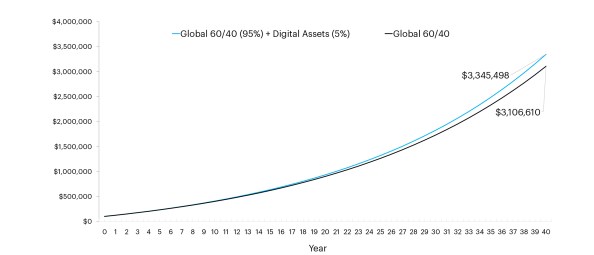
Of course, these days many people are running up large amounts of debt just to complete their education. The first 10 years of work are often spent paying that off and getting into a position to start saving for the future. So if you are 35 and don’t have a big chunk of money saved you are not alone, and it is by no means too late. That said, if you are 25 and have the ability to save even a small percentage of your income for retirement you should seriously consider doing so. Even if the amount seems trivial, the extra 10 years of saving will make a significant difference by the time you are 65. The charts in this article do a good job of illustrating the benefit of starting saving early.

Remember that saving for retirement is one of three basics you should be looking to cover as soon as possible, along with building an emergency cash reserve and arranging basic insurance. It’s probably better to focus on accomplishing these three things, rather than trying to hit a specific number by age 35.

Goal Setting Part 4 – Financial Independence

woman-591576_640

Today we have the fourth part of our series on setting financial goals, based on Tony Robbins “Wealth Mastery”, and this is a pretty major milestone: financial independence.

I have heard many definitions of financial independence, but I think this is the clearest: You have achieved financial independence when you have accumulated a critical mass of capital that, invested at an 8% rate of return, provides you with enough cash to live the exact same quality of life you have today, without ever having to work again for the rest of your life.

What we are talking about here is becoming independent from work. It doesn’t necessarily mean retiring, or stopping work. In fact, most people who achieve financial independence continue to work in some form or other, often on something that is meaningful to them.

Wealth mastery actually has two more stages after financial independence:

Financial freedom involves accumulating enough capital to provide you with sufficient income to live the lifestyle you desire, without having to work again. And absolute financial freedom is when you feel certain that you can do virtually anything you want, whenever you want, wherever you want, with whomever you want, as much as you want.

What you are probably realising as you read this is that the goal here is income without having to work. It’s not about having enough money to just buy everything you want. A new car purchase can be broken down into monthly payments, as can a new home. Kids school fees are paid on a quarterly / annual basis. It’s much easier to break your ideal lifestyle down into monthly payments, rather than a list of what you want and what it costs. The income to cover your lifestyle of choice could come from investments, property, royalties, a pension, or any combination of these things.

The key is to work out what is the monthly income you would require, and from there calculate the critical mass amount you need to accumulate to cover this. Once you get there, you need to know how to generate that 8% return without taking too much risk.

What is the total amount of capital you would need to be independent from work?

Goal Setting Part 3 – Financial Vitality

inspiration-1514296_640

Moving on to the third installment on setting financial goals, based on Tony Robbins “Wealth Mastery”, today we will look at Financial Vitality.

You have achieved financial vitality when you have accumulated a mass of capital that, invested at an 8% rate of return, provides you with enough cash to meet the six goals of financial security, plus the following three additional financial goals, without having to work again unless you want to.

  1. The ability to provide for your children’s education.
  2. Providing for basic entertainment needs.
  3. The purchase of new clothing, or one or two reasonable luxury items.

Obviously the big one here is children’s education, and it will require some research in order to understand the numbers on this goal. Here’s a little date that may help:

For school, Santa Fe Relocation Services website has a great overview of the cost of international school in Japan here. As a minimum we are looking at JPY 2,000,000 per year.

Higher Education costs will of course vary from country to country. There are some useful numbers in this article. Education costs are rising every year so you will need to keep updating your research but currently, including tuition, room and board, you could be spending somewhere between $20,000 and $40,000 per year.

What is the total amount of capital you would need to accumulate to achieve financial vitality?

Goal Setting Part 2 – Financial Security

cash-1169650_640

Continuing our series on setting financial goals, based on  Tony Robbins “Wealth Mastery”, today we will look at the second milestone, known as Financial Security. People have varying definitions of what it means to be financially secure, which is fine. However, if you are not sure how to define financial security, perhaps the following will help:

Financial security is not just a matter of job security or income. In order to be truly financially secure you need to accumulate a critical mass of capital that, invested at an 8% rate of return, provides you with enough cash to meet the following needs forever, without having to work again unless you choose to:

  1. Monthly mortgage payment on your home until it’s paid off (or otherwise your monthly rent)
  2. You and your family’s food needs each month
  3. All utilities
  4. Transportation needs
  5. Insurance
  6. Taxes

We are using an 8% return here based on a diversified, growth-oriented asset allocation. Feel free to change the annual return to fit your expectations.

Go ahead and calculate how much you need for each of the six categories above. If you don’t know the amount for each of these monthly expenses, then that is the first job. You can’t have a target for financial security without understanding these basic numbers.

Here’s a simple example:

  1. Mortgage: $1,200
  2. Food: $330
  3. Utilities: $360
  4. Transportation: $280
  5. Insurance: $320
  6. Taxes: $460

In this case the monthly total is $2,950, so annual is $35,400. That would require capital of $442,500 @ 8% return.

Now calculate how much capital you would need to be financially secure.


Goal Setting – Financial Protection

umbrella-2904775_640

We’ll spend the next few posts looking at various milestones in the financial planning process, and start to understand exactly what you need to have in place for each stage. I am going to borrow heavily from Tony Robbins “Wealth Mastery” here as he has done an incredible job of helping people get clarity on their financial goals.

Today we’ll start with Financial Protection. This is the basic minimum goal for everyone. The idea here is to be absolutely certain that you and your family are protected, no matter what life may throw at you. You want to financially bulletproof yourself and your family against sickness, unemployment, an economic downturn or whatever else may lie in wait.

You have adequate financial protection when:

  1. You have accumulated an emergency cash reserve large enough to cover your basic living expenses for a minimum of 3 months and up to 24 months, depending on your needs. If you lose your job tomorrow, you need to be able to cover these basic expenses for as long as it takes to find new employment. If you have a very secure job or highly marketable skills, you may be comfortable with less. If you are self employed, or have a fluctuating income, you may need a bit more cash to feel comfortable. Write down the actual amount of money you need for your emergency cash reserve.
  2. You have obtained income protection insurance to protect yourself and your family against long-term sickness or disability. The amount of insurance you need is directly related to the amount you already have saved. Income protection insurance is designed to pay you a portion of your current income if you are sick and unable to work for the long term. It will often cover you up to age 65 for a relatively small monthly cost. Write down how much income you would require per year if you you were disabled and unable to work ever again from tomorrow.
  3. You have at least obtained basic life insurance to provide for your family if you were to pass away. Even if the amount of cover is small, try to at least meet your family’s basic income needs. If your family needs a minimum of $25,000 per year to pay the bills, then look at $500,000 in cover. The $500,000 invested at a 5% return = $25,000 per year. Go for a simple term life policy and set the term so it expires when your youngest child will become financially independent. Write down the amount of life insurance required to cover the basics for your family if you were no longer around.

Loss of income due to job challenges or long term illness are the main causes of economic trouble for families. If your choice is to make the first contribution to a retirement plan, or pay the first premium on an income protection plan, the latter is going to be far more valuable if you have an accident or illness.

Cryptocurrency Trading Basics

bitcoin-3089728_640

Having written a couple of posts on Bitcoin and how to protect yourself when trading / investing in cryptocurrency, I thought I would share some basic information on the trading side. Please don’t expect any high level technicals, trading charts or buy / sell recommendations; I’m still learning this myself. I bought Bitcoin around May last year and have been holding it ever since. I have no intention to sell it in the near future.

However, the volatility in crypto makes trading hard to resist. I started trading in January this year on Quoinex, a Japanese exchange. Quoinex ticks all the boxes for security that I mentioned in my previous post. It also has its own cryptocurrency named QASH, along with other well-known tokens such as BTC, BCH, ETH and XRP.

So, here are some basics to get you started, based on my experience so far:

Select an exchange – are you going to trade in Japan or overseas? See my previous post on how to protect yourself when selecting an exchange.

Account opening – The initial application involves filling in your basic information online. For Japanese exchanges this may require some Japanese language ability. You will need to upload a proof of identity and in some cases a proof of your residential address. In Japan, the exchange verifies your address by sending a postcard by registered mail that you have to sign for. You should also set up two-factor authentication to protect your account. This involves downloading an authentication application such as Google Authenticator to your phone and pairing it with your account.

Deposit – If you are depositing FIAT currency you will first need to register your bank account details. Once these have been approved, you can then create a funding request. Then you follow the instructions to wire money to the exchange. If you are depositing Bitcoin or Ethereum you will create a funding a request and then follow the instructions to transfer BTC / ETH to your exchange account. If you are planning to send a large amount it is a good idea to do a smaller test transaction first and make sure it arrives safely.

Buying and selling – Once your account is open, verified and funds have been deposited, you are ready to trade. If you are new to this I would suggest starting small while you get used to the trading interface. The basic orders you will use to begin with are market orders and limit orders. A market order allows you to buy / sell at whatever price is available at the time. A limit order allows you to specify the price you want to buy / sell at and matches you with bids / offers at that price.

The first thing you should learn how to read is the Order Book. This shows you a real time list of bids / offers on the exchange for the particular token you are looking at. This gives you a picture of how much is being traded at the moment and at what price. You will see two prices here: the bid price is the price that traders are willing to buy at right now, and the offer price is the price traders are willing to sell at.

Be very careful using market orders. Cryptocurrency is extremely volatile and the price can move considerably in a matter of minutes. Just because “X Coin” is now trading at 100, it does not mean your order will get filled at that price, particularly if it’s a large order. You may get partially filled at 100, and then the rest of your order gets filled at all kinds of different prices. Some new traders have had nasty shocks, finding that they have just bought at a much higher price than they expected.

Limit orders are much safer. With a limit order you can specify that you want to buy at 100, and your order will get filled whenever other traders offer to sell at that price. Unlike stock accounts, where typically limit orders are “good for the day” unless you specify otherwise, crypto limit orders are good for as long as you want to keep them. This is particularly useful if you don’t have all day to watch the markets. You can select the price you want to buy or sell at and come back later to check if your order has been filled or not.

Margin trading – most exchanges offer the option of using leverage. Essentially you are borrowing money from the exchange to increase the size of your order, and taking on significantly more risk in the process. Given the volatility of crypto markets I would advise extreme caution with leverage. Personally I don’t use it at all.

Withdrawal – once you are done trading you are free to withdraw your money from the exchange. Depending on the exchange, it can be sent back to your bank account in FIAT currency, or you can transfer BTC / ETH back to your own wallet. Remember that coins left sitting on an exchange are at risk of hacking and theft. Also note, particularly for traders in Japan, that a withdrawal creates a taxable event. Make sure you are aware of this before you move money or tokens.

Tax – I will talk about Japan in particular here. As noted above, making a withdrawal (which includes transferring tokens to another wallet outside Japan) creates a taxable event. Crypto gains in Japan are treated as miscellaneous income and you will need to declare them and pay tax at your marginal rate. For high earners this can mean up to 50% tax on gains. Calculating the profit itself is no easy business. This post provides a useful guide in English. I am already aware of one company in Japan that will assist (for a fee) in calculating cryptocurrency gains. I’m sure we’ll see more companies like that spring up in the near future, along with applications linked to exchanges to make the calculation easier.

I hope this helps people with an interest in crypto trading to get started. As always, I would stress that cryptocurrency trading carries a high degree of risk and you should only trade amounts commensurate with your knowledge. Start small and be prepared to make mistakes you can afford.

Disclaimer: This should go without saying, but the information contained in this blog is not investment advice, or an incentive to invest, and should not be considered as such. This is for information only.


 

50 Cent and the Art of Being Wrong


IMG_2934

I’m sure you noticed that last week saw a sudden return to volatility in markets. As discussed in our 2018 Investment Outlook, this kind of correction was long overdue. The one thing we didn’t know for sure was when it would happen.

Which leads us to a major lesson in investing, taught this week by 50 Cent. (well not that 50 Cent…)

Nomura apologizes to investors burned in bet against “fear index”

The mysterious trader nicknamed ’50 Cent’ made $200 million last week as the market blew up

The articles above show two sides to the same trade. After a long period of almost no volatility in the stock market, Nomura managed to convince investors that the status-quo would continue. The chart above, plotting the inverse of the VIX volatility index, essentially shows what happened to those investors last week.

Meanwhile, the trader nicknamed “50 Cent” spent the last 12 months being expensively wrong on his bet on a (let’s face it, inevitable) return to volatility. Wrong that is, until he was right and made a profit of some $200 million.

The lesson here, of course, is that when things are good (stocks hitting all-time highs and volatility low), it’s easy to get caught up in the fervor and keep buying. It’s much harder to realise that things can’t go on this way forever, but not know exactly when they will come to an end. You will note that “50 Cent” did not make this bet a month ago. He started acquiring large amounts of call options over a year ago. He didn’t know when he would be right, he just knew he would be.

Now this is a financial planning blog not a trading blog, but the lesson is still valuable. Those Nomura clients aren’t professional traders, they are regular people. It’s likely that many of them did not realise how much risk they were taking. However, if stocks are at all time highs, you probably shouldn’t be betting the farm that they will keep going higher. If another asset class has underperformed for the last few years, that doesn’t mean you should write it off forever.

It takes a mixture of common sense and courage to go against the crowd, especially if it means you might be wrong for a while.

Disclaimer: This should go without saying, but the information contained in this blog is not investment advice, or an incentive to invest, and should not be considered as such. This is for information only.

Cryptocurrency Hacks – How to Protect Yourself When Trading And Investing

hacking-3112539_640

If you follow crypto markets, you are probably aware of this weekend’s massive theft of digital currency from a Japan-based exchange. In the early hours of Friday January 26th Coincheck Inc. was hacked and nearly $500 million in NEM digital tokens were stolen. Mercifully, Coincheck seem to have the means to reimburse their customers, albeit after a slight haircut, but once again security is a hot topic when it comes to crypto trading and investing.

So how can you protect yourself and still participate in the cryptocurrency phenomenon? Here are a few things to consider:

Are you trading or investing? – first off be clear on what your strategy is. Are you actively trading, or buying and holding?

Traders – If you are trading crypto then you will be using an exchange and, as we have seen, exchanges can be vulnerable to hacks. That is a risk you will have to take, but at least exercise caution. If you are in Japan, for example, make sure you are using an exchange that is registered with the Financial Services Agency. The site is in Japanese but you can find a list here. (I couldn’t find the same page on their English site) Note though that Coincheck had applied to register and was allowed to continue trading, and advertising on TV, during the approval process. FSA registration does not guarantee that your funds are safe, but I would not bother with exchanges that don’t make this list. If you are trading outside Japan Buy Bitcoin Worldwide is a useful resource for finding exchanges in your country, along with a list of pros and cons for each exchange.

You should be looking for exchanges that implement at least the following measures:

  • Cold wallet – the recent hack was from Coincheck’s hot wallet, which is connected to external networks
  • Whitelisting of all withdrawal addresses for crypto
  • Private server
  • Two-factor authentication
  • No API withdrawals

If you are done with trading, or taking a break for a while, you should be moving your coins off the exchange to a private wallet or storage device.

Investors – perhaps you just want to buy some Bitcoin or Ethereum and hold it for the long term? In this case you will likely buy the coins on an exchange, but you then need to move them into a private wallet. If you leave crypto sitting on the exchange you are at risk.

Online wallets are convenient for shopping with Bitcoin but they are also not a safe place to store your coins.

I stored Bitcoin with Xapo, whose vault service is currently free of charge. They store their private keys in multi-signature form in vaults in Asia, the United States and South America.

Hardcore crypto enthusiasts will tell you to keep your private keys completely offline. Probably the most popular hardware wallet is the Trezor device. With this device a pin code gives you access to your coins, and if you lose it you can regenerate your wallet using the 24 word recovery code.

If you don’t trust any storage solution that can be plugged into a computer, or are looking for a near indestructible back up for your hardware wallet then take a look at Cryptosteel.

Lastly, don’t get carried away with the promise of high returns. Only invest / trade amounts commensurate with your level of knowledge. If a large portion of your assets are in cryptocurrency you better be an expert!

Disclaimer: This should go without saying, but the information contained in this blog is not investment advice, or an incentive to invest, and should not be considered as such. This is for information only.

2018 Investment Outlook


compass-2779371_640

“Prediction is very difficult, especially if it’s about the future.” – Niels Bohr.

People interested in investing typically find themselves deluged with forecasts at this time of year, and a look back at investment professional’s predictions from this time last year will tell you just how difficult it is to be right. So, I’m going to be careful here! The purpose of this post is not to make bold predictions for the year, and it is certainly not to be considered investment advice. However it is interesting to take a look at current trends, along with results from last year, and consider how things might develop in 2018. So here we go…

2017 was supposed to be the year of the crash. This time last year every forecaster worth his salt was telling us that winter was coming. The Trump rally couldn’t last, central banks had to taper their stimulus programs, and the party was going to end. It was going to get ugly…

Well… S&P 500 +21.8%…. MSCI Emerging Markets +31%…. MSCI Europe +14.5%…. UK FTSE 100 +11.9%…. Japan Topix 22.2%…. even Japan hit 26 year highs!

Oil came back strongly at year end, gold was up double digits, even pound sterling recovered somewhat. Not to mention the surge in Cryptocurrency! 2017 was not a good year to be holed up in your bunker, hoarding cash and waiting for the sky to fall. What was perhaps most surprising was the lack of volatility through the year – the US stock market hasn’t seen a major pullback since the election, and volatility metrics have hit record lows.

So the party goes on, right?

Well, we will see. The fact remains that we are living in an unreal world economically. Negative interest rates are not supposed to be a thing, but they are currently reality in several countries. Moreover, negative real interest rates (when taking inflation into account) have been the norm in the developed world since October 2016. On January 9th the Bank of Japan announced that it was reducing the rate of bond purchases as part of its quantitive easing program. This reduction was relatively small, and well within the BOJ’s stated goals. It was really a non-event. However, as soon as it was announced, the Yen spiked up and markets shuddered. So imagine where we’ll be if something really happens…

The US Federal Reserve has gradually increased interest rates, and so far managed to do so without slowing the stock market’s bull run. Japan, however, is another matter. The run up in the Nikkei at the end of 2017 / early 2018 owes a lot to loose monetary policy, not to mention massive ETF purchases by the BOJ. The Abe administration doesn’t want the run to end, but it can’t go on forever.

Sorry if this is too much detail, but what I’m really saying is the crash / correction is still coming. It’s just a matter of time.

Given what happened last year, this doesn’t necessarily mean you should liquidate everything and crawl into your bunker right now. We have no idea how much longer the party will run before the inevitable end. The important thing is to know the end is coming and to plan accordingly. Here are some ways we can all do that:

Diversify – if you are 100% in stocks today, you are perhaps overexposed. It could be a good time to move into a more diversified asset allocation.

Rebalance – if you are already in a diversified allocation but have not made any changes recently, you may find that the stock run-up has left you overweight equities. You may have started with 40% in stocks but now that weighting is over 50%. Rebalancing back to your original asset allocation is a disciplined way to buy low and sell high.

Consider getting some gold – if you haven’t already, you may want to make an allocation to gold, which tends to perform well when panic sets in. Also commodity prices seem to be turning around in general, which is good news for metals.

Expect a strong Yen – we’ve seen time and again that the Yen is seen as a safe haven in times of trouble. If you live in Japan and send money home, there may be a big opportunity coming your way.

Stick to your plan – if you are relatively young and investing for the long term, you don’t need to worry too much about market downturns. Remember why you started in the first place and don’t panic.

Keep some powder dry – a crash is a fabulous opportunity to buy cheap. Have some cash at the ready and be greedy when others are fearful.

Consider inverse ETFs – if you are particularly aggressive and have a high level of conviction that the market will go down, then inverse ETFs are a simple way to short the market. Inverse ETFs use derivatives to profit from a decline in an underlying benchmark. Be aware that many of these ETFs are leveraged, and not only magnify returns, but can double or triple your losses if you are wrong.

Finally, a word on Cryptocurrency: After the incredible run of Bitcoin and numerous other coins last year, more and more people are getting into crypto trading and investing. The digitalisation of money is just beginning, and there are fantastic opportunities out there, but do your own research. Buying Bitcoin with no knowledge of how it works, just because it’s going up in value, is pure folly. I’m not going to tell you Bitcoin is or isn’t in a bubble, or that Ripple or Litecoin are going to take over. If you are interested in the concept of cryptocurrency then study it, invest a little to get some skin in the game, and study some more. Only invest according to your level of knowledge and don’t get caught up in herd mentality.

With that I wish you all the best in 2018. Let’s hope winter doesn’t come too soon.

Disclaimer: This should go without saying, but the information contained in this blog is not investment advice, or an incentive to invest, and should not be considered as such. This is for information only.


Planning for the New Year

design-2711676_640

First of all, Happy New Year! If you have been following this blog in 2017, thank you very much for reading. Starting from mid-May last year I managed a total of 55 posts. I hope some of them were useful. Now to try and keep up that pace in 2018…

A New Year, of course, means New Year’s resolutions. Some people are very good at making and keeping resolutions, and some people let their gym membership lapse in February. Often, when you look back on resolutions that didn’t work out, you will find that it was the initial goal that wasn’t clear enough, not just a lack of discipline or willpower. So here are some simple tips for setting financial goals for the year:

Be realistic – we’d all like a million dollars in the bank, but if the number is unreachable it will be easy to give up.

Be clear – “Save more money” is not a clear goal. “Pay my credit card down to zero and have an emergency cash reserve of $10,000 by June 30th” is much better. Write it in big letters and stick it to the fridge if you have to!

Start with something you can do immediately – open excel and start a budget spreadsheet, download an app, open an account, fund an account. Find something you can take action on right now to get you started.

Stick with one or two major goals for the year and track them – if your list is too long it can become overwhelming. Start with one or two major goals, make them as realistic and specific as possible, take action immediately, and review every month.

If you are running short on ideas, here are some examples:

Track your money – if you are not clear on your income and expenditure then this is a priority. It doesn’t matter if you use a spreadsheet, an app or a blank sheet of paper. Spend the first two months of the year tracking all incoming and outgoing money so you know exactly where you stand.

Prioritise debt – make a list of your liabilities and prioritise them by interest rate. Pay the most expensive ones down first.

Cover the basics – emergency cash reserve, basic insurance cover, some kind of pension. Take care of these three things before moving on to loftier goals. Automate as much as you can.

Set a savings goal – how much are you going to save this year? What accounts are you going to max out? Start by maxing out any tax-advantaged accounts like an IRA or NISA.

Identify bad habits – are there things you need to stop doing? Whether it’s online shopping binges or overpriced lunches, see if there’s any financial fat you can cut out.

Start a side project – is there something you love that you could turn into a side business and increase your income? You never know, one day you might be able to quit the day job!

Invest in knowledge – find a book you want to read, sign up for a course, follow a blog! Educating yourself is a low-cost, high-return way to improve your financial situation. Share what you find with like-minded friends.

I hope this gives you some actionable ideas. Thank you again for reading and please feel free to comment, share and get in touch.

Wishing you all the best for a successful 2018!