
Property Investing Part Three – Money in, Money Out, Asset for Free, Income for Life

mortgage-295211_640.png

Welcome back to part three of our series on property investing with Graeme. In this installment he shows us how to use mortgages to our advantage:

Above is the number one mantra of a professional property investor, and if you want to build a successful portfolio it really helps to know how you can get a property for free and income for life.

Property is a major route to life-changing wealth and the main reason is because you can use other people’s money to make money. Even if you use your own money, an important point is how you buy a property and get your money back whilst making a rental profit each month. In many countries, (UK, USA, Canada, Australia, New Zealand etc.) not only can you pull your money out of a property by remortgaging and make a monthly rental income, you can also increase the property’s equity over time.

Money Out with a Mortgage

The principle of money in money out works because of mortgages. Mortgages are available in all countries, however the calculation to find money in money out deals may vary slightly from one country to another. For example, in the UK we focus on getting our money spent on a property back in 6 months because this is the legal amount of time it takes to get a remortgage after purchase. In other countries this time frame may be slightly different, however the basic principle of using mortgages (the bank’s money) to return your personally invested money is the same around the world.

To use the U.K. example, whenever a serious investor analyses a property he or she asks the question:

What is this property worth, refurbished to a good standard in 6 months time?

We want to refurbish properties to a good standard because the mortgage company will increase the loan amount and six months after purchase we can get all our invested money out of the property. Furthermore we want to refurbish a property to a good standard because we want to be good landlords – property is a people business and a good property attracts good tenants who stay longer and pay full rent on time. Initially it costs more to refurbish a property to a good standard but in the long run this is the smart business thing to do.

So how do we know what is a money in money out deal? This is best explained with an example:

Money In Money Out Example

Lets say we find a property on the market and comparables suggest it is worth 100K in good condition. To keep things simple and based on standard UK mortgage lending we will assume a loan of 75% to the value of the property.

If we want to get all our money back we do a simple calculation:

100K x 75% = 75K (loan amount)

– refurbs e.g. 5K

– other costs 2K (legal fees, survey)

= 68K

So we know our maximum offer to the seller is 68 K and we can invest a total of 75K if we want to get all our money back on the remortgage.

With this example let’s assume we have the 75K in savings and our offer of 68K is accepted. We buy the property for 68K, pay the survey and legal fees and refurbish the property with 5K. Then 6 months later, when the property is already rented, we take a remortgage and the mortgage company’s surveyor looks for comparables in the area and finds the fair market value is 100K, and because most UK mortgage companies give 75% of a property’s value, they give us 75K and hey presto we now have the 75K spent back in our bank account.

Comparing Apples with Apples

“How do we find good comparables?” you may ask. “How do we know the true value of a property?”

Well, we have to think like a surveyor because surveyors are the people who actually put the values on properties.

A surveyor looks at similar properties that have sold in the same area recently. In the U.K. we use websites such as nethouseprices.com, mouseprice.com or ourproperty.co.uk as these websites use Land Registry data. (the organization which stores official property title deeds)

Specifically we want to know if anything has sold within the last 6 months that is very similar to our property, in particular comparables should have the same number of bedrooms. Ideally these comparables are in the same street. If not the same street then within ¼ of a mile, and if not then expand your search out further which is easy to do when you input your information into a property website’s search engine.

Look for properties in a high price range and in good condition.

If the comparables are a bit tired or fully distressed call 3 estate agents and ask for an honest appraisal and take the average of the 3 predictions. Another method is to call a local surveyor and ask “What will this property value at in the current market, once refurbished?”

To be extra safe you can use all the techniques together and take the average.

The Power of Persistence

Now, one mistake amateur investors make is believing the seller’s asking price. Our research tells us the value of our example property is 100k after refurbishment, however the asking price might be 110k or 130K or 90K or whatever the seller thinks it is worth. The only thing you need to remember is: The asking price is irrelevant!

Of course you may say, “This is all very interesting but no seller will accept such a low offer” and you would be right that it is unusual. However it is possible, and successful investors actively search for such below market value (BMV) deals.

Property investing courses say that 1 in 40 such BMV offers are accepted. The truth is it depends on the market. It might be 1 in 60 BMV offers in a buoyant market, but when sellers are desperate you might only have to make 20 such offers. The point is there are motivated sellers in every market and professional investors have a variety of ways of finding them.

As you can see you will have to experience a lot of rejections in order to get a real BMV deal. You will have to kiss a lot of frogs to find a prince. Amateurs hate rejection but it is part of the game, and if you don’t embrace rejection it may crush you to the point of giving up. However, just because someone says “No” it does not mean they won’t say “Yes” at a later date. If a seller rejects your offer simply record the offer in your property database and move onto the next property. Then 3 weeks later re-offer. You will probably offer 3 or 4 times on the same property and that is fine. Your database is a simple chart that shows property address, offer, date of offer, refurb estimate and rent per month. Your database is a simple, powerful tool that will grow and, given time, help you find good BMV deals. Remember to put all your offers into the database because as my mentor likes to say, “The money is in the database”.

The number one mantra of a professional property investor is:

Money in, money out, asset for free, income for life.

In the next article we will examine the final piece of the mantra i.e. how to get rental income for life, even while paying a mortgage on the property. For now however, let’s summarize this piece which has focused on getting your money out of a property and gaining an asset for free.

Summary

  1. Research and make many BMV offers
  2. Buy BMV
  3. Refurbish
  4. Roll onto long-term finance with a bank.

The Offshore Regular Savings Plan

So here is a first look at a well known investment product. I’m going to start here as these plans have been around for a long time, and have been known to generate lively discussion. They are in the toolbox of almost every expat financial adviser / salesperson worldwide and millions of dollars, pounds and euros flow into them every year. They are also somewhat controversial products as they have sometimes been abused by unscrupulous salespeople, selling them to (in some cases lazy) customers, who don’t read the terms and conditions.

Regular savings plans are offered by a number of life companies, with the most common being RL 360, (Royal London), Friends Provident International, Old Mutual International, Generali Worldwide and Zurich International Life.

Structure

The typical structure for this product is an offshore unit linked insurance policy. Offshore means it is domiciled in a tax free jurisdiction such as the Isle of Man or Guernsey. Unit linked means that contributions are used to buy units in investment funds. A unit linked plan acts like a savings vehicle, but it also has the benefits of an insurance contract. The insurance part comes from the 101% (of policy value) death benefit attached to the policy. Although many of these contracts are now issued on a capital redemption basis, whereby there are no lives assured and the contract can be passed on to future generations. Capital redemption products have a slightly confusing 99 year maximum term, which facilitates the passing on of the investment to future generations – you do not have to keep it in force for 99 years though!

Typically these contracts are set up with a fixed savings term, usually aligned with the investors savings goal, such as their retirement age. If the policy is surrendered before this savings term is reached, early surrender penalties apply.

Security

The Isle of Man and Guernsey regulators each operate a policyholder protection scheme. In Guernsey insurers are required to hold assets representing at least 90% of liabilities in trust with an independent trustee. The Isle of Man Policyholder Protection Scheme levies all insurance companies operating on the island to pay into a Policyholders Compensation Fund, which will pay out a sum equal to 90% of the liability if an insurer is unable to meet it’s liabilities.

Note: What we are talking about here is protection if the insurance company itself “goes under”. In practice this is highly unlikely. If one of these companies started to get into trouble, it would most likely be swiftly bought out by one of it’s competitors and policyholders would be unaffected. Also, policyholder protection does not protect from losses in the underlying funds. If the fund goes down in value, so does your policy. If the fund itself fails, then your capital is at risk.

Uses

Regular savings plans are typically used for saving for retirement or for children’s future education costs. Moreover they are popular with people who feel they need to get started saving and perhaps need some discipline to do so. Although it is getting much easier these days, it used to be quite difficult for expats to find an investment vehicle where you could invest a small amount of money each month and still be able to diversify into a range of asset classes. High investment minimums or high transfer costs would prevent the smaller saver from getting started. The ability to make automatic monthly collections from the customer’s credit card made all this easy, the money would simply be deducted every month and the investor didn’t have to go to the bank and send it. When you consider that in Japan, for example, making a $300 overseas bank transfer can cost up to $40, not to mention the time spent in the bank actually getting it done, credit card collection made these products easily accessible.

Fees and charges

The fees on these policies are relatively high. And with the advent of low cost brokerage accounts and ETFs it is getting harder to justify the cost of one of these vehicles. A typical fee structure looks something like this:

Initial unit charge: 1.5% per quarter, charged on contributions made in the first 18 months for the life of the policy.

Administration charge: 1.5% per year applied across both initial and accumulation units

Policy fee: A fixed fee, usually around $8 per month

These are the basic fees applied to the policy itself. The underlying investment funds also have their own management fee, which is typically 1.5% per year. There are generally no initial fees for accessing the funds.

These products are not sold directly by the life companies. They are distributed via financial advisers. The initial unit charges are largely used to pay commission to the adviser.

Usually these policies offer some kind of extra allocation as an incentive to get started, or a loyalty bonus to incentivise saving for the long term.

Investment Options

The investment choice for these products is menu-driven. This means there is a fixed range of funds to choose from. These are mostly managed funds (mutual funds) and cover the full range of asset classes. You cannot access ETFs in these plans at present, although there are an increasing number of index tracker funds available. Switching between funds is free of charge.

Currency

Typically these plans are available in GBP, Euro and USD. Some accept contributions in JPY. In most cases, once you have selected the contribution currency, it cannot be changed. This means you need to think carefully about your base currency before getting started. Funds are available in multiple currencies, which is one way you can mitigate currency risk if need be.

Tax

As these policies are domiciled in “tax havens”, they are not subject to income or capital gains tax in those jurisdictions. This means they will grow without any tax being deducted at source. It does not necessarily mean that they are tax free for policyholders, as that will depend on their nationality, where they reside, and their own personal tax situation. Offshore life products were originally designed for British expats, and carry several potential benefits for them, even if they return to the UK with the policy. These include a 5% withdrawal allowance, time apportionment relief, top slicing relief, and clustering and segmentation. (I’m not going to get into the details here as this post will already be long enough as it is)

One of the benefits of these international schemes is that they are “portable”. It’s easy to move from one country to another without affecting the investment itself, although it’s important to note that a policyholder’s tax situation may change when they move.

Do’s and Don’ts

Despite the high fees, these products can still be an effective long term savings vehicle if used properly. The most important thing here is to understand how the contract works and avoid the pitfalls.

There are two types of units associated with these policies: initial units and accumulation units.

Initial units are units purchased during the Initial Allocation Period (IAP), which is typically 18 months, but can vary. These units are charged at a higher rate and must stay invested until the end of the selected savings term. If these units are withdrawn early, an early surrender penalty will apply. That penalty starts off large and gets smaller the closer you get to the maturity date.

Accumulation units are those purchased after the IAP. They are charged at a lower rate and can be withdrawn without penalty if necessary.

Once you have completed the initial unit allocation period, you have the option to reduce contributions, or take a break from contributions for a while.

DON’T mistake one of these products for an 18 month savings plan – if someone explains it to you as such, run a mile.

DON’T start with a higher premium level than you plan to contribute for the whole of your chosen term. One of the worst ways to use a plan like this is to start off contributing say $4,000 per month, and then reduce it to $300 per month after the IAP. You just end up paying high initial fees on the original amount in order to get a $300 per month savings plan.

DO start with an initial contribution amount that you are comfortable making for the whole investment term. This is the most efficient way to use these plans. The flexibility to take a break from paying premiums is there but it’s far better not to use it. Increasing contributions generates a new IAP on the increased amount and new initial charges, but you are not penalised for it. Reducing / stopping premiums effectively comes at a price.

DO read the product literature, especially the parts about fees and charges, the IAP, and maturity dates. Take responsibility for understanding the investment before you get started.

That said, if you are considering investing in one of these schemes, you are likely talking to a financial adviser. This is a long term investment and the adviser is well paid for it, so make sure you are talking to someone you think you can work with for the long term. How long have they been around already? Are they likely to stick around? Are they qualified? Do they have a plan for how to manage one of these policies through the three stages of capital accumulation, diversification, and pre-retirement? (See here)

NOTE: If you have one of these plans already, and you didn’t really understand it when you started, your “adviser” is no longer around, and you are not happy, consider your options carefully. I have seen blanket online advice that you should quit immediately and take the hit, or withdraw as much as you can to reinvest in something cheaper. These things should be considered on a case by case basis, depending on what your maturity date is, how much you have contributed so far, and how much you are able to contribute going forward. You should also be considering what funds you hold, how they’ve performed, and whether now is a good time to be selling them or not. Find an adviser you can trust before making any hasty decisions.

Summary

It’s very easy to write these plans off and say “you should just invest in a portfolio of ETFs and only pay 0.5% per year in fees”. While I certainly don’t disagree with that strategy, some people simply do not find it that easy to implement by themselves. If used for reasonable investment amounts as a long term savings vehicle these products can be simple and effective. I have seen them make decent returns over the long run when used properly. However, they are certainly not for everybody and should only be implemented after careful consideration.

Disclaimer: This should go without saying, but the information contained in this blog is not investment advice, or an incentive to invest, and should not be considered as such. This is for information only.

Investment vehicles / products and cleaning toilets for wifi

bank-1238320_640

Over the coming weeks we are going to take a look at the pros and cons of various investment vehicles. Before doing so, let’s just clarify what we mean by this. When talking about an investment vehicle or an investment product, what we’re really talking about is a box – a box for holding assets. These assets could be cash, bonds, stocks, funds, ETF’s etc. The box may be structured as a directly owned account, a nominee account, or even an insurance product. The main point here is to separate the box from the actual investment strategy – i.e. what assets you hold inside the box and how you manage them over time.

I often hear people say “I’ve got a …….. product / account and it’s not performing well.” This requires some clarification as it’s unclear if it’s the account itself that is not performing well, or the investments inside it. You can have a really great vehicle that is secure, tax efficient, and reasonably costed, but if your asset allocation is poor and the investments are not performing you will not be happy with the result. Equally, you could have picked great investments that have performed very well and suffer because the vehicle you are using is inefficient, not secure, or the fees are excessive. For some of you this will be obvious, but many people fail to distinguish between the investment vehicle and the investments themselves.

Another thing people often fail to do is read the instructions on the box! It’s amazing how many people own investment products without having any idea of how they work, what restrictions there are, what fees they are paying or how they will be taxed. In many cases they have bought the product through an adviser or salesperson, based on their presentation, and not actually read the terms and conditions themselves. While we are on the subject of reading the small print, I recently came across this rather amusing article about a public wifi company’s campaign / publicity stunt, whereby thousands of people agreed to clean toilets for wifi because they didn’t read the terms.

Now I’m as guilty as anyone of not reading the terms I agree to in order to get access to public wifi, or download songs from iTunes for that matter, but when it comes to investing money we should all take responsibility for understanding what we are getting into. While I truly feel for people who get duped, or simply get unlucky, investors need to do their own due diligence before investing their money.

20 years in Japan!

fireworks-180553_640.jpg

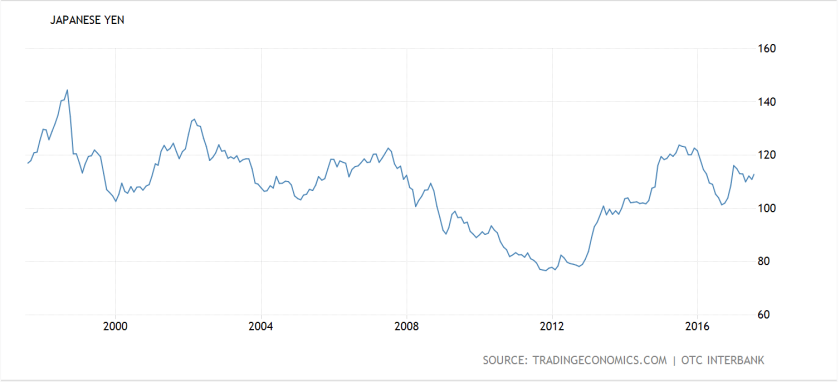
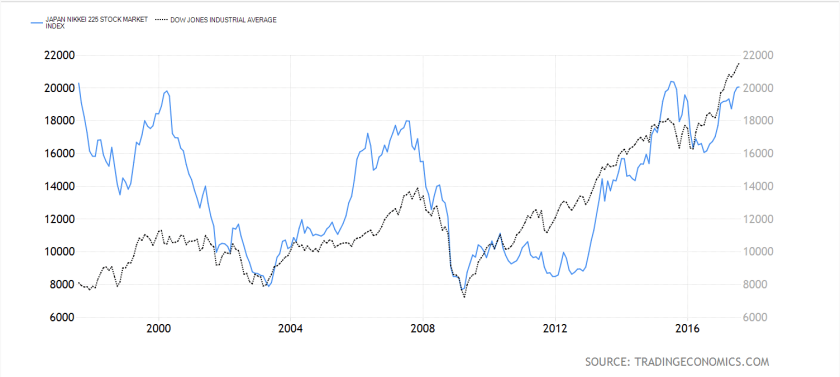
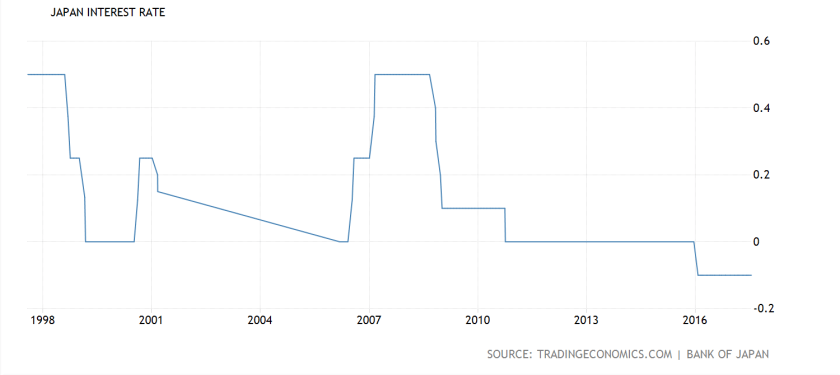
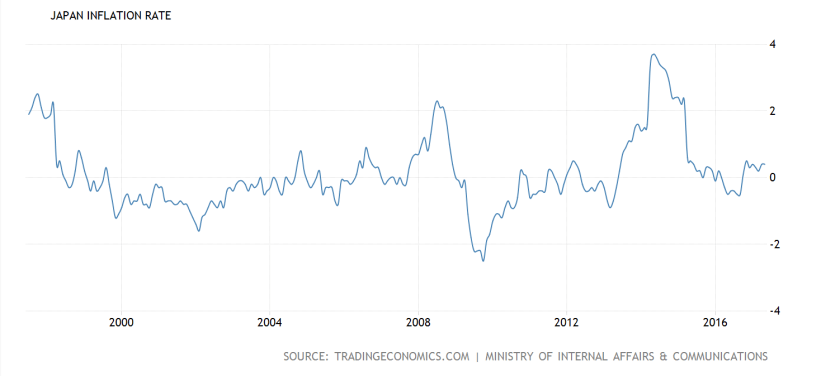
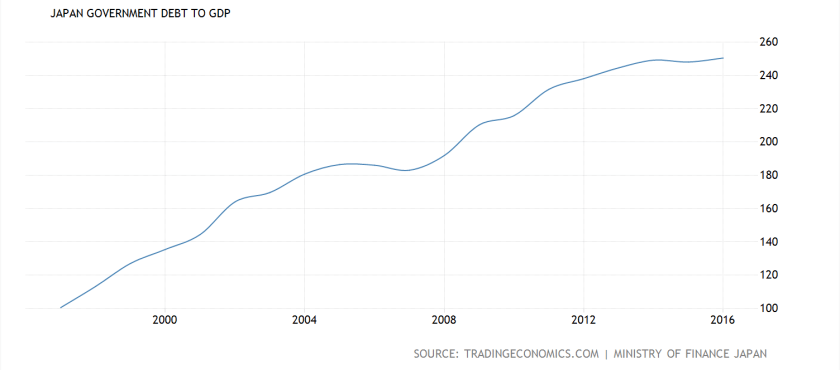
July 21st 2017 marked exactly 20 years since I moved to Japan. I’ve made plenty of memories during those years that are fun to look back on, and it made me wonder what it’s been like for investors in Japan over that time frame. So here is some data from 21st July 1997 to 21st July 2017:

USD/JPY

USD:JPY 20 yrs

There have been some large currency fluctuations over the last 20 years, and it’s interesting to note that at around 111 today we are probably near the average for the period. I remember going to the UK many years ago and £1 was around 240 yen! If the Brexit vote has done nothing else, it has at least made my trips back home cheaper!

Nikkei 225

Nikkei 225 20 yrs

Interesting to note that if you had bought the Nikkei exactly 20 years ago and held it, you are pretty much back where you started! This is excluding dividends, which would have outperformed cash at least. (average dividend yield is 1.68%) Regular investors would have fared better due to the averaging effect of buying regularly and accumulating more during the bad years. (see article on Regular vs. Lump Sum investing) Investors who loaded up during the lows of 2003 and 2009 will have done very well for themselves. Remember, if you see the Nikkei at those levels again you should be buying as much as you can, not panicking and running for the hills.

Interest rate

Japan interest rate 20 yrs

Anyone who has lived in Japan in the last 20 years will know that cash in the bank does not earn anything by the time you have deducted ATM and transfer fees. For homeowners it does make Japan a borrowers paradise though. Buying our own home was a great move for my wife and I, with monthly mortgage payments lower than we were previously paying in rent.

10 year JGB Yield

JGB 20 yrs

Not much to see here I’m afraid, and the next chart explains why:

Inflation

Japan inflation 20 yrs

Japan is still battling deflation, and Bank of Japan governor Haruhiko Kuroda has just pushed back the expected timing for hitting the 2% inflation target for the sixth time, with the new target being fiscal 2019. All this despite a mammoth stimulus effort of debt purchasing and an ultra-easy monetary policy. So far this effort has failed to budge the stubborn inflation rate, although it has certainly impacted the next two charts:

Bank of Japan balance sheet

BOJ Bal Sheet 20 yrs

Japan debt to GDP

Debt to GDP 20 yrs

With the US Federal Reserve already raising interest rates and the European Central Bank possibly looking to tighten from September, all eyes are now turning to Japan, which certainly has the most daunting task ahead when it comes to how to exit this ultra-easy monetary policy. It’s probably safe to say that this is unlikely to begin for some years yet, but it should certainly make the next 20 years an interesting time to be in Japan.

(Charts from Trading Economics – a great source of data if you’re interested in this kind of thing)

Golf in Japan

TBags

It’s here! The first golf post! Ok if you are not into golf then please feel free to tune out right now. And yes, I’m aware that this post has absolutely nothing to do with personal finance, but if that’s all we talk about then it’s going to get boring.

You can’t just save all of your money to secure your financial future after all. You have to spend some of it on what you enjoy in the here and now, which for me tends to be golf. The aim of this post is to provide expats in Japan with links to useful information to feed their golf addiction. I won’t try to fit it all into one post, so expect more on this at a later date. I apologise that it is very Kanto focussed, but that’s what I know. I always welcome an exchange of information with people in other parts of Japan.

Firstly, if you are new to Japan, I have to tell you that you are living in a paradise full of wonderful golf courses, but things are a little different from back home. Basically golf in Japan takes all day. If you are planning to pop out for a round early in the morning and be back in the office by lunchtime, you are likely to be disappointed. Although even that can be done if you know where to look! Mostly though you are going to need to plan for the day: up early, travel to the course, bit of practice, tee off, finish the front nine and take a break for lunch (I kid you not), back nine, hot bath, maybe a drink or two, and back home for dinner. It’s simple, you can fight this routine, or you can embrace it.

Many people have the image that golf in Japan is prohibitively expensive. While it certainly is on the pricy side compared to what we may be used to, we are well out of the bubble era where golf memberships were changing hands for tens of millions of yen.

My best advice it this: If at all possible, take a day off and play on a weekday. It’s cheaper, less crowded, you have more control over tee times, and of course the knowledge that everyone else is in the office while you are on the golf course! Typically you can expect to pay between 8,000 and 12,000 yen on a weekday including lunch, while weekend prices average somewhere between 15,000 and 20,000 yen.

If you are looking for people to play with, here are a couple of expat friendly groups you can consider joining:

Tokyo Beer and Golf Society – I think the name explains this one well enough. Always fun, well organised days out, and always a beer within easy reach. (the photo at the top of this post is me in one of their snazzy uniforms)

Tokyo Golfers – another relaxed, friendly group that plays often on Fridays and weekends.

For researching places to play, here are some useful sites:

Air Golf – lot’s of useful info here, including that elusive early bird round that gets you back to the office by lunchtime!

Golf in Japan – great for course reviews.

If you can read Japanese, then Rakuten Gora is essential for booking your round – lot’s of deals and promotions going on, and they also have a single player booking system (一人予約), whereby people looking for playing partners can meet up and organise a round.

Hopefully that will help to get you started. As always feel free to ask questions and look out for the next random golf post.


Inflation – The Evil Twin


Inflation erosion

We touched on the subject of inflation before in a previous post on benchmarking, but I would like to return to it briefly just to stress how important it is in your planning.

In the short term, inflation can seem harmless enough. If you leave $100 under your mattress and the rate of inflation is 3%, then next year your $100 will buy 3% less goods and services. In other words, in order to buy the same amount of goods and services you now need $103. When you extend this to 10 years you may think that you now need $130, but the effects of compounding mean that you actually need $134.39. Yes, as wonderful as compound interest is when working in your favor, compound inflation, it’s evil twin, is working against you over time.

So how can inflation affect your long term financial planning? Well first of all it will affect the targets you set. Let’s take an example of someone who wants to have an income of $50,000 per year in retirement in 25 years time:

If you can find a miracle low risk product that generates a 10% annual return, then you need $500,000 in capital at retirement. Then you can live off the interest without spending your capital and it doesn’t matter how long you live.

If we are more realistic and think in terms of a 5% return, then you need $1,000,000 in order to generate $50,000 per year.

What if you can only get 2.5% in retirement? Well then you need $2,000,000.

The problem is that all of these numbers are in today’s money. The table above tells us that over 25 years at 3% inflation, our spending power will more than halve. (it actually goes to 46.70% but let’s keep the numbers simple) That means that with a 5% return we actually need $2,000,000. And with a 2.5% return we need $4,000,000.

This is why it’s important to start saving and investing early. If we are not taking advantage of compound interest on our savings, our nest egg will be getting eaten away by its evil twin inflation!

Property Investing Part Two – Know Your Area


IMG_2520

Following our interview on property investing with Graeme, here is a second post from him with some practical advice on how you can actually get started and research your investing area:

In the previous post we discussed SAP (Strategy, Area, Property) and how a serious investor starts by identifying a clear strategy. We will return to the topic of strategy, however you’re probably saying “OK, strategy is important, but for now just give me some actionable advice to help me get into my investing area and find good rental properties and good agents to manage my houses.”

Know your Area! – The Green Pen/Red Pen Game

To make money from property you need to know your area because if you buy in the right area, most likely good tenants will move in, pay the rent on time, take care of your house and stay a long time. Needless to say, buying in the wrong street is more likely to result in voids, bad tenants and arrears. So how can you learn about your area quickly?

The average investor goes to the estate agent and asks them for info on the local area. The problem is that the estate agent will sell you almost anything, regardless of whether the area is going up, down or stagnating. Estate agents just want to sell and only focus on a property’s good points so that they make money. Instead, first go to a lettings agent and bring a photo-copied map of the area, a green pen, and a red pen. Get the lettings agent to highlight in green all the streets on the map where property can be easily let, i.e. the desirable streets.

The exact words to say to your lettings agent are:

“If I were to bring you a house in a decent street, that you could rent today, where would it be”?

Notice the language we are using. The phrases make it sound as if you are helping them. Agents get time wasters everyday who ask random questions but take no action, so you want to separate yourself and make it clear from the start that you are here to do business.

Also ask the lettings agent specifically what type of house is in demand? (2 bedrooms, 3 bedrooms, apartments, properties with gardens etc) and why?

After they have shown you the good streets then ask them to highlight any dodgy streets with the red pen so you know the places that are best to avoid. Even if there are no rough streets in your area, it is still worthwhile getting to know which are the most desirable and least desirable streets and why.

I suggest doing the green pen/red pen game with 2 or 3 lettings agents to cross check you are getting the right info. You are also interviewing the lettings agent to see how much they know and whether you want to work with them in the future. In short you are quickly gathering accurate information about your area while doing a job interview.

So, now you should know which properties are renting fastest, in which streets and why.

Next, go to your local estate agents, show them the green streets and ask “What properties do you have for sale in these streets?” Once you have the estate agent’s list of good properties, take that list back to the lettings agent and say “Is this the kind of property you mean?”

How much rent will I get for it?

What kind of tenant (unemployed, student, family, young professional, retired) will want this property?

Is there anything I need to do to the property to get the maximum rent?

What are your fees as a lettings agent?

By doing this you are double checking your information and gleaning extra nuggets of wisdom about your investment area.

There are 2 Ps in the word property

In the previous post we talked about using the bank’s money to buy property and this is called OPM (other people’s money). In this article we are using other people’s knowledge (OPK), and this expert knowledge can be gleaned in a single day, preferably face to face but, if necessary, by phone.

OPM and OPK when combined are very powerful tools for building a successful property portfolio. From OPM and OPK comes one of the most important property investor mantras and it is this:

“There are 2 Ps in the word property. The first P is for property and the second P is for people.”

The importance of having the right people on your team cannot be underestimated to your net worth. Property is a people business. It’s all about the people we interact and transact with. Build good relationships with the right people, understand how they operate and know how to talk with them.

If you want to have a good relationship with your agent, you need to understand their system. For example, when you go into the estate agent, ask specifically to speak with the agent who deals with investors. Usually the young, inexperienced, agent is put front of shop. You want to navigate around them and talk with the experienced agent who knows the area and the business inside out. They may well be at the back of the room or have their own office off the main shop floor. It is this person you want to do business with and make your offers to.

This post has provided advice on how to build your area knowledge and how to work with agents. You might not be ready to put in offers but for now grab your pens and maps and get out there asking the right questions!!

In the next post we will examine the goal of any serious investor. How can you buy property without using your own money and how do you calculate what the right offer is?

The Lifelong Expat

japan-1841199_640

So you’re a lifer? Congratulations! For some people expat life is so good, they never intend to go home. Also of course, many people make their lives in their country of choice: they have a home, family, kids in school, perhaps a business, things that they never plan to leave behind to “return home”.

So, sticking with Japan as our example, how should you adjust your planning if you are staying here for life? Many of the basics do not change, but everything will have more of a Japan focus. We will look at each of these in more detail later but here is a summary of things to consider for now:

  • Protection – this is of course the first place to start. See the protection review here for the basics. This probably means taking care of some of your insurance needs with a Japanese insurance policy, which of course means policy documents and explanations in Japanese. It’s worth looking around for a local insurance agent you can communicate well with, and exploring hospitalisation insurance, income protection, and life insurance if you need it. You will find that Japanese policies come with all kinds of add ons, fixed rate guarantees, and other bells and whistles. Start by looking for the simplest policies that cover your particular requirements, and beware of over-paying for things you don’t need.
  • Buying a home – owning versus renting becomes a bit of a no-brainer if you are going to be in Japan forever. You will likely find that you end up with more space for a lower monthly cost if you own your own home. Ultra low mortgage rates are, of course, an attractive factor. Whether you buy a house or an apartment is down to your own preference, but we will look at the pros and cons of each later.
  • Retirement planning – if you work in Japan you will already be paying into the Japan national pension. Once a year it is worth reviewing how this is going and what your pension is likely to be. If you are paying into the national pension scheme, you are also eligible to start a Japanese 401k, which is a self managed pension. This offers significant tax savings over time and is worth considering.
  • Savings – another tax efficient way to save is NISA, which is based on the UK ISA. NISA is relatively new and, although it does have its drawbacks, dividends and capital gains are tax free. Once you have exhausted ways to save that carry a tax benefit, you should look at opening a local brokerage account. This is a great way to invest in stocks and low cost ETFs.
  • Investment property – from one room apartments to whole buildings, there are excellent opportunities for property investment in Japan.
  • Lastly, consider if you have other base currencies? Keep in mind that if you are planning to send your kids to university overseas, for example, you should save for that need in the currency you will be spending in. Also, for general investment purposes, remember that Japan only accounts for around 8% of world stock market capitalisation. Investing too narrowly in Japan concentrates your risk in one area, and you also miss out on the opportunity to diversify into world markets.

The long-term expat

background-1511499_640

Last time out we looked at the opportunity for short term expats. Today we move on to the long-termers. This is quite a loosely defined group, and will cover a broad section of the expat community. What we really mean by long term is:

  • You are not here on a short term expat posting – or you are but it is likely to renew many times before you move on.
  • You plan to leave the country you reside in at some point in the future, whether to go home, work somewhere else, or retire somewhere else.

This means you will spend a significant part of your life in your current country of residence. Let’s assume it’s Japan for clarity, but it could just as easily be Hong Kong, Singapore or elsewhere.

Once again, your number one financial planning issue is going to be base currency, and it’s quite possible you will have more than one. So you need to ask yourself what are the things you need to save for in the future, and what country are you planning on them taking place in? So if you are saving for retirement in Europe, you may have Euro as your base currency for that need. If you are planning on sending your child to college in the United States, you may have USD as your base currency for that. If you may actually end up staying in Japan forever you may need to keep some assets in JPY just in case.

My main point here is that currency risk can be a killer. I just found this interesting site that monitors national debt, and here is Japan’s debt clock. Now Japan may manage this well over the next 20 years, or it may not. What do you think will happen to the value of JPY if it doesn’t? If you are retiring in Europe, do you really want to be saving your money in JPY with a view to converting it later, when you move back?

Other than base currency, here are a few other things to consider:

  1. Protection – we have covered this in the protection review earlier. You should also have a plan for repatriation to your home country in case something goes wrong with your current employment and you have to leave in a hurry.
  2. Property – if you are going to be here for a long time then have you considered buying a property in Japan? Thanks to the developed world’s lowest interest rates, it can be very cost-effective when compared to renting. If you have the means, buying a property back home can also give you some extra income while you are away and a place to either go back to or sell to generate capital.
  3. Structuring – deciding where and how to hold particular investments is going to be important. You may have limited options for investing in Euros in Japan for example. It may be more tax effective to use an offshore structure or a structure back home. US citizens cannot escape worldwide taxation and need to think carefully about how to report assets. If you were to die, you probably want your assets be passed smoothly to your designated family members. Skilled advisers can add significant value here, just choose them carefully. (more on structuring in future posts)

The Expat Opportunity

tokyo-1842759_640

There are many different types of expats: some are posted overseas by their employer and do 2-3 year stints in a couple of countries and then return home. Some come as travelers, students or teachers and end up living and working overseas for a longer period. And some, like me, come for an adventure for a couple of years and never end up leaving! Whether you are a short term contractor, a long termer, or a lifer, the need to plan for your financial future is a constant. However, the method will vary depending on your circumstances. Over the next few posts we will consider each of these expat types and the opportunities available to them.

Today we will start with the shorter term expat contractors. If you belong to this group then I’m sure you are aware that you have an incredible opportunity to secure your financial future. You will probably never have as much disposable income as you have as an expat, and what you do with that income can really impact the rest of your life.

I recently spoke to someone who spent several years as an expat in Asia before returning to his home country and he told me: “I realise now that the investing I did in those years as an expat really set me up for a life of wealth.”

So what are some things you should be doing if you are here in Asia and enjoying the benefits of an “expat package”? Here are a few ideas:

  1. Make sure you understand what your base currency is. If you are unsure then this post will help you define it.
  2. Max out contributions to anything that gives you tax free growth first. This is most likely going to be pension type assets, such as a 401K or IRAs in the US, or ISAs in the UK.
  3. If you are paid in your base currency and receive a housing allowance in the country you are posted to, then you have a significant opportunity to invest back home or offshore. You may want to consider talking to an adviser both in your home country and a qualified expat adviser based in the country you are living in.
  4. Consider buying property in your home country, if you haven’t already. You have the option of renting it out while you are away, and you may achieve considerable capital growth over time too.
  5. Have a plan for how you are going to repatriate yourself and your family in case your employment comes to an unexpected end – you will need to plan for plane tickets, shipping belongings / furniture, and a place to live when you get home.

Most of all,  be sure to set aside some time for financial planning while you are away. The expat lifestyle can not only be fun and rewarding, but also incredibly busy. Make sure you don’t forget to make the most of the saving and investing opportunity of a lifetime.