Inflation – The Evil Twin


Inflation erosion

We touched on the subject of inflation before in a previous post on benchmarking, but I would like to return to it briefly just to stress how important it is in your planning.

In the short term, inflation can seem harmless enough. If you leave $100 under your mattress and the rate of inflation is 3%, then next year your $100 will buy 3% less goods and services. In other words, in order to buy the same amount of goods and services you now need $103. When you extend this to 10 years you may think that you now need $130, but the effects of compounding mean that you actually need $134.39. Yes, as wonderful as compound interest is when working in your favor, compound inflation, it’s evil twin, is working against you over time.

So how can inflation affect your long term financial planning? Well first of all it will affect the targets you set. Let’s take an example of someone who wants to have an income of $50,000 per year in retirement in 25 years time:

If you can find a miracle low risk product that generates a 10% annual return, then you need $500,000 in capital at retirement. Then you can live off the interest without spending your capital and it doesn’t matter how long you live.

If we are more realistic and think in terms of a 5% return, then you need $1,000,000 in order to generate $50,000 per year.

What if you can only get 2.5% in retirement? Well then you need $2,000,000.

The problem is that all of these numbers are in today’s money. The table above tells us that over 25 years at 3% inflation, our spending power will more than halve. (it actually goes to 46.70% but let’s keep the numbers simple) That means that with a 5% return we actually need $2,000,000. And with a 2.5% return we need $4,000,000.

This is why it’s important to start saving and investing early. If we are not taking advantage of compound interest on our savings, our nest egg will be getting eaten away by its evil twin inflation!

Property Investing Part Two – Know Your Area


IMG_2520

Following our interview on property investing with Graeme, here is a second post from him with some practical advice on how you can actually get started and research your investing area:

In the previous post we discussed SAP (Strategy, Area, Property) and how a serious investor starts by identifying a clear strategy. We will return to the topic of strategy, however you’re probably saying “OK, strategy is important, but for now just give me some actionable advice to help me get into my investing area and find good rental properties and good agents to manage my houses.”

Know your Area! – The Green Pen/Red Pen Game

To make money from property you need to know your area because if you buy in the right area, most likely good tenants will move in, pay the rent on time, take care of your house and stay a long time. Needless to say, buying in the wrong street is more likely to result in voids, bad tenants and arrears. So how can you learn about your area quickly?

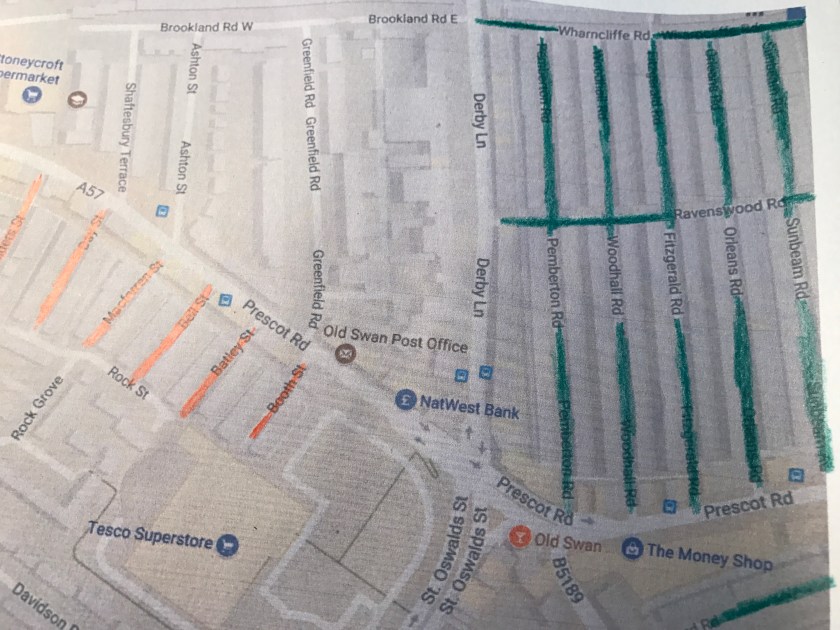
The average investor goes to the estate agent and asks them for info on the local area. The problem is that the estate agent will sell you almost anything, regardless of whether the area is going up, down or stagnating. Estate agents just want to sell and only focus on a property’s good points so that they make money. Instead, first go to a lettings agent and bring a photo-copied map of the area, a green pen, and a red pen. Get the lettings agent to highlight in green all the streets on the map where property can be easily let, i.e. the desirable streets.

The exact words to say to your lettings agent are:

“If I were to bring you a house in a decent street, that you could rent today, where would it be”?

Notice the language we are using. The phrases make it sound as if you are helping them. Agents get time wasters everyday who ask random questions but take no action, so you want to separate yourself and make it clear from the start that you are here to do business.

Also ask the lettings agent specifically what type of house is in demand? (2 bedrooms, 3 bedrooms, apartments, properties with gardens etc) and why?

After they have shown you the good streets then ask them to highlight any dodgy streets with the red pen so you know the places that are best to avoid. Even if there are no rough streets in your area, it is still worthwhile getting to know which are the most desirable and least desirable streets and why.

I suggest doing the green pen/red pen game with 2 or 3 lettings agents to cross check you are getting the right info. You are also interviewing the lettings agent to see how much they know and whether you want to work with them in the future. In short you are quickly gathering accurate information about your area while doing a job interview.

So, now you should know which properties are renting fastest, in which streets and why.

Next, go to your local estate agents, show them the green streets and ask “What properties do you have for sale in these streets?” Once you have the estate agent’s list of good properties, take that list back to the lettings agent and say “Is this the kind of property you mean?”

How much rent will I get for it?

What kind of tenant (unemployed, student, family, young professional, retired) will want this property?

Is there anything I need to do to the property to get the maximum rent?

What are your fees as a lettings agent?

By doing this you are double checking your information and gleaning extra nuggets of wisdom about your investment area.

There are 2 Ps in the word property

In the previous post we talked about using the bank’s money to buy property and this is called OPM (other people’s money). In this article we are using other people’s knowledge (OPK), and this expert knowledge can be gleaned in a single day, preferably face to face but, if necessary, by phone.

OPM and OPK when combined are very powerful tools for building a successful property portfolio. From OPM and OPK comes one of the most important property investor mantras and it is this:

“There are 2 Ps in the word property. The first P is for property and the second P is for people.”

The importance of having the right people on your team cannot be underestimated to your net worth. Property is a people business. It’s all about the people we interact and transact with. Build good relationships with the right people, understand how they operate and know how to talk with them.

If you want to have a good relationship with your agent, you need to understand their system. For example, when you go into the estate agent, ask specifically to speak with the agent who deals with investors. Usually the young, inexperienced, agent is put front of shop. You want to navigate around them and talk with the experienced agent who knows the area and the business inside out. They may well be at the back of the room or have their own office off the main shop floor. It is this person you want to do business with and make your offers to.

This post has provided advice on how to build your area knowledge and how to work with agents. You might not be ready to put in offers but for now grab your pens and maps and get out there asking the right questions!!

In the next post we will examine the goal of any serious investor. How can you buy property without using your own money and how do you calculate what the right offer is?

The Lifelong Expat

japan-1841199_640

So you’re a lifer? Congratulations! For some people expat life is so good, they never intend to go home. Also of course, many people make their lives in their country of choice: they have a home, family, kids in school, perhaps a business, things that they never plan to leave behind to “return home”.

So, sticking with Japan as our example, how should you adjust your planning if you are staying here for life? Many of the basics do not change, but everything will have more of a Japan focus. We will look at each of these in more detail later but here is a summary of things to consider for now:

  • Protection – this is of course the first place to start. See the protection review here for the basics. This probably means taking care of some of your insurance needs with a Japanese insurance policy, which of course means policy documents and explanations in Japanese. It’s worth looking around for a local insurance agent you can communicate well with, and exploring hospitalisation insurance, income protection, and life insurance if you need it. You will find that Japanese policies come with all kinds of add ons, fixed rate guarantees, and other bells and whistles. Start by looking for the simplest policies that cover your particular requirements, and beware of over-paying for things you don’t need.
  • Buying a home – owning versus renting becomes a bit of a no-brainer if you are going to be in Japan forever. You will likely find that you end up with more space for a lower monthly cost if you own your own home. Ultra low mortgage rates are, of course, an attractive factor. Whether you buy a house or an apartment is down to your own preference, but we will look at the pros and cons of each later.
  • Retirement planning – if you work in Japan you will already be paying into the Japan national pension. Once a year it is worth reviewing how this is going and what your pension is likely to be. If you are paying into the national pension scheme, you are also eligible to start a Japanese 401k, which is a self managed pension. This offers significant tax savings over time and is worth considering.
  • Savings – another tax efficient way to save is NISA, which is based on the UK ISA. NISA is relatively new and, although it does have its drawbacks, dividends and capital gains are tax free. Once you have exhausted ways to save that carry a tax benefit, you should look at opening a local brokerage account. This is a great way to invest in stocks and low cost ETFs.
  • Investment property – from one room apartments to whole buildings, there are excellent opportunities for property investment in Japan.
  • Lastly, consider if you have other base currencies? Keep in mind that if you are planning to send your kids to university overseas, for example, you should save for that need in the currency you will be spending in. Also, for general investment purposes, remember that Japan only accounts for around 8% of world stock market capitalisation. Investing too narrowly in Japan concentrates your risk in one area, and you also miss out on the opportunity to diversify into world markets.

The long-term expat

background-1511499_640

Last time out we looked at the opportunity for short term expats. Today we move on to the long-termers. This is quite a loosely defined group, and will cover a broad section of the expat community. What we really mean by long term is:

  • You are not here on a short term expat posting – or you are but it is likely to renew many times before you move on.
  • You plan to leave the country you reside in at some point in the future, whether to go home, work somewhere else, or retire somewhere else.

This means you will spend a significant part of your life in your current country of residence. Let’s assume it’s Japan for clarity, but it could just as easily be Hong Kong, Singapore or elsewhere.

Once again, your number one financial planning issue is going to be base currency, and it’s quite possible you will have more than one. So you need to ask yourself what are the things you need to save for in the future, and what country are you planning on them taking place in? So if you are saving for retirement in Europe, you may have Euro as your base currency for that need. If you are planning on sending your child to college in the United States, you may have USD as your base currency for that. If you may actually end up staying in Japan forever you may need to keep some assets in JPY just in case.

My main point here is that currency risk can be a killer. I just found this interesting site that monitors national debt, and here is Japan’s debt clock. Now Japan may manage this well over the next 20 years, or it may not. What do you think will happen to the value of JPY if it doesn’t? If you are retiring in Europe, do you really want to be saving your money in JPY with a view to converting it later, when you move back?

Other than base currency, here are a few other things to consider:

  1. Protection – we have covered this in the protection review earlier. You should also have a plan for repatriation to your home country in case something goes wrong with your current employment and you have to leave in a hurry.
  2. Property – if you are going to be here for a long time then have you considered buying a property in Japan? Thanks to the developed world’s lowest interest rates, it can be very cost-effective when compared to renting. If you have the means, buying a property back home can also give you some extra income while you are away and a place to either go back to or sell to generate capital.
  3. Structuring – deciding where and how to hold particular investments is going to be important. You may have limited options for investing in Euros in Japan for example. It may be more tax effective to use an offshore structure or a structure back home. US citizens cannot escape worldwide taxation and need to think carefully about how to report assets. If you were to die, you probably want your assets be passed smoothly to your designated family members. Skilled advisers can add significant value here, just choose them carefully. (more on structuring in future posts)

The Expat Opportunity

tokyo-1842759_640

There are many different types of expats: some are posted overseas by their employer and do 2-3 year stints in a couple of countries and then return home. Some come as travelers, students or teachers and end up living and working overseas for a longer period. And some, like me, come for an adventure for a couple of years and never end up leaving! Whether you are a short term contractor, a long termer, or a lifer, the need to plan for your financial future is a constant. However, the method will vary depending on your circumstances. Over the next few posts we will consider each of these expat types and the opportunities available to them.

Today we will start with the shorter term expat contractors. If you belong to this group then I’m sure you are aware that you have an incredible opportunity to secure your financial future. You will probably never have as much disposable income as you have as an expat, and what you do with that income can really impact the rest of your life.

I recently spoke to someone who spent several years as an expat in Asia before returning to his home country and he told me: “I realise now that the investing I did in those years as an expat really set me up for a life of wealth.”

So what are some things you should be doing if you are here in Asia and enjoying the benefits of an “expat package”? Here are a few ideas:

  1. Make sure you understand what your base currency is. If you are unsure then this post will help you define it.
  2. Max out contributions to anything that gives you tax free growth first. This is most likely going to be pension type assets, such as a 401K or IRAs in the US, or ISAs in the UK.
  3. If you are paid in your base currency and receive a housing allowance in the country you are posted to, then you have a significant opportunity to invest back home or offshore. You may want to consider talking to an adviser both in your home country and a qualified expat adviser based in the country you are living in.
  4. Consider buying property in your home country, if you haven’t already. You have the option of renting it out while you are away, and you may achieve considerable capital growth over time too.
  5. Have a plan for how you are going to repatriate yourself and your family in case your employment comes to an unexpected end – you will need to plan for plane tickets, shipping belongings / furniture, and a place to live when you get home.

Most of all,  be sure to set aside some time for financial planning while you are away. The expat lifestyle can not only be fun and rewarding, but also incredibly busy. Make sure you don’t forget to make the most of the saving and investing opportunity of a lifetime.


How to Buy and Store Bitcoin

bitcoin-1995332_640

Following my previous post on investing in Bitcoin, here are a few pointers on how to go about actually buying it if you have decided to do so. Obviously this is not investment advice, it’s meant as a practical guide:

Firstly, beware! Cryptocurrency is still relatively new and it is not well regulated. Scams abound and many people have seen their hard-earned money disappear simply from choosing the wrong place to buy and store it. Make sure you do your research!

Buying Bitcoin

The easiest way to purchase Bitcoin is to open an account with a reputable Bitcoin exchange. If you are expecting to be able to do this nearly anonymously and with a minimum of ID documentation, I’m sorry to disappoint you. You will need to submit a copy of your ID, passport is the usual but other government issued ID’s will work, and a copy of a utility bill or bank statement to prove your residential address. If you live in Japan and are using an exchange outside Japan, then this document will need to be in English. Although paper statements are a little old fashioned, I recommend having your bank at home send you one every quarter so you have an English proof of address available. You will need it for pretty much any international financial transaction these days.

If you are looking for an exchange in Japan, Bitflier seems to be the largest.

If you prefer to buy your coins overseas, then some of the well known exchanges that will accept residents in Japan and other parts of Asia are Kraken, Gemini, and Xapo. I was recommended Bitstamp as a popular European exchange but they took two weeks to “review” my application and then came back and said they hadn’t received the documents I had uploaded…

Buy Bitcoin Worldwide is a useful resource for finding exchanges in your country, along with a list of pros and cons for each exchange.

If you are looking to invest over $20,000 then Genesis Trading has a well connected OTC desk.

Storing Bitcoin Securely

It is not advisable to leave your Bitcoins sitting on the exchange after purchasing them. Although security is improving, almost none of them are insured against theft and hacks still happen fairly regularly. Online wallets are convenient for shopping with Bitcoin but they are also not a safe place to store your coins.

I stored mine with Xapo, whose vault service is currently free of charge. They store their private keys in multi-signature form in vaults in Asia, the United States and South America.

Hardcore Bitcoin enthusiasts will tell you to keep your private keys completely offline. Probably the most popular hardware wallet is the Trezor device. With this device a pin code gives you access to your coins, and if you lose it you can regenerate your wallet using the 24 word recovery code.

If you don’t trust any storage solution that can be plugged into a computer, or are looking for a near indestructible back up for your hardware wallet then take a look at Cryptosteel.

I hope this is useful. The prospects for Bitcoin going forward are certainly exciting, but as I’m sure you are aware, the potential upside comes with significant risk. Don’t invest more than you can afford to lose is still the number one rule.


Bitcoin – a worthy investment?

bitcoin-2007769_640

“All I ever seem to hear about these days is Bitcoin.”

Someone said this to me the other day and I had to agree. Particularly in Japan, after Bitcoin was recognised as a legal payment method 3 months ago, resulting in a huge spike in trading, not to mention in price. So, if you’re sick of hearing about Bitcoin I apologise, but it’s hard to ignore it when discussing money and investments these days.

The purpose of this post is to consider Bitcoin, or other cryptocurrency, from a longer term investment perspective. Firstly, cryptocurrency is obviously a satellite holding. If you don’t understand what I mean by that, you may want to check out this post on Core vs Satellite.

As by far the dominant digital currency, there is incredible potential for Bitcoin technology to compete with existing infrastructure such as:

  • $2 trillion annual market for electronic payments
  • $1 trillion annual e-commerce market
  • $514 billion annual remittance market
  • $7 trillion gold market
  • $4.5 trillion cash market
  • $16.7 trillion offshore deposit market

There are also some significant risks associated with Bitcoin. The four most prominent being:

  • a better digital currency emerging and stealing the market lead
  • an undetected bug in the system
  • a hard fork (when some nodes in the network upgrade to software that is incompatible with previous versions) causing the Bitcoin payment network to split in two
  • a sustained attack by an organisation with substantial financial resources (e.g. a government)

Bitcoin enthusiasts have rebuttals for each of these risks, but they have to be taken seriously. That said, there is no sign of Bitcoin going away any time soon. If you think the potential upside is worth the risk, here are some simple investment guidelines:

  • Start with Bitcoin rather than other, less prominent cryptocurrencies
  • Don’t invest more than you can afford to lose. 1-2% of your total assets is a good guide.
  • Expect volatility – even people used to stock market volatility will find this a rollercoaster. Don’t invest if it’s going to prevent you sleeping at night.
  • Plan to hold for the long term
  • Consider dollar cost averaging to begin with
  • Study up on how to store your Bitcoins safely – don’t leave them sitting on an exchange

Interview with a Property Investor


key-2114455_640

I get asked all the time about investing in property overseas, but investment property is not an asset class I have any personal experience with. Luckily I have a friend who I have watched go from beginner to professional investor over the course of many years, and I have persuaded him to share some of his knowledge with us. Although he is back living in the UK now, Graeme lived in Japan for almost 20 years, and built up a large chunk of his property portfolio while he was living here. He was not a “rich expat”, just a guy with a regular job. He values his privacy, so I’m not going to publish his full name and contact details, but if you have any questions for him he is happy to answer them through the blog. I hope you enjoy the interview and find some value in his knowledge:

SMA: How did you come to live in Japan?

G: I came here directly from university and like many people, planned to stay only a few years. In the end I stayed a lot longer and thoroughly enjoyed my time in Japan.

SMA: What made you start investing?

G: A good friend recommended the personal finance book Rich Dad Poor Dad. The book was written in plain English whereas other finance books used complicated terminology and were difficult to understand. Reading this book I realized I did not have a financial plan for the future. This concern about not having financial control of my future was the starting point.

SMA: Can anyone really become a property investor?

G: In my experience not everyone is cut out to be a successful property investor. One mistake people make is to think property is a get-rich-quick scheme, but it takes time to be successful. If, however, you surround yourself with good people and the right knowledge, property can develop into a dependable source of income for the months, years, decades and even generations to come.

Not everyone can make it as a successful investor and a personal example comes from a couple of years ago when I enrolled in a property-investing course.  About 40% of the participants did nothing with the information, 50% turned property into a hobby and now make some money from it and 10% are becoming extremely successful and gaining financial freedom. Anyone can go on a property course but you have to be motivated to be successful.

Ask yourself the question: How motivated am I to be a property investor? If the answer is less than 75% I wouldn’t bother. However if you are serious then it is worth getting educated, taking action and making a positive impact on your financial future.

SMA: Don’t I need a lot of money for this?

G: No, you don’t need as much money compared to other investments. For example, the average stock investor who wants to buy $100,000 of stocks needs to invest $100,000. However a property investor who wants to buy a $100,000 property only needs to invest $25,000 because the rest can be secured with a mortgage on a low interest rate.

This is one of the big differences between the stock market and property and gives you hard evidence about which one is more secure, because your bank will not give you money to invest in the stock market but will give you money to invest in a property. The ability to intelligently use other people’s money through leverage is one of the key skills of a good property investor. (SMA – leverage is available for stocks, but only for highly qualified investors)

SMA: What is the first thing I should do if I want to invest in  property?

G: Many people think the first thing to do when you invest in property is find a good location, others think the first thing to do is find a good property. Both of these things are important, however they are not the first thing to do.

Before anything else it is wise to consider your property strategy.

Your strategy is an overall plan to know in which direction you want to move. Strategy is crucial because it drives all your decisions and actions. Having a clear property strategy means answering questions such as:

* What is your long-term goal?

* What specifically do you want to achieve and gain from property?  – Do you want monthly cash flow from rental income or do you want large chunks of money from capital gains?

* Do you want to invest in small buy-to-let properties at the cheaper end of the market, or do you want to invest in multi-let properties, which cost more and have more regulations but offer a bigger return?

* Or do you want to focus on a strategy such as social housing, which is a longer-term project, perhaps in riskier parts of a town, but can give you a steady return?

* Or you may choose to focus on flipping property and making larger sums of money by buying distressed property, refurbishing them to a high standard and selling them for a good profit.

Once you have a clear strategy, next consider your area:

* How well does your area suit your strategy?

* What are the strengths and weaknesses of investing in this area?  – What types of tenant live in the area (families, unemployed, young professionals, students)

* In which direction is the area heading?

* Who can give you the information you need to choose a good investing area?

The more you understand your area the better your chance of success is.

Finally, focus on individual properties. This is when you start viewings and making offers. Viewing properties means identifying necessary repairs, calculating the cost of repairs and then having a trustworthy team in place to first refurbish and then manage the sale or rent.

The acronym to remember is SAP – Strategy. Area. Property.

First formulate your long-term strategy, next learn about a suitable area, and then start viewing and offering on properties.

The average, uneducated investor just goes out and buys a property without knowing enough about their property team, the area, and without a clear, long-term strategy for financial success. This is why so many investors get into trouble, with long voids, difficult tenants, or members of a property team who are a liability rather than an asset.

So, for safety and speed remember- S.A.P!!

SMA: How can someone in Asia get financing in the UK?

G: Raising money is one of the tests to see if you are truly motivated to be a property investor.

First of all you may have your own money to invest. If not, there are many ways of getting finance and today we will focus on bank mortgages. It often depends on your individual situation, for example there is international bank lending from big banks such as Nat West, Barclays and HSBC. These banks offer international loans. Of course they will ask a lot of questions and whether you get a mortgage usually depends on your existing relationship with that bank. If you have a good credit history with them you have a much better chance of getting the money.

Another possibility is to visit your local bank in Japan/Asia as they may have a relationship with a bank in your investing area. If so you may be able to borrow on property in your target location. The first thing to do is speak with your local bank and find out their international banking relationships.

A further option is working with a close family member in your investing country who can get a mortgage for you and will own the property. Together you sign a deed of trust so that you actually control the property and benefit from the rental income.

Whichever method you choose, ultimately your goal is to build a track record with a bank so you can borrow easily in your investing country.

A final point on this topic is that you don’t need to buy a property to financially benefit from it. With as little as $5,000 pounds you can angel invest and support professional property investors with a return of 6 – 10% and your money back within 8 months. A more complex option is to use lease options to control property. These strategies will be explored in future posts.

 SMA: What’s the difference between investing in the UK and in Japan?

G: You can make money from property in any country. There are however some important differences to remember. The main difference between Japan and the UK is that Japan is a rental income market, whereas the UK is a rental income and capital gain market. In Japan, the land typically holds its value but the property devalues. If you invest in the right area the income generating opportunity is quite strong, particularly compared to keeping money in the bank. In the UK, property is built to last and generally prices increase over time so you have the double benefit of rental income, and when you sell the property you should make a profit, sometimes a substantial one.

 SMA: Are you concerned about Brexit?

Brexit is a great opportunity for overseas property investors!

Since the referendum the pound has crashed and anybody transferring currency to the UK will see a massive difference. Your foreign currency is now worth 10% to 40% more than pre-Brexit vote, which means you can buy more property, and with historically low interest rates, now could be the best time to invest in the UK.

Furthermore if you start a limited company to hold your portfolio, from 2020 the corporation tax will be reduced to 17%. As tax is one of your greatest expenses this is an important factor.

Yes, there are some concerns about our relationship with Europe which will need ironing out, but people will always need a place to live and unlike Japan the U.K’s population is growing, which means more demand for the same number of houses.

We also need to consider that in certain areas, investment is already flowing into the UK. Examples of this are in the northern towns of England with new intercity train lines planned (HS2). In Yorkshire, Hull’s European City of Culture Year, combined with the opening of Siemens 310 million pound wind turbine factory, represents a big boost for property and property investors by bringing long-term jobs and money to the area.

SMA: Where do you see yourself in 10 years time?

G: My career has been in teaching and property investing so I would like to combine these two skill sets and become a property mentor. I have been strongly supported by inspiring property mentors, therefore to help other motivated people move forward and achieve their financial goals would be a dream come true.

SMA: Thanks Graeme, we look forward to talking with you more soon!

Winter is Coming!

Winter Is Coming.jpg

By now you may be tired of talk of diversification and asset allocation. Surely there are more interesting things we can talk about with regards to investment? I agree, it can get pretty dry. However, there is a reason we keep coming back to these fundamentals: financial markets have different seasons, and the number one reason that people fail at investing is fear of winter:

Correction – when any market falls by at least 10% from its peak.

Bear Market – when any market falls by at least 20% from its peak.

Fear of these financial winters lead otherwise intelligent people to do some strange things. It wasn’t just stupid people that sold everything at the end of 2008 / early 2009. It wasn’t only fools who sat on the sidelines and did nothing as the market rebounded spectacularly through 2009 and beyond. So how do we overcome this fear of financial winter? Firstly, by understanding it better:

  • On average there has been a market correction every year since 1900.
  • The average correction over the last 100 years has been 13.5%.
  • From 1980 to 2015 the average drop was 14.2%.
  • Historically, the average correction has lasted only 54 days.
  • Less than 20% of corrections have turned into a bear market.
  • Historically bear markets have happened every 3-5 years.
  • Historically the S&P 500 has dropped on average 33% during bear markets.
  • In more than a third of bear markets it has dropped more than 40%.
  • On average, bear markets have lasted about a year
  • Bull markets tend to commence when investor confidence is at a low point.
  • The market hit bottom on March 9th 2009 – the S&P 500 surged 69.5% in the 12 months that followed.

(from Unshakeable: Your Financial Freedom Playbook by Tony Robbins)

You may be surprised to hear that corrections happen so frequently. This means the next one could come at any time. If you follow the news, and in particular the financial news, there are always multiple reasons to be fearful: terrorism, North Korea, conflict in the Middle East, slumping oil prices, budget standoffs, Brexit!

Then there are the doomsday guys who are forever warning of the coming crash. If you listen to these people you will never be able to get started investing. But how often are they actually right? Well if you consistently warn of a coming crash you will always be right eventually! Tony Robbins’ book has a brilliant section where he shows 33 instances of “experts” warning of a market downturn over a three year period, where the market actually went up instead.

Here’s the key: in the years 1980 to 2015, the S&P 500 experienced an average intra-year decline of 14.2%. However, the market ended up achieving a positive return in 27 of those 36 years. That’s 75% of the time. You cannot afford to be sitting on the sidelines while this is happening. In fact, the opportunity cost of doing nothing will cost you far more than any of the corrections, bear markets, and flash crashes:

“From 1996 through 2015, the S&P 500 returned an average of 8.2% a year. But if you missed out on the top 10 trading days during those 20 years, your returns dwindled to just 4.5% a year. Can you believe it? Your returns would have been cut almost in half just by missing the 10 best trading days in 20 years! It gets worse! If you missed out on the top 20 trading days, your returns dropped from 8.2% a year to a paltry 2.1%. And if you missed out on the top 30 trading days? Your returns vanished into thin air, falling all the way to zero!” (from Unshakeable: Your Financial Freedom Playbook by Tony Robbins)

So we need to understand that winter is just one of four seasons and get back to the boring stuff: understand your risk profile, get your asset allocation right, rebalance annually, and ignore the noise!

Core vs Satellite

satellite-1030779_640.jpg

So, you have completed your financial profile, worked out your base currency and risk profile, and committed to a strategic asset allocation that fits. You should be feeling pretty good about your investments. However, isn’t this all a little bit…boring? You just read that gold mining stocks are about to go on a tear, or your friend showed you a cool biotech fund you want to get into, or how about cryptocurrency? There are always going to be some more exciting investments out there with potentially big returns, but where do they fit into your strategic asset allocation? The answer is, they don’t!

Firstly, you should be very careful investing in “the next big thing”. Often, by the time you hear about a cool new opportunity from your friend at the bar, the smart money has already been invested for some time and is looking for suckers coming in late to sell to. Having said that, at any given time there may be really exciting long term investment opportunities for people willing to tolerate some extra risk. They are just a little “niche”.

Screen Shot 2017-06-27 at 8.40.59 AM.png

This is where you need to understand the concept of a core/satellite approach. Simply put, the core of your assets, that is 80-90% of your investments, should be in your strategic asset allocation. This is serious money that you are planning to spend later on important things like your kid’s education and your retirement. If you really want to invest in platinum, or alternative energy, or bitcoin then this should be considered a “satellite” holding. It’s perfectly ok to allocate 5% of your investments to something more speculative, just don’t go all in! Over time we will look at some potential satellite holdings that you may want to consider.