
2019 Investment Outlook

Netflix-Tidying_Up_Marie_Kondo-1296x728-Header-1024x575

Wow is it February already? Apologies that this is a little late, but after a family holiday it’s been a slow start to the year. 2018 marked the arrival of our first child, so it’s been easy, and fun, to take my eye off the ball a little. However, it is time to get back to business, not to mention getting the house in order! I’ve seen a lot of talk recently about the Netflix series “Tidying Up With Marie Kondo”, so perhaps we should make de-cluttering our theme for this post.

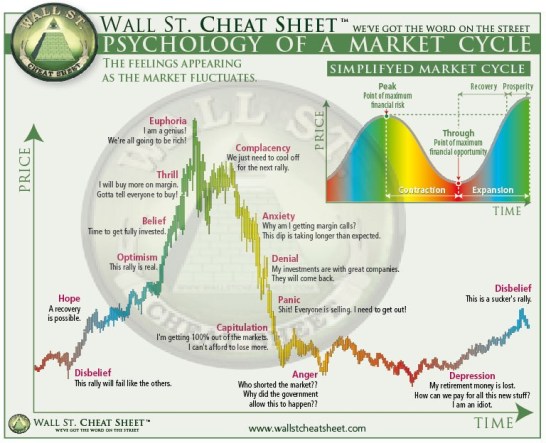
So how was 2018 for you? From an investment perspective there was little joy being sparked no matter where you looked. In a year where much of the talk was about the prospects for a continuing bull market in stocks, actual returns were rather bearish. We never really got the crash that many predicted, but we saw a significant correction in February, and a rather painful last quarter where most stock indices dropped double digits.

Some rough numbers for 2018: The S&P 500 finished -6.2%, Euro Stocks were around -13%, Japan -12%, Emerging markets -17%. Gold ended the year strongly but was still down around 2% for the year. Oil fell some 40% from its previous high, losing almost 25% for the year. Furthermore, as interest rates rose, bonds prices fell too. There were not many places to hide in 2018. (let’s not even talk about that crypto portfolio…)

So what can we expect in 2019? Depending on how much information you are able to digest, Bloomberg has compiled a monster article of Wall Street predictions here.

Sticking with the idea of de-cluttering though, here is a short list of key themes:

  • The end of the bull cycle is getting nearer, but it is not here yet.
  • Investors, however, are likely to behave as if the end is right around the corner (this means continued volatility)
  • The US Federal Reserve will continue to normalise rates.
  • The Bank of Japan will continue its accommodative monetary policy.
  • The outcome of trade negotiations with China will be the main driver of USD strength / weakness. (perhaps we’ll see a weaker USD vs. JPY?)
  • Brexit will not have as big an effect on global markets as many commentators make out. (just my personal opinion here)
  • There is, perhaps, excessive pessimism with regard to Japanese stocks. With the end of the Heisei era, and subsequent celebration of the new era, a growing influx of foreign tourists, the Rugby World Cup later this year and the upcoming 2020 Olympics, we could see a real buzz that will be good for business.

So how should you plan your personal investment strategy for 2019? Again let’s keep it simple:

  • Have a plan! Read this post if you don’t have one.
  • Stick to your guns. Don’t let the noise divert you from your commitment to saving and investing.
  • Diversify and rebalance – review your asset allocation.
  • Max out tax advantaged investments such as NISA.
  • Look for Japan stocks that are likely to benefit from the buzz of the next two years.

With that I wish you all the best for 2019. Hope it is filled with things that spark joy!

Disclaimer: This should go without saying, but the information contained in this blog is not investment advice, or an incentive to invest, and should not be considered as such. This is for information only.




Don’t Panic!

Stocks Sink

It’s already been an eventful year for the markets, but waking up this morning I must say I did a double take at the stocks app on my phone. The S&P 500 Index was down 3.3% overnight, with the fall being led by the popular tech stocks. The NASDAQ was down 4.4%.

The stock app also offered up this article, which  is a quick but worthwhile read at a time like this. There’s some simple advice in here for individual investors:

  • Don’t panic.
  • Wait a few days for things to settle.
  • Make sure you know yourself and don’t be aggressive with money you are planning to spend in the near future.

Makes sense right? While this may not necessarily be the start of the grand reckoning that many are expecting, there are going to be more days like this, so it’s best to be prepared.

Here are a few things I would add:

  • Diversify – should you really be 100% in stocks? Are you prepared to ride out the storm for as long as it takes? A well diversified asset allocation will not capture all of the upside in the good times, but it also won’t absorb all of the downside when things go south.
  • Don’t try to time the market – the pros get this wrong, so what chance do we have? You are right to be buying after a significant drop in prices, but you don’t have to do it all at once. Add a little and then wait a few days.
  • Knowing yourself means knowing your base currency, your risk profile and your time horizon.
  • There is more to come -The Cboe Volatility Index rose past 20 for the first time since April. The US Federal Reserve is walking a tightrope trying to return rates to normal in order to avoid the economy overheating, whilst trying not to upset the stock market. The Bank of Japan can not even hint at “tapering” or reducing bond purchases without setting off an avalanche.

It’s likely to be a rough day for Asian stocks today. Be prepared, stick to your long term plan and don’t panic!

Update to this post, 12th October 2018: Ray Dalio says it better than me in this 5 minute interview, but the message is the same – stick to strategic asset allocation and don’t try to trade and time markets.

Disclaimer: This should go without saying, but the information contained in this blog is not investment advice, or an incentive to invest, and should not be considered as such. This is for information only.

50 Cent and the Art of Being Wrong


IMG_2934

I’m sure you noticed that last week saw a sudden return to volatility in markets. As discussed in our 2018 Investment Outlook, this kind of correction was long overdue. The one thing we didn’t know for sure was when it would happen.

Which leads us to a major lesson in investing, taught this week by 50 Cent. (well not that 50 Cent…)

Nomura apologizes to investors burned in bet against “fear index”

The mysterious trader nicknamed ’50 Cent’ made $200 million last week as the market blew up

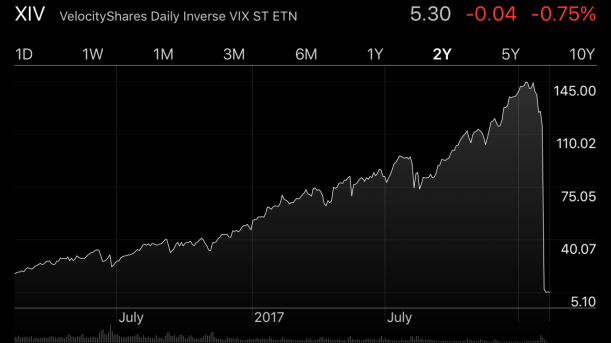
The articles above show two sides to the same trade. After a long period of almost no volatility in the stock market, Nomura managed to convince investors that the status-quo would continue. The chart above, plotting the inverse of the VIX volatility index, essentially shows what happened to those investors last week.

Meanwhile, the trader nicknamed “50 Cent” spent the last 12 months being expensively wrong on his bet on a (let’s face it, inevitable) return to volatility. Wrong that is, until he was right and made a profit of some $200 million.

The lesson here, of course, is that when things are good (stocks hitting all-time highs and volatility low), it’s easy to get caught up in the fervor and keep buying. It’s much harder to realise that things can’t go on this way forever, but not know exactly when they will come to an end. You will note that “50 Cent” did not make this bet a month ago. He started acquiring large amounts of call options over a year ago. He didn’t know when he would be right, he just knew he would be.

Now this is a financial planning blog not a trading blog, but the lesson is still valuable. Those Nomura clients aren’t professional traders, they are regular people. It’s likely that many of them did not realise how much risk they were taking. However, if stocks are at all time highs, you probably shouldn’t be betting the farm that they will keep going higher. If another asset class has underperformed for the last few years, that doesn’t mean you should write it off forever.

It takes a mixture of common sense and courage to go against the crowd, especially if it means you might be wrong for a while.

Disclaimer: This should go without saying, but the information contained in this blog is not investment advice, or an incentive to invest, and should not be considered as such. This is for information only.

2018 Investment Outlook


compass-2779371_640

“Prediction is very difficult, especially if it’s about the future.” – Niels Bohr.

People interested in investing typically find themselves deluged with forecasts at this time of year, and a look back at investment professional’s predictions from this time last year will tell you just how difficult it is to be right. So, I’m going to be careful here! The purpose of this post is not to make bold predictions for the year, and it is certainly not to be considered investment advice. However it is interesting to take a look at current trends, along with results from last year, and consider how things might develop in 2018. So here we go…

2017 was supposed to be the year of the crash. This time last year every forecaster worth his salt was telling us that winter was coming. The Trump rally couldn’t last, central banks had to taper their stimulus programs, and the party was going to end. It was going to get ugly…

Well… S&P 500 +21.8%…. MSCI Emerging Markets +31%…. MSCI Europe +14.5%…. UK FTSE 100 +11.9%…. Japan Topix 22.2%…. even Japan hit 26 year highs!

Oil came back strongly at year end, gold was up double digits, even pound sterling recovered somewhat. Not to mention the surge in Cryptocurrency! 2017 was not a good year to be holed up in your bunker, hoarding cash and waiting for the sky to fall. What was perhaps most surprising was the lack of volatility through the year – the US stock market hasn’t seen a major pullback since the election, and volatility metrics have hit record lows.

So the party goes on, right?

Well, we will see. The fact remains that we are living in an unreal world economically. Negative interest rates are not supposed to be a thing, but they are currently reality in several countries. Moreover, negative real interest rates (when taking inflation into account) have been the norm in the developed world since October 2016. On January 9th the Bank of Japan announced that it was reducing the rate of bond purchases as part of its quantitive easing program. This reduction was relatively small, and well within the BOJ’s stated goals. It was really a non-event. However, as soon as it was announced, the Yen spiked up and markets shuddered. So imagine where we’ll be if something really happens…

The US Federal Reserve has gradually increased interest rates, and so far managed to do so without slowing the stock market’s bull run. Japan, however, is another matter. The run up in the Nikkei at the end of 2017 / early 2018 owes a lot to loose monetary policy, not to mention massive ETF purchases by the BOJ. The Abe administration doesn’t want the run to end, but it can’t go on forever.

Sorry if this is too much detail, but what I’m really saying is the crash / correction is still coming. It’s just a matter of time.

Given what happened last year, this doesn’t necessarily mean you should liquidate everything and crawl into your bunker right now. We have no idea how much longer the party will run before the inevitable end. The important thing is to know the end is coming and to plan accordingly. Here are some ways we can all do that:

Diversify – if you are 100% in stocks today, you are perhaps overexposed. It could be a good time to move into a more diversified asset allocation.

Rebalance – if you are already in a diversified allocation but have not made any changes recently, you may find that the stock run-up has left you overweight equities. You may have started with 40% in stocks but now that weighting is over 50%. Rebalancing back to your original asset allocation is a disciplined way to buy low and sell high.

Consider getting some gold – if you haven’t already, you may want to make an allocation to gold, which tends to perform well when panic sets in. Also commodity prices seem to be turning around in general, which is good news for metals.

Expect a strong Yen – we’ve seen time and again that the Yen is seen as a safe haven in times of trouble. If you live in Japan and send money home, there may be a big opportunity coming your way.

Stick to your plan – if you are relatively young and investing for the long term, you don’t need to worry too much about market downturns. Remember why you started in the first place and don’t panic.

Keep some powder dry – a crash is a fabulous opportunity to buy cheap. Have some cash at the ready and be greedy when others are fearful.

Consider inverse ETFs – if you are particularly aggressive and have a high level of conviction that the market will go down, then inverse ETFs are a simple way to short the market. Inverse ETFs use derivatives to profit from a decline in an underlying benchmark. Be aware that many of these ETFs are leveraged, and not only magnify returns, but can double or triple your losses if you are wrong.

Finally, a word on Cryptocurrency: After the incredible run of Bitcoin and numerous other coins last year, more and more people are getting into crypto trading and investing. The digitalisation of money is just beginning, and there are fantastic opportunities out there, but do your own research. Buying Bitcoin with no knowledge of how it works, just because it’s going up in value, is pure folly. I’m not going to tell you Bitcoin is or isn’t in a bubble, or that Ripple or Litecoin are going to take over. If you are interested in the concept of cryptocurrency then study it, invest a little to get some skin in the game, and study some more. Only invest according to your level of knowledge and don’t get caught up in herd mentality.

With that I wish you all the best in 2018. Let’s hope winter doesn’t come too soon.

Disclaimer: This should go without saying, but the information contained in this blog is not investment advice, or an incentive to invest, and should not be considered as such. This is for information only.


Don’t Slip Up on Currency

slip-up-danger-careless-slippery

I came across this Telegraph article the other day and it reminded me of one of a common mistakes investors make: not taking currency risk seriously. If you haven’t read my post on Base Currency, I suggest you do before we go any further.

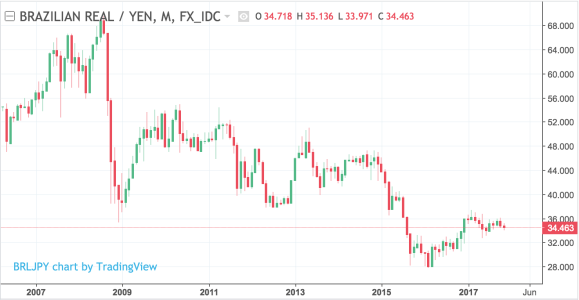
I’m sorry to single them out, but Japanese investors fall into this trap all too often. With interests rates at zero for so many years, Japanese investors are hungry for yield. This leads them to buy overseas bonds or cash deposits that are paying high interest rates whilst disregarding the risk that currency fluctuations might go against them. New Zealand dollars were a favourite for a while, then Australian bonds, even Latin American debt was popular at one point. The chart below (from Trading Economics) showing Brazilian Real vs Japanese Yen tells you all you need to know about this trade: regardless of the interest rate you receive, if you bought 10 years ago and held until now you have lost almost half of your money on the currency conversion…

Screen Shot 2017-11-30 at 6.42.20 AM

Going back to the Telegraph article, currency fluctuations can, of course, work in your favour as well. UK investors holding overseas assets have seen their returns magnified by the fall in the pound since the Brexit vote. Japanese investors who bought foreign assets during the period of JPY strength from 2011 – 2013 will also have benefitted as the yen weakened.

So how do we mitigate currency risk, whilst retaining some of the advantages of investing in other currencies?

Know your base currency – this is the currency you are planning to spend the money in. Remember you may have different base currencies for different financial goals.

Invest in a globally diversified portfolio  – exposure to overseas assets is important, however keep the majority of your portfolio weighted to your base currency. A well constructed growth portfolio will be between 65-85% invested in base currency assets.

Know your time horizon – the closer you are to spending the money, (eg. retirement) the less you can afford currency risk.

If you are going to take currency risk, be smart about it – make sure you have understood historical exchange rates and know where you are in the cycle. If a currency is at historical highs it is likely to return to the mean at some point, but be very careful about betting on the timing. Remember the famous quote from John Maynard Keynes:

“Markets can remain irrational longer than you can remain solvent.”

What is an ETF?

stock-market-2616931_640

Someone asked me the other day what exactly an ETF is. It’s one of those investment terms that probably everyone has heard by now and it made me aware that I have referred to Exchange Traded Funds in several posts already, assuming that people know what they are. So for the sake of clarity I thought it might be useful to provide a simple overview.

Probably the first point of reference here is to look at mutual funds. A mutual fund is a pooled investment run by a professional manager for a fee. The manager decides what assets to buy and sell in the fund and is usually benchmarked to an index in order to gauge performance. The idea is that investors are paying the manger to keep up with or beat that benchmark. Each investor owns a share of the fund, and at the end of each day the fund adds up the value of all the assets it owns and divides it by the number of shares so everyone knows the value of their share.

In 1976 Vanguard Group launched the first index fund. An index fund is still structured as a mutual fund. The difference lies in the investment strategy. Instead of trying to beat the market, an index fund simply tracks the market. Because tracking an index such as the S&P 500 does not require the skills of an active manager, the costs are lower. That first index fund, known as the Vanguard 500 (VFINX) is still around today.

An ETF is also a pooled investment. Like a mutual fund it can invest in cash, bonds, equities, commodities, or a blend of assets, and these assets are divided up into shares. The main difference from a mutual fund is that it is exchange traded – this means that it is traded just like a stock. You don’t have to wait until the end of the day to get the price of an ETF, it updates in real time. Therefore you can buy and sell it whenever the market is open. You can also utilise stock-like strategies such as stop losses, limit orders, or buying on margin. The structure makes it very low cost and easy to access through a brokerage account.

In January 1993 the American Stock Exchange released the S&P 500 Depository Receipt, the first ETF. Early ETFs were typically index trackers, but they have become more and more sophisticated and these days you can even find ETFs that short the market (in the expectation that it will go down) and use leverage to magnify returns.  There are currently almost 7,000 ETF strategies available, so there is plenty of choice.

So just how widely used are ETFs these days? Well in May this year the global total assets under management in ETFs went past $4 trillion. And if you’re wondering now how much a trillion is, take this on board:

1 million seconds ago was 12 days ago.

1 billion seconds ago was 32 years ago.

1 trillion seconds ago was 32,000 years ago!


Disclaimer: This should go without saying, but the information contained in this blog is not investment advice, or an incentive to invest, and should not be considered as such. This is for information only.

Asset Allocation for All Seasons

beach-84631_640

Welcome back – I hope you had a great summer! It’s hard to believe it’s already almost September. The last four months of the year can be a busy time for investors. Many people have committed to targets earlier in the year, maybe in their New Year’s resolutions, for how much money they will put away or invest during the year, and suddenly the last quarter is looming. We all know that December is pretty much a write-off as you get busy preparing for Christmas and end of year holidays, so there are only really three months left to take action.

It’s been a pretty eventful year, not to mention a volatile summer. At one point in August the VIX Index, otherwise known as the fear index, surged by 62% in three days. (Bloomberg) A person with money to invest right now is looking at a constant stream of rather off-putting news: North Korea, terrorist attacks, protests in the US, Brexit, oil prices slumping again, not to mention central banks mulling major monetary policy decisions. So how on earth do you choose investments at a time like this?

Once again we need to go back to basics and build a core portfolio that can withstand the risks a fast changing world can throw at it. A lot of people already get the concept of spreading their risk around, not having all their eggs in one basket, but are perhaps unsure of exactly how to achieve this. Today we will look at some advice from an expert.

Ray Dalio is the founder of Bridgewater Associates, the world’s largest hedge fund with some $150 billion in assets under management. Coincidentally, while I was drafting this post, I found this article in the Financial Times quoting the man himself on a rise in risk in the current climate. Needless to say, his opinion is highly sought after.

Tony Robbins interviewed Dalio for his book MONEY Master the Game: 7 Simple Steps to Financial Freedom and asked him how regular investors should organise their portfolios. His advice is both simple, and easily implemented:

According to Dalio there are four things that move the price of assets:

  1. Inflation
  2. Deflation
  3. Higher than expected economic growth
  4. Lower than expected economic growth

Also, there are only four economic environments, or seasons, that will affect asset prices:

  1. Higher than expected inflation (rising prices)
  2. Lower than expected inflation (deflation)
  3. Higher than expected economic growth
  4. Lower than expected economic growth

Unlike the four seasons we associate with nature, these seasons do not necessarily come in order, and it is difficult to predict how long a season will last. Each asset class will fair differently depending on the prevailing season. Therefore Dalio says we should have 25% of our risk in each of the categories. His strategy is known as All Weather, and ensures the portfolio is covered, regardless of what season comes next.

Dalio breaks down which assets will perform well in each of these seasons:

  1. Higher than expected inflation – commodities / gold, inflation linked bonds
  2. Lower than expected inflation – government bonds, stocks
  3. Higher than expected economic growth – stocks, corporate bonds, commodities / gold
  4. Lower than expected economic growth – government bonds, inflation linked bonds

Tony Robbins persuaded Dalio to simplify this into an asset allocation that individual investors can follow. It’s called the All Seasons strategy and it looks like this:

  • 30% stocks
  • 15% intermediate term bonds (7-10 year)
  • 40% long term bonds (20-25 year)
  • 7.5% gold
  • 7.5% commodities

This portfolio could easily be constructed with a low cost portfolio of ETFs, as suggested in this article. (a year old but see the ETFs listed in the middle of the article)

Many people are surprised by the high allocation to bonds, but Dalio points out that stocks are three times more volatile than bonds, therefore the damage they can do in the wrong environment needs to be controlled. Most investors have their asset allocation set up to do well in a good market, but very badly in a bad market.

He also points out the importance of rebalancing annually so you do not get out of balance when one segment does particularly well. I would also stress, for the international investor, the importance of establishing your base currency to control currency risk over time.

So, if you are looking to add to your investments over the coming months, make sure you are considering your asset allocation carefully and set yourself up to thrive in all four seasons.

Disclaimer: This should go without saying, but the information contained in this blog is not investment advice, or an incentive to invest, and should not be considered as such. This is for information only.

Inflation – The Evil Twin


Inflation erosion

We touched on the subject of inflation before in a previous post on benchmarking, but I would like to return to it briefly just to stress how important it is in your planning.

In the short term, inflation can seem harmless enough. If you leave $100 under your mattress and the rate of inflation is 3%, then next year your $100 will buy 3% less goods and services. In other words, in order to buy the same amount of goods and services you now need $103. When you extend this to 10 years you may think that you now need $130, but the effects of compounding mean that you actually need $134.39. Yes, as wonderful as compound interest is when working in your favor, compound inflation, it’s evil twin, is working against you over time.

So how can inflation affect your long term financial planning? Well first of all it will affect the targets you set. Let’s take an example of someone who wants to have an income of $50,000 per year in retirement in 25 years time:

If you can find a miracle low risk product that generates a 10% annual return, then you need $500,000 in capital at retirement. Then you can live off the interest without spending your capital and it doesn’t matter how long you live.

If we are more realistic and think in terms of a 5% return, then you need $1,000,000 in order to generate $50,000 per year.

What if you can only get 2.5% in retirement? Well then you need $2,000,000.

The problem is that all of these numbers are in today’s money. The table above tells us that over 25 years at 3% inflation, our spending power will more than halve. (it actually goes to 46.70% but let’s keep the numbers simple) That means that with a 5% return we actually need $2,000,000. And with a 2.5% return we need $4,000,000.

This is why it’s important to start saving and investing early. If we are not taking advantage of compound interest on our savings, our nest egg will be getting eaten away by its evil twin inflation!

Winter is Coming!

Winter Is Coming.jpg

By now you may be tired of talk of diversification and asset allocation. Surely there are more interesting things we can talk about with regards to investment? I agree, it can get pretty dry. However, there is a reason we keep coming back to these fundamentals: financial markets have different seasons, and the number one reason that people fail at investing is fear of winter:

Correction – when any market falls by at least 10% from its peak.

Bear Market – when any market falls by at least 20% from its peak.

Fear of these financial winters lead otherwise intelligent people to do some strange things. It wasn’t just stupid people that sold everything at the end of 2008 / early 2009. It wasn’t only fools who sat on the sidelines and did nothing as the market rebounded spectacularly through 2009 and beyond. So how do we overcome this fear of financial winter? Firstly, by understanding it better:

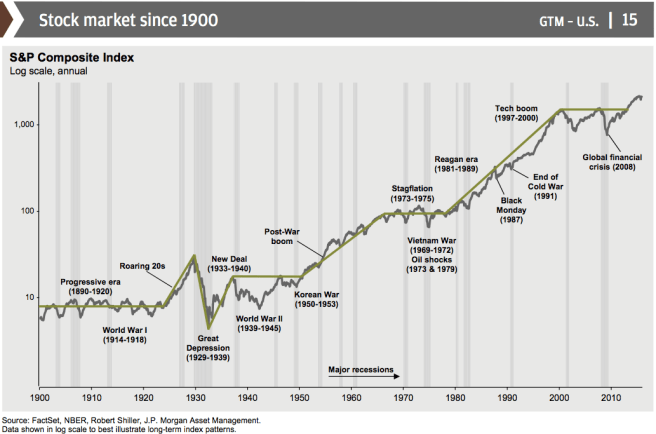
  • On average there has been a market correction every year since 1900.
  • The average correction over the last 100 years has been 13.5%.
  • From 1980 to 2015 the average drop was 14.2%.
  • Historically, the average correction has lasted only 54 days.
  • Less than 20% of corrections have turned into a bear market.
  • Historically bear markets have happened every 3-5 years.
  • Historically the S&P 500 has dropped on average 33% during bear markets.
  • In more than a third of bear markets it has dropped more than 40%.
  • On average, bear markets have lasted about a year
  • Bull markets tend to commence when investor confidence is at a low point.
  • The market hit bottom on March 9th 2009 – the S&P 500 surged 69.5% in the 12 months that followed.

(from Unshakeable: Your Financial Freedom Playbook by Tony Robbins)

You may be surprised to hear that corrections happen so frequently. This means the next one could come at any time. If you follow the news, and in particular the financial news, there are always multiple reasons to be fearful: terrorism, North Korea, conflict in the Middle East, slumping oil prices, budget standoffs, Brexit!

Then there are the doomsday guys who are forever warning of the coming crash. If you listen to these people you will never be able to get started investing. But how often are they actually right? Well if you consistently warn of a coming crash you will always be right eventually! Tony Robbins’ book has a brilliant section where he shows 33 instances of “experts” warning of a market downturn over a three year period, where the market actually went up instead.

Here’s the key: in the years 1980 to 2015, the S&P 500 experienced an average intra-year decline of 14.2%. However, the market ended up achieving a positive return in 27 of those 36 years. That’s 75% of the time. You cannot afford to be sitting on the sidelines while this is happening. In fact, the opportunity cost of doing nothing will cost you far more than any of the corrections, bear markets, and flash crashes:

“From 1996 through 2015, the S&P 500 returned an average of 8.2% a year. But if you missed out on the top 10 trading days during those 20 years, your returns dwindled to just 4.5% a year. Can you believe it? Your returns would have been cut almost in half just by missing the 10 best trading days in 20 years! It gets worse! If you missed out on the top 20 trading days, your returns dropped from 8.2% a year to a paltry 2.1%. And if you missed out on the top 30 trading days? Your returns vanished into thin air, falling all the way to zero!” (from Unshakeable: Your Financial Freedom Playbook by Tony Robbins)

So we need to understand that winter is just one of four seasons and get back to the boring stuff: understand your risk profile, get your asset allocation right, rebalance annually, and ignore the noise!

Buy Low, Sell High!

dollar-790903_640

I’m sure you have heard the mantra “buy low, sell high”. That’s because it is the number one objective of investing. But how do you actually go about this in a fast changing world without constantly having to watch the markets? The answer is more straightforward than you might think:

Let’s keep this really simple – say you have a portfolio that is 60% in stocks and 40% in bonds. (of course your portfolio will be much better diversified than this but we’re going for simple here!) Over the course of a year the stock market soars and the bonds stay about the same. You’ve had a really good year in your stocks. In fact, they’ve done so well that the balance of your portfolio has changed to 70% stocks and 30% bonds. Now, you haven’t changed anything yourself. It’s just that one of your asset classes has increased in value and therefore in weight.

Then the next year, guess what? The stock market continues to do well! Your bonds stay about the same and the stocks have such a great year that the value of your investment goes up significantly. And you go out and celebrate! Your asset allocation is working perfectly!

What you haven’t noticed is that now your portfolio is 80% stocks and only 20% bonds. And what happens the next year? Yes, you guessed it – the stock market crashes, you are over-exposed to it, and all those gains are wiped out…you failed in your attempt to buy low and sell high.

So how can this be averted? Simply, by rebalancing. At the end of the first year you automatically sell some of your stocks (selling high what you bought low) and buy bonds, restoring your asset allocation to 60/40. At the end of year two you do the same.

Then year three comes and the stock market goes down, but the 40% you have in bonds is there to protect you. In fact, it’s quite likely that bonds do well that year. So in that case, at the end of the year, you will sell the some of the bonds (high) and invest back into stocks (low). That’s it!

So, once you have understood your risk profile, and diversified into a blend of assets weighted to match that profile, the last thing to do is make sure you rebalance on a regular basis so the weightings don’t get out of whack.

Rebalancing annually is how you automatically buy low and sell high, without stressing yourself about the direction of the market.